Category Archives: media

CNN: the “E.R.” of TV news?

By Chris Daly

Insightful piece today by Brian Stelter in the Times. It raises the question: Is CNN like the emergency room of a hospital that cannot fill its inpatient beds? CNN is very busy during crises, but it becomes a lonely place during periods of routine news. That certainly rings true in my experience: on an election night, I’m a visitor of CNN for sure. If I hear a snatch of something startling on the radio and want to hear/see more right away, I will snap on CNN. If all hell is breaking loose somewhere, it’s usually my top choice (certainly far ahead of cable-news leader Fox News, which has so few correspondents who can jump on breaking news).

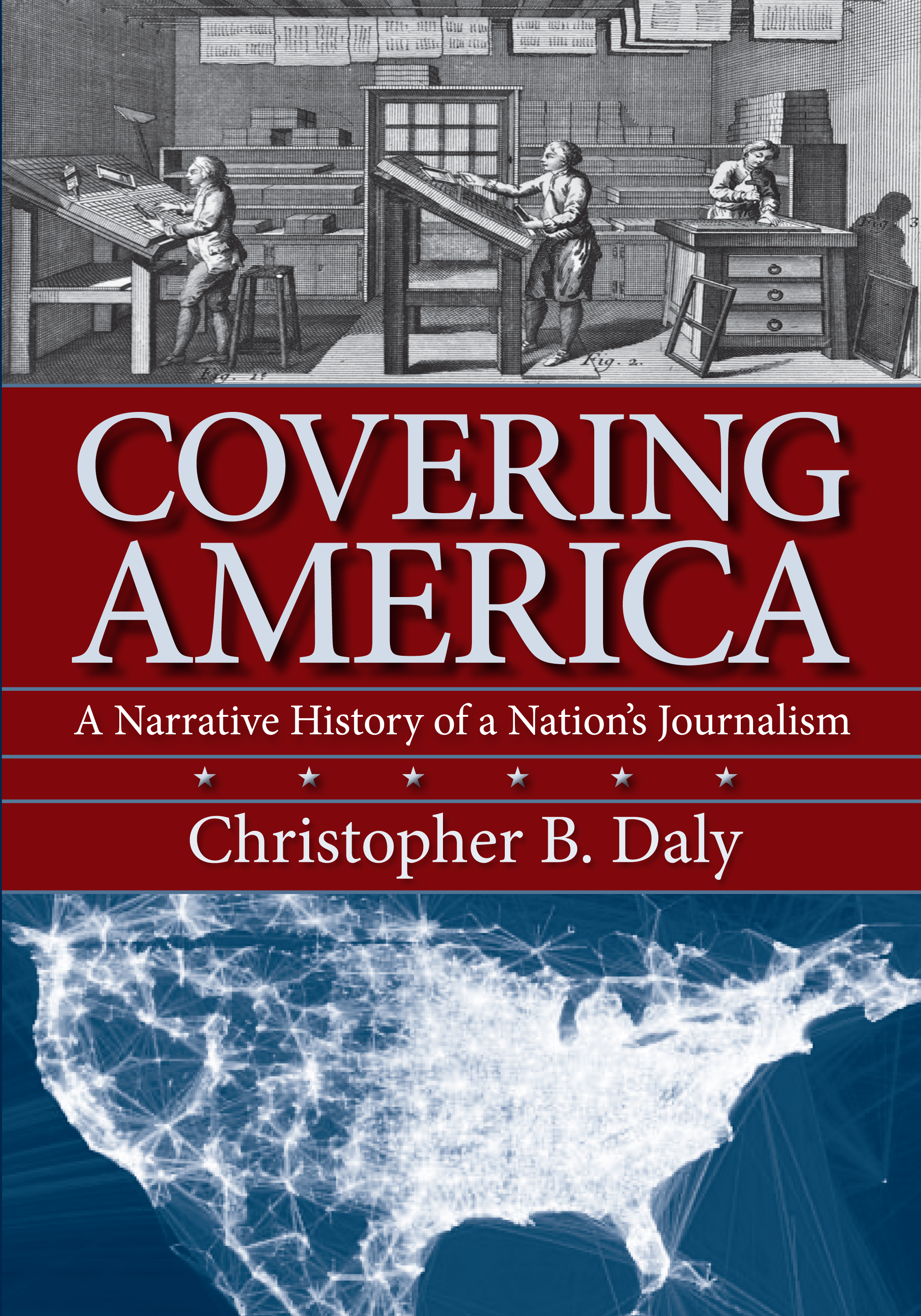
Fundamentally, this problem has been with CNN almost from the get-go. Here’s an excerpt from my book, Covering America, about the founding of CNN and its basic business problem. 

. . .By approaching cable news this way, [CNN founder Ted] Turner was coincidentally creating a new business model for TV journalism. Unlike the networks, CNN did not plan to build a huge entertainment division that would have to create or bid for programs. And unlike public television, CNN was not dependent on public subsidies, foundation grants, or donations from the audience. Instead, Turner was adapting an older business model from newspapers. In the CNN approach, TV news would be paid for through a “dual revenue stream.” Just as newspapers made money from two sources—advertising and subscriptions—so would CNN. The company would sell ads, and it would also have a steady stream of revenue coming in from the cable operators, who had to pay CNN a few pennies per customer per month, reflecting CNN’s share of the monthly cable TV bills that Americans were getting used to paying. With low costs and two fairly reliable streams of revenue, news on cable just might work.

Ready or not, on June 1, 1980, CNN made its debut. There were the inevitable mishaps (the cleaning lady who walked across the set behind the anchor while the cameras were rolling), but the impressive thing was that it worked. CNN started covering the news that day and has done so continuously ever since—days, nights, weekends, holidays. Only the AP could make a similar claim, (though it supplies news to the industry rather than directly to the public). Soon, Turner was showing the skeptics that it was in fact possible to put news on television round the clock. Yes, it was sometimes raggedy. And yes, there was a lot still to accomplish—including hammering out reciprocal video-sharing agreements with affiliates, hiring more and more staff, opening bureaus around the world. But it worked.

By the end of 1981, CNN was getting established. It was reaching 10 million households and was clawing its way to journalistic parity with the network news divisions.18 One key issue was what is known as “pool coverage.” This occurs in many settings when there is not enough room to accommodate all the media people who wish to cover some location or event, such as a courtroom, a presidential appearance with limited access, or the like. In those cases, the answer is a pool, in which all the journalists in each medium agree to cooperate. Typically, each medium gets to put one representative at the scene. In return for that access, the chosen journalist agrees to share the results with all the other members of the pool in the same medium. In addition, each member of the pool agrees to take a turn in providing the feed. This arrangement assumes, of course, that anyone participating in the pool will produce work of high enough quality to satisfy all the others. CNN was originally scorned by the networks, which refused to let CNN crews participate in the White House television pool coverage. It took a lawsuit (which cost Turner another $1 million), but eventually CNN was allowed in.

One of the early tests of CNN as a news organization came on March 30, 1981. President Reagan gave a speech that day to the AFL-CIO at the Washington Hilton. CNN covered the speech live and then, when it was over, switched to some filler material, about sewing in China. While that was airing, the police scanner in CNN’s Washington bureau barked: “Shots fired . . . Hilton Hotel.” Almost immediately, the veteran newscaster Bernard Shaw sat down in the anchor chair in the CNN Washington bureau and began reporting that shots had been fired at the president—a full four minutes before the networks. Shaw stayed in the chair for more than seven hours, and, with help from Dan Schorr, proved that the fledgling news service could keep up with the established networks. Through the evening, CNN kept breaking in with new details: a picture of the shooter’s home, a report on his motive, pictures of the vice president in Texas heading to Washington. According to one account of that day: “Such details were hitting the air in no particular sequence. CNN’s viewers got the story in the jumbled way a journalist receives fragments of information before transforming them into an orderly, polished report. The ‘process’ of gathering news determined the form in which that news was delivered.” Before CNN, viewers had received their news in measured doses at fixed times; now they were drinking straight from the fire hose.

For years, CNN cost more to produce than it brought in through the combined revenues of cable subscriptions and advertising. The network was burning through Ted Turner’s personal wealth at an unsustainable rate. The early years were a desperate race to get CNN included in enough viewers’ basic cable packages to pay for itself. Most of the costs of gathering and disseminating the news by cable were fixed; the great variable was the size of the audience. Beginning in 1978, from the pre-launch investments in people, property, satellite time, and equipment, CNN lost an estimated $77 million through 1984.20 But then in 1985, CNN began posting profits: $20 million that year and more in the coming years. In the grow-or-die spirit of modern capitalism, Turner soon started thinking about acquiring other businesses. At the same time, a profitable CNN was looking more attractive to other investors, who might try to take it over. By the end of the decade, CNN was earning almost $90 million a year and had an estimated value of $1.5 billion. At the decade mark, on June 1, 1990, it could be seen in 53 million homes in the United States and in eighty-four countries worldwide. CNN had nine U.S. bureaus and another eighteen overseas, with a global total of some 1,800 employees. CNN had arrived. . .


Leave a comment

Filed under broadcasting, CNN, Fox News, Journalism, journalism history, media

Elite media?

By Chris Daly 

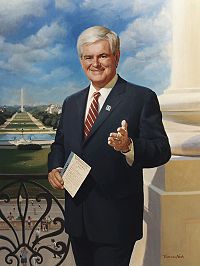
Newt Gingrich has done it again. On Sunday morning, he was the lead-off guest on “Meet the Press.” (So, no whining, Mr. Gingrich, about being ignored by the media.)

The able, veteran host, David Gregory, led off with the kind of question that such a host is supposed to ask on such a show: he asked about the hottest story of the previous 72 hours, the flap over access to contraception in health insurance plans.

Did Gingrich respond? Did he weigh in on the issue that so many Americans were thinking about?

He did not!

He went straight into political jiujitsu mode and tried to attack Gregory. His reply:

“You know, David, I am astonished at the desperation of the elite media…”

Whoa. Stop the video.

ELITE MEDIA?? What is Gingrich talking about. That is, what is he really talking about.

Gingrich flings that term “elite media” around every chance he gets. He must have reason to believe that it helps him with some sub-set of the U.S. electorate.

Here’s the question I wish Gregory had come back to him with: “What do you mean, Mr. Speaker, by elite media? Is there some other kind? Is there a zhlubby, mediocre media that you prefer? Is there a really dopey, terrible media that is somehow not getting its fair shake?”

What, in other words, does the word “elite” add to Gingrich’s sneering, mocking phrase “the elite media”? He protests an awful lot.

Is not Gingrich, a former professor, part of an elite?

Is not Gingrich, an author of multiple books, part of an elite?

Is not Gingrich, former speaker of the U.S. House, part of an elite?

Is not Gingrich, TIME magazine’s 1995 “Man of the Year,” part of an elite?

Is not Gingrich, a multimillionaire consultant, part of an elite?

Just to clarify, I entered the word “elite” into an online antonym finder and came up with the following list: common, low-class, ordinary, poor, worst, commoners, plebites, proletariat, low-born, low-life, poor, unprivileged, vulgar, wanting.

Would Gingrich really prefer a low-class, wanting, vulgar media staffed with ordinary proletariat commoners?

Maybe he would.

The official portrait

2 Comments

Filed under Journalism, media

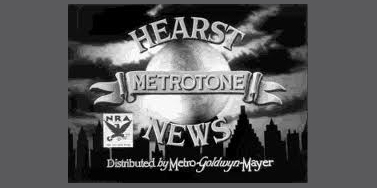
William Randolph Hearst’s company at 125

By Chris Daly 

The Hearst Corp has decided to give itself a big birthday — 125.

That is predicated on the fairly arbitrary starting point of March 4, 1887, the date on which young William Randolph Hearst took over the management of his father’s newspaper, the San Francisco Examiner. It’s as good a date as any, I suppose, although it was another two decades before WRH really started building the media empire that still endures. Hearst, naturally, looms large in my new book on the history of journalism, Covering America, since his career lasted from 1887 almost to his death in 1951.

Fun fact: Hearst opposed U.S. intervention in WWI, and he came under attack from Wilson and his supporters. On the defensive about his loyalty, Hearst literally became a flag-waver: he ordered the editors of all his newspapers to print little American flags on the upper corners of every front page.

Don’t miss the great visuals in the slideshow and video in the company’s anniversary page. Hearst Corp., by the way, is one of the biggest privately held media companies in the U.S., owning everything from TV stations to Cosmopolitan and O magazines.

Courtesy, Hearst Corp.

Leave a comment

Filed under Journalism, journalism history, media

Protecting journalists’ sources

By Chris Daly 

It’s good to see the news media agreeing to close ranks on something. In the latest case, it is an attempt by the U.S. Justice Department to force a prominent, respected journalist to reveal the identity of his source. The government wants that identity revealed so that it can go ahead and punish the “leaker.”

According to a story in today’s NYTimes by Charlie Savage, just about every major U.S. news organization joined in urging a federal appeals court to “shield” the journalist, the indispensable James Risen, a Times reporter on national security issues who also wrote a book in 2006 called State of War. In his book, Risen, using confidential sources, embarrassed the CIA by detailing the agency’s failed attempts to sabotage the Iranian nuclear-weapons program. To my mind, that seems like valuable information that a free people ought to have access to, so that we can debate the wisdom of what it being done in other countries in our name. Without reporting like that done by Risen, we would all just be kept in the dark.

The story in the Times has plenty of valuable links to the original documents, including the media’s amicus brief. Here is a link to the key Supreme Court ruling on the issue (and be sure to read down to Justice Douglas’s stirring dissent, which gets it right).

For a fuller understanding of the historical backdrop of the case, here is an excerpt from my new book (due out in about a week) that details the U.S. Supreme Court’s handling of the landmark Branzburg case in 1972. Branzburg v. Hayes was the case that has shaped the legal, political, and constitutional debate over whether journalists should have a “shield law” to allow them to protect confidential sources.

From Covering America © Christopher B. Daly:

(pardon the formatting issues)

In the spring of 1968, [New York Times reporter Earl] Caldwell traveled to Memphis to cover the strike being waged by the city’s sanitation workers, supported by the Reverend Martin Luther

King Jr. Caldwell was in the Lorraine Motel on April 4 when a loud shot rang out.

The only journalist present at the scene, Caldwell immediately called the Times

newsroom and began dictating details of the King assassination, which the editors

spread across the top of page one. According to Caldwell, King had spent

most of the day in his room, then emerged around 6 p.m. onto the balcony, wearing

a black suit and a white shirt. Caldwell’s report continued:

Dr. King, an open-faced genial man, leaned over a green iron railing to

chat with an associate. . . .

The Rev. Ralph W. Abernathy, perhaps Dr. King’s closest friend, was

just about to come out of the motel room when the sudden loud noise

burst out.

Dr. King toppled to the concrete second-floor walkway. Blood

gushed from the right jaw and neck area. His necktie had been ripped

off by the blast.


King’s murder touched off a fresh round of violence in cities across America, and

Caldwell returned to the “riot beat” for much of the summer (fig. 12.5).

That fall, Caldwell went to San Francisco to become a West Coast correspondent

for the Times. Through his contacts among the few black reporters in the Bay

Area, he gained access to Black Power advocate Eldridge Cleaver, and by the end

of 1968, Caldwell was the most knowledgeable reporter in the mainstream press

about the emerging Black Panther Party, based across the bay in Oakland. As it

turned out, the Panthers were shrewd enough about the media to want coverage

in the New York Times, and they gave Caldwell access, as well as what reporters

call “color” (atmospheric details), on-the-record interviews, just about anything

he might want. His stories established that the Panthers were heavily armed and

were talking about violent revolution. Caldwell worried about how Cleaver and

the other Panthers would react to his reporting, but he didn’t need to. “The Panthers

wanted people to know what they were doing. They wanted me to write in

the paper about them having guns.”24 His reporting also attracted the attention of

the FBI, which was waging a nationwide campaign of surveillance and intimidation

against radical groups both black and white. That attention would develop

into one of the landmark Supreme Court rulings affecting reporters and their

ability to protect confidential sources.

The legal case began when FBI agents paid a visit to Caldwell and told him

that they wanted a lot more information about the Panthers. Caldwell told the

agents that everything he knew was right there in the newspaper, including the

fact that the Panthers were armed and that they were threatening to kill the president.

Even so, the government wanted more from Caldwell. He refused to talk,

however, believing that any appearance in secret before a grand jury would make

him look like an informant and dry up his sources. The agents were not satisfied,

and the Bureau turned up the pressure, warning him that he would be forced to

testify in court—a step that would not only destroy his relationship with the Black

Panthers but jeopardize his value as a reporter on any other beat as well. Facing

a possible court appearance, Caldwell destroyed most of his Panther files, but

there was still the matter of his testimony. In February 1970 he was served with

a subpoena ordering him to appear before a federal grand jury investigating the

Black Panthers. The subpoena did not name the Times, but the newspaper hired a

prestigious San Francisco law firm to represent Caldwell. Their advice: cooperate.

Hearing that, Caldwell tapped his network of black journalists, who steered him

toward a Stanford law professor, Anthony Amsterdam, a brilliant defense lawyer,

who agreed with Caldwell’s decision not to testify and offered to represent him pro

bono.25

After he continued to refuse to testify about his news sources, Caldwell was

found in contempt of court and ordered to jail, but he was allowed to remain free

while his case went to the Ninth U.S. Circuit Court of Appeals. The higher court

sided with Caldwell, but then the federal government appealed that ruling. Enroute

to the U.S. Supreme Court, Caldwell’s case was combined with two others

and filed under the heading Branzburg v. Hayes. Paul Branzburg was a reporter

for the Louisville Courier-Journal who had been an eyewitness to a drug crime.

(Thus he was not, strictly speaking, protecting a confidential source.) Paul Pappas

was a television news photographer working for a TV station in New Bedford,

Massachusetts, who had gone to nearby Providence to cover the local Black Panthers

chapter and spent several hours inside their headquarters. Like Caldwell,

Branzburg and Pappas were both journalists who had been ordered to testify

before grand juries; like Caldwell, they had refused on professional grounds.

In all three cases, the issue was not a classic instance of protecting the identity

of a confidential source. It was more a matter of preserving the journalists’ access

to sources, which would be destroyed if the people who were being reported on

suspected that the reporters had cooperated with law enforcement. All three cases

involved a constitutional claim that the First Amendment includes not only the

right to publish (and withhold) information freely but also the right to gather news

freely. Recognizing the stakes, news executives threw their institutional weight

behind Caldwell and the other reporters. Supporting briefs were filed by the Washington

Post Company, the Chicago Tribune Company, the American Newspaper

Publishers Association, the American Society of Newspaper Editors, the American

Newspaper Guild, the Radio and Television News Directors Association, the

Press Photographers Association, and the ACLU—along with affidavits from such

respected journalists as Anthony Lukas, Walter Cronkite, and Marvin Kalb.

In a decision handed down on June 29, 1972, the Supreme Court narrowly

ruled against the journalists.26 Writing for the 5–4 majority, Justice Byron White

held that the First Amendment had to be balanced against the Fifth Amendment,

which guarantees criminal defendants the right to have their cases presented to

a grand jury before indictment. In his opinion White invoked the ancient legal

doctrine that “the public . . . has a right to every man’s evidence.” The only exceptions,

he said, are those instances in which the states have adopted laws specifically

granting certain categories of people a legal privilege against having to testify.

Such a “testimonial privilege” might protect a wife from testifying about her

husband, a doctor about a patient, or a priest about a penitent. In such cases,

legislatures determined that some other social good was worth the cost of allowing

the privileged category of people to avoid the grand jury. But, White said,

the Court could not take seriously the idea “that it is better to write about crime

than to do something about it.” If reporters know things that prosecutors want to

find out, they must tell what they know. Besides, the justice wrote, if the Court

created a special privilege for journalists, it would soon have to define who is

(and is not) a journalist—a task that raised the specter of government licensing

of journalists, which would be far more murky than determining who is a doctor

or a priest. “Almost any author may quite accurately assert that he is contributing

to the flow of information to the public,” White wrote, warning that just about

anybody could claim to be a journalist of one variety or another. Finally, White

observed that the U.S. attorney general had written a set of guidelines governing

the issuance of subpoenas to reporters, which the high court thought ought to

suffice for the bulk of cases.27 The majority opinion also included an invitation

to legislatures to create a “testimonial privilege” for reporters, and many state

legislatures went ahead and passed versions of what are known as “shield laws.”

In a brief concurring opinion, Justice Lewis Powell, though voting with the

majority, very nearly came down on the other side. He warned prosecutors that

“no harassment of newsmen will be tolerated,” and he wrote that if reporters feel

they are being abused by overzealous prosecutors seeking the names of confidential

sources, then those reporters should go to court and seek a protective order. “The

asserted claim to privilege should be judged on its facts by the striking of a proper

balance between freedom of the press and the obligation of all citizens to give relevant

testimony with respect to criminal conduct,” Powell wrote, saying it is up to the

courts to handle such claims on a case-by-case basis. Nevertheless, his joining with

the majority had the effect of denying journalists’ claims to a constitutional privilege.

Among the dissenters, Justice William O. Douglas wrote one of the most eloquent

statements of press freedom in history. Having staked out a position as a

First Amendment fundamentalist, Douglas saw the Caldwell and related cases

in clear-cut terms. “My belief is that all of the ‘balancing’ was done by those who

wrote the Bill of Rights,” he said, adding that “by casting the First Amendment

in absolute terms, they repudiated timid, watered-down, emasculated versions

of the First Amendment. . . .” The key to understanding the First Amendment,

Douglas argued, is to recognize that it exists for the benefit of the American people

as a whole. If the people are to govern themselves, they must have reliable,

independent sources of information. “Effective self-government cannot succeed

unless the people are immersed in a steady, robust, unimpeded, and uncensored

flow of opinion and reporting which are continuously subjected to critique,

rebuttal, and re-examination,” he wrote. In Douglas’s view, the free press cases

that come before the Court are not really about the press per se; they are about the

rights of the American people, the ultimate sovereigns of our system. The press,

which serves as the agent of its audience, is incidental to the greater purpose

of self-government. Douglas continued: “The press has a preferred position in

our constitutional scheme, not to enable it to make money, not to set newsmen

apart as a favored class, but to bring to fulfillment the public’s right to know.

. . . There is no higher function performed under our constitutional regime. Its

performance means that the press is often engaged in projects that bring anxiety

and even fear to the bureaucracies, departments, or officials of government.” He

concluded by warning that the Court’s majority opinion would reduce journalists

to stenographers, and that without the right to protect confidential sources, “the

reporter’s main function in American society will be to pass on to the public the

press releases which the various departments of government issue.”

The majority, however, did not see it that way. As a result of the Court’s 5–4

ruling against the journalists, reporters and their sources have operated in legal

jeopardy ever since, at least in federal courts.

On the state level, the Branzburg ruling had the effect of spurring many legislatures

around the country to enact shield laws to protect reporters in state courts, but Congress has steadfastly

refused to recognize the same right on the federal level. Ironically, the Branzburg

ruling also had another impact: it dried up what was probably the FBI’s greatest

source of information about the Black Panthers—the reporting that anybody

could read in the pages of the New York Times. Of course, by the time Caldwell’s

case was resolved, the Justice Department had lost much of its interest in the

Black Panthers. Most of Caldwell’s contacts were in jail, in exile, or dead.

* * *

Meanwhile, by the late 1960s, more and more people. . .

Leave a comment

Filed under First Amendment, Journalism, journalism history, media, Supreme Court

Book recommendation

By Chris Daly

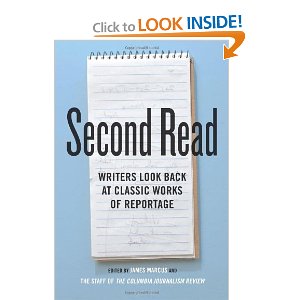
I just finished a book that surprised me — Second Read: Writers Look Back at Classic Works of Reportage.


I found it surprising because when I first picked it up, I thought it would be yet another anthology of great works of journalism, perhaps with brief headnotes introducing each one. Instead, this is a collection of well-considered essays by contemporary writers about some of the great works in the history of (mainly American) journalism. The overall editor is James Marcus of Columbia’s J-School, and he drew on the faculty and the masthead of CJR  for most of the entries.

A few of these essays pointed me to works that I have never read and now want to catch up with (DeFoe’s “A Journal of the Plague Year,” Paul Gallico’s “Farewell to Sport,” Cornelius Ryan’s “The Longest Day”).

Others were meditations on familiar works that made them fresh again (Evan Cornog on Liebling’s “Ear of Louisiana,” Scott Sherman on Frady’s “Wallace,” David Ulian on Didion’s “Slouching Toward Bethlehem”).

My only regret is that this book does not include the originals — or at least significant excerpts — that are being celebrated. I am sure a publisher can explain why this book can make a little money at 184 pages and would lose a fortune at 1,840 pages. Oh, well. Off to the library to hunt down the originals.

If you have any interest in journalism history or “literary journalism,” don’t missSecond Read.


Leave a comment

Filed under Journalism, journalism history, media

A media roundup

By Chris Daly 

–First, let’s pause a moment and let this sink in: Eastman Kodak has filed for bankruptcy protection.

This is the company that ruled photography in the 20th Century, the company that made photography a popular activity, and the company that really enabled photojournalism by making cheap portable cameras as well as flexible, lightweight film.


–Second, the chips are falling in the online piracy dispute. Regrettably, this issue appears to be turning into a shouting match. For all the advocates of “freedom,” the question remains: What about stealing the work of creative people? To be continued. . .


–Coincidentally, there was also a little-noticed SCOTUS ruling yesterday on copyright. Now, while I favor granting copyright to make sure that content-generators get paid for their work, I have to wonder how much sense it makes to impose new copyright restrictions on the work of dead foreigners. The purpose of the U.S. copyright law is to encourage creative output by giving Americans an economic incentive to write, compose, paint, etc. Putting new restrictions on “Peter and the Wolf” is not going to bring any new work out of Prokofiev (no matter how much his heirs may rake in). This, too, is not the answer.


 –Who knew that Twitter had all these features? (I should have but didn’t.)

–Finally, the gift (to media reporters) that keeps on giving: The Murdoch Hacking Scandal. Jude Law is smiling today because he is among three dozen victims of phone hacking by Murdoch reporters who have extracted “settlements” (i.e., payoffs) from Murdoch’s News Intl. The “nut graf”:

The apparent admission of a cover-up seemed likely to add to the challenges facing Mr. Murdoch in Britain. News International, the British subsidiary of News Corporation said it would not immediately comment, Reuters reported.

Andrew Cowie/Agence France-Presse — Getty Images 


Leave a comment

Filed under business, First Amendment, Journalism, media, Supreme Court

Imagine that!

by Chris Daly

Another aggregagtor, BuzzFeed, has decided that there is a secret formula to getting noticed: generate original content. 

Today’s Times informs that BuzzFeed has hired Ben Smith away from Politico to do just that.

Here’s the plan:

The reporters will be scoop generators, Mr. Peretti said. “By breaking scoops and drawing attention,” he added, they will help increase traffic and, by extension, advertising sales.


Isn’t that pretty much the basic idea since the time of the Penny Press in the 1830s?


Leave a comment

Filed under blogging, Journalism, journalism history, media

Who is a journalist?

By Chris Daly 

The latest round in the debate over “who is a journalist” comes from Oregon. A blogger named Crystal Cox went on a rampage against an Oregon financial company, Obsidian Finance Group. (In fact, in a burst of candor, she named her blog Obsidian Finance Sucks.) One of the firm’s principals sued her for defamation.

Complications ensued, which you can read about here, thanks to Yahoo, which appears to have aggregated this story from its original source, Digital Trends.

All this struck me as a rehash of issues that arose almost a decade ago. So, I decided to re-post an essay I wrote in 2005 on blogging and journalism. Here you go:


ARE BLOGGERS JOURNALISTS?
LET’S ASK THOMAS JEFFERSON

by Christopher B. Daly


Who is a journalist?

In America, where we don’t license journalists, that is not always a simple question. Lately, the issue has come up in a new light because of the claims made by people who post Web logs. Bloggers came to prominence during the 2004 election, often criticizing or correcting the “mainstream media.” Recently, the first blogger in history was issued credentials to cover the White House. And just last month, a California judge was asked to decide whether bloggers who write about Apple computers can enjoy the legal protections of that state’s “shield laws.”

Not surprisingly, most bloggers insist that they are journalists, entitled to equal rights with older media. Others disagree, saying bloggers are not journalists by any stretch. Recently, for example, Los Angeles Times media critic David Shaw argued that bloggers should not be considered journalists because they have no experience, they have no editors, and they have no standards.

Who is to say?

One approach to an answer is historical. In fact, bloggers stand squarely in a long-standing journalistic tradition. In this country, their roots go back to the authors of the often-anonymous writings that helped to found America itself by encouraging the rebellion against Britain.

Beginning around 1760 and continuing at a quickening pace, the colonists began taking part in a great public argument — about the rights of Englishmen, the nature of civil society, and the limits of power. What began as a trickle of protest grew into a torrent of polemic.

Hundreds upon hundreds of pamphlets were printed in the colonies between 1760 and 1776, providing the intellectual setting for the debate over independence. Those writings — and their authors — played a role that was at least as important as established newspapers in giving expression to the growing political crisis.

The pamphlets were crucial to the rebellion because they were cheap, because they presented provocative arguments, and because it was impossible for the royal authorities to find their authors and stop them. The authors of the pamphlets were not professional writers, nor were they printers. They were lawyers, farmers, ministers, merchants, or — in some cases — men whose true identities are still unknown. It was a well-established practice in colonial times for writers to use pen names, even when writing on non-controversial subjects.

With the coming of conflict with England and the fear of reprisals by the authorities, most pamphleteers resorted to writing under a nom de plume such as Cato or Centinel — the “Wonkette” and “Instapundit” of the day.

They would use a sympathetic printer’s press under cover of night, then sneak the pamphlets out for distribution. As a result, the pamphleteer had one great advantage over the printer: he could state the boldest claims against the Crown and not have to fear any penalties. The pamphleteers amounted to the nation’s first version of an underground press, a guerilla counterpart to the established newspapers.


THE GREATEST PAMPHLETEER of the age was certainly Thomas Paine. He arrived in Philadelphia late in 1774. Already 37, Paine was not a terribly impressive figure (you might even call him a “slacker”). Born in England, he had failed in the family’s corset-making business and later got fired as a tax-collector. His first wife had died, and he was separated from his second one. Jobless and nearly penniless, he set sail for a new life in America. On the way, he fell ill and nearly died.

Then his life began to turn. He began writing essays for The Pennsylvania Magazine. He met and became friends with several advocates of independence, including the prominent doctor Benjamin Rush and the visiting Massachusetts lawyer John Adams. After a few months, Paine left the magazine but continued writing. Soon, he wrote a pamphlet of his own.

Titled Common Sense, it appeared on Jan. 10, 1776, and it shook the world. The impact of that pamphlet, out of the hundreds then circulating, was unprecedented. Paine later estimated that some 150,000 copies were sold, so it was probably read by about half a million people — at a time when the entire colonial population was about 2 million.

Like most other pamphleteers, Paine wrote Common Sense anonymously, but his central idea was unmistakable.

Paine embraced republicanism — the idea that people can govern themselves without a hereditary or religious central authority.

His first target was the monarchy itself. In Paine’s view, when stripped of all its ermine robes and gilded scepters, the monarchy consisted of naked power, plain and simple. In language that sounds a lot like ranting, Paine said the English crown could be traced to William the Conqueror, whom he dismissed as “a French bastard landing with an armed banditti.”

He went on to call for “an open and determined declaration for independence,” and he promised his readers that “the sun never shined on a cause of greater worth.” These were radical ideas, and Paine became a wanted man.

Common Sense and other pamphlets like it were precisely the kind of political journalism that Jefferson had in mind when he insisted on a constitutional amendment in 1790 to protect press freedom — anonymous, highly opinionated writing from diverse, independent sources. In historical terms, today’s bloggers are much closer in spirit to the Revolutionary-era pamphleteers than today’s giant, conglomerate mainstream media. On those grounds, blogs deserve the full constitutional blessings that the First Amendment guarantees.


ARE BLOGS IMMUNE FROM LIBEL CLAIMS?

But that is not to say that bloggers have carte blanche. It is important to remember that the First Amendment is a limit on the government’s power to impose prior restraint — that is, to prevent ideas from reaching the public by shutting down a newspaper before publication. It has always left journalists open to consequences that might arise after publication — such as being sued for libel or being ordered by a judge to reveal a confidential source.

It is clear that bloggers enjoy First Amendment rights, which are strongest at protecting opinions.

It is less clear that they should be entitled to the protections of all the other laws that have been passed since the Founding that affect journalists.

Consider, for example, the state and federal “shield laws,” which in general allow journalists to protect confidential sources, as in the Apple case. Many bloggers say they should be covered by those laws.

Here again, history offers a guide. Most laws protecting journalists are much newer than the First Amendment. They were passed in recent decades in order to protect and foster a specific activity called reporting.

What we think of as reporting — the pursuit, on a full-time basis, of verifiable facts and verbatim quotations — was not a significant part of journalism in the time of Jefferson and Paine. In fact, the practice of reporting began around 1833 in New York’s “penny papers” and gradually spread during the 19th Century.

Nowadays, when we ask whether someone is a journalist, we may need to refine the question. We should ask: Is this the kind of journalist who presents analysis, commentary, or political rants? Or, is this the kind of journalist who offers the fruits of reporting? Or some of both? The issue is not the job title but the activity.

Anyone who engages in reporting — whether for newspapers, magazines, radio, television, or blogs — deserves equal protection under those laws, whether the news is delivered with a quill pen or a computer.

“What do we mean by the Revolution? The war? That was no part of the Revolution; it was only an effect and consequence of it. The Revolution was in the minds of the people, and this was effected, from 1760 to 1775, in the course of fifteen years before a drop of blood was shed at Lexington. The records of 13 legislatures, the pamphlets, newspapers in all the colonies, ought to be consulted during that period to ascertain the steps by which the public opinion was enlightened and informed…”

–John Adams, writing to Thomas Jefferson, 1815.


Copyright ©2005 Christopher B. Daly
All Rights Reserved.

[Last modified: April 7, 2005]


Leave a comment

Filed under blogging, First Amendment, Journalism, journalism history, media

Media bias? Not so much

By Chris Daly 

Michelle Bachmann, a former flavor-of-the-week in the lengthy, fickle Republican primary campaign for the presidential nomination, has a gripe. Not surprisingly, she is complaining about the media.

This, of course, is a time-tested tactic for Republicans, especially when they are feeling politically desperate. Bachmann claims to have caught CBS News in a “gotcha” moment that she believes confirms her suspicions of liberal bias at CBS. Now, it may well be that there are liberals at CBS, but this episode does not prove her point. In fact, I believe it proves the opposite point.

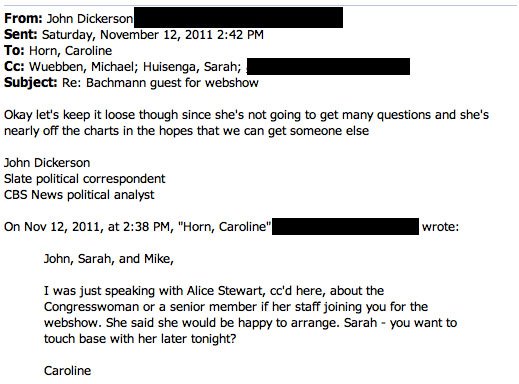
Briefly. . . As recounted in today’s NYTimes, the guy in charge of political coverage at CBS, John Dickerson, was caught doing his job. He was trying to find an online guest for a show he was orchestrating that would follow the latest Republican debate on Saturday night. In an email to colleagues, he said he would rather “get someone else” other than Bachmann.

His reason? She was “not going to get many questions” and “she’s nearly off the charts” in the polling of voters’ preferences.

(Dickerson’s big mistake was that he included a Bachmann aide among the people in the list of addresses for that particular email, so his thinking went unfiltered to the Bachmann communication director, who then did the professional thing and tried to make hay out of it, in a Facebook blast and elsewhere.)


Back to Dickerson’s email.

If we look at what he actually said, it appears that his criteria for choosing the guests to pursue were non-political, non-partisan, and non-ideological.

Like any good producer, he wanted a “hot” guest — hot in the sense of someone who is trending, someone who is going to create or amplify buzz, someone who is going to add to CBS’s ratings. He does not want someone who was last week’s news. Simple as that.

And the facts bear him out: Bachmann did indeed get few questions in the debate and little air time, and she is dying in the latest polls. (CBS’s own latest poll had her in 6th place with just 4% support.) That is not to say that she could not surge again; if she does, Dickerson and every producer, host, and booker in politics will be chasing her. Not because they like or dislike her and not because they agree or disagree with her. It will be all about blowing on the hot coals.

In his email, Dickerson could be properly charged with telling “vicious truths.”

Was he ruthless? Yes.

Was he liberal? No.

Even the awful site Big Journalism almost got this right. In fact, the blogger

p.s. For another day: What about Bachmann’s implicit claim? Do the news media formulate common policies, then execute them in concert? (Hint: people in the news media can’t agree on whether to capitalize “president” !)


1 Comment

Filed under broadcasting, Journalism, media, Politics

Keep hope alive!

The latest annual survey of job prospects in journalism, conducted by the Grady College at the University of Georgia, is out.

Here’s the take-away:


The job market for graduates of journalism and mass communication programs around the country showed signs of improvement in 2010 and the first half of 2011, though the improvements are tentative and the market has not yet returned even to the level of two years ago.

The 2010 graduates were more likely than graduates of 2009 to report having at least one job offer on graduation, more likely to report being employed at the benchmark date of the end of October of last year, and more likely to hold a fulltime job six to eight months after completing university studies. The jobs the graduates held were more likely to be in the field of communication in 2010 than they were in 2009.

Been down so long it looks like up to me!


Leave a comment

Filed under Journalism, media