Category Archives: journalism history

America’s history of censorship

By Christopher B. Daly 

A recent obituary reminds us that during World War II, President Roosevelt created and operated a wide-ranging and largely effective program of censorship of all news media. The news is the death, at age 94, of Cal Whipple, who was a Pentagon correspondent for LIFE magazine during the war. It was Whipple who persuaded the military to re-examine its policy of banning photos of dead U.S. servicemen. Eventually, the top brass referred the matter to the president, and Roosevelt personally intervened. (It might have made more sense, of course, for LIFE’s publisher, Henry Luce, to take up the matter with the president — but for the fact that Luce was a Republican and quite a FDR-basher by 1943.) The result of Whipple’s efforts was this stunning photo by LIFE’s George Strock:
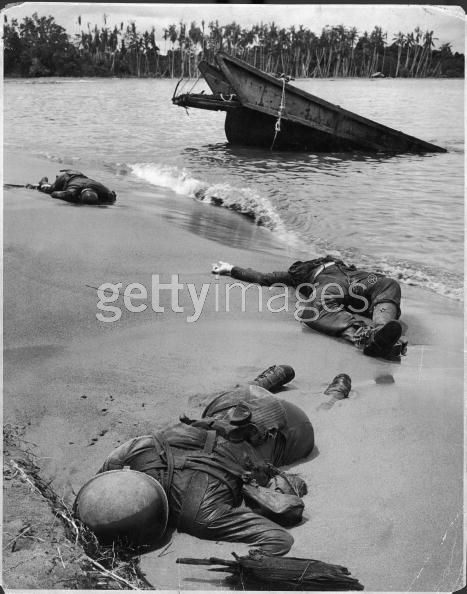
Photo by George Strock/ LIFE magazine.

Photo by George Strock/ LIFE magazine.

That photo (which I paid Getty Images for the right to use) was followed by many more, all of which brought home the reality of war.

Here is an excerpt from my book, Covering America, about the issue:


   Another special case involved war zone photography. Initially, U.S. military and civilian censors banned the publication of photos showing dead American soldiers or sailors. It was assumed that such images would be bad for civilian morale, and they would probably not bring the troops much cheer either. For twenty months after Pearl Harbor, not a single photo depicting a dead U.S. service member appeared in the news media. Much of the initiative for change came from the editors of Life magazine, which, with a circulation of more than 2.5 million a week,23 had emerged since its founding in 1936 as the nation’s premier showcase for photojournalism. Among its wartime staff were Margaret Bourke-White, Carl Mydans, and Robert Capa. With its large format and glossy paper, Life gave photos their greatest possible impact. In a 1942 advertisement for itself, Life expressed its philosophy: “Never has LIFE glossed over the horrors that stalk in the wake of the Axis aggression, but has shown war as it really is . . . stark, brutal, and devastating.” Even so, the censorship guidelines prevented showing dead GIs, so editors at Life and elsewhere pressed their case for greater candor. In mid-1943 the Roosevelt administration reversed its earlier policy, and in September officials began releasing the first of the somber photos. The most famous was the one printed in Life showing three dead soldiers lying where they had been shot on a beach in New Guinea. The photo, by George Strock, was a masterpiece of composition and understatement. The dead men’s faces were not visible, and their wounds were hidden as well. The editors and the military brass all worried about the public reaction, but they need not have: most letters to Life supported the decision, and there was no measurable drop-off in American support for the war. Ever since, readers on the home front have been given a closer and more realistic look at war. . .
Leave a comment

Filed under Journalism, journalism history, Photojournalism

Shameless self-promotion (Journalism history division)

By Christopher B. Daly

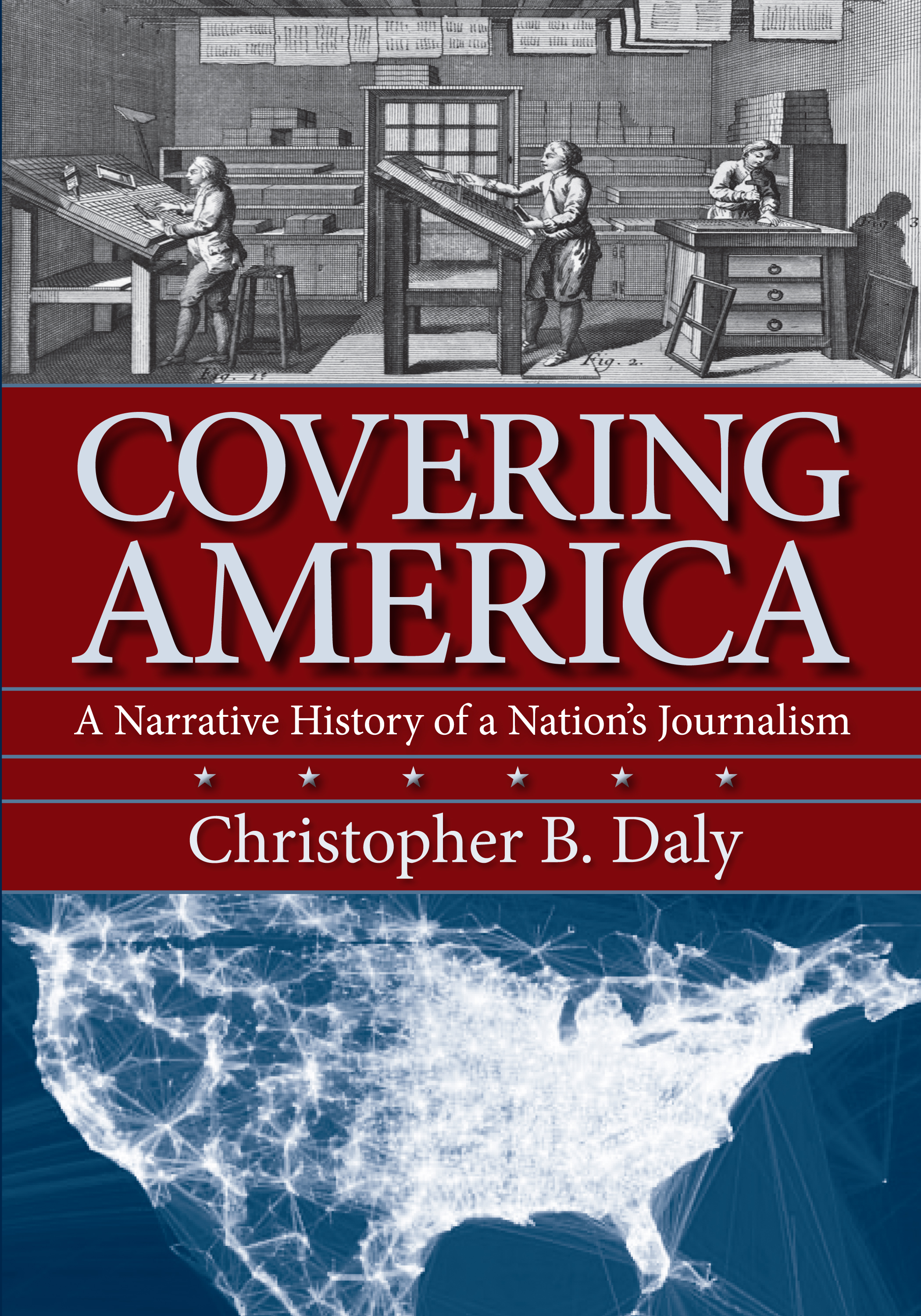
Finally, it’s here: the electronic version of my book about the history of U.S. journalism, Covering America.

Just in time for the anniversary of the rollout of the hardback, this prize-winning book is now available in all major formats:

Nook,

Kindle,

Apple iBook, (This is the format I am checking it out on, and it looks great.)

Google Play,

you name it.

I am very pleased because I know that some folks have been waiting for the e-book. These formats make the book quite a bit cheaper and dramatically lighter! For people who don’t feel drawn to the ~$50 hardcover, here’s your chance to read Covering America. The book won the 2012 Prose Award for Media and Cultural Studies, and it has been selling well and drawing rave reviews (except for one stinker on Amazon — sheesh).

Enjoy it, and write to me about your reactions. You can comment here, or email me: chrisdaly44@gmail.com

CA cover final


Leave a comment

Filed under broadcasting, CNN, Covering America, David Halberstam, FCC, First Amendment, Fox News, history, Huffington Post, Journalism, journalism history, leaks, Murdoch scandal, New York Times, NPR, Photography, Photojournalism, Politics, publishing, Supreme Court, The New Yorker

Woodward flap: Much ado about Sperling?

By Christopher B. Daly

The recent dust-up between Bob Woodward and the Obama White House has now entered the phase where everyone is wondering what all the fuss was about.  It has gone in record time from sounding like a scandal to sounding like a big nothing. Woodward, of all people, should know when he is being threatened by the White House, as he and Bernstein famously were threatened in 1972-3 while reporting on the Nixon gang. 

From today’s Times:

His feud with an unnamed official, first reported in Politico, which said Mr. Woodward clearly saw the administration’s choice of words “as a veiled threat,” initially drew cheers from many conservative commentators and bewilderment from many Washington reporters who wondered whether Mr. Woodward was being a tad oversensitive.

In an interview later on Thursday, Mr. Woodward emphasized that he had not said he felt threatened. “I never said it was a threat,” he said, but added that he still had concerns about how the administration handled criticism. “We live in a world where they don’t like to be challenged, particularly when the political stakes are so high,” he said.

imgres


2 Comments

Filed under Journalism, journalism history

A(nother) review of “Covering America”

Shameless commerce division: Here’s a review I just came across.

[FYI, I use a “Google alert” to tell me about new mentions on the Web of the phrase “Covering America.” Turns out, they miss a lot of stuff. If you are using a google alert for something important, don’t assume that it’s catching everything. Do an active search once in a while.]

Here goes:

Information & Culture: A Journal of History

Covering America: A Narrative History of a Nation’s Journalism

By Christopher B. Daly.

[Amherst, Massachusetts: University of Massachusetts Press, 2012. 546 pp. $49.95.]

From the earliest days of European colonization of North America, the settlers were by

and large literate and able to afford reading materials. That was the backdrop for the

birth of the press in what eventually became the United States. Historian and one-time

reporter, Christopher B. Daly provides a narrative history of journalism, of its major

figures, institutions, and industry from 1704 to the early 2000s. He devotes much of his

narrative to the lives of individual publishers, such as printer Benjamin Franklin,

publisher James Gordon Bennett, and editor William Randolph Hearst, describing the

organizations they built, the publications they produced, and the effects they had on the

profession of journalism. The book is organized in two parts, the first covering events

from 1704 to the 1920s, the second where he focuses on the media from the 1920s to

the present. The first was all about print publications, from broadsides to newspapers

and magazines, while the second in addition included radio, television, and most

recently, the Internet.

While narrating the evolution of the press into the profession of journalism, he pays

considerable attention to their business organizations: how they made money and who

bought their products, because the vast majority of the work done by this sector of the

American economy was conducted by private enterprises. As with other industries,

media evolved in response to changes in the American economy, political attitudes,

desires of their customers (readers), and events in the life of the nation. Technologies

came that also altered the events of this industry, from the introduction of the telegraph

in the nineteenth century to the arrival of the Internet in the twentieth.

Daly argues that the history of journalism went through five cycles. The first (1704-

1832) involved a highly politicized and partisan press, while the second (1832-1900)

saw the commercialization of a national news industry with large newspapers, a national

readership, and the development of specialized workforces, such as full-time reporters.

The third era (1900-1974) witnessed the professionalization of news gathering and

reporting, both of which occurred during a time when electronic media came into its

own. The fourth period (1965-1995) Daly characterizes as the time when media

businesses conglomerated, with newspapers and radio and television becoming parts of

much larger enterprises, often run by executives with little or no background in

journalism. The fifth era (since 1995) introduces the period of the PC and the Internet.

Most readers familiar with the history of American newspapers, magazines, and

journalism will find no surprises in this synthetic well-written history up through World

War II. The chapters covering the next six decades, however, are some of the best in this

book, providing a history of journalism through the Cold War, the Vietnam period, and

recent national developments, most notably the arrival of the Internet. It is these later

chapters that provides much new material, and offers a synthesis of developments on

the part of the media, but that also contributes an analysis on the expanding role of

citizens in using their content. Consistent across all periods is his attention to

technological innovations, the economics of the media industry, the culture of the

profession, the political environment in which they operated, and finally on the work

values of the profession. He includes discussions about the African-American press and

the role of women in each period, beginning after the Age of Jackson and extending to

the present. In the process, he demonstrates that these communities initially had an

alternative, yet parallel, development alongside mainstream journalism that during the

twentieth century increasingly became more intertwined with the activities and

institutions of American journalism. This was particularly the case with African American

journalism. However, he barely discusses Hispanic journalism of the late twentieth

century, possibly because it may not yet have developed sufficiently to warrant attention

in such a broad treatment of American journalism.

This is a useful, very up-to-date one volume narrative summary of the story. It is not a

book based on archival research; rather, Daly relies extensively on secondary literature,

which he documents in notes and in a bibliography. For students of the history of

information, this is a welcome addition to the literature on who supplied many types of

publications to the American public and how they functioned. It is a practical volume for

both students of American history and for participants in American media, such as

journalists, editors and publishers. In the vernacular of today’s media, it is also “a good

read.”

James W. Cortada, IBM Institute for Business Value

Information & Culture

info@infoculturejournal.org

Published by University of Texas Press

Website © The University of Texas at Austin

School of Information

The University of Texas at Austin


Leave a comment

Filed under Journalism, journalism history

On covering Ed Koch

By Christopher B. Daly 

Ed Koch, who died this week, was the mayor of NYC while I lived there, from the fall of 1976 to January of 1980. He was never my favorite politician, but he must have been fun to cover. Here is a collection of tales form the City Hall pressroom.

Ed Koch talking to reporters at Gracie Mansion, the city's official mayoral residence.

Ed Koch talking to reporters at Gracie Mansion, the city’s official mayoral residence.


Leave a comment

Filed under Journalism, journalism history

Washington Post downsizes

By Christopher B. Daly 

Seeing that the Washington Post is planning to sell its downtown D.C. headquarters, I guess I feel like a kid whose parents sell the old family home to move into a condo. It was such a thrill to go there for meetings when I was the paper’s New England correspondent during the 1990s. The Post was still printing money in those days, and there was a great feeling of energy and clout about the place. 

Actually, I remember my very first visit. I was seriously disappointed about the drab appearance of the exterior. It met the street like a cheap commercial building — all concrete and shadows. It made me wish that Mrs. Graham had struck a deal with I.M. Pei to design a headquarters in the shape of a typewriter!

Anyway, all things must pass. And I am sure that the Post offices in DC are more valuable as real estate than as a home for a shrinking workforce.

imgres

Leave a comment

Filed under Journalism, journalism history, Uncategorized

TNR re-designs itself

By Christopher B. Daly

The venerable opinion magazine The New Republic is getting a makeover. Here is a video report from the NYTimes about the new look.

TNR was founded in 1912 by Progressive journalist Herbert Croly. One of his first recruits was Walter Lippmann, who became one of the most prominent US journalists of the 20th Century. Here’s my take, from Covering America:

In 1912 a friend asked Lippmann if he would like to write a book. Lippmann

published A Preface to Politics the next year to favorable reviews, and while living

in New York and mingling with the leftist and bohemian crowd around the intellectual

and patron Mabel Dodge, he started another book. While he was working

on it, Lippmann got an invitation to lunch from Herbert Croly, a prominent Progressive

thinker and journalist. Croly, who had been impressed by Lippmann’s

debut book, had a proposition: How would Lippmann like to join the staff of a

new magazine Croly was putting together? The magazine was to be smart, literate,

and progressive. He could write and edit and make $60 a week. Lippmann

jumped at the offer. It was another stroke of good fortune. The magazine, which

still had no name, was eventually called the New Republic, and it became one of

the most influential journals of opinion and analysis of the twentieth century.14

Croly’s goal was to “be radical without being socialistic”15 and to advance his view

that the small, weak central government envisioned by Jefferson could not possibly

deal with the challenges posed by companies like Standard Oil or the big

meatpacking firms or the sugar trust. Instead, the country needed new agencies

like the Interstate Commerce Commission or the Food and Drug Administration,

staffed by a new class of expert public servants who would have the power

to police and guide these huge private enterprises. This was just the outlook that

Lippmann had been moving toward ever since he left Harvard, one that ultimately

drove him away from the socialists and muckrakers of his youth. . .


Leave a comment

Filed under history, Journalism, journalism history

One of the greats

Sad news: the death of Eugene Patterson, a member of the “greatest generation” who really was a great journalist. Reading his obituary in the Times and the version in the Post today, I wondered how many tank commanders go into journalism any more. (After facing the Germans at Bastogne, why would he fear the KKK?)

This undated photo made during World War II, shows Eugene Patterson, commander of a tank platoon as Gen. George Patton’s 3rd Army drove through the German ranks. Newspaper editor and columnist Eugene Patterson, who helped fellow Southern whites understand the civil rights movement, has died, Saturday, Jan. 12, 2013. He was 89. Photo: AP.

This undated photo made during World War II, shows Eugene Patterson, commander of a tank platoon as Gen. George Patton’s 3rd Army drove through the German ranks. Newspaper editor and columnist Eugene Patterson, who helped fellow Southern whites understand the civil rights movement, has died, Saturday, Jan. 12, 2013. He was 89. Photo: AP.


Leave a comment

Filed under Journalism, journalism history

A new “Hearst castle”?

By Christopher B. Daly 

Even from the grave, media mogul William Randolph Hearst continues to make headlines, reshape the landscape, and build edifices. Turns out, one of the rockpiles he bought in Europe was never re-assembled but just lay in a shed in San Francisco’s Golden Gate

The house's stones were bought in Spain by William Randolph Hearst in the 1930s, then abandoned in San Francisco's Golden Gate Park for decades.(Max Whittaker for the NYT)

The house’s stones were bought in Spain by William Randolph Hearst in the 1930s, then abandoned in San Francisco’s Golden Gate Park for decades.
(Max Whittaker for the NYT)

Park. Until, that is, a band of monks and a California artisan brewer (is there any other kind inthe Bay Area) teamed up to put all the pieces back together again.

A rare feel-good story involving Hearst. (Actually, there is a missing feel-bad angle: these stones belong in Spain and should have been repatriated. Hearst, the cultural imperialist, should not be allowed to get credit for this.)


Leave a comment

Filed under journalism history

Ada Louise Huxtable, 1921-2012

Whether you agreed with her or not, it must be acknowledged that Ada Louise Huxtable elevated the practice of American journalism just by being in it. I recall how many of her pieces were events in themselves.

Thank you, Ada.

Ada Louise Huxtable, with Arthur Ochs Sulzberger, in 1970, when she won the first Pulitzer Prize for distinguished criticism.

Ada Louise Huxtable, with Arthur Ochs Sulzberger, in 1970, when she won the first Pulitzer Prize for distinguished criticism.

Leave a comment

Filed under Journalism, journalism history, New York Times