Category Archives: journalism history

When journalists are captured

By Christopher B. Daly

I am delighted that Richard Engel is safe after being captured and held in Syria. The NBC correspondent has been risking his neck for years in some of the most godforsaken places on earth, just so the rest of can debate what (if anything) we should “do” about those countries.

Here is his appearance (by video) on his network’s ailing “Today” show. (Btw, I still miss Ann Curry.)

Here is the story from today’s Times, which raises the issue of what (if anything) should be reported about missing journalists while they are in captivity. Here’s the takeaway:

NBC’s television competitors and many other major news organizations, including The New York Times, refrained from reporting on the situation, in part out of concern about endangering the crew even more.

In 2008, news outlets similarly refrained from publishing reports about the kidnapping in Afghanistan of David Rohde of The New York Times and a local reporter, Tahir Ludin. The two escaped in June 2009 after seven months in captivity.

In the case of Mr. Engel, Gawker and a number of other Web sites reported speculation about his disappearance on Monday. After he and his crew members returned safely to Turkey, Peter N. Bouckaert, the emergencies director of Human Rights Watch who has been involved in efforts to free captives, criticized the decisions made by those sites. News blackouts, he said, go “against the journalistic instinct to report the news, but in many of these cases it does save lives.”


Leave a comment

Filed under journalism history

Rave review for “Covering America”

By Christopher B. Daly 

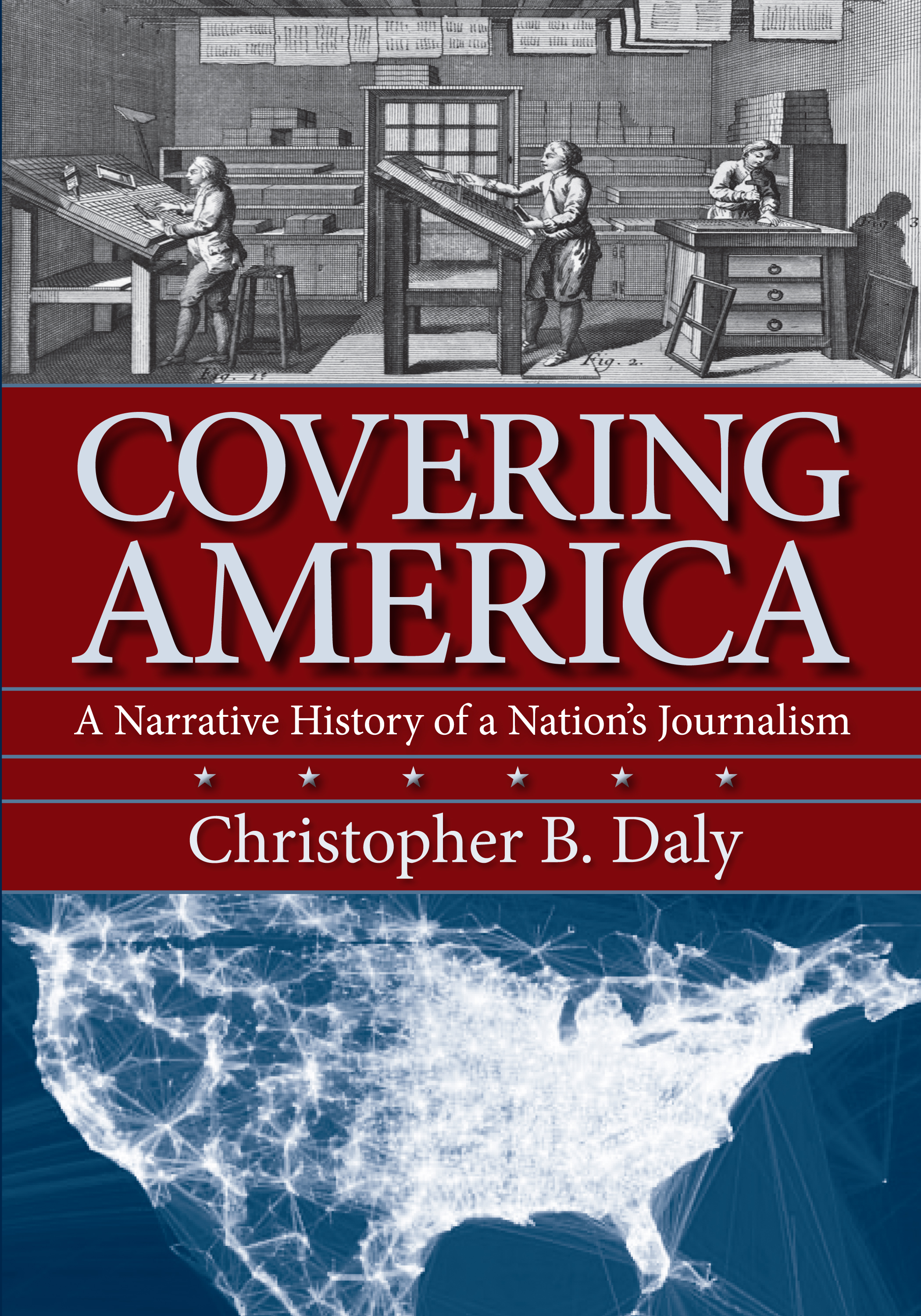
My book Covering America drew an insanely enthusiastic review in the Providence Journal on Sunday. The timing reminds me: IMHO, this book would make a great holiday gift for anyone who cares about American journalism, American history, American politics, the tech revolution in news, Jefferson/Lincoln/FDR, WWI/WWI/Vietnam, and a whole bunch of other stuff.

Have I left anyone out?

Leave a comment

Filed under Covering America, history, Journalism, journalism history

Newsweek: R.I.P.

By Christopher B. Daly 

Another legacy news institution dies. The latest print publication to fail to make the transition to a digital ecology is Newsweek — a fixture on the American scene since its founding in 1933. After decades as a profitable division of the Washington Post Co., the weekly news magazine peaked at a paid circulation of just over 3.1 million a week, in 2001. Less than a decade later, with circulation plummeting and debts mounting, the Post company sold Newsweek for one dollar, just to try to stop the bleeding, and the magazine merged with the Daily Beast. 


Newsweek was important as an alternative to the Luce empire’s older and bigger TIME magazine in the weekly news-magazine market, and it did some fine reporting and photography over the years. 

Technically, Newsweek is ceasing to publish in print. It will go online-only and be folded into the Daily Beast website, founded and run by Tina Brown.

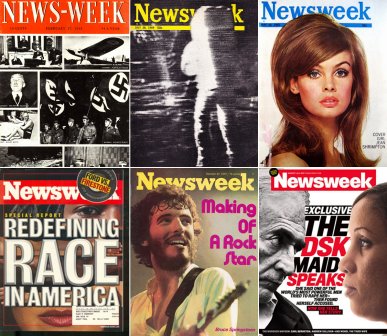
Here’s a collection of Newsweek covers from today’s Daily Beast site.


p.s. I hate writing these obits for legacy media, and I hope this is the last. — CBD


Leave a comment

Filed under Journalism, journalism history

Journalism history: a personal note

By Christopher B. Daly 

The Times has a piece today in the Science section about the downside of not drinking alcohol in certain professions. Speaking for the news business, I would say that would be a definite drawback — or at least it was, back in the 1970s, when I was breaking in. Without taking a position on the merits of drinking, I will say I was taken back by the photo that illustrates today’s Times piece: it shows the Pig ‘N’ Whistle, a bar on W. 48th St. in Manhattan, just south of Rockefeller Center. That’s the place where I and my colleagues at The Associated Press (50 Rock) went to drink (ahem, after work), joined by our colleagues from NBC News (30 Rock) and the various media over on 6th Ave.

It’s good to know that “the Pig” is still in business, quenching journalists’ thirsts.


Leave a comment

Filed under Journalism, journalism history

Collecting journalism history

By Christopher B. Daly 

For those who want to understand America’s history through the legacy of printed materials, there is a terrific new exhibit at the Grolier Club, a leading institution for bibliophiles (who knew?), located at 47 E60th St. in Manhattan. According to the NYTimes, the exhibit shows the importance of collecting historical materials while history is being made, rather than waiting and hoping to find them later.

The exhibit, titled “In Pursuit of a Vision,” features some of the gems from the estimable American Antiquarian Society.

The AAS (which is not as stuffy as its name might imply) is located in Worcester, Mass., and it serves as the greatest repository of original newspapers, magazines and ephemera from early America through the 19th century. It was founded by Isaiah Thomas, a Revolutionary War-era printer/editor who put out a paper called The Massachusetts Spy. When he thought the Redcoats might be about to shut him down, he fled from Boston to Worcester, and he brought with him his own collection of newspapers, which formed the core of the AAS collection.


Leave a comment

Filed under Journalism, journalism history, publishing

Clay Shirky on the journalism business model

By Christopher B. Daly

The new issue of the Columbia Journalism Review has a terrific piece by Clay Shirky about the current efforts to rescue journalism by finding a new business model for the news business. (Don’t get discouraged by the misleading — confusing? — headline.)

Shirky, who teaches about these issues at NYU’s Carter Institute of Journalism, compresses a lot of the points I made in my recent book, Covering America, in chapter 3 (about the rise of the Penny Press) and in chapter 13 (about the collapse of the “dual revenue stream” that financed journalism from the 1830s to the 1990s). In my book, the final chapter adds some recent success stories, showing how some digital natives are making a go of it in the new environment — doing great, serious journalism and, importantly, making money at the same time.

In my view, too many of us suffer from the historical fallacy of thinking that the present is “normal” and reflects the way things have always been. A lot of people, especially those over 35 or so, operate on the assumption that it is normal for journalism to be practiced by full-time employees of large, profitable corporations. In fact, by taking the long view, as I do in my book, it can be seen that the way journalism was practiced in the late 20th Century was not inevitable, not necessary, and certainly not permanent. It is already fading into the past as a distinct historical period, giving way to a present in which people are still figuring out the future.

1 Comment

Filed under business, Covering America, Journalism, journalism history

Journalism issues galore

By Christopher B. Daly

Lots to catch up with this Labor Day:

–A very thoughtful piece by Sasha Issenberg from the Sunday Timesabout a possible skills gap between political reporters and political operatives.

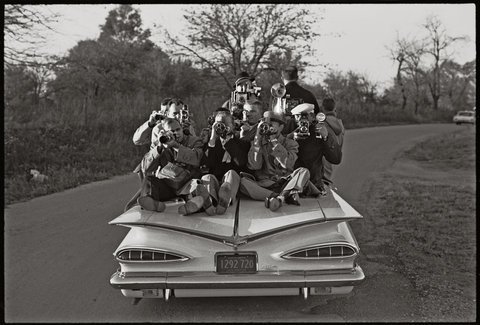
Nice slideshow goes with it, including this photo from the 1960 Kennedy campaign:

Paul Schutzer/Time & Life Pictures — Getty Images

Paul Schutzer/Time & Life Pictures — Getty Images


I wonder what Nate Silver thinks of all this?


–A new David Carr column about Reddit. (which may be the ugliest site on the Web.)


–A look at the top lawyer at Twitter, who makes the day-to-day calls on freedom of speech.


–A fascinating peek at how the New Orleans Times-Picayune is tip-toeing across the scary rope bridge to the future. Here’s a prior post.


Leave a comment

Filed under Journalism, journalism history, Politics

Mal Browne, a great journalist, dies at 81

By Christopher B. Daly 

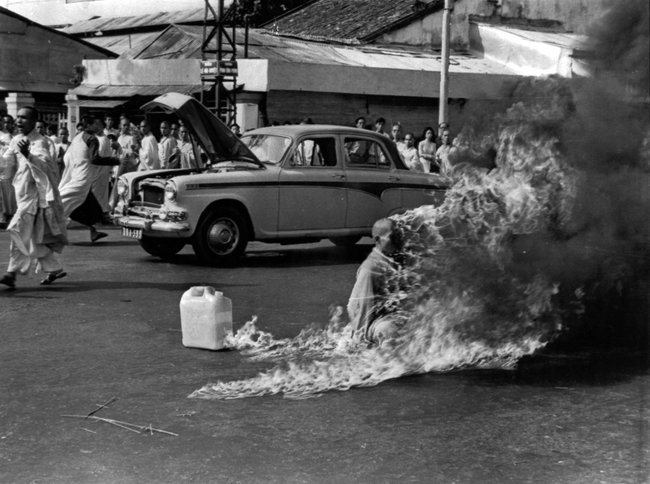
Today brings sad news: the death of Mal Browne, a real original and a great journalist. Probably best known for his famous photograph of a Buddhist monk burning himself to death in protest against the government in South Vietnam, Browne was also a terrific reporter and writer.

You can read the obituary by The Associated Press, Browne’s employer when he was in South Vietnam in the 1960s, in the NYTimes, which was his eventual employer. (Browne, who studied chemistry before becoming a reporter, later became a war reporter and science writer at the Times.)

Also not to be missed is Browne’s memoir, Muddy Boots and Red Socks: A War Reporter’s Life.

Browne also has some really worthwhile insights in this terrific PBS video.

You can also read about Browne in these excerpts from my book, Covering America.

In the early 1960s Halberstam was the only full-time reporter working in Vietnam for a U.S. newspaper, and since that paper was the Times, he was destined to become the most visible journalist in the country. But Halberstam was not the only American correspondent based in Saigon. There was a small contingent of other journalists, who were followed later by hundreds of reporters, photographers, television cameramen, producers, columnists, feature writers, spies, adventurers, and poseurs, along with brigades of military “public information officers” whose mission was the care and feeding of the vast and hungry press corps. But all that was still far off. In the early 1960s the Saigon press corps could have easily fit into one helicopter. They had a lot in common, this band of friendly rivals; as was typical of the era, they were all white and all male, and no one spoke Vietnamese.


Among the news agencies with a presence in Vietnam, two of the most important, because of the enormous size of their audiences, were the U.S.-based wire services the Associated Press and United Press International. The AP bureau was led by Malcolm Browne, who was raised a Quaker and began a career as a chemist but then was drafted into the army in 1956 and ended up driving tanks in Korea. He came home and worked for several newspapers in the States (including the Record in Middletown, New York, where he briefly worked alongside a young reporter named Hunter S. Thompson) before joining the AP and getting his wish—to become a foreign correspondent—in his early thirties. Tall, thin, and pensive, Browne might have been mistaken for a professor if not for his wide array of sources and the bright red socks he always wore. He shared a cramped office with Horst Faas, AP’s Saigon photo editor (who insisted that all AP reporters in the country carry cameras, just in case), and a young AP reporter from New Zealand, Peter Arnett. Fearless and relentless, Arnett became a legend in Vietnam. “He stayed longer, took more chances, and wrote more words read by more people than any war correspondent in any war in history,” notes one observer.9 At UPI, the AP’s major competitor, the bureau consisted of a single correspondent, Neil Sheehan, who had worked his way out of the old factory town of Holyoke, Massachusetts, and into Harvard, graduating three years after Halberstam. He then joined the army, went to Korea, and worked at Stars and Stripes before joining UPI. Like his rival Browne at AP, Sheehan was young and hungry. Nobody had ever heard of either reporter in 1962, but they would before it was all over. . .


As these correspondents went about their reporting in the early 1960s, they were on a fairly long leash. Given the state of communications, they were often hard to reach, so if their editors in New York had some brilliant idea, they might as well forget it, because by the time it arrived in Saigon, the reporter would probably be off somewhere else covering the action. Reporters thus had the happy burden of making up their own assignments. They also had pretty much the run of South Vietnam and could almost always get to the scene of any action. Sometimes the war would take place right in front of them, even in the middle of Saigon. In a guerrilla war, reporters soon realized, the battle was everywhere and nowhere. There was certainly no “front line,” as there had been since time immemorial. When fighting did break out, the U.S. military usually obliged with transportation, putting reporters into any available space aboard jeeps, armored vehicles, helicopters, ships, and jets. At other times, reporters could hire a car and driver or literally take a taxi to cover the news.


On the whole, there was remarkably little censorship in Vietnam. Officially, there was no military censorship in the traditional sense, although the United States did issue “guidelines” to all correspondents that covered the basics. To be sure, first Kennedy then Lyndon Johnson tried to have individual reporters fired, and they counted on the South Vietnamese government to expel any real trouble-makers. Especially in the early years, the Diem regime made life miserable for correspondents, particularly if their reporting was critical of Diem’s government. But the fact was that the United States, as a guest in an undeclared war, fighting for freedom against totalitarian communism, was in a bind and could not impose official censorship.


As a result, the Pentagon brass and officials in the Kennedy and Johnson administrations felt the need to try to sell the war, using the techniques of public relations and news management. One approach involved the selective withholding of information. Until 1967, for example, American officials did not provide a total count of U.S. troops killed and missing. At the same time, officials made a great effort to encourage reporters, especially in the early years, to “get on the team,” as generations of journalists had done in previous wars. They also borrowed techniques from public relations to try to convey the message that the United States was winning and the enemy was losing. Halberstam, for one, had seen enough of the war firsthand so that he was not buying what they were selling. Neither were most of the other young resident correspondents.


Stories revealing the conflict between the military and the press abound. To take one notorious case, in December 1961 the U.S. aircraft carrier Core docked at the foot of Tu Do Street in Saigon, towering over the nearby buildings. Plainly visible on the deck were dozens of olive drab Sikorsky H-21 helicopters. Mal Browne was among a half-dozen reporters who wanted to know what was going on, since the United States was officially only advising South Vietnam, not arming it. The reporters went to the U.S. Information Service office and asked the director about the massive ship.


“Aircraft carrier?” he asked. “What aircraft carrier? I don’t see any aircraft carrier.”

VC spies, of course, managed to see the ship and even record the serial numbers of the aircraft as they were unloaded.


. . .As the reporters in the Saigon press corps could see, the strategy was not working. More evidence came in 1963 in a series of events known as “the Buddhist crisis.” The crisis began in May, when Diem traveled to Hue to celebrate the twenty-fifth anniversary of his brother’s elevation to the Catholic hierarchy. For the occasion, the streets of Hue were festooned with flags, both the Vietnamese national flag and the Vatican flag. The problem was that a majority of Vietnam’s people (70 to 80 percent) were Buddhists. A few days later the Buddhists of Hue were celebrating the 2,587th birthday of the Buddha, and they wanted to fly their own flag. When the Diem government said no, the Buddhists took to the streets. Someone threw a grenade, and the conflict rapidly escalated. Monks began to venture out from their pagodas, and they quickly spread the protests to Saigon and other cities. The Diem regime embarked on a series of clumsy crackdowns, which only made matters worse. Halberstam pounced on the story and pushed it onto the front page of the New York Times.


In the White House, President Kennedy, an avid reader of the Times, was still learning about Vietnam. After reading Halberstam’s report about the Buddhists, Kennedy asked an aide: “Who are these people? Why didn’t we know about them before?”

On June 11, 1963, the Buddhist monks of Vietnam took center stage. For weeks as the crisis built, the AP’s Mal Browne had been filing stories, and he had spent a lot of time in pagodas, interviewing monks and getting a good understanding of their cause. On the night of June 10 Browne got a call from a contact among the monks, telling him there would be an important development the next morning at a small Saigon pagoda. Several Western correspondents got the same tip, but only a few showed up, including Browne and, later, Halberstam. Only Browne, under the AP photo policy, was carrying a camera. After a while, a seventy- three-year-old Buddhist monk, Thich Quang Duc, went to a busy Saigon intersection and sat down in the lotus position, ringed by hundreds of other monks. Several monks doused him with gasoline, then he struck a match. As the flames rose, the monk never flinched. Browne kept working. “Numb with shock,” Browne later recalled, “I shot roll after roll of film, focusing and adjusting exposures mechanically and unconsciously, almost as an athlete chews gum to relieve stress. Trying hard not to perceive what I was witnessing I found myself thinking: ‘The sun is bright and the subject is self-illuminated, so f16 at 125th of a second should be right.’ But I couldn’t close out the smell.” Browne probably could not have intervened once the match was lit, even if he had been prepared. The hundreds of monks would have stopped him.

This incident, like much else that correspondents saw in Vietnam, dramatizes a problem that might be called the Journalist’s Dilemma. For obvious reasons, journalists often witness tragedies and catastrophes. In the course of reporting or shooting photos, they are sometimes confronted by an apparent conflict between continuing to work or stopping to render assistance. Should the journalist step out of the traditional role of observing news and try to help? If the journalist intervenes to prevent a tragedy or to offer aid and comfort to victims, does he or she thus enter the story as a historical actor and give up any claim to practicing journalism (and along with it, perhaps, any First Amendment rights)? Close examination of many cases reveals that the Journalist’s Dilemma is often an illusion. In most instances, the action unfolds so quickly that there is no time for decision making, while in others, the journalist is in fact able to observe the news, record it, and still rise to at least a basic level of humanitarian action. Still, it is in the nature of a dilemma to have no ultimate solution.


Browne’s photos, which were flashed worldwide, dominated the coverage and reached the desk of President Kennedy, who was clearly upset by what he saw. The president turned to a visitor and said, “We’re going to have to do something about that regime.”


While Kennedy pondered his relations with Diem and the Buddhists expanded their campaign against the government, Browne and Halberstam and the rest of the reporters in Saigon pressed on. . .


. . . By the mid-1960s television had become nearly universal in U.S. homes, and it was that change that made Vietnam the first “living room war.” Television also shaped the thinking of policymakers, including President Johnson, who had three TV sets installed in the Oval Office so he could keep an eye on the network news reports, which were reaching a combined audience of some 35 million Americans every evening. From the correspondent’s point of view, the technology of television was still crude. Mal Browne, after leaving the AP, worked for a few years for ABC Television and continued to cover Vietnam. Although his photos of the burning monk became a famous symbol of the war, Browne never considered himself a photographer, and he quickly came to appreciate the television cameramen, the guys who humped around the heavy equipment that made it possible to film the fighting in the field. He wrote: “A network of electric umbilical cords connected the Auricon to the soundman and his recording controls, and to a microphone clutched in the hand of the correspondent. Joined together as a cursed trinity, a television crew would leap together from an alighting helicopter and run in cadence through ground fire like three monkeys holding each other’s tails.”


Thanks, Mal.


Leave a comment

Filed under Journalism, journalism history

1968: A Hinge in History

[I recently finished reading a chunk of the new biography of Walter Cronkite that deals with the events of 1968. It put me in mind of the following essay, which I wrote for my book, Covering America, but had to cut for reasons of space. Enjoy.]


EARTH RISE, 1968.

This image was described in The Last Whole Earth Catalog as: “The famous Apollo 8 picture of Earthrise of the moon that established our planetary facthood and beauty and rareness (dry moon, barren space) and began to bend human consciousness.”

(photo by NASA)


1968: A HINGE IN HISTORY

By Christopher B. Daly

As the year 1968 began, the Beatles’ song from the year before was still playing on record-players and on radios:

I read the news today, oh boy…

 And what a flashing kaleidoscope of news it was. By turns amazing, shocking, depressing, inspiring, enraging, the news in 1968 seemed to have entered some uncharted realm. Things started normally enough. Americans woke on the first day of the year to read a UPI story reporting that the Census Bureau put the U.S. population at just over 200 million. During the first few days of January, they could also read about the exploits of the dashing O.J. Simpson, who rushed USC to victory in the Rose Bowl over Indiana. Newsweek reported that its own poll showed Republicans favoring Richard Nixon over his GOP rivals at the start of that presidential election year. Gary, Indiana, got a new “Negro” mayor, Richard Hatcher, whose first act was to appoint a white chief of police and order him to crack down on crime.

Then there was the news from Vietnam, all of it bad. During what was supposed to be a new year’s truce, Vietcong troops launched a sneak attack just a few minutes after midnight and “savagely mauled” ARVN forces, killing 19. The next day, the extent of the assault became clearer in a Times front-page story:

Vietcong guerrillas, attacking in regimental force, killed 26 American  infantrymen and wounded 111 early today in rubber plantation country near  Tayninh, 50 miles northwest of Saigon, United States officers said.

According to a Saigon newspaper, American psy-ops forces were blanketing Vietnam with propaganda leaflets. The only problem: six years into the war, Americans still had not learned to speak the language. The level of Vietnamese used in the leaflets ranged from “consistently awful” to “unintelligible.” From Hanoi came an AP report that North Vietnam had shot down 1,063 American warplanes in the previous year.  Trying to sum up the overall situation in a front-page piece on Jan. 1, Times correspondent Johnny Apple offered a “thumb-sucker”[i] that began this way:

SAIGON, South Vietnam, Dec. 31 — American officials at almost all  levels, both in Saigon and in the provinces, say they are under steadily increasing pressure from Washington to produce convincing evidence of progress, especially by the South Vietnamese….

So many portents and signals, and yet so much noise too. During the first week of 1968, readers could also find an AP story under the headline:

DUTY LIFTED ON BAGPIPES

Yes, President Johnson signed a bill lifting the 15% tax, but only after having certified that there “is no known commercial production of bagpipes in the United States.” (Who knew?) The Times reported that cigarette sales were up 7.5 percent, to 46.6 billion smokes, and the paper documented the new year’s social news, noting that 29 debutantes had been “presented” at the Waldorf Astoria. The Times also took note of the fashion trend of the era, the miniskirt, and asked the classic question during periods when the hemline is up: “Will It Go Down?” The paper waffled and said only that the issue was a “cliff-hanger” heading into 1968.

Readers would have also found the following item in the Times on the first day of the year, a sort of all-purpose headline that the newspaper could have kept on file for use through the year:

TOP OFFICIALS FRET OVER NATION’S ILLS

There was plenty to fret about: the problems of crime, housing, violence, race, and war were not getting any better. As the year continued, the headlines from the homefront kept growing larger and larger. At the end of February, the Kerner Commission weighed in on the previous year’s urban riots. “Our nation is moving toward two societies, one black, one white – separate and unequal,” the report warned, adding that the news media were part of the problem because “the media report and write from the standpoint of a white man’s world.”[ii] And, incidentally, the report pointed out that it was high time the news media hired some black reporters. Within weeks, more shocks: The U.S. abandoned the gold standard in March.

Then, in April, the news was suddenly wall-to-wall. In the estimation of the Times’ managing editor, Arthur Gelb, the first week of April 1968 was “the most crowded week of news since World War II.”[iii] It actually began on March 31. The president requested airtime on the TV networks to discuss the war. The advance text did not include the finishing lines, which were written at the last minute by LBJ himself. So, no one was prepared when Johnson suddenly announced: “… I shall not seek, and I will not accept, the nomination of my party for another term as your president.” A political earthquake, followed days later by the bulletins from Memphis: Martin Luther King Jr. shot – assassinated, really, almost like JFK. In no time, the fury caused by King’s death erupted in the streets – Newark, Baltimore, Chicago, Louisville, Washington, D.C., even on military bases in Vietnam

That spring, the whole world seemed to be freaking out. Students at Columbia, led by an SDS radical named Mark Rudd, took over buildings and demanded an end to Columbia’s involvement in the war and its imperial expansion into the surrounding neighborhood. A new show called “Laugh-In” – which featured drug jokes, a pop-art esthetic, non-sequiturs, and nonsense (“Sock it to me!”) – became the top hit on TV. In France, students and workers staged an uprising demanding change. The hottest show on Broadway was called “Hair,” and it had actual naked people on stage, along with some catchy anthem-melodies. Then, June 5: Bobby Kennedy won the Democratic primary in California and was making his way through a crowded hotel in L.A. when a lone gunman shot him, practically point-blank. The next day, RFK died, too. Another national funeral, another round of anguished self-examination. Were Americans “the people of the gun”?

The news kept coming. In late July, Pope Paul VI issued an encyclical condemning birth control. What a lot people heard was: sex is only for making babies. Thou shalt not have sex for the hell of it. (Well, screw that!) Within two weeks, the Republicans held their national political convention in Miami Beach, giving every possible signal that they were the party of straight, white, square people who accept hierarchy, who appreciate order, and who have no intention of turning the country over to a bunch of dirty hippies and crazy radicals. At the end of the month, the Democrats met in Chicago, and they staged a brawl inside the convention center and outside. Two gifted provocateurs, Abbie Hoffman and Jerry Rubin, told the world that their Yippie Party had big plans:

            We will burn Chicago to the ground!

We will fuck on the beaches!

We demand the Politics of Ecstasy!

Acid for all!

Abandon the creeping meatball!

YIPPIE![iv]


Provoked by such tactics and spoiling for a fight to begin with, the Chicago police erupted in a frenzy of beatings, letting the goddamn hippies know who was boss in Chicago. While the whole world watched, cops beat the kids – and they beat a few journalists, too, for good measure. A few weeks later, it was time to question another American tradition, the Miss America beauty pageant. Demanding an end to their “enslavement,” a group of radical feminists picketed the pageant in Atlantic City, setting up a “freedom trash can” on the Boardwalk which they filled with girdles, bras, high-heeled shoes, hair curlers and other things that pinched or demeaned women. The media went berserk, even inventing the myth that women took off their bras and burned them. In October, at the Olympics in Mexico City, two U.S. sprinters, Tommie Smith and John Carlos, went to the stand to get their medals and raised their gloved fists in a Black Power salute. Again, the whole world was watching. On Nov. 5, Richard Nixon and Spiro Agnew barely won the White House (43.4% for them, 42.7% for Humphrey, and 13.5% for George Wallace), but with less than 44 percent of the popular vote they got 100 percent of the power of the Executive Branch. In late November, the Beatles released another album – one with no apparent name, just a white cover – that featured a song called “Revolution.” Did they mean it?

Finally, just at the end of the year, the space program came through with some good news. Three astronauts managed to fly into space, get into orbit around the moon, see the dark side, and make it back home safe and sound. It had been quite a year.

 0   0   0   0

            During 1968, a year of miracles and horrors, something else was happening too. It never really qualified as “news,” but maybe it should have. Here are there, in twos and threes, millions of people, most of them under 30, were getting high for the first time, usually by smoking marijuana, then maybe some other psychotropic drug like hashish, mescaline, or LSD. Most of them were never quite the same afterward. Once they stepped through the “doors of perception” by deliberately altering their consciousness, they were not going to return to the “straight” world of alienated work, endless consumption, striving, conflict, and domination. Why should they? Why do that when life was a magical mystery tour, a carnival, a dream? Millions heard the call from Lennon and McCartney – “I’d love to turn you on” – and nodded. One result was a new divide in America, which had plenty of fault lines already: now the populace was self-dividing between hip and straight. These two cultures began to gawk at one another, even as they drifted further and further apart. The hip young people wanted nothing to do with the War in Vietnam, of course, but that was just the beginning. They wanted nothing to do with the whole world of hierarchy, power, Wall Street, thousand-year-old churches – basically, they rejected the idea that anyone should tell them what to do. They wanted a revolution, and it began with freeing their minds. They wrote about all manner of cosmic riddles and existential jokes: What color is time? What flavor is your hair? You ask, is the government too big? I wonder: Is the government real?

                        You tell me it’s the insti-tu-tion,

                        Well, you know,

                        You better free your mind instead…[v]

 One place to find the new culture was in music. Suddenly, the radio mattered, more than ever. New songs by Dylan or the Beatles were stunning, stopping people in their tracks. Pop music was not just silly love songs any more. Now, it could be about anything: it could be plastecine porters with looking-glass ties, or an opera about a blind boy who’s a wizard at pin-ball, or about the dark side of the moon. It could be made by men and women, it could be a sitar-player from India or an ancient black bluesman from the Delta, it could be fluffy and dreamy or it could be dark and scary, it could be the most fantastic, improvisational hodge-podge you could imagine.

Johnny’s in the basement,

mixin’ up the medicine,

I’m on the pavement,

thinking ‘bout the government…[vi]


(Who’s Johnny? What’s the government up to? Who knows? Who cares?) The thing was to open your mind, to seek, and to question everything. Music led the way.

In 1968, this music got a major new partner, in the form of a new magazine called Rolling Stone. It had been founded the year before in San Francisco, by a Berkeley dropout named Jann Wenner, but in 1968, it really began to take off, gaining national circulation – in part on the strength of young vagabonds who criss-crossed the country, following rock bands, going to concerts, always heading further down those long, long roads. They carried Rolling Stone with them, from Berkeley to Boston and from Austin to Madison, sharing it with friends, turning them on to a new voice that was right on their wavelength. Rolling Stone had caught the wave of hip culture, youth culture, and rock’n’roll. It was not the first “alternative” paper, and it was far from the only one; it was not even the only one covering the music scene, but Rolling Stone was one of a kind. It was not spying on the scene like Time or Newsweek, it was part of the scene. Like the music itself, each new issue of Rolling Stone was something of an adventure. Who would be on the cover? What taboo might fall? Whose weird new writing style might emerge from those acres of prose?

Out with the old.


[i] When a reporter goes into analysis mode – as for a Sunday “think piece” or a year-end summing-up piece – the writer is said to be preparing a “thumb-sucker.”

[ii] See Kerner Commission report, chapter 15, “The News Media and the Disorders.” Quote appears on page 366 in the New York Times edition, which includes an Introduction by Tom Wicker.

[iii] Arthur Gelb, City Room, pg. 480.

[iv] Quoted in Perlstein, pg. 291. To “abandon the creeping meatball” is, of course, nonsense, but it has a nice ring to it.

[v] Lennon/McCartney, Revolution 1, The Beatles (“The White Album”), 1968.

[vi] Bob Dylan, “Subterranean Homesick Blues,” 1965.

Leave a comment

Filed under history, Journalism, journalism history

Not to be missed

By Christopher B. Daly

A few recent notable pieces:

Ken Doctor at Nieman Journalism Lab summarizes some favorable trends in the business of news. Woo-hoo.

Vanity Fair follows the money and takes a look at Mitt Romney’s decision to off-shore part of his personal finances.

Vanity Fair scores again with a vivid remembrance of the late Marie Colvin, who was a real reporter.

Leave a comment

Filed under Journalism, journalism history, Politics