Category Archives: history

Review of “Covering America” by J&MC Quarterly

I am posting this enthusiastic review in the scholarly journal Journalism & Mass Communication Quarterly because the journal charges a lot for access.

Book Review:

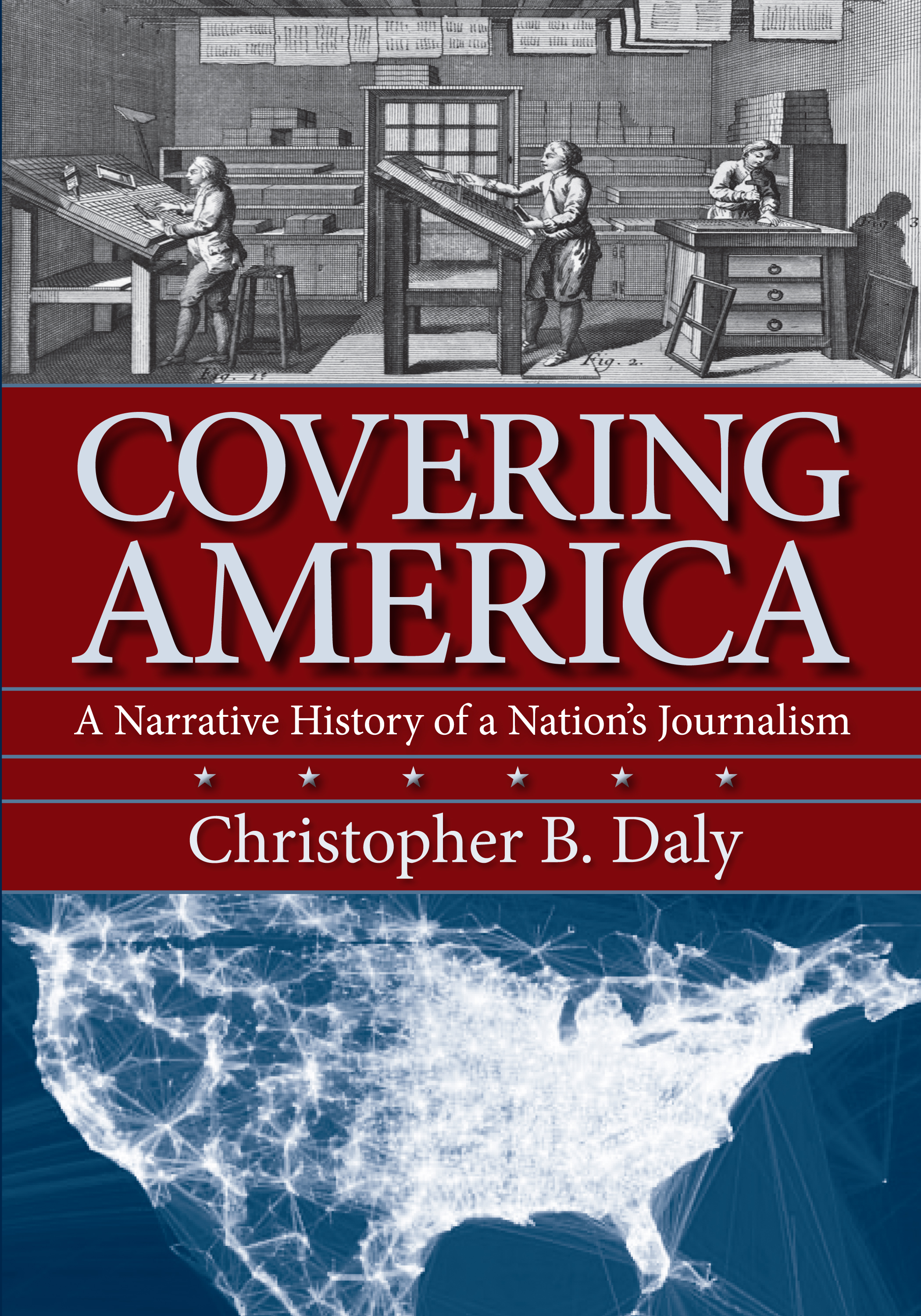
CA cover final 2Covering America: A Narrative History of a Nation’s Journalism

Reviewed by Giovanna Dell’Orto (University of Minnesota, Minneapolis, MN, USA)


This engrossing, wide-ranging history of American journalism from

the colonial era to the present makes a tremendous contribution to

mass communication education by being that rarest kind of

textbook—one that reads like literature instead of CliffsNotes.

Covering all the bases, from the Zenger trial to the Huffington Post,

and with excursions into much lesser known histories across news

media, Covering America makes perfect and enjoyable mandatory

reading for undergraduate and graduate classes in journalism history.

Christopher Daly, an associate professor at Boston University’s

Journalism Department, approaches this monumental historical

survey with the reportorial flair appropriate for a former Associated

Press and Washington Post journalist, which sets it apart from more

pedagogical classics like Emery, Emery, and Roberts’s The Press

and America. Literally from the first line, Daly grabs the reader with

striking, cinematic details that make the past come alive. Page 1

opens with a teenage Benjamin Franklin skulking along the dark

streets of eighteenth-century Boston, trying to put one over his

brother in order to start his writing career—and the readers are

hooked, be they scholars who have been teaching colonial journalism

for years, like this reviewer, or freshmen who might have never heard

of Franklin.

Similarly intimate visual vignettes are peppered throughout the next

nearly five hundred pages, including an iconic Ed Murrow “sitting on a

bench in a White House hallway, chain-smoking Camel cigarettes” as

FDR decides how to react to just-received news of Pearl Harbor. At

the other end of the press–government relationship spectrum, we are

treated to the image of President Nixon dancing at the White House

wedding of his daughter at the very same moment when “the

typesetters and pressmen at the [New York] Times started printing”

the Pentagon Papers stories.

Most helpful for classroom use, in all these cases and across the

volume, Daly assumes no prior historical knowledge on the readers’

part, and retells the basics of U.S. history through the eyes of the

journalists and media owners who put its first draft in front of the

American people. Most chapters even conclude with short summaries

of how their main characters—from Franklin to David Halberstam—

ended up, much like the end titles in documentaries, so that no gaps

are left in a remarkably comprehensive story.

Some journalism historians might object that this volume skates very

close to the “Great Men” tradition. The narrative focus is unabashedly

on the major figures that made journalism what it is (and yes, for the

vast majority of the three hundred years covered it was mostly white

men). As Daly puts it repeatedly, social, political, economic, and

technological developments influenced the shape of journalism, but

for the major shifts to happen, “somebody had to do something.”

Since this book’s main audience is not the specialist, focusing on the

adventures of those various “somebodies” at the expense of scholarly

interpretative controversy seems an effective trade-off for terrific

storytelling that gets the major points across memorably.

In addition, the book does make two fundamental conceptual

arguments that give it depth and a unifying thread. Daly argues that

journalism has been central to the history of the country. From the

early Republic Party press all the way to today’s blogs (which, as

Daly notes, are not that different), the media history narrated in the

volume shows how journalism helped shape American life.

Sometimes, it has done so with nefarious effects, but also with a

“long tradition of service to humanity.” That service, however, has

recurrently been imperiled by the practice of journalism as a

business.

The most heartfelt, compelling question raised is the strange bed

fellowship of journalism and money. At the end of chapter 12, which

focuses on the Pentagon Papers and Watergate and is perhaps the

book’s best, Daly reflects on what he feels was the “apotheosis” of

the raison d’être for independent, aggressive journalism: “Build a big

enough audience so that you can make enough money to tell anyone

to go to hell. The risk of such an attitude is sounding arrogant, but

without it there is no real journalism.” But money, as the book shows,

is not always a journalist’s friend—not when it has meant

acquiescence to governmental or corporate interests, not when it is

intended to fatten shareholders’ wallets instead of newsgathering

operations, and not when it is made by pandering to the evil twin of

mass interest, the enduring prurient passion for celebrity scandals

and gore.

For an overview book, the level of detail is astounding, especially

since it does not detract from the narrative flow. With illuminating

forays into law, technology, and policy making, readers are

introduced to pamphleteers, editors, reporters, columnists, and

broadcasters, from Thomas Paine to Matt Drudge by way of Horace

Greeley, Ida B. Wells, Adolph Ochs, Harry Luce, and less obvious

figures, such as Harold Ross and Walter Winchell. From the smelly

printing equipment in colonial shops to the Supreme Court justices’

opinions and the account behind the iconic napalm-burned

Vietnamese girl photograph, there are no major stories left untold.

Striking quotes straight from the media—the Liberator’s opening

editorial, Ernie Pyle’s Captain Waskow’s tribute, Earl Caldwell’s

report of the King assassination—enrich the atmospheric narrative.

Until, that is, the digital era: The one major criticism of this volume is

that its treatment of what Daly calls the last major period of journalism

history, the digital revolution from the mid-1990s onward, is

unsatisfactorily perfunctory. The entire digital era gets a twenty-page

chapter that does not even mention such critical developments as the

rise of fake news shows or shattering scandals such as the Jayson

Blair affair, which is hinted at in the conclusion.

Writing what amounts to a history of the present is certainly difficult,

but the end of the book feels abrupt, and the first decade of the

twenty-first century deserves the same lively, in-depth study as the

other eras so masterfully narrated. Despite that shortcoming, this

volume is a top-choice main history textbook and reference work for

journalism educators, researchers, and students at all levels.
Leave a comment

Filed under Covering America, history, Journalism, journalism history

Notice of “Covering America”

By Christopher B. Daly 

A shout-out to Rutgers historian David Greenberg. In a book review in the current issue of the Journal of American History, Greenberg more or less dissected a new book called News for All the People. Then, unexpectedly, he swerved into a nice mention of my book:

Historians of journalism seeking a new synthesis will be better served by Christopher B. Daly’s Covering America: A Narrative History of a Nation’s Journalism (2012), which does not emphasize racial oppression quite as much yet does debunk cherished myths of American journalism history while presenting a coherent narrative account.

1.cover

1 Comment

Filed under Covering America, history, Journalism, journalism history

NSA Leak: Is Greenwald a journalist or activist? (Does it matter?)

By Christopher B. Daly

In his NYTimes column today, David Carr raises a somewhat misleading question about Glenn Greenwald, who broke the story about the illegal, secret NSA spying on innocent Americans. Carr poses the question: is Greenwald a journalist or an activist?

I think that’s the wrong question, for several reasons.

First, as a historian of journalism, I start with looking at the history of American journalism. For more than a century, back in the early days of newspapers in Colonial America and during the first few decades of the early national period, there was no such thing as “objectivity” in the newspaper business, and there were no full-time reporters.

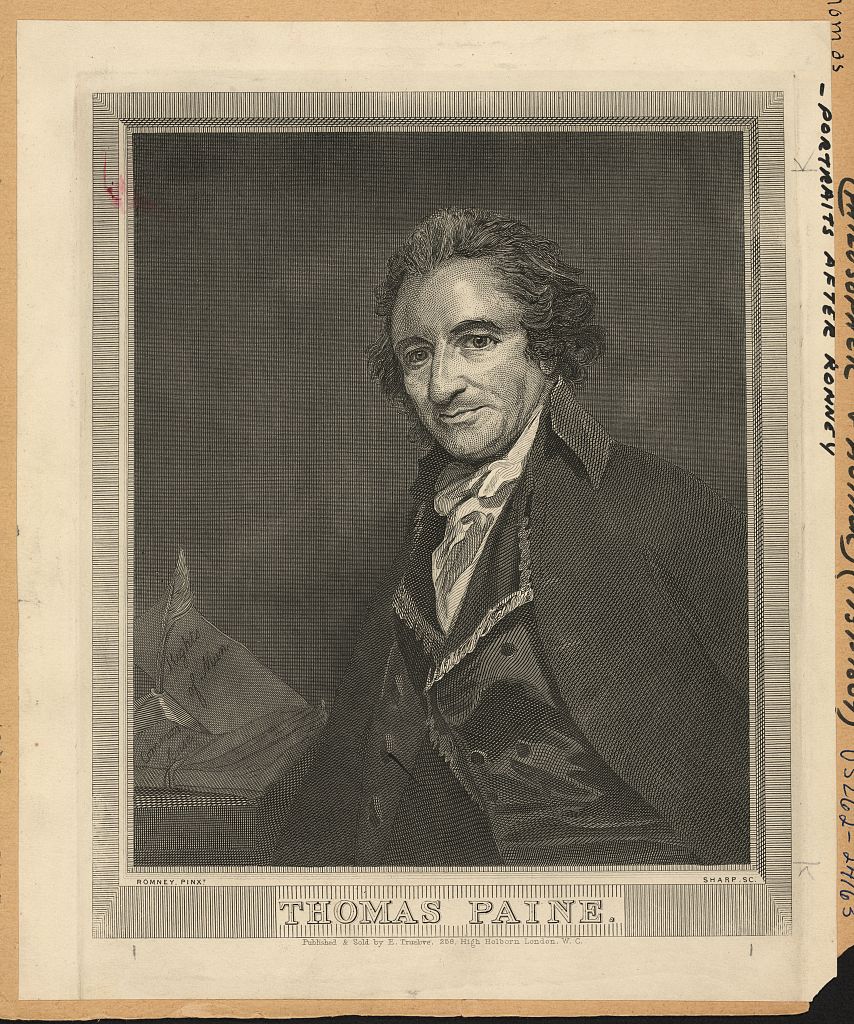
Thomas Paine (Library of Congress)

Thomas Paine (Library of Congress)

That is, the entire industry was based on content created by people with an ax to grind. Often, they were political activists (like Sam Adams or Tom Paine) or surrogates for office-holders (like James Callender).

The idea that a journalist should be defined as a full-time, professional fact-gatherer who has no political allegiances is not only unrealistic, but it is already a historical artifact. If that definition of a journalist ever made sense, it was during a period (the mid and late 20th century) that is now over. Today, the term “journalist” embraces all sorts of folks with different business models, different priorities, and different media. So be it.

Glenn Greenwald is actually a case in point for this new media landscape. He is not just a reporter. He is a lawyer-litigator, an author, a columnist, a blogger, and an advocate. He is also gay and living in a DOMA-induced exile in Brazil. In all he does, he appears to have strong convictions (or biases, if you prefer). He makes no bones about his allegiances. In a sense, he is the compleat modern journalist — global, multi-platform, high-impact.

I don’t agree with him on everything, but I value what he does. And I appreciate knowing where he’s coming from — unlike some journalists who actually have an agenda but deny it.


1 Comment

Filed under history, journalism history, media, Uncategorized

NYTimes videos revisit recent past

By Christopher B. Daly 

Without much fanfare, the New York Times has been engaging in an interesting experiment that revisiting old news stories to address the ageless qusetion: “Oh, yeah . . . whatever happened to that?”

Rev. Al, back in the day.

Rev. Al, back in the day.

The service is a partnership between the Times video section and a private non-profit called “RetroReport.” (It’s not that easy to find on the Times site, but here is the link to the page that lists all seven such reports done to date.) According to the partner’s website, RetroReport’s mission is to produce video follow-ups to big stories from a decade or more ago that dropped off the radar of the news business. Recent examples include revisiting the Tawana Brawley case, the Biosphere 2 experiment, and the Y2K hubbub. The folks at RetroReport seem to be a mix of young documentarians and some heavy-hitting alumni of top-shelf operations like 60 Minutes, the Ken Burns films, and PBS.

This is a potentially great idea that brings the Times into the realm of creating the second draft of history as well as the first. In a sense, the Times has entered the field

Biosphere 2. Remember?

Biosphere 2. Remember?

of historical revisionism, giving its audience the chance to re-evaluate stories that once seemed to have one point or significance only to find that new evidence or new concerns have cast the recent past in a different light.

One theme that emerges from these early versions: a lot of stories are wrong the first time around.

Another theme: Despite the predictions, the sky rarely falls.

History keeps happening.


1 Comment

Filed under history, Journalism, journalism history, media, New York Times, Photojournalism

History keeps happening: Southern textile factory gets new uses

By Christopher B. Daly

The Loray Mill in its heyday, when it made fabric for the Firestone tire company.

The Loray Mill in its heyday, when it made fabric for the Firestone tire company.

The huge brick textile factory complex in Gastonia, North Carolina, once considered the largest in the world, is about to find a new life as an apartment complex, complete with amenities like restaurants and shops. From the description in today’s New York Times, it looks like the old factory has come a long way from the original life of the Loray Mill, built in stages starting in 1902.

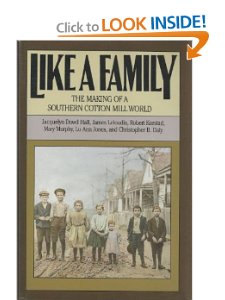
That earlier story is the one told in the book that I co-authored with five fellow historians, Like a Family: The Making of a Southern Cotton Mill World. Published in 1987 and reissued in 2000,51gBhqv0KTL._BO2,204,203,200_PIsitb-sticker-arrow-click,TopRight,35,-76_SX225_SY300_CR,0,0,225,300_SH20_OU01_ Like a Family puts the Loray Mill (see chap. 4), located near Charlotte, into the broader context of Southern industrialization, told largely from the workers’ point of view, based on their own testimony in hundreds of oral history interviews. That work was made possible through the Southern Oral History Program at UNC-Chapel Hill, which continues to do fine work in oral history. The SOHP interviews are mostly on deposit at UNC’s Wilson Library, where they are open to scholars. You can even search for a term like “Gastonia” in the search tool.

That should keep you busy for a while!

banner5

Leave a comment

Filed under history, Uncategorized

Shameless self-promotion (Journalism history division)

By Christopher B. Daly

Finally, it’s here: the electronic version of my book about the history of U.S. journalism, Covering America.

Just in time for the anniversary of the rollout of the hardback, this prize-winning book is now available in all major formats:

Nook,

Kindle,

Apple iBook, (This is the format I am checking it out on, and it looks great.)

Google Play,

you name it.

I am very pleased because I know that some folks have been waiting for the e-book. These formats make the book quite a bit cheaper and dramatically lighter! For people who don’t feel drawn to the ~$50 hardcover, here’s your chance to read Covering America. The book won the 2012 Prose Award for Media and Cultural Studies, and it has been selling well and drawing rave reviews (except for one stinker on Amazon — sheesh).

Enjoy it, and write to me about your reactions. You can comment here, or email me: chrisdaly44@gmail.com

CA cover final


Leave a comment

Filed under broadcasting, CNN, Covering America, David Halberstam, FCC, First Amendment, Fox News, history, Huffington Post, Journalism, journalism history, leaks, Murdoch scandal, New York Times, NPR, Photography, Photojournalism, Politics, publishing, Supreme Court, The New Yorker

History keeps happening

By Christopher B. Daly

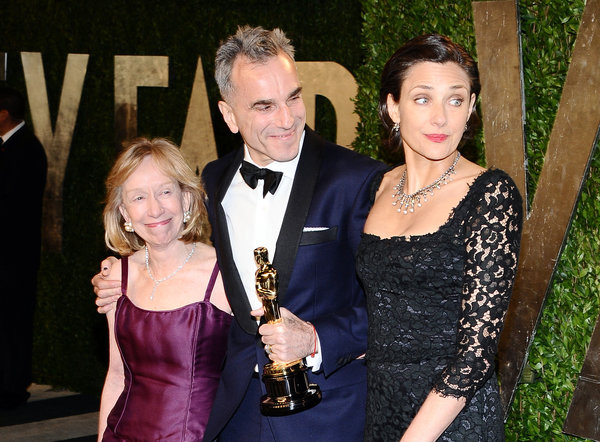
I guess it’s a good thing to see a historian at a glamorous Hollywood event. (I mean, it’s probably better than a glamorous Hollywood event without a historian, right?)

Seen below, left to right: Doris K-G, Daniel D-L, and his wife, Rebecca Miller (who was not identified in the caption of his photo in the NYTimes, but she should have been: Although not a historian, she is the daughter of playwright Arthur Miller; she went to Yale; and she has her own career as an actress, screenwriter, novelist, and director.)

l to r: Historian, Lincoln impersonator, multi-talented person.

l to r: Historian, Lincoln impersonator, multi-talented person.


Leave a comment

Filed under history

Civil War at 150

By Christopher B. Daly

Among the many worthwhile efforts to recall the U.S. Civil War on its 150th anniversary is an attempt to add a visual dimension. The “Civil War 150 Pinhole Project” is reviving the technology of the pinhole camera to make dramatic images of re-enactors and others. A hat-tip to Michael Falco, a photographer based in NYC for making this happen.

Some results:

Antietam cornfield

Antietam cornfield

crossing_artillary

Leave a comment

Filed under history

TNR re-designs itself

By Christopher B. Daly

The venerable opinion magazine The New Republic is getting a makeover. Here is a video report from the NYTimes about the new look.

TNR was founded in 1912 by Progressive journalist Herbert Croly. One of his first recruits was Walter Lippmann, who became one of the most prominent US journalists of the 20th Century. Here’s my take, from Covering America:

In 1912 a friend asked Lippmann if he would like to write a book. Lippmann

published A Preface to Politics the next year to favorable reviews, and while living

in New York and mingling with the leftist and bohemian crowd around the intellectual

and patron Mabel Dodge, he started another book. While he was working

on it, Lippmann got an invitation to lunch from Herbert Croly, a prominent Progressive

thinker and journalist. Croly, who had been impressed by Lippmann’s

debut book, had a proposition: How would Lippmann like to join the staff of a

new magazine Croly was putting together? The magazine was to be smart, literate,

and progressive. He could write and edit and make $60 a week. Lippmann

jumped at the offer. It was another stroke of good fortune. The magazine, which

still had no name, was eventually called the New Republic, and it became one of

the most influential journals of opinion and analysis of the twentieth century.14

Croly’s goal was to “be radical without being socialistic”15 and to advance his view

that the small, weak central government envisioned by Jefferson could not possibly

deal with the challenges posed by companies like Standard Oil or the big

meatpacking firms or the sugar trust. Instead, the country needed new agencies

like the Interstate Commerce Commission or the Food and Drug Administration,

staffed by a new class of expert public servants who would have the power

to police and guide these huge private enterprises. This was just the outlook that

Lippmann had been moving toward ever since he left Harvard, one that ultimately

drove him away from the socialists and muckrakers of his youth. . .


Leave a comment

Filed under history, Journalism, journalism history

Stanley Karnow, 1925-2013

Today brings news of the passing of Stanley Karnow, who wrote one of the most-cited works trying to figure out what happened during the U.S. war in Vietnam. He was an exemplar of the journalist-turned-historian.

Here is the Times obit, which mentions that Karnow was also on the Nixon “enemies list.”

Here is the AP version, which notes that Karnow got his start in journalism on his high school newspaper and at the Harvard Crimson.

The ultimate quote:

‘‘What did we learn from Vietnam?’’ Mr. Karnow later told AP. ‘‘We learned that we shouldn’t have been there in the first place.’’

imgres


Leave a comment

Filed under history, Journalism