Tag Archives: media

Monday morning roundup

Odds & Ends:

–Here’s David Carr on the “British invasion” of the high end of American media. (Why don’t they ever try to take our unpaid internships and crummy starting jobs?)

–Here’s the Times’ attempt to keep with Edward Snowden. What I found remarkable about this story — which was, after all, quite inconclusive — was the combined throw-weight of the team of reporters. In addition to the triple byline, I count seven more bylines in the credit line at the bottom. That’s 10 reporters on three continents, not to mention interns, news aides, editors, photographers, and photo editors. Take that, HuffPo!

–Here’s a Times feature on the antiquated ways of SCOTUS. These are not merely quaint. I believe they are snubbing their noses at all the rest of us, because they can. They are among the most unaccountable holders of power in the country. Perhaps an occasional impeachment (yes, it can be done and has been) would get their attention.


2 Comments

Filed under Uncategorized

Maine’s governor to press: Drop dead!

By Christopher B. Daly

The Republican governor of Maine, Paul LePage, has decided not to speak to three of the largest media outlets in his

Tight-lipped governor.

Tight-lipped governor.

state — which means, of course, that he is refusing to speak to all of their readers (who are also voters). Fair enough. That’s his call. He is a partisan (by definition), and he believes the papers are out to get him, so he’s going to try to win the argument by not engaging.

Hmmm… let’s see how that works out.

My guess that is that the Portland Press Herald, the Kennebec Journal (Augusta), and the Morning Sentinel (Waterville) will all be in business long after LePage has been retired by the readers/voters.


Thanks to the AP’s David Sharp for staying on top of this. Here’s the Press Herald’s own account.

imgres

Leave a comment

Filed under Journalism, Politics

Bulger loses one

By Christopher B. Daly

Good to see: Whitey Bulger lost his attempt to use the rules of trial procedure to exclude two Boston Globe journalists from covering his murder trial. He tried to place Shelley Murphy and Kevin Cullen on his witness list, then claimed that, as witnesses, they cannot attend his trial.

Kudos to Judge Denise Casper, who brushed that one off and granted the Globe’s request to exempt Murphy and Cullen from the list of witnesses who will be “sequestered” from the trial.

Not to be missed: This is one of many rulings that Bulger will have to accept from Judge Casper — which is rich, because Bulger is notorious for (among other things) his oft-stated contempt for women and African-Americans. Now, his fate is in the hands of someone who is both.

(A hat-tip to Margery Eagan, columnist for the Boston Herald, who made this point last night on the weekly public-TV media analysis show “Beat the Press.”)


Leave a comment

Filed under Journalism

Readers to the rescue! NYTimes gains in circulation

By Christopher B. Daly 

Yes, the New York Times company reported a sharp drop in earnings this week.

Yes, the figures for advertising revenue were wretched and getting worse.

BUT, buried in the financial details, there is some potentially important good news: Money coming in from circulation is rising. In fact, it rose 6.5% in the first quarter of this year compared to the same quarter a year ago. Therein may lie the salvation of the most important news organization in the country.

The reason is that “circulation revenue” is all the money coming in from the subscriptions to the traditional print edition, the dollars paid by folks picking up a copy of the Times at newsstands, and — most important of all — the money coming in from digital subscribers who bumped into the Times “paywall” and decided to pony up and pay for full access to the Times online. They are important because they are the future. In the digital era, the key metric is whether you can make money online. Historically, newspapers depended on a “dual revenue stream” of money coming from both circulation and advertising. For more than a century, both sources increased, and they fluctuated around a ratio of 50/50 in terms of total revenues.

If the Times can continue to gain readers who will pay, then there is no reason it could not sustain itself mainly on the basis of its own readers — who are, ultimately, a better base for journalism than advertisers. Thank you, Tiffany and Bloomingdales, and may your ad spending continue. But ultimately, the Times might be better off if it were funded like the old PM newspaper, or I.F. Stone’s Weekly, or NPR, or the AP or other news organizations that do not depend on advertising.

According to the latest figures, readers now account for a majority of the Times revenues.

Here’s a chart from the company’s press release.


First Quarter
2013 2012 % Change
Revenues
Circulation $ 241,789 $ 226,994 6.5 %
Advertising 191,167 215,234 -11.2 %
Other(a) 32,977 33,204 -0.7 %
Total revenues 465,933 475,432 -2.0 %

When I looked at the numbers more closely, here’s what I found on a percentage basis:

First quarter

[                                 2013               2012

Revenues

Circulation             51.8%          47.7%

Advertising            41.0%          45.2%

Other                          7.1%             6.9%

So, it appears that “the people formerly known as the audience” are pointing the ( or a?) way forward.

Readers to the rescue!

chart

This chart (which I customized using a tool on the NYTCo corporate site) shows how the NYTCo stock has performed in the last six months, compared to the Dow Jones average, which has been on a tear. 

Leave a comment

Filed under business, Journalism, journalism history, New York Times, Uncategorized

The bombing case: “Total Noise”?

By Christopher B. Daly 

Here is a fine piece that features the author Jim Gleick thinking in print about the coverage of the Boston Marathon bombing and related events. (Full disclosure: I have known Jim since we were in college together, and I admired his books Chaos and The Information; I am not currently in touch with him.)

Gleick’s piece from New York magazine was also noticed by Maureen Dowd in her column today. She added value by actually taking him out for coffee and interviewing him.

Photo montage by New York magazine (including photo by BU student journalism Kenshin Okubo).

Photo montage by New York magazine (including photo by BU student journalism Kenshin Okubo).

Leave a comment

Filed under broadcasting, CNN, Journalism, journalism history, Photography, Photojournalism

Un-bundling the media

By Christopher B. Daly 

In his latest column, the New York Times‘ David Carr makes a smart argument about how the media — both entertainment and news — are coming apart under pressure from the Web. That’s coming apart, not falling apart. They are coming apart in the sense that the “bundles” of material that arose during the pre-digital era no longer make sense. 

Here’s his lead:

For the longest time in the media business, the concept of the bundle has been foundational. Ads go with editorial content in print, commercials go with programming on television and the channels you desire are paired with ones you did not in your cable package.
People were free to shop for what they wanted, as long as they were willing to buy a bunch of other stuff they did not. The box score last night for your home team? It was wrapped inside a bundle of paper that included everything from foreign news to ads for lingerie. If you liked a song, you generally had to buy an album full of others to get the goods.


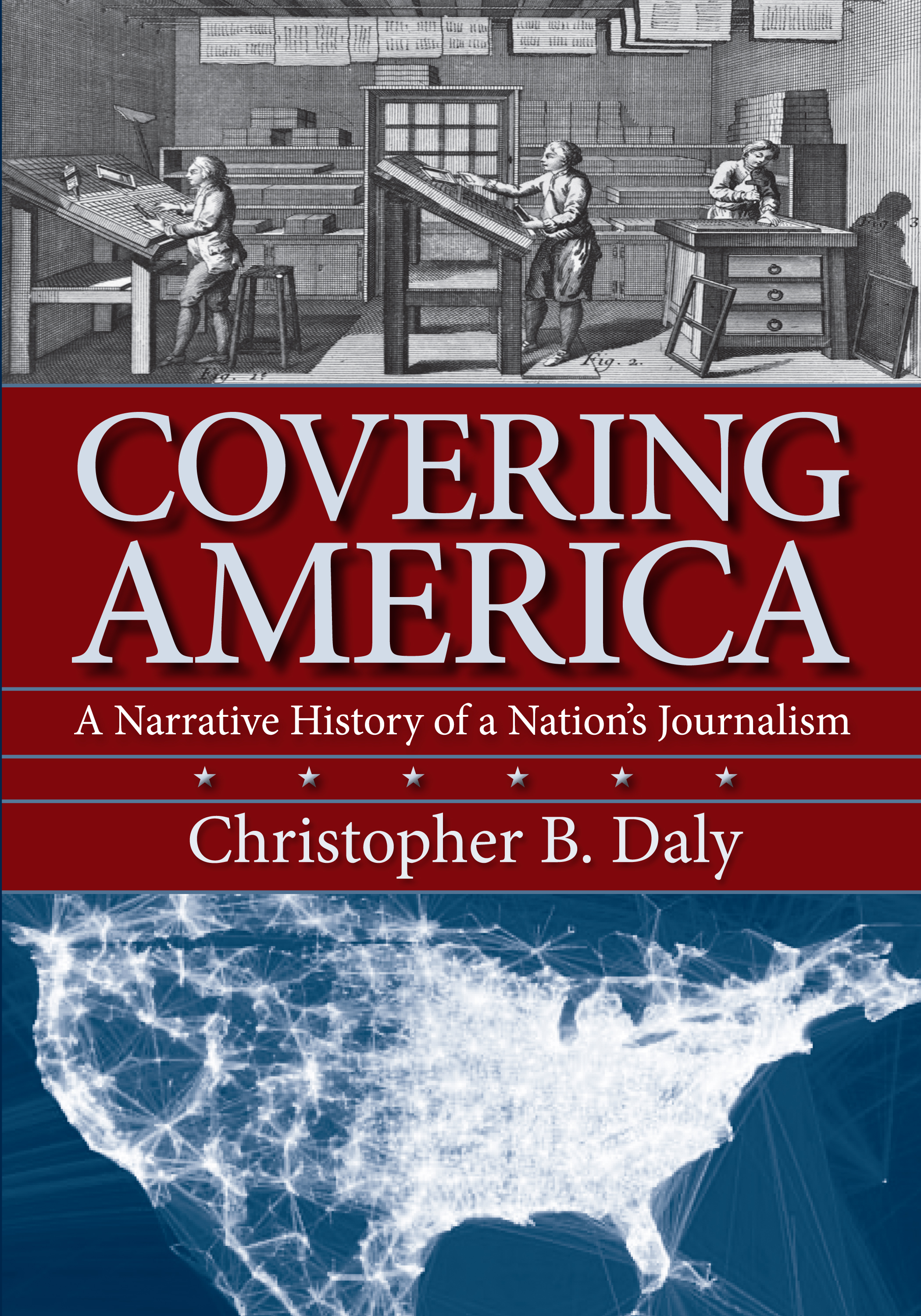
I think he’s on the right track. Consider the newspaper, for example, as I did in my book Covering America. Here’s an excerpt from Chapter 13:

Another problem besetting newspapers (and, to a great extent, magazines and television news as well) was even more existential. When seen against the backdrop of the Internet, one fact about newspapers becomes painfully obvious: a newspaper is a fixed bundle of coverage that is good but ultimately second rate. Offering readers no choice, a newspaper presents coverage of a set matrix of topics: politics, crime, business, sports, arts, and something called lifestyle. In each case, though, people who really know or care about those fields understand that they are not going to find the absolute best, most detailed, most passionate coverage of their favorite topic in a daily newspaper. They know that the best coverage will be in some niche on the Web where obsessive amateurs or professional experts gather. And with the coming of the Web, the absolute best coverage is available to everyone, everywhere, all the time, for free. In politics, for example, readers can find pretty good coverage in the Times or Newsweek. But if they really live and breathe politics, they will want it faster and at a much higher level of granularity, so they will log on to a site like Politico or Real Clear Politics instead and get what they are looking for. The same is true for business, sports, even crosswords and recipes. Thus the question arises: What is the remaining value of reading merely pretty good coverage (and paying for it) when readers can unbundle the newspaper, go online, and plunge into first-rate coverage, written by real aficionados and provided at a price of zero?

One way to understand the decline of the newspaper is to ask the ultimate question: If newspapers did not exist, would it make any sense to invent them?

I wrote that about two years ago. The only change I would make now would be to drop the reference to Newsweek. The venerable weekly print newsmagazine went broke in 2012 trying to sell a fixed bundle of pretty-good coverage and was absorbed into a born-digital enterprise, The Daily Beast. I might also amend the statement that all the high-quality niches are free, since a small but possibly growing number do charge something.

Leave a comment

Filed under broadcasting, Journalism, journalism history, New York Times, publishing, software

Shameless self-promotion (Journalism history division)

By Christopher B. Daly

Finally, it’s here: the electronic version of my book about the history of U.S. journalism, Covering America.

Just in time for the anniversary of the rollout of the hardback, this prize-winning book is now available in all major formats:

Nook,

Kindle,

Apple iBook, (This is the format I am checking it out on, and it looks great.)

Google Play,

you name it.

I am very pleased because I know that some folks have been waiting for the e-book. These formats make the book quite a bit cheaper and dramatically lighter! For people who don’t feel drawn to the ~$50 hardcover, here’s your chance to read Covering America. The book won the 2012 Prose Award for Media and Cultural Studies, and it has been selling well and drawing rave reviews (except for one stinker on Amazon — sheesh).

Enjoy it, and write to me about your reactions. You can comment here, or email me: chrisdaly44@gmail.com

CA cover final


Leave a comment

Filed under broadcasting, CNN, Covering America, David Halberstam, FCC, First Amendment, Fox News, history, Huffington Post, Journalism, journalism history, leaks, Murdoch scandal, New York Times, NPR, Photography, Photojournalism, Politics, publishing, Supreme Court, The New Yorker

Obama: Media Critic?

By Christopher B. Daly

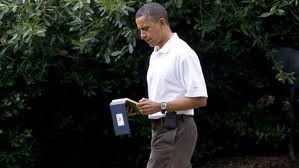
Even on vacation, I couldn’t help noticing this piece in today’s Times about President Obama’s news-reading habits and his criticisms of some of the coverage. 

As a media critic myself, I am not sure how I feel about adding this new guy to the ranks. But he does seem to have a grasp on some major issues. From the Times:

The news media have played a crucial role in Mr. Obama’s career, helping to make him a national star not long after he had been an anonymous state legislator. As president, however, he has come to believe the news media have had a role in frustrating his ambitions to change the terms of the country’s political discussion. He particularly believes that Democrats do not receive enough credit for their willingness to accept cuts in Medicareand Social Security, while Republicans oppose almost any tax increase to reduce the deficit.

Privately and publicly, Mr. Obama has articulated what he sees as two overarching problems: coverage that focuses on political winners and losers rather than substance; and a “false balance,” in which two opposing sides are given equal weight regardless of the facts.

Mr. Obama’s assessments overlap with common critiques from academics and journalism pundits, but when coming from a sitting president the appraisal is hardly objective, the experts say.

Irony alert: after quoting Obama on the problem of false balance and explaining the concept, the piece goes on to engage in the very practice.

To his credit, Obama seems to read a lot, and that can’t be a bad thing.

Now, back to the beach.

Obama reads his iPad while walking. ABC News.com

Obama reads his iPad while walking. ABC News.com

Leave a comment

Filed under broadcasting, Journalism, Politics, President Obama

Journalism 101: Read the whole opinion

By Christopher B. Daly

It comes down to this: two major news organizations (CNN and Fox News) blew their initial coverage of the most important Supreme Court ruling this decade. They did so because reporters at both cable news outlets made a rookie mistake by generating headlines without reading the whole SCOTUS opinion. In these situations, reporters often face an apparent dilemma: Do you want to be first? Do you want to be right?

The answer, of course, is that a conscientious reporter should want to be the first one who is also right.

And, just so I don’t let anyone else off the hook, this message needs to be embraced and shared by editors, desk people, and top management. The message has to be sent early, often, and unambiguously.

How do I know?

Aren’t I just a professor, safely watching this from the sidelines?

Well, yes and no. I worked for almost five years in a news cockpit, covering the state government of Massachusetts for the AP. In that role, one of my duties was to read the opinions of the Massachusetts Supreme Judicial Court (the SJC, the oldest continuously sitting court in the English-speaking New World, older than SCOTUS). When those opinions were newsworthy, as they often were, I had to bang out an immediate hard-news lead. Directly across the room from me in the Statehouse Press Gallery, my competitors at UPI were doing the same thing. We could tell from the sound of our typing who was writing and who was finished and had transmitted the story. The stakes were not as high as they were on Thursday at SCOTUS, but covering the SJC is essentially the same challenge.

So, here are my takeaways from the health-care bulletin fiasco:

–News organizations need “beat” reporters. That is, they need reporters who specialize in an area (health care, let’s say, or covering the Supreme Court) and become experts in it. General-assignment reporters (and god love ’em, we need them too) cannot be thrown at every new situation and expected to learn on the fly.

–The Supreme Court should re-institute the “embargo” system. An embargo occurs when the news media are given material in advance, on condition that they agree to withhold it until a specific time. When that agreed-upon moment arrives, the journalists are all released from their promise and can all disseminate the news at the same time. That system has several advantages. It means that reporters are quarantined for a period of time that they can use to their benefit — they can read the whole opinion, maybe more than once; they can check their notes and background materials; they can even call experts for analysis and comment. They can use the time to craft a story that is accurate and complete, knowing that no other news organization that participated in the embargo is going to scoop them. Granted, it is not natural for a news professional to endorse any system that delays the delivery of news. But the reason we sometimes accept embargoes is that they ultimately serve the best interest of our audiences, which is what we should care about the most.

–We need bloggers too. A delicious irony from Thursday is that two big-deal professional news organizations (yes, I am lumping Fox News in here, arguendo) discovered their mistake in part by reading a blog! The highly regarded SCOTUSblog got the story right and prompted part of the correction process. So, let’s give a hat tip to the power of a small group of experts using the Web to communicate.

(And a special salute to Lyle Denniston of SCOTUSblog, seen at right. Talk about beat reporters! He has been covering the Supreme Court for 54 years, or far longer than any of the current justices has served.)

Leave a comment

Filed under blogging, broadcasting, CNN, Fox News, Journalism, Supreme Court

Inside the Meme Factory

By Christopher B. Daly

That phrase, Inside the Meme Factory, is the working title of my next book. It refers to an idea that is well illustrated in a piece on page 1 of today’s Times by the estimable James B. Stewart (lawyer, book author, contributor to both the New Yorker and the Times — is there more than one of him?). In his article, Stewart seizes on a comment made by Supreme Court Justice Antonin Scalia and tries to walk it back to its origins. The phrase involved a rhetorical question raised from the bench by Scalia during arguments over the national health care law, asking whether the government could make Americans do other things that are good for them, such as eating broccoli. Here’s the nub:

It turns out that broccoli did not spring from the mind of Justice Scalia. The vegetable trail leads backward through conservative media and pundits. Before reaching the Supreme Court, vegetables were cited by a federal judge in Florida with a libertarian streak; in an Internet video financed by libertarian and ultraconservative backers; at a Congressional hearing by a Republican senator; and an op-ed column by David B. Rivkin Jr., a libertarian lawyer whose family emigrated from the former Soviet Union when he was 10.

 Stewart’s painstaking track-back shows that the idea of challenging the limits of the Commerce Clause originated with libertarian thinkers and was sustained in a series of hand-offs by other libertarians and conservatives, all working within the universe of conservative institutions (Cato, Reason, Limbaugh, the Wall Street Journal op-ed page, Reagan-appointed judges, a former Clarence Thomas law clerk, et al.) And, as so often happens, several of those institutions get crucial amounts of funding from the Kochs and the Scaifes.

The “broccoli” story exemplifies a much larger truth: most of the themes, slogans, argument-stoppers, images, and jokes that shape our politics and much of our public conversation don’t come from nowhere. Many of them are the fruits of deliberate efforts, especially among conservatives, and many of those efforts take place in a nearly hidden network of institutions. Those institutions include an array of think tanks, publishers, and conservative media outlets that generate and amplify conservative “memes.” In my book, I trace the deliberate campaign to fund and build this network of interlocking conservative institutions in the decades after World War II.

Stay tuned.

Leave a comment

Filed under Journalism, journalism history, media, New York Times, Supreme Court