
Wow.

By Christopher B. Daly
A recent obituary reminds us that during World War II, President Roosevelt created and operated a wide-ranging and largely effective program of censorship of all news media. The news is the death, at age 94, of Cal Whipple, who was a Pentagon correspondent for LIFE magazine during the war. It was Whipple who persuaded the military to re-examine its policy of banning photos of dead U.S. servicemen. Eventually, the top brass referred the matter to the president, and Roosevelt personally intervened. (It might have made more sense, of course, for LIFE’s publisher, Henry Luce, to take up the matter with the president — but for the fact that Luce was a Republican and quite a FDR-basher by 1943.) The result of Whipple’s efforts was this stunning photo by LIFE’s George Strock:
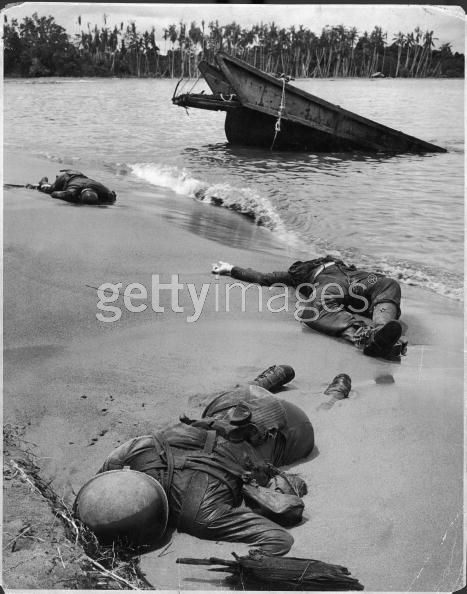
Photo by George Strock/ LIFE magazine.
That photo (which I paid Getty Images for the right to use) was followed by many more, all of which brought home the reality of war.
Here is an excerpt from my book, Covering America, about the issue:
Another special case involved war zone photography. Initially, U.S. military and civilian censors banned the publication of photos showing dead American soldiers or sailors. It was assumed that such images would be bad for civilian morale, and they would probably not bring the troops much cheer either. For twenty months after Pearl Harbor, not a single photo depicting a dead U.S. service member appeared in the news media. Much of the initiative for change came from the editors of Life magazine, which, with a circulation of more than 2.5 million a week,23 had emerged since its founding in 1936 as the nation’s premier showcase for photojournalism. Among its wartime staff were Margaret Bourke-White, Carl Mydans, and Robert Capa. With its large format and glossy paper, Life gave photos their greatest possible impact. In a 1942 advertisement for itself, Life expressed its philosophy: “Never has LIFE glossed over the horrors that stalk in the wake of the Axis aggression, but has shown war as it really is . . . stark, brutal, and devastating.” Even so, the censorship guidelines prevented showing dead GIs, so editors at Life and elsewhere pressed their case for greater candor. In mid-1943 the Roosevelt administration reversed its earlier policy, and in September officials began releasing the first of the somber photos. The most famous was the one printed in Life showing three dead soldiers lying where they had been shot on a beach in New Guinea. The photo, by George Strock, was a masterpiece of composition and understatement. The dead men’s faces were not visible, and their wounds were hidden as well. The editors and the military brass all worried about the public reaction, but they need not have: most letters to Life supported the decision, and there was no measurable drop-off in American support for the war. Ever since, readers on the home front have been given a closer and more realistic look at war. . .
Filed under Journalism, journalism history, Photojournalism
By Christopher B. Daly
Having just returned from two weeks in China, I can confirm the point made in a story in today’s New York Times: China’s air is filthy. People routinely wear surgical masks just to avoid breathing in all the particulates. It feels like Pittsburgh or Manchester of the late 19th Century.
Two points:
–China’s energy companies are as short-sighted as our own, lobbying to continue polluting the air. But at least on CCTV I did not see any ads touting the oxymoronic “clean coal.” Coal is coal, and coal is dirty. From today’s Times piece by Edward Wong:
Even as some officials push for tighter restrictions on pollutants, state-owned enterprises — especially China’s oil and power companies — have been putting profits ahead of health in working to outflank new rules, according to government data and interviews with people involved in policy negotiations.
Sheesh.
–We in the States should be aware that China is subsidizing our own clean skies by putting up with the pollution that makes their products so cheap. Walmart and other retailers could not stock their shelves with such low-priced goods if China took the necessary steps to clear its own skies. If they really insisted on air that is as clean as that in the US or Europe, China would have to install scrubbers, switch to cleaner fuels, and invest in a lot of new greener technology. In that case, the price of manufacturing would go up, and we would have to pay a bit more for all the cheap stuff we import. Which would not be the worst thing.
Here’s a photo I took in Xi’an, a city of about 10 million in east-central China:

Power plant in Xi’an, China.
And here’s a Beijing sunrise:
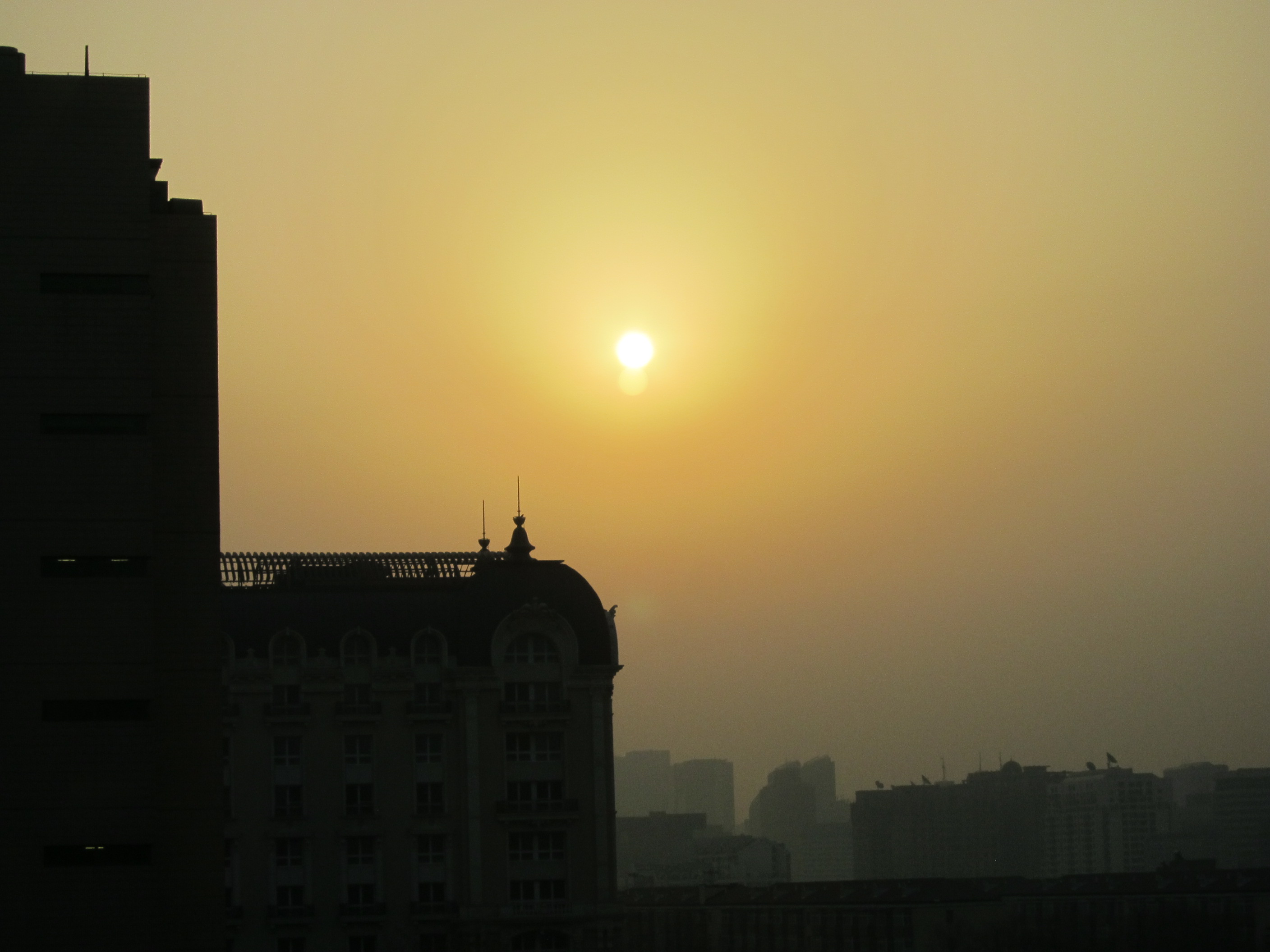
It really is that bad.
Filed under Uncategorized
By Christopher B. Daly
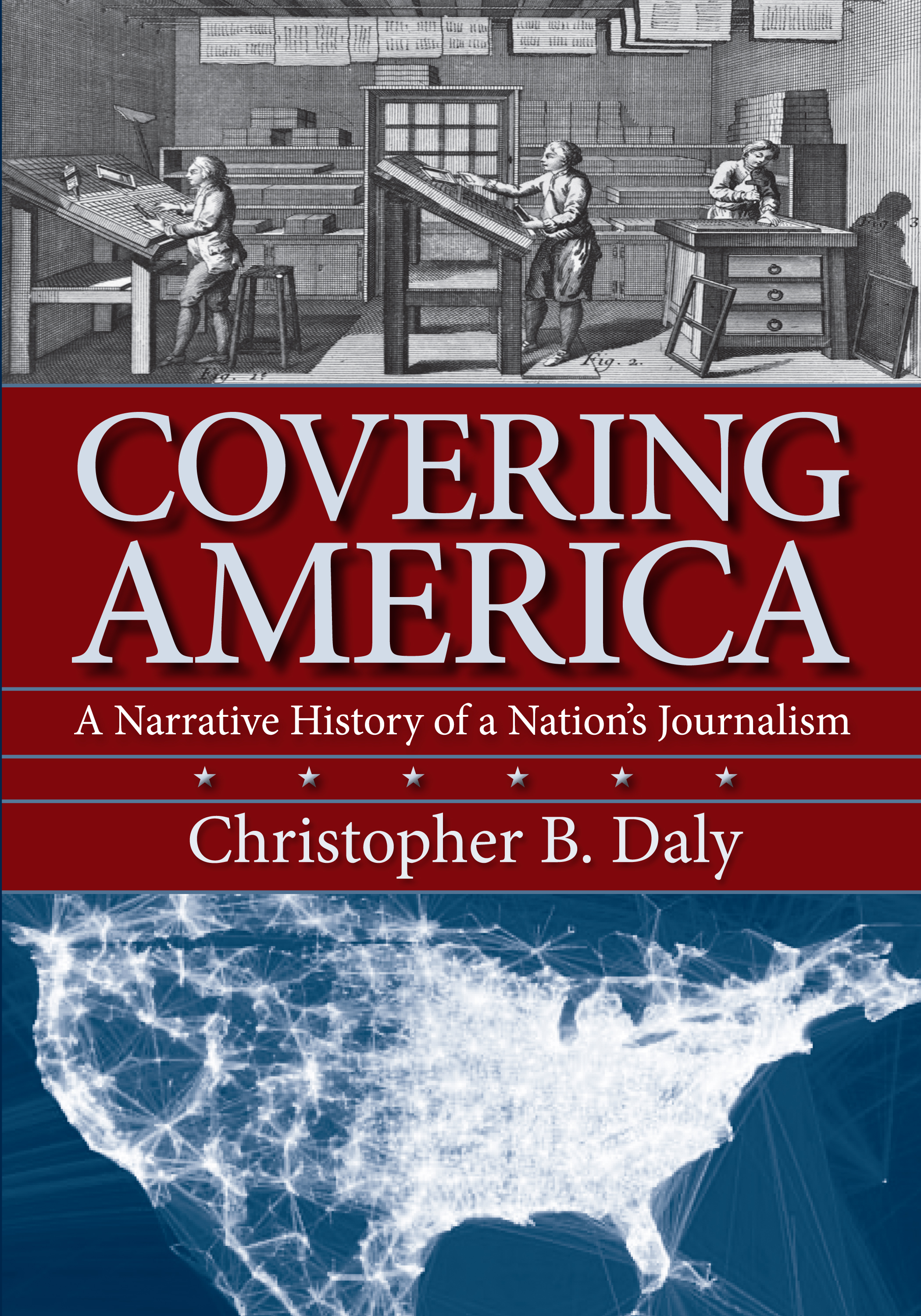
Finally, it’s here: the electronic version of my book about the history of U.S. journalism, Covering America.
Just in time for the anniversary of the rollout of the hardback, this prize-winning book is now available in all major formats:
Nook,
Apple iBook, (This is the format I am checking it out on, and it looks great.)
you name it.
I am very pleased because I know that some folks have been waiting for the e-book. These formats make the book quite a bit cheaper and dramatically lighter! For people who don’t feel drawn to the ~$50 hardcover, here’s your chance to read Covering America. The book won the 2012 Prose Award for Media and Cultural Studies, and it has been selling well and drawing rave reviews (except for one stinker on Amazon — sheesh).
Enjoy it, and write to me about your reactions. You can comment here, or email me: chrisdaly44@gmail.com
By Christopher B. Daly
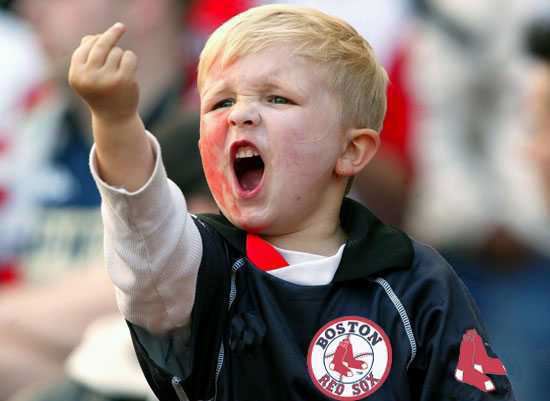
That’s about the state of certain comments by certain people. This piece in today’s Times labors to try to make this sound new. As anyone knows who has gotten involved with a dispute on-line, the comments tend to go straight downhill. I’m not sure what that tells us — except maybe that it stands as confirmation that life really is like high school.
It brings to mind the original comment by the original blogger, Dave Winer. Early in his career as a founding blogger, Dave announced that he would not allow comments on his blog. His reason: If you have something to say, start your own damn blog! The web allows everyone to speak their mind. So there is absolutely no moral imperative to open your site to trolls.
Right here, on my own blog, I say (as we used to say at Medford High) to all trolls:
Ah, go fuck yourself!
Filed under Uncategorized
By Christopher B. Daly
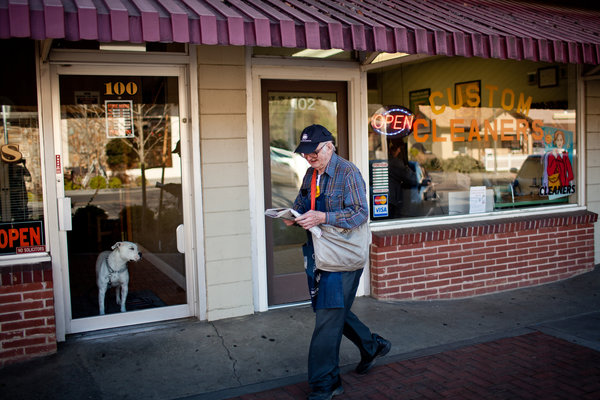
This would just be a silly (possibly exploitive, age-ist, etc) piece, but for one thing: I got my start in journalism delivering newspapers. I had a paper route for 8 years, six days a week, delivering the Boston Globe in my neighborhood in West Medford, Mass.
Started when I was 10 and finished when I graduated from high school. As I recall, I managed to save a significant chunk of college tuition in the process. And, I saw a lifetime of sunrises. Still hate to get up early and get going in the morning.
I still think newspapers made a mistake by getting of paperboys and (-girls) and replacing them with adults who drive around in cars. I have tried for 20 years to get my adult paper-delivery person to get my paper up onto my front porch. No luck. When I was a kid delivering papers, I had to ring every doorbell on my route every week — talk about staying in touch with your customers. It was the original social network. If they were unhappy about my service, they let me know.
Come to think of it, I learned most of what I know from doing that paper route. Kids should have the chance. Down with grown-ups!
Filed under Journalism
By Christopher B. Daly
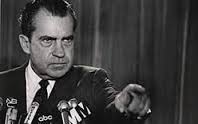
The recent dust-up between Bob Woodward and the Obama White House has now entered the phase where everyone is wondering what all the fuss was about. It has gone in record time from sounding like a scandal to sounding like a big nothing. Woodward, of all people, should know when he is being threatened by the White House, as he and Bernstein famously were threatened in 1972-3 while reporting on the Nixon gang.
From today’s Times:
His feud with an unnamed official, first reported in Politico, which said Mr. Woodward clearly saw the administration’s choice of words “as a veiled threat,” initially drew cheers from many conservative commentators and bewilderment from many Washington reporters who wondered whether Mr. Woodward was being a tad oversensitive.
In an interview later on Thursday, Mr. Woodward emphasized that he had not said he felt threatened. “I never said it was a threat,” he said, but added that he still had concerns about how the administration handled criticism. “We live in a world where they don’t like to be challenged, particularly when the political stakes are so high,” he said.
Filed under Journalism, journalism history
By Christopher B. Daly
I guess it’s a good thing to see a historian at a glamorous Hollywood event. (I mean, it’s probably better than a glamorous Hollywood event without a historian, right?)
Seen below, left to right: Doris K-G, Daniel D-L, and his wife, Rebecca Miller (who was not identified in the caption of his photo in the NYTimes, but she should have been: Although not a historian, she is the daughter of playwright Arthur Miller; she went to Yale; and she has her own career as an actress, screenwriter, novelist, and director.)
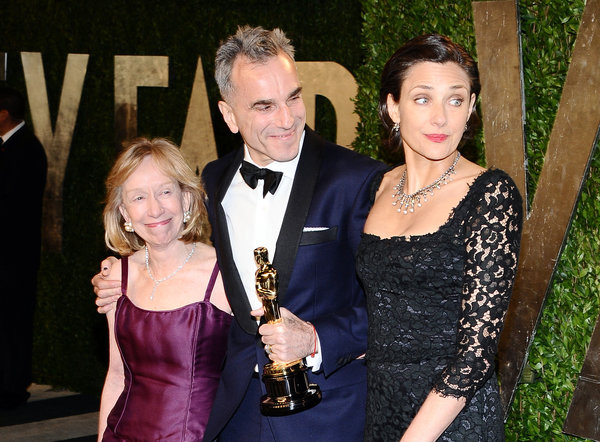
l to r: Historian, Lincoln impersonator, multi-talented person.
Filed under history
By Christopher B. Daly
If you ran the New York Times and enjoyed the prestige that comes with doing great journalism and having a large, talented staff, why would you run any of your enterprises under another name? That seems to be the thinking behind the latest business move by the Times: renaming the venerable International Herald Tribune into The International New York Times. It makes sense, particularly if the Times executives have already made the decision to hang onto the old IHT and not spin it off, as they recently chose to to with the Boston Globe and Worcester Telegram & Gazette.
The IHT — which the Times has owned outright since it bought out its partner The Washington Post Co. in 2003 — is already subtitled “The global edition of the New York Times,” so it is only a short step to turn that into the new name.
From the Times’ own story about the change:
Stephen Dunbar-Johnson, publisher of The International Herald Tribune, noted that for most of the newspaper’s long history, it has had New York in its name. The paper (www.ihtinfo.com) was first published in 1887 as the European edition of The New York Herald. Through a series of ownership changes, it became The New York Herald Tribune in 1959.
The paper became The International Herald Tribune in 1967 when The Washington Post Company and the Times Company invested in the paper to keep it afloat after the New York Tribune folded. In 1991, the Post and Times companies became co-owners of the paper. The Times Company bought out The Washington Post Company’s share and became its sole owner in 2003.
The announcement is part of the company’s larger plan to focus on its core brand and building its international presence, the spokeswoman said. On Feb. 20, the Times Company said it was exploring offers to sell The Boston Globe and its other New England media properties. Last year, the company sold its stake in Indeed.com, a jobs search engine, and the About Group, the online resource company.
Filed under Journalism, New York Times
By Christopher B. Daly
Hooray that more than half of the leading contenders for Best Picture at this year’s Academy Awards have historical themes.
A question that always hangs over such films is: how accurate are they? Accuracy, of course, is often in the eye of the beholder, but a more useful question might be: do any of these films revise history in a way that improves our historical understanding, warps our historical understanding, or makes no difference?
Keep that in mind tonight when watching the Oscars show a propos the following:
–Les Miz (just how often do the poor break into song?) 
 –Argo (does it matter that the character played by Ben Affleck was really Hispanic? If you don’t think so, then Ah, go fuck yourself!)
 –Zero Dark Thirty (who says that torture “worked”?)
 –Lincoln (did one weary, kindly man “free the slaves” all by himself?)
 –Django Unchained (was the past an orgy of stylized violence?)
Filed under Uncategorized

 Prof Chris Daly's Blog