Category Archives: Journalism

Obama: Wrong on secrecy

By Christopher B. Daly 

I am disappointed in President Obama over his insistence on shrouding his drone program in secrecy. It is one thing to keep quiet about the operations of a quasi-military, semi-secret technology such as the drones that have emerged as the leading weapon in the “war on terror” that Obama inherited from George W. Bush. But imgres3there is no reason that justifies keeping quiet about the legal rationale for such a program. When drones are used in countries against which we have not declared war, and particularly when they are used to kill American citizens overseas, I believe the people of the United States are not only entitled to an explanation, we have a duty to know what is being done in our name. If Obama has a good reason for his drone program that squares with the Constitution, fine. If he does not, then he should admit it and seek another way.

But as things stand, we cannot even have a debate over the wisdom of the program, because the White House won’t allow it. As the Times reports today, a federal judge in Manhattan threw up her hands in frustration over the secrecy but had to conclude that, under law, she could not force the administration to divulge anything. Judge Colleen McMahon issued a ruling (see page 3) in a FOIA request filed by two of the Times‘ own reporters, Charlie Savage and Scott Shane. Good for them for trying to get the Obama folks on the record. And shame on the administration (DOJ, DOD, and CIA) for keeping the reason for their secret program secret. What do we have a Freedom of Information Act for, if not for situations like this?

As matters stand, the president won’t deny that the program exists, and he won’t stop it. But he won’t explain it either. Meanwhile, the drone strikes continue. There are reports of successes in places like Waziristan and Yemen. But, as the president, who watches “Homeland,” must realize, the drone program continues to make new enemies every day who must blame Americans for keeping a government in power that would do such things.

Don’t get me wrong: I have an open mind about the drone strikes, but I find this secrecy intolerable.

What Would Carrie Do?

Leave a comment

Filed under Journalism

State of the Art: Multimedia journalism

By Christopher B. Daly 

Just catching up with a landmark in multimedia journalism: the New York Times project titled “Snow Fall: The Avalanche at Tunnel Creek,” which was originally posted just before Christmas. IMHO, it is very nearly the state of the art in using multimedia to tell a story, especially a narrative.

The piece (if that’s the right word… project?) was a success in many ways — it was beautiful (in a terrifying sort of way), it was deeply informative, and it brought the Times a whole lot of welcome traffic from new visitors. Snow Fall It remains to be seen if any of those drop-in readers become regulars or subscribers. I would say “Snow Fall” is on a par with the best work done by MediaStorm or NatGeo, or even one of my all-time favorites, Bear71.

That said, could the Times have done a better job on Snow Fall? I hasten to say I could not have done better but I can think of two suggestions: First, the Times took some well-deserved flak for annoying subscribers by sending out a “breaking news” alert about Snow Fall, when it was clearly not breaking news. I trust they will not do that again.

More important, I would venture to say that the essential story could have been stronger. There were a lot of protagonists, and we barely met a few of them before they were all engaged in dramatic actions, and it was hard to keep them straight. It is very hard to drive a narrative without a clear hero or villain, and I found the focus wavering. Still, a salute to the lead reporter/writer, John Branch. And, thanks to the Times for tackling the whole project.

Courtesy of Jim Romenesko, here is a comment to the Times staff from the paper’s executive editor, Jill Abramson.


Leave a comment

Filed under Journalism, New York Times

Holy shit!

By Christopher B. Daly

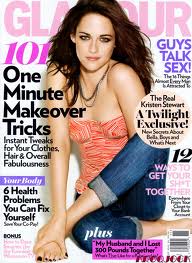
I guess this is a reminder that not all change is progress. Now that the editors of certain “women’s” magazines are using formerly banned words in their headlines, I’m not sure what is being gained here.

IMHO, it’s simple. . . Everyone who writes should use the right word for the situation.

It’s a simple rule to state but much harder to execute. Give it a try.

Now, to step back a bit. Here’s the cover of Glamour that the Times used to lead into its “trend” story. (A side note to the Times‘ Arts and Style section editors: how many instances does it take to make a trend?)

Glamour, Nov. 2011

Of all the ways in which this cover cheapens our culture, is the presence of the word “SH*T”  the worst?


Leave a comment

Filed under Journalism

Reporting on gun violence and gun control (cont.)

By Christopher B. Daly

This is a huge, sprawling topic that is also something of a moving target. So, here are some more sources for journalists to consult. If you are involved in covering these issues and you come across other helpful sites, please leave a comment below, or email me and I will update.

More from the Journalist’s Resource project at Harvard:

*On gun policies: http://journalistsresource.org/studies/government/criminal-justice/effectiveness-policies-programs-reduce-firearm-violence-meta-analysis

*Global look at gun-homicide connection: http://journalistsresource.org/studies/government/criminal-justice/reassessing-association-gun-availability-homicide-rates-cross-national-level

*On violent video games: http://journalistsresource.org/studies/society/internet/value-violent-video-games-research-roundup

0        0          0           0            0              0               0             0

What do historians make of the whole issue? That is a big, complicated tale. The subject has been almost as controversial among historians as it has been among politicians.

Here’s an intro to a recent controversy in the scholarship over gun ownership.

And here’s the major critic, Clayton Cramer. (But beware of link rot!)

Here is the report by Emory University on its own professor’s work.


Leave a comment

Filed under Journalism

Reporting on gun violence and gun control (cont.)


By Christopher B. Daly 


In the wake of the massacre at the elementary school in Newtown, Conn., here are some more resources for reporters, editors, and users of news sites.


–The Journalist’s Resource at Harvard’s Shorenstein Center has added a new post with many new links.


–Before anyone needlessly piles onto people with Asperger’s Syndrome, here is the website of the Asperger’s Assn of New England, which has lots of resources for learning about the condition. The AANE has also issued a statement specifically addressing the Newtown case.


–Here are some links to research done by researchers at the Berkman Center on meanness and cruelty (in case those issues are relevant here, and they may not be; I am trying to cast a wide net).


–Here is the homepage of the NRA. (Yes, it looks like the opening of the Colbert Report, but that’s Colbert’s point, isn’t it?)


–Here is the homepage for a leading gun-control organization, the Brady Campaign.


Leave a comment

Filed under Journalism

Reporting on gun violence and gun control

By Christopher B. Daly 

The recent massacre of innocents at a school in Connecticut is bound to spur a renewal of debate over gun control. Based on President Obama’s comments on Friday, it appears likely that — finally — something might happen. If you are reporting on that issue, or just reading about it, the dialogue could be elevated if the reporting were deepened.

One place to start: the highly worthwhile site Journalist’s Resource, sponsored by the Shorenstein Center at Harvard’s Kennedy School.

Here is a page of results from a keyword search for “gun control.”

It is a start toward bringing the best of fact-based research to bear on this enormous problem.

HKSlogo_sub_shoren

2 Comments

Filed under Journalism

The lure of owning a (whole) newspaper

By Christopher B. Daly 

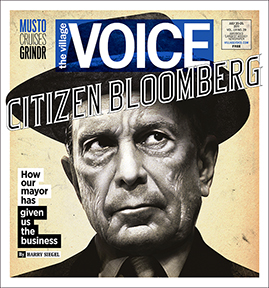
What would you do if you were worth a couple of billion dollars and were the mayor of New York City and (probably) banned from seeking a fourth term? If you are Michael Bloomberg, your thoughts might stray toward buying a newspaper. Not a copy of a newspaper, of course, but a whole newspaper company.

That’s the upshot of a story in today’s Times, which says that Bloomberg is reportedly considering buying Financial Times Ltd., which owns all of the Financial Times newspaper and a half interest in The Economist magazine. (FT Ltd is a division of the British media giant Pearson.)

You might ask: why?

Michael Bloomberg has made a fortune multiple times over from the “media” company that he bloomberg-terminalalready owns — Bloomberg L.P. The company is based on the phenomenally lucrative business of supplying patented terminals to stock traders, along with content from Bloomberg’s own company and other sources. In that business, Bloomberg made billions. But it’s not enough.

What follows is pure speculation (since I have never met him or interviewed him). I don’t believe Michael  Bloomberg wants any more wealth. Besides, getting into the printing of newspapers or magazines is hardly the road to riches. I suspect that what drives Bloomberg is the electricity that comes from power — the kind of power he now wields as mayor of the country’s biggest city but which will be passing from his hands.

Like many another media mogul before him (Greeley, Hearst), Bloomberg has toyed with the idea of offering the whole country his services, as president of the United States. There are many reasons to believe that will not happen, so what else is there? He probably does not want to go back to minding the store at a company that sells trading terminals to Wall Street types.

No, the only kind of activity that offers the promise of that much power (or at least influence) is owning an important publication. Since the time of the first truly mass-circulation daily newspapers in the 1830s, that has been the pattern throughout U.S. history (see my book Covering America on Bennett, Greeley, Pulitzer, Hearst, Luce, Murdoch, etc.) . Time and again, as publishers have connected with masses of people, they have convinced themselves that they are indispensable to the fate of the nation and start throwing their weight around.

Michael Bloomberg already has a record of accomplishment. He has come a long way from his origins in Medford, Mass. If he really wants to help our country, and if he really wants to boost the news business, he should buy a couple of newspapers — every day, at a newsstand — then take them home and read them.

29@200


1 Comment

Filed under Journalism, Politics

Subway photos: The journalist’s dilemma

By Christopher B. Daly

Anyone who has ever ridden the NYC subways has probably thought about it as you stand on the platform waiting for a train. What if some crazy bastard snuck up behind me and pushed me onto the tracks? Could I get back up? Would anyone help me?

Or, perhaps a variation on the theme: What if I see someone else pushed? Will I have the courage to jump down there and help?

The recent tragedy in New York City pushes all these thoughts (and more) into focus. These issues often rise to the forefront when journalists are on-scene. It seems that photojournalists, in particular, are often thrust into these situations, because photographers are so often at or near the scene of terrible things.

This is an issue that I took up in my recent book, Covering America.(pgs 329-330)

Here’s an excerpt that was prompted by the famous photo from the American war in Vietnam that showed a Buddhist monk burning himself to death in protest. (More thoughts after the excerpt)

. . . On June 11, 1963, the Buddhist monks of Vietnam took center stage. For weeks as the crisis built, the AP’s Mal Browne had been filing stories, and he had spent a lot of time in pagodas, interviewing monks and getting a good understanding of  their cause. On the night of June 10 Browne got a call from a contact among the monks, telling him there would be an important development the next morning at a small Saigon pagoda. Several Western correspondents got the same tip, but only a few showed up, including Browne and, later, [David] Halberstam. Only Browne, under the AP photo policy, was carrying a camera. After a while, a 73-year-old Buddhist monk, Thich Quang Duc, went to a busy Saigon intersection and sat down in the lotus position, ringed by hundreds of other monks. Several monks doused him with gasoline, then he struck a match (fig. 11.2). As the flames rose, the monk never flinched. Browne kept working. “Numb with shock,” Browne later recalled, “I shot roll after roll of film, focusing and adjusting exposures mechanically and unconsciously, almost as an athlete chews gum to relieve stress. Trying hard not to perceive what I was witnessing I found myself thinking: ‘The sun is bright and the subject is self-illuminated, so f16 at 125th of a second should be right.’ But I couldn’t close out the smell.” Browne probably could not have intervened once the match was lit, even if he had been prepared. The hundreds of monks would have stopped him.

Malcolm Browne / AP

Malcolm Browne / AP

This incident, like much else that correspondents saw in Vietnam, dramatizes a problem that might be called the Journalist’s Dilemma. For obvious reasons, journalists often witness tragedies and catastrophes. In the course of reporting or shooting photos, they are sometimes confronted by an apparent conflict between continuing to work or stopping to render assistance. Should the journalist step out of the traditional role of observing news and try to help? If the journalist intervenes to prevent a tragedy or to offer aid and comfort to victims, does he or she thus enter the story as a historical actor and give up any claim to practicing journalism (and along with it, perhaps, any First Amendment rights)? Close examination of many cases reveals that the Journalist’s Dilemma is often an illusion. In most instances, the action unfolds so quickly that there is no time for decision making, while in others, the journalist is in fact able to observe the news, record it, and still rise to at least a basic level of humanitarian action. Still, it is in the nature of a dilemma to have no ultimate solution. . .

Like soldiers, cops, EMTs, firefighters and other “first responders,” news reporters and photojournalists often find themselves running toward trouble rather than away from it. As a result, they are often present when bad things happen. This, of course, does not mean that they caused the bad thing, just that they were in the vicinity. Throughout the history of journalism, going at least as far back as Samuel Wilkeson of the New York Times covering the battle of Gettysburg in 1863 and finding the body of his own son among the Union dead, the issue has come up again and again. Here are some notable cases:
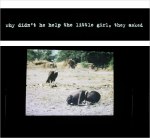
Kevin Carter 1993

Kevin Carter 1993

–There is the story of photographer Kevin Carter, who took a heart-stopping photo of a starving child apparently being stalked by a waiting vulture. That photo, taken in Sudan in 1993, earned him both praise and condemnation. After the photo won the Pulitzer Prize in 1994, Carter took his own life. Here is his NYT obit (written by South Africa correspondent Bill Keller). Few people realize that Carter helped save the girl’s life. His story was later the focus of a film, called “The Death of Kevin Carter: Casualty of the Bang Bang Club.” (Made in 2006 at the Cal-Berkeley School of Journalism.)

–There is the longer version of Mal Browne’s photo of the burning monk. Browne also describes the incident in a segment of a terrific historical PBS video called “Reporting America at War.”

KIM PHUC VIETNAM –There is the story behind another famous Vietnam war photo — the “napalm girl” photo of 1972, taken by photojournalist Nick Ut, a Vietnamese native who was working for the AP at the time. As with Kevin Carter, few people who saw this photo ever learned that Ut put his camera down and render aid that probably saved the girl’s life. Here is a version told in part by the AP photo chief in Saigon during the war, the prize-winning photojournalist Horst Faas. The girl, Kim Phuc, survived and moved to Canada. Here is more about her. She was also the subject of a 1999 biography by Denise Chong called The Girl in the Picture. Photographer and subject also met several times.

–More recently, NYTimes photojournalist Tyler Hicks has found himself in the thick of things all throughout Pakistan, Afghanistan, and the countries of the Arab Spring. Hicks, a Pulitzer Prize-winner, was captured in Libya in March 2011. Later, he was with his colleague Anthony Shadid when Shadid died from a severe asthma attack that came on while the two journalists were entering forbidden territory in Syria. Hicks carried his buddy’s body across the border into Turkey. images

–Finally, there is the incomparable James Nachtwey, who has been thinking about these things for a long time. Here are some of his thoughts in a TED talk.


 

Leave a comment

Filed under Journalism, Uncategorized

Memo to Britain

By Christopher B. Daly 

I’ll keep this brief. Just 11 words, in fact:

CONGRESS SHALL MAKE NO LAW ABRIDGING THE FREEDOM OF THE PRESS. 

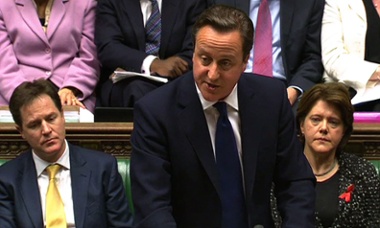
It has worked here (on the whole) since 1791. As the Brits grapple with the fallout from the multiple disasters in their news media inflicted by the minions of conservative media mogul Rupert Murdoch, they might want to consider doing nothing.

Keep calm and carry on and all that. Not to be missed: The Guardian‘s comprehensive coverage.

leveson-report-government-prepares-draft-bill-live-coverage

Leave a comment

Filed under First Amendment, Journalism, Murdoch scandal, Uncategorized

The power of reporting

By Christopher B. Daly

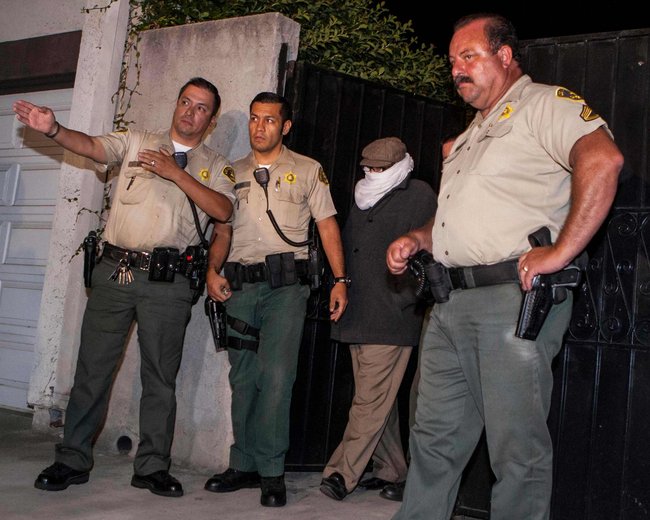
Today presents a good example of what makes the New York Times so valuable. When the “controversy” over the anti-Muhammad movie called “Innocence of Muslims” broke a couple of months ago, many news organizations covered it for a few days. Eventually, to judge by the evidence so far, they all threw in the towel and gave up trying to get to the bottom of the story of the Coptic deadbeat/activist Nakoula Basseley Nakoula (if that really is his name). All except the Times. In today’s edition, the paper presents a page-1 story with a double byline. Top billing went to Pulitzer-winner Serge Kovaleski, backed up by Brooks Barnes. But that’s not all. At the bottom of the story is a credit line that mentions four more people:

Ana Facio-Krajcer and Noah Gilbert contributed reporting from Los Angeles, and Mai Ayyad from Cairo. Jack Begg contributed research.

So, that is six journalists and counting. All of which is not to mention the folks on the photo desk and the several layers of editors who worked on this piece as well. In all, I would estimate that the full team was in the low double digits.

That is real reporting power. That is the Times’s way of saying: We don’t care how long it takes or how many people it takes, if we get interested in something, we are going to pursue it.

Is the Times perfect? Does the Times pursue every story you would like it to. Obviously not, but where would we be without it?

A man identified as Nakoula Basseley Nakoula (in white scarf) engages in a “perp walk” in California in September. Photo: Bret Hartman / Reuters

1 Comment

Filed under Journalism, New York Times