Tag Archives: journalism

Jacob Riis showed “How the Other Half Lives”

By Christopher B. Daly 

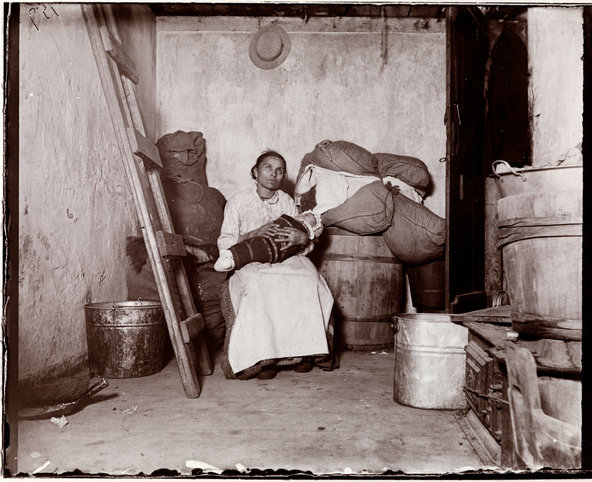
A hat-tip to journalist and educator Ted Gup for a terrific story about his discovery of a classic work of journalism history — the copy of How the Other Half Lives that was owned and annotated by the author himself, Jacob Riis. As I described him in my book, Covering America, Riis (pronounced rees) was a Danish immigrant to New York City who was shocked and outraged by the conditions he found in the city’s many tenements in the late 19th century. Picking up his notebook and a camera (equipped with a then-new technology — the portable flash), he explored the warrens of tiny, windowless rooms where New York’s newest and most miserable found cheap housing. In buildings lacking heat, ventilation and plumbing, the masses huddled while the wealthy were building ever grander pleasure domes uptown on Fifth Avenue and the rest of the Upper East Side. His work also provided a template for the journalists of the classic “muckraking” movement in the first decade of the 20th Century. 

An important thing to know about Riis’ expose, published in 1890, is that it had an impact. His photos and writing contributed to a political demand for improvements in New York City housing codes, which resulted in concrete improvements in the tenements. The city adopted new building codes that required more light, less crowding and, eventually, heat and plumbing.

In his piece in today’s Times, Gup — an investigative journalist himself who now chairs the Journalism Dept at crosstown Emerson College — describes how he stumbled upon a first edition of How the Other Half Lives that contains Riis’ own handwritten comments and marginalia. He also rightly commends Riis as a “multimedia” journalist for his combining of text and photos (and his use of a flash to light up those dark inner rooms of the tenements).

As many have observed (including the city’s new mayor, Bill DeBlasio), Riis is as relevant as ever, now that New York City is living through another Gilded Age in which wealth is as unevenly distributed as it was in the days of Rockefeller, Morgan, and Hearst.

"The Italian Rag-picker," by Jacob Riis, from his book, How the Other Half Lives.  Photo from Museum of the City of New York.

“The Italian Rag-picker,” by Jacob Riis, from his book, How the Other Half Lives.
Photo from Museum of the City of New York.


Leave a comment

Filed under history, Journalism, journalism history, Photojournalism, Politics

Partisanship in journalism: a discussion

By Christopher B. Daly

For readers’ convenience, I am posting some material that airs out the issue of partisanship in the news media. In sequence, here are:

1. A NYTimes invitation to a Sunday Dialogue, a feature of the paper’s Sunday Review section in which readers are asked to respond to a short essay.

2. My reply as published on Dec. 7, 2013.

3. A thoughtful email that I got from a reader, who gave me permission to post his ideas here.

4. The Sunday Dialogue replies by people other than me.

5. The original author’s reply to the replies.

6. My reply to that reply.

08letters-articleLarge


How Fox News, MSNBC and others present the news.

 To the Editor:

An autobiography gives an intimate account of a life, but to get the larger picture, you also need the biography.

The same goes for news. Relying on one source, or even on several sources with the same bias, will leave you with only part of the story.

That’s why the much maligned right-wing media is just as important as the so-called mainstream press. Fox News and others on the right certainly have a deeply embedded conservative bias, but the liberal bias on the other side is just as pervasive. Taken together, they roughly fill each other’s omissions.

Fox, for example, spent a good part of the past year digging into the Benghazi attack and I.R.S. tax-exempt status stories and talking hopefully about smoking guns, while the mainstream press was determined to take the Obama administration’s word for it that it did nothing wrong in either case.

More recently, when the president’s pronouncement about keeping your health insurance proved false, it was reported as a lie by the right and as a simple misstatement by the left.

And when the Obamacare website failed so miserably that not even the mainstream press could cover for it, the networks were obliged to sound like Fox for a while, although noticeably lacking was the appetite for pursuit that characterizes their coverage of Republicans.

Fairness in journalism requires not that every story or point of view receive equal weight but that every valid position receive equal respect. Thus the pro-life position should be treated with the same validity as pro-choice; small-government conservatives with the same respect as tax-and-spend liberals; Republicans as more compassionate than they sound and Democrats as less omniscient than they think.

But since journalists and news organizations are partisan at heart, one must sift through the best reporting and punditry from each side of the journalistic divide and take all the biases and agendas into account to arrive at an informed understanding of any story.

MARK R. GODBURN
North Canaan, Conn., Dec. 2, 2013

The writer is an antiquarian bookseller.

Here’s my comment:

In his lament about bias in the news media, Mr. Godburn assumes that unbiased journalism is possible and desirable. History suggests otherwise.

In the 18th and early 19th centuries, American journalism was highly political, often polemical and openly biased. That was the kind of journalism in which the likes of Sam Adams and Thomas Paine gloriously argued for liberty, and it was the form of journalism that was on the founders’ minds when they enshrined the doctrine of a free press in the First Amendment.

Only later, beginning with Benjamin Day’s Sun newspaper in 1833, did American journalists begin to develop a strong tradition of factual reporting. In part, this was the result of Day’s ambition to sell his paper to every reader (“It Shines for All”) and not limit his audience to members of any one political party.

In the 20th century, the major broadcast network news divisions, first in radio and then in television, reinforced this idea. They not only wanted the highest possible ratings, but were also operating as publicly traded corporations and were regulated by the Federal Communications Commission.

Nowadays, from within the turbulence of the digital age, we can begin to see that the years when big media companies were purveying what they described as nonpartisan, factual reporting were actually a historical period that is already fading into the past. The Internet has reinvigorated the “advocacy tradition” in journalism, and it has also made possible new forms of reporting such as crowd-sourcing, reporting that enlists the audience and the like. The spirit of innovation lives.

CHRISTOPHER B. DALY
Boston, Dec. 4, 2013

The writer is a professor of journalism at Boston University and the author of “Covering America: A Narrative History of a Nation’s Journalism.”

Here’s the email I got from blogger Steve Claflin:

Professor Daly:

Thank you for “Partisanship in the Media” in the December 8 New York Times letters.

The revived “advocacy tradition” problem you mention might be easier to manage if we had a form of majority rule that allows the general public to have more influence.

In the old days, the House was able to vote on any bill and the majority would prevail. Until an important bill recently passed by a wide margin, a Tea Party minority could usually intimidate other members, especially the Speaker, and prevent legislation that would easily pass from even getting to the floor. The minority party in the Senate can routinely block action on bills, because minority rule is built into Senate procedures. 60 votes are needed, with the help of a fickle minority, to pass legislation.

Is there anything more vital to democracy than majority rule? Is this what distinguishes democracy from autocracy? Is this what a democracy needs in order to succeed? We have the elections we normally associate with a democratic process. We reassure ourselves by going through the motions.

But the active ideological minorities in Congress, and the members who are owned and operated by special interests that donate large sums of money, are repeatedly able to slow or block or derail changes those few oppose and the rest of us generally favor. As such repeated occurrences so rudely remind us, we can have the structure, the trappings, the proceedings, the appearance of democracy without having majority rule.

Here are the other comments published in the Times:

Readers React

In an ideal world, graced by Enlightenment ideals, Mr. Godburn’s recommendation that citizens sift through biases of diverse news media outlets to form a complete perspective would be warmly endorsed. However, in this far-from-ideal world, individuals live in media echo chambers, selecting out viewpoints that agree with their own and sometimes avoiding conflicting ones.

Research finds that conservatives gravitate to Fox News and liberals to MSNBC — as well as to like-minded websites. A Pew Research Center study reported that from August to October of 2012, just 6 percent of Fox News’s election stories about President Obama were positive, while only 3 percent of MSNBC stories about the Republican presidential candidate Mitt Romney were positive.

Exposure to biased media strengthens partisan biases, exacerbating political polarization rather than producing the more informed understanding that Mr. Godburn desires.

RICHARD M. PERLOFF
Cleveland, Dec. 4, 2013

The writer is a professor of communication at Cleveland State University.

I read The New York Times every morning. I also watch more MSNBC than I like to admit. Occasionally, for entertainment, I’ll wander to Fox for a Bill O’Reilly moment or two.

Mr. Godburn’s thesis is an example of false equivalence. The Times is real journalism. But even The Times sometimes stretches too far in the service of “journalistic objectivity.” When one perspective is true and the other is propaganda, they should not be presented as equally valid.

As to MSNBC and Fox: The MSNBC host Rachel Maddow, for example, is surely dramatic. But I have never encountered an instance in which she was fundamentally dishonest. On the other hand, Fox is frequently and outrageously untethered from the truth, and its talking heads are attack dogs. Anyone consuming equal doses of this “news” will have intellectual indigestion.

If you bend over too far in the effort to be balanced, you’ll fall flat on your face.

STEVE NELSON
New York, Dec. 4, 2013

Well said, Mr. Godburn. Political correctness and a pervasive left-wing media bias are corrosive and do immense harm to the democratic process. People eventually find out that they have been misled. This breeds cynicism and mistrust. The left and the right learn to develop their own separate versions of the “truth.”

But while most right-wing news sources acknowledge their bias, those on the left deny their bias. Left-wing news sources are suffering a fallout in ratings because people are waking up to these facts and don’t like being manipulated.

FRANK COOK
Wayne, Pa., Dec. 5, 2013

Mr. Godburn makes a telling point, but he doesn’t go nearly far enough. His assertion that liberal and conservative news outlets “roughly fill each other’s omissions” assumes that there are exactly two reasonable points of view toward any given social issue; that these viewpoints are locked in a zero-sum game whereby each one can be validated only to the degree that the opposing one is impeached; and that they happen to correspond to the platforms of our two leading political parties.

Both parties are only too eager to promote this theory themselves, since it implies that together they have a monopoly on the truth. So a responsibility of both a free press and its readers is to examine both contrary viewpoints critically and consider other viewpoints — a third, fourth or fifth perspective — that have not been embraced by either side.

THOMAS LEITCH
Newark, Del., Dec. 4, 2013

Balanced news media is essential in any democracy. But let’s remember what brought us to the present situation — the 1987 repeal of the Fairness Doctrine, which required the airing of contrasting views on public issues, and the loosening of regulations on media concentration, allowing many media outlets to fall under the control of a few corporate-owned conglomerates.

Both have created a situation in which media is not only biased and unbalanced, but overwhelmingly influenced by the opinions and wishes of its corporate masters.

DOMINIC QUINTANA
Astoria, Queens, Dec. 4, 2013

Having recently returned from a trip to Brussels, I found the evening news there to be refreshing and professional. One subject wasn’t beaten to death 24/7 as it is here. You didn’t have to flip from channel to channel to see the “whole” picture, and the news was international in nature. In the United States you rarely hear about what is going on in Africa, Australia and, actually, most of the world.

It is a shame.

BONNIE CHALEK
Ridgewood, N.J., Dec. 4, 2013

I agree with Mr. Godburn that we need different perspectives. I would like to point out that Fox News is the No. 1 news source in America. Surely, that should qualify Fox as “mainstream.”

Studies have also shown that, for many Americans, Fox News is their only source of news. Those viewers are getting a slanted perspective — not balance. Defenders of Fox News often portray it as an underdog struggling to have a voice in the crowd of “mainstream” outlets, but that depiction simply isn’t consistent with its ratings.

I commend Mr. Godburn for admitting that news outlets he identifies as left-leaning did report on the problems with Obamacare. I find that so-called left-leaning news outlets, including The New York Times, are frequently critical of Democrats and their policies.

Mr. Godburn would have a much more difficult time finding comparable examples of Fox News criticizing the G.O.P. — except perhaps when it criticizes moderate Republicans for not being in lock step with the rest of their party.

TOBY PLEWAK
Easton, Mass., Dec. 4, 2013

It may be a fool’s errand to think that we can overcome media bias. The media is ultimately a collection of voices of various people, who generally stick to certain biases and opinions. The answer instead may be to encourage media outlets to be more forthcoming about their biases.

If we, as media consumers, know that a mainstream news outlet typically holds a certain viewpoint, then we can take in the news with a better understanding of what information may be missing or may be shaded one way or another. As it is, given the rather obvious political positions held by certain newspapers and television news divisions, many of us have already begun interpreting the news in this way.

MATTHEW K. KERFOOT
New York, Dec. 4, 2013

Here is Godburn’s last word:

The Writer Responds

Professor Perloff reinforces my point by noting that conservatives gravitate to right-leaning news sources and liberals to left-leaning ones, often without being exposed to contrary views or inconvenient facts.

But then he says that going to such biased sources only exacerbates the problem, as if he thinks there are reliably unbiased sources that one can go to instead. There are not, and that is why it is necessary to mine a variety of biased ones.

Mr. Nelson engages in the cheap liberal tactic of Fox-bashing. If Fox’s talking heads are attack dogs, they are poodles compared with the pit bulls he favors at MSNBC. Simply calling one’s favored sources true journalism and the other side propaganda doesn’t make it so. And if too much news causes intellectual indigestion, too little causes intellectual blinders.

Mr. Leitch is correct that there are more than two points of view. And examining all of them will not necessarily allow one to arrive at some desired middle ground. Just because you have one foot in hot water and the other in cold doesn’t mean you’re comfortable.

Professor Daly’s claim that I assume unbiased journalism is possible and desirable may have been a good lead-in for his journalistic history lesson, but that’s not what I said. The problem is not that journalists are biased — it’s that they claim they aren’t.

MARK R. GODBURN
North Canaan, Conn., Dec. 5, 2013

And, of course, since this is my blog, here’s my final, final word:

I will grant that maybe I misread his original post. When he wrote that all journalists and news organizations are partisan at heart, I thought he considered that a flaw. Perhaps inevitable, perhaps correctable (by reading multiple sources from different perspectives) but still a problem. If he says he doesn’t think so, then who am I to argue? I would say that many people (including a lot of journalists) do consider partisanship some kind of original sin of journalism.

Comments?

Leave a comment

Filed under blogging, broadcasting, First Amendment, history, Journalism, journalism history, media, New York Times, Politics

No cheering in the pressbox, please.

By Christopher B. Daly 

Boston Globe sports columnist Dan Shaughnessy had a remarkable column on the front page of the paper today. It was remarkable for several reasons.

First, it was on page 1, which suggests to me that it was a newsroom decision to put this on the front page. I wonder why? That means, for one thing, that the Globe’s editors wanted this message to reach readers beyond those who read the sports pages.

Second, it makes a point about the methodology of writing columns, which is more “meta” than Dan usually gets. So, I wonder if this column was prompted by something specific. (Maybe the new Ted Williams biography by Dan’s former colleague, Ben Bradlee Jr., which reminds us of the feud Williams had with Boston sports columnists who were not sufficiently admiring.)

Perhaps it has to do with the Globe’s new owner, John Henry, who also happens to be the major owner of the Boston Red Sox. Was Dan declaring his independence from both the team and the new owner? Was the newsroom supporting him in this? Were they trying to tell Henry (who is new to the role of newspaper-owner) that he should not expect Shaughnessy — and, by extension, the whole Globe staff — to use their words and images to support the boss’s causes and interests? Does that extend to Henry’s business interests? To his politics?

Boston Globe image

Boston Globe image

Dan (full disclosure: he’s a friend, and our boys are friends) is making a case that should be self-evident. Years ago, the principle was established among the guild of sports writers that they attended sporting events not to root for the teams they were covering. This attitude was expressed quite well in the classic formulation: “No cheering in the pressbox.”

That goes for the hometown team, too. I believe the job of a sportswriter is to call them as he/she sees them. If my team stinks, I want to know why. I don’t want to be told that they don’t stink when they do.

Dan’s column got a lot of comments, many of which were the kind of harsh put-down that fills sports radio, the internet, and many a comments section. Turns out, a lot of guys want a columnist like Dan to agree with them. That, too, is not his job. As I understand the calling of columnist, the job is to be interesting, plain and simple. A columnist should write about things that are true in an interesting way and write about things that are interesting in a true way.

It’s not the same job as being a reporter or a beat writer. That is a more factual task, trying to answer the basic question: what happened? The columnist is trying to answer a different question: of the things that just happened, which ones are not obvious but would amuse, inform, challenge, provoke, or beguile my readers?

This has been true since the early days of column writing in the early 20th century and can be seen in the work of

Red Smith

Red Smith

the great Red Smith or in the tremendous columns churned out by the likes of Walter Lippmann, Dorothy Thompson, Langston Hughes, and Ernie Pyle (see Covering America).

Keep ’em coming, Dan. And don’t pull any punches.

2 Comments

Filed under Journalism

Interrogation: Jack Bauer v. Frank Columbo

By Christopher B. Daly

Recently, my colleague Doug Starr has gotten a good deal of deserved attention for his work on the subject of interrogation, including a fact piece in the New Yorker and an interview on NPR’s Fresh Air.

Doug is an experienced science journalist who has written important books on the history of the global trade in blood (Blood)  as well as the birth of forensic science in late 19th C. France (The Killer of Little Shepherds). In turning his attention to the science of interrogation, Doug found that actually there is no science to support a widespread suite of interrogation techniques. The approach most commonly used by U.S. police departments is prone to producing false confessions.

Turns out, there is a better way:

What works best is to calmly ask a suspect some open-ended questions. That forces the suspect to generate a narrative. So far, so good. Then, you check the parts that you can against any external sources. Then, you have the suspect tell the “story” again, looking for discrepancies, even tiny ones. Repeat as needed.

No shouting, no threats. No good cop/bad cop routine. No torture.

What strikes me is that this interrogation technique corresponds to the approach used by another occupational group: journalists. This is essentially what reporters do: ask questions, listen to the answers, check the information against other sources, then go back over the same ground again — as many times as necessary.


images


The model that I try to steer my students toward is not Jack Bauer on the TV series “24.”


Instead, I recommend Frank Columbo on the eponymous TV show from the 1970s and 80s. Never in a hurry, forever dressed in that rumpled trenchcoat, Frank Columbo was always willing to appear to be the dumbest guy in the room and never hesitated to admit

ColumboDVD3 that he just couldn’t understand a case and ask a suspect to run through a story just once more.

Here’s a glimpse from Wikipedia:

Columbo is polite. He has a keen intellect and good taste which he hides very well. Though a bit dated, his clothes are high quality. Columbo never divulges his first name. His absent-minded approach to cases, his distracted outbursts and constant pestering of suspects is his modus operandi. He is gifted at lulling anyone guilty into a false sense of security. Often he would pursue a line of question that brings about minimal information, not pressing enough to cause the suspect any alarm. Columbo would thank the suspect, and turn to leave – only to turn back at the last second, claiming to suddenly have remembered something (stating, “Oh, uh, one more thing…” or some variant thereof), and present the suspect with a far more serious and vital question, catching the suspect off guard. This is referred to as “the false exit”.

But I don’t think that quite captures Columbo’s genius. Like a good, veteran reporter, Columbo approaches each case serene in the knowledge that if he asks enough questions and listens carefully enough, the suspect will eventually tell him everything he needs to know.

That’s really all there is to it:

Ask.

Listen.

Ask again.


1 Comment

Filed under Journalism

Hyper-local news: a $300 million bust?

By Christopher B. Daly

Now comes word that AOL’s CEO, Tim Armstrong, is putting the finishing touches on the finale of Patch.com, the online local news sites. In his column today, NYTimes‘ David Carr reports that Armstrong is throwing in the towel on what used to be his baby. Too bad it didn’t work out.

There was a time when Patch looked like it might be an important part of the journalistic future. It was based on a key insight: more people were getting their news and information online, so why not local news? (Plus, there are a lot of local pizza parlors and nail salons that might advertise in such a site but would not be bothered advertising on a bigger site, because they would be paying to reach a lot of people who would never wander into their shops.)

While it lasted, Patch was a source of entry-level jobs for our journalism students, and I am worried about what will replace it.

Here’s Carr’s take:


The theory was that Patch would use a single news person and a single advertising person, at least initially, to create a digital maypole in hundreds of communities at a cost of about $100,000 annually per site. Patch sites popped up across the country, like Calabasas, Calif., and Nashua, N.H., covering high school sports, city elections and other local fare.

The execution risk was large — Patch was all moving parts, many undermanaged. At its peak, some 900 sites employed 1,400 people. Much of the journalism was pedestrian, while some of it, especially during Hurricane Sandy, was deeply important, but the decision to start at such a large scale was crippling. And all local efforts, digital or not, confront the tyranny of small numbers. Both the journalism and the ad sales were hand-to-hand, a retail effort that required spending a lot of money to go after pretty small revenue.

In August, it was clear that the math would not work. More than 350 people at Patch were laid off and hundreds of sites were shuttered.

What strikes me is the amount of money Armstrong was able to shovel into it — $300 million. Even for corporate moguls, that’s not nothing. Maybe that’s what was wrong all along: if you want to live online, keep your costs down.

I look forward to the experiment in this space that gets it right.


1 Comment

Filed under business, Journalism, publishing

What China really fears: a free press

By Christopher B. Daly 

[Update: TNR weighs in with a piece stressing the perils of self-censorship.]

Through their statements and actions, the leaders of China are showing their true colors. For all their talk about moving toward a more modern, open, accountable society, China’s leaders refuse to budge on one issue. Their policies indicate that what they fear above all — even more than U.S. fighter jets cruising through contested air space — is a free press. Specifically, they fear a U.S.-style press that insists on afflicting the powerful by investigating them.

The evidence is in the Chinese handling of recent revelations by reporters for the New York Times and Bloomberg. American journalists who cover China have made dramatic disclosures about how the families who hold power in China manage to use that power to enrich themselves personally. The bar for this kind of reporting was set by David Barboza of the Times (and a Boston University alumnus, BTW), whose series “The Princelings” won a Pulitzer Prize earlier this year.

The Chinese reaction was characteristically blunt: the government in Beijing pulled the plug on the NYTimes in China, banning the print and electronic editions. Now the government is dragging its heels on renewing the visas that journalists like Barboza need to stay in the country and continue their work.

Here is a quote from a Chinese Foreign Ministry official that captures the issue perfectly:

“As for foreign correspondents’ living and working environments in China, I think as long as you hold an objective and impartial attitude, you will arrive at the right conclusion.”

What this reveals is an outlook that holds that there is a “right conclusion” — which is determined by the Communist Party — and that the task of journalists is to discern the party’s views and stick to them. In other words, don’t rock the boat.

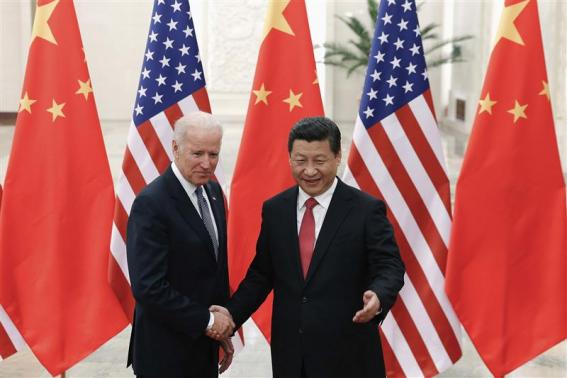
The issue is such an irritant between the U.S. and China that vice president Joe Biden put it on the agenda during his visit to China this week. From today’s NYT version:

Vice President Joseph R. Biden Jr. raised the issue here in meetings with President Xi Jinping and other top Chinese leaders, and then publicly chastised the Chinese on Thursday for refusing to say if they will renew the visas of correspondents and for blocking the websites of American-based news media.Chinese President Xi Jinping shakes hands with U.S. Vice President Joe Biden inside the Great Hall of the People in Beijing

“Innovation thrives where people breathe freely, speak freely, are able to challenge orthodoxy, where newspapers can report the truth without fear of consequences,” Mr. Biden said in a speech to an American business group.

At a meeting on Thursday with Beijing-based reporters from The New York Times and Bloomberg, Mr. Biden said that he warned Chinese leaders, in a formal session and over dinner, that there would be consequences for China, especially in the Congress, if it forced out the journalists. But he said Mr. Xi appeared unmoved, insisting that the authorities treated reporters according to Chinese law.

If only the U.S. had some good options for pressuring the Chinese. We could exclude Chinese journalists from working in the United States, but that’s a terrible idea. We do not want to sink to the level of unprincipled tactics used by the Chinese, and we want to encourage more coverage of America in China, not less.

I don’t have a great answer here, except for patience. It is an article of faith with me that the truth will out and that in the long run, the power of the press will win out. Besides, I have one other reason for optimism: I teach a lot of young Chinese students about American journalism — its history, its principles, its techniques. Most of them go back to China, and when they return they bring some lessons they are unlikely to unlearn.

princelings-landing-page-jumbo

Leave a comment

Filed under business, Journalism, media, New York Times

The power of narrative: NPR tells the tale of a T-shirt

A hat-tip to the talented team at NPR’s “Planet Money.” They are spinning a yarn this week about how a T-shirt is made, from start to finish. Best of all, they decided to actually make a specific T-shirt of their own, and reporters worldwide are contributing to a narrative that traces the arc of that T-shirt from the cotton fields of the Deep South to a robotic yarn-spinning factory in Indonesia and god-knows-where next.

Great idea, great sound, intelligent reporting. Way to go.

machines-callout_custom-f6c175d992dc3a44e766a669252f32b8afdfb30d-s3-c85

Read. Listen. Enjoy.


Leave a comment

Filed under broadcasting, business, Journalism, NPR

New York mag cuts back on print edition

By Christopher B. Daly 

[Update: Here is a glass-half-full response to Carr, which I think makes a lot of sense.]

David Carr uses his NYTimes “Media Equation” column today to describe the changes going on at New York magazine under its phenomenally successful current editor, Adam Moss. The magazine is scaling back its print version from nearly weekly now to

“You can’t help but get wistful about it,” said Adam Moss, the editor in chief of New York. Photo: Fred R. Conrad/NYT

“You can’t help but get wistful about it,” said Adam Moss, the editor in chief of New York.
Photo: Fred R. Conrad/NYT

every other week. The culprit: the high cost of printing and distribution versus the dropping value of print advertising.

The good news: the printing cutback is being done in service of strengthening the online version, which is the magazine’s future.

Meanwhile, New York is actually thriving by some measures: the website is going gangbusters and is considered must reading among younger “readers” in Manhattan and Brooklyn (as well as aspirational districts around the rest of the world).

As a supplement to Carr’s column, I am offering a couple of excerpts from my book Covering America that touch on the early days of New York, under its founding editor, Clay Felker:

. . . Another reason for the success of the New Journalism was institutional. Like the innovators of any new creative movement, the practitioners of this hybrid form of journalism needed patrons. They did not find them among the lords of the newsroom, the editors of America’s daily newspapers, who mostly thought these writers had lost their bearings (and maybe their sanity). Instead the New Journalists found sympathy, encouragement, expense accounts, and pretty good pay at a handful of magazines with extraordinary editors. One of the most influential was Clay Felker, who edited the Sunday supplement published by the Herald Tribune. It was an incubator for the talents of the young Tom Wolfe and a columnist named Jimmy Breslin. Felker, who had previously worked at Esquire, stayed at the Trib, cultivating good new writers—such as Gloria Steinem—wherever he could find them, until the newspaper folded in 1967. Then he took the nameplate of the Trib’s Sunday magazine, New York, and turned it into the prototype “city magazine.” In the early days, New York magazine also served as one of the unofficial headquarters of the New Journalism. A second clubhouse was not far away in Manhattan, at the offices of Esquire magazine. Under editor Harold Hayes, Esquire published many of the foundational pieces of the New Journalism, including Norman Mailer’s 1960 meditation on JFK, “Superman Comes to the Supermart,” and Gay Talese’s famous profiles of Joe DiMaggio and Frank Sinatra. Elsewhere in Manhattan, literary agents and editors at book publishing houses were starting to talk to some of these hotshot young writers, and some of those journalists quit their newspaper jobs to become full-time writers. . . 

Here’s another excerpt, about Felker and Gloria Steinem:

. . . One of the most prominent and influential women who changed the perception of feminism was a journalist and political activist who helped found a magazine that captured the new zeitgeist—Gloria Steinem. With obvious talent, intelligence, and (as was always remarked) good looks, Steinem became a highly visible figure who helped to lead both a magazine and a movement.

After a difficult childhood in Toledo, where she saw firsthand the vulnerability of women in traditional roles after her father left her mother, Steinem went to Smith College. Following her graduation in 1956, she traveled around India before landing in New York City, where she began to work as a freelance magazine writer. She worked hard and took all kinds of assignments. In an effort worthy of Nellie Bly, Steinem even went undercover for an article about working as a Playboy bunny. She thrived as a freelance writer, and she became a rising star. But still, as a “girl reporter,” she knew there were limits. (The low point: a piece for the New York Times magazine about textured stockings.) Over the course of the decade, even as she kept writing, Steinem became an activist in the civil rights, antiwar, and farm workers’ movements.

She found a congenial base at New York magazine, where editor Clay Felker allowed Steinem to tackle bigger and better assignments. Eventually she wrote the magazine’s “City Politic” column, which meant she was covering national politics and all the major issues. She liked Felker, and he advanced her career immeasurably, but in the end they came to an impasse: he was interested in pro-feminist articles only if they were paired with articles from an opposing point of view. “That’s why I gradually stopped writing for New York,” Steinem later explained. “It was just too painful to be only able to do it in the context of two women fighting.” . . .

1 Comment

Filed under Journalism, journalism history, Uncategorized

Ted Williams and his feud with baseball writers

By Christopher B. Daly

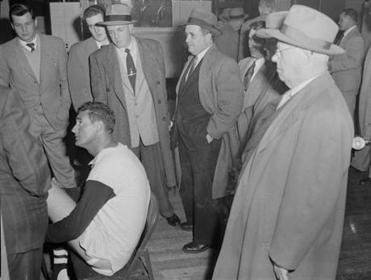
The Boston Globe is running a series of excerpts from a new book about Ted Williams, written by Ben Bradlee Jr., a former Globe editor and son of the great Washington Post editor. Today’s installment focuses on Ted’s testy relationship with the press corps, particularly the large gang of baseball writers who worked for the Boston dailies in the 1940s and 50s. Fun fact: Boston had nine daily newspapers back then, with separate sports staffs. Here’s the line-up:

Between 1939 and 1960, the years spanning Ted’s career with the Red Sox, Boston had eight major newspapers, or nine if one counted both the morning and evening editions of The Boston Globe, which had separate staffs and circulations. The morning papers were the Post, the Herald, the Record, the Daily Globe and the Christian Science Monitor. The evening journals were the American, the Transcript, the Traveler, and the Evening Globe. The Post and the Record dominated the city in 1940 with circulations of 369,000 and 329,000 respectively.

Here’s an excerpt from the excerpt:

In the ’30s, ’40s, and ’50s, major league baseball was by far the dominant sport in the country, and would often take up a third of the front page of newspapers in Boston, New York, Chicago, and Philadelphia. To be a baseball writer assigned to cover one of the big league teams was a highly prized assignment.

The writers wore suits. On long road trips, they’d play poker on the trains with the players and among themselves. Some great yarns came out of those trips, but in the fraternal milieu, it was understood that the stories would stay in-house, never to turn up in print.

On average, the writers were a generation-or-more older than the players they covered. Before World War II, the vast majority had not gone to college, and in the ’40s, their salaries ranged between $5,000 and $7,000 a year. But you couldn’t beat the perks. In what seems a quaint anachronism today, it was common practice at least into the ’60s for the ball clubs to pay all the expenses of the writers when the teams traveled. The reporters would stay at the best hotels, order from room service, and eat at fine restaurants. Moreover, they spent six weeks in Florida for Spring Training on the teams’ tab as well. In return for such largesse, the clubs of course expected, even demanded, favorable coverage, and they received it. On the rare occasions they did not, the teams would not hesitate to assert their economic leverage over the papers.

Does any sportswriter still wear a suit? (or a fedora?)

Ted Williams surrounded by the gentlemen of the press.  (via Boston Globe)

Ted Williams surrounded by the gentlemen of the press.
(via Boston Globe)


2 Comments

Filed under Boston, Journalism, journalism history, Red Sox

JFK Remembered

By Christopher B. Daly 

Among the many journalistic efforts to commemorate the assassination of John F. Kennedy on its 50th anniversary, one of the best is a production by JFK’s hometown newspaper, The Boston Globe. In its print editions of today, the Globe wrapped the day’s regular edition in a special four-page supplement made up on reproductions of the paper’s actual pages in 1963.

In the online edition, the Globe has links to an interactive graphic. The graphic consists of images of historic front pages from Nov. 22 to Nov. 29, 1963. If you scroll over articles, you can click through to the full text of each. Beautiful, powerful, useful.

112263-evening1_01

Some highlights from that week:

–the old Globe, like most American newspapers, was wider then, running to eight columns wide (instead of today’s standard of 6)

–the Globe ran ads on page 1, which was commonplace until the glory days of the 1970s and 1980s, when a lot of U.S. papers were profitable enough to forego those ads as a point of pride.

–the paper featured a lot of wire-service copy, mostly from AP but including the famous “scoop” by UPI’s Merriman Smith on the assassination. Here’s the lead:

DALLAS (UPI) –President Kennedy was assassinated here today.

A single shot through the right temple took the life of the 46-year-old Chief Executive. He was shot as he rode in an open car in downtown Dallas, waving and smiling to a crowd of 250,000.

Smith beat out the AP by using the car phone in a limousine in the motorcade to dictate his lead, then bending over the phone to physically block it from the AP reporter, who pummeled Smith for access to the phone but could not get his hands on it.

–In the Nov. 23 edition of the Globe, the front page features stories by UPI’s Helen Thomas, who only recently gave up covering the White House, and by Mary McGrory, whose son Brian now edits the Globe.

–On the 28th, the Globe ran a page 1 column by Walter Lippmann, the great mid-century syndicated columnist. True to form, Lippmann held forth in his most olympian mode, saying little but sounding momentous.


Leave a comment

Filed under Boston, Journalism, journalism history