Tag Archives: journalism

The re-making of the news media

By Christopher B. Daly 

We are living through a period of great flux in the news business. There are new ventures, new hybrids, new devices for gathering and disseminating information, documents, and polemics. It’s a treat to have a front-row seat (Goodbye, Google Reader! Hello, Feedly!), but it can be disorienting at times.

To wit: the decision by the mighty Time Warner media conglomerate to abandon its shiny, still-new namesake building at Columbus Circle in Manhattan and decamp to a still-unfinished tower in a lower-rentPennStation district the developers refer to as Hudson Yards. (Does anybody really call it that? It’s really a vast wasteland on the Far West Side between Chelsea and Hells Kitchen, but it is slowly becoming a new media hub within Manhattan.)

But not to be missed is a more powerful trend sweeping through much of Big Media: the break-up of many of the big conglomerates. At Time Warner, at News Corp., and at Tribune Co., the same de-conglomeration process is underway: the division of those big companies into a print division and a (for lack of a better word) video division.

–Time Warner is spinning off its magazine division, which has been the cornerstone of the Time empire since Henry Luce founded Time magazine in 1923.

–News Corp. took out a double-truck ad in the NYTimes on Monday to signal its separation into two divisions. One made up of the Wall Street Journal, the NYPost and many, many other newspapers along with some magazines, almost all of which lose money. The other is a new company (called “21st Century Fox”) made up of the highly profitable television, cable, and movie-making subsidiaries. (The new video division began trading on the stock market on July 1; shares opened at $29 and basically stayed there all day. The new print division has not started trading yet.)

–Tribune Co., which traces its roots to the Chicago newspaper empire founded by Joseph Medill and taken over by his grandson, Col. Robert R. McCormick, announced this week that it is going to spend $2.7 billion to buy 19 local television stations around the country. At the same time, Tribune Co. is trying to sell “some or all of its newspaper properties,” including the cornerstone Chicago Tribune, according to a story in today’s NYT business section.

–The New York Times Co., which traces its roots to the founding of the New-York Daily Times newspaper in 1851, began selling off its broadcast units about six years ago and completed the process a few years later. The Times Co. is apparently pursuing a strategy of shrinking to its core business and trying to defend the castle keep with a paywall.

The big open question: What will any of this mean for the quality of the journalism that is carried out by these companies?

Stay tuned.

Leave a comment

Filed under broadcasting, Journalism, journalism history, New York Times, publishing

TV in courtrooms? TV in statehouses?

By Christopher B. Daly

In America, where the people attempt to rule themselves, why should we not have access to even the innermost reaches of our executive, legislative and judicial branches of government? It seems to me that if we really believe in transparency, we should demand it. We should operate on the assumption that all government operations are open unless there is a really good case for closing them.

Two cases in point:

–The Whitey Bulger trial in Boston is a matter of intense interest to a couple of million people in eastern Massachusetts and lots of other individuals around the country. But we cannot watch his trial on television, because video cameras are banned from federal courts. Instead, we make do with the daily work of “sketch artists,” pursuing an odd hybrid of fine art and journalism that should have gone out of business by now. TV cameras have been operating for decades in most state-level courts, and guess what? The quality of justice in the state courts has not diminished measurably.

(LEFT TO RIGHT) CHRISTINE CORNELL; JANE FLAVELL COLLINS; MARGARET SMALL Boston Globe

(LEFT TO RIGHT) CHRISTINE CORNELL; JANE FLAVELL COLLINS; MARGARET SMALL
Boston Globe

–The recent filibuster in the Texas Legislature made a hero of state Sen. Wendy Davis (and her pink running shoes). Last week, she borrowed a tactic from conservatives and waged a real, old-fashioned filibuster in order to block a bill that would have seriously rolled back access to abortion in Texas. Yes, she was aligned politically with the liberal agenda. Yes, she was very telegenic. But the only reason that she could rise to her current level of stardom is the presence of television cameras that routinely record and transmit the people’s business being done in the legislature.

Sen. Wendy Davis faces the cameras.

Sen. Wendy Davis faces the cameras.

Obviously, we the people cannot attend every court hearing or legislative debate. For one thing, we are busy. For another, we would never all fit in the tiny public galleries available in most courtrooms or legislative chambers. We need access.

Let those cameras in!

(And if you are worried about the presence of cameras touching off an epidemic of grandstanding, forget it. Our litigators and legislators are already grandstanding every day. We’re just missing a lot of it.)

1 Comment

Filed under broadcasting, Journalism, Politics, Uncategorized

NSA Leak: Is Greenwald a journalist or activist? (Does it matter?)

By Christopher B. Daly

In his NYTimes column today, David Carr raises a somewhat misleading question about Glenn Greenwald, who broke the story about the illegal, secret NSA spying on innocent Americans. Carr poses the question: is Greenwald a journalist or an activist?

I think that’s the wrong question, for several reasons.

First, as a historian of journalism, I start with looking at the history of American journalism. For more than a century, back in the early days of newspapers in Colonial America and during the first few decades of the early national period, there was no such thing as “objectivity” in the newspaper business, and there were no full-time reporters.

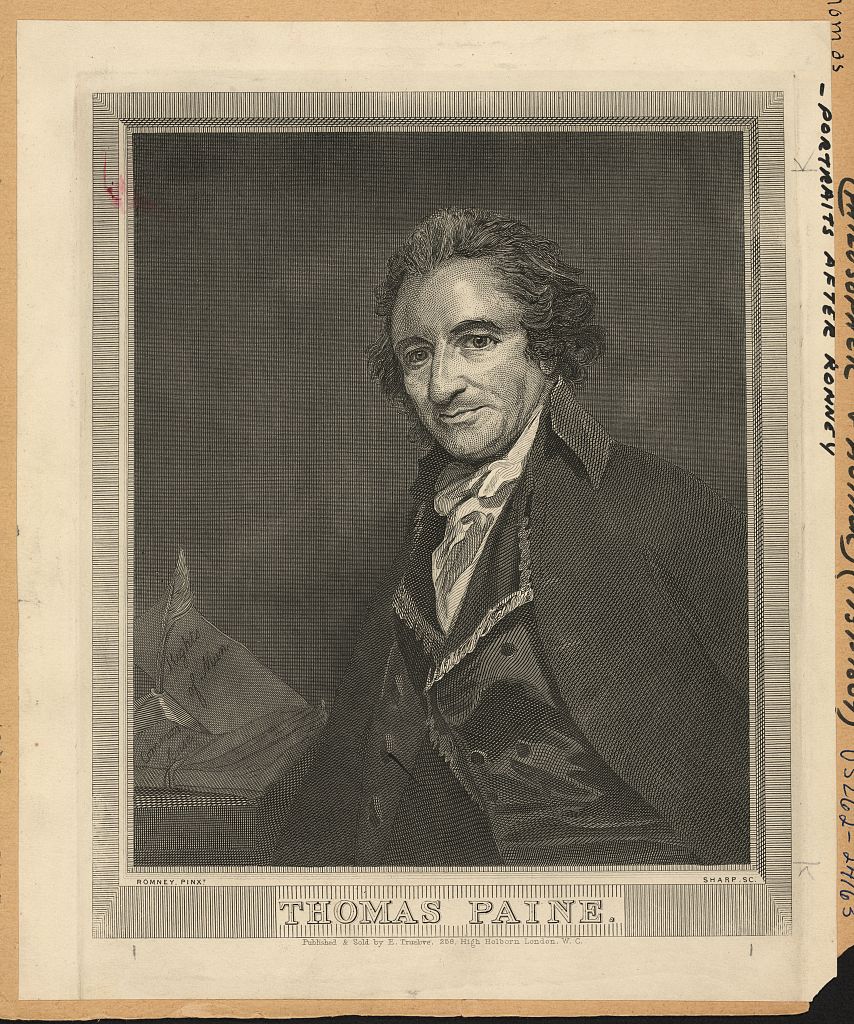
Thomas Paine (Library of Congress)

Thomas Paine (Library of Congress)

That is, the entire industry was based on content created by people with an ax to grind. Often, they were political activists (like Sam Adams or Tom Paine) or surrogates for office-holders (like James Callender).

The idea that a journalist should be defined as a full-time, professional fact-gatherer who has no political allegiances is not only unrealistic, but it is already a historical artifact. If that definition of a journalist ever made sense, it was during a period (the mid and late 20th century) that is now over. Today, the term “journalist” embraces all sorts of folks with different business models, different priorities, and different media. So be it.

Glenn Greenwald is actually a case in point for this new media landscape. He is not just a reporter. He is a lawyer-litigator, an author, a columnist, a blogger, and an advocate. He is also gay and living in a DOMA-induced exile in Brazil. In all he does, he appears to have strong convictions (or biases, if you prefer). He makes no bones about his allegiances. In a sense, he is the compleat modern journalist — global, multi-platform, high-impact.

I don’t agree with him on everything, but I value what he does. And I appreciate knowing where he’s coming from — unlike some journalists who actually have an agenda but deny it.


1 Comment

Filed under history, journalism history, media, Uncategorized

Monday morning roundup

Odds & Ends:

–Here’s David Carr on the “British invasion” of the high end of American media. (Why don’t they ever try to take our unpaid internships and crummy starting jobs?)

–Here’s the Times’ attempt to keep with Edward Snowden. What I found remarkable about this story — which was, after all, quite inconclusive — was the combined throw-weight of the team of reporters. In addition to the triple byline, I count seven more bylines in the credit line at the bottom. That’s 10 reporters on three continents, not to mention interns, news aides, editors, photographers, and photo editors. Take that, HuffPo!

–Here’s a Times feature on the antiquated ways of SCOTUS. These are not merely quaint. I believe they are snubbing their noses at all the rest of us, because they can. They are among the most unaccountable holders of power in the country. Perhaps an occasional impeachment (yes, it can be done and has been) would get their attention.


2 Comments

Filed under Uncategorized

Bulger trial coverage

By Christopher B. Daly

Whitey Bulger, courtesy of Boston PD. One of the greatest mugshots in the history of the genre.

Whitey Bulger, courtesy of Boston PD. One of the greatest mugshots in the history of the genre.

The long-awaited trial of gangster/murderer Whitey Bulger is in full swing in a federal courthouse in Boston (named for the longtime congressman from the district of South Boston, the late Joe Moakley).

Some of the journalists and news institutions covering the trial are doing excellent work. Here’s a guide:

The Boston Globe, the biggest news organization in New England, is all-in. Here’s a link to their special expanded coverage for “Globe Insiders” (which just means non-freeloaders — i.e., those who have a digital subscription, as we all should).

WBUR, the longtime news leader among NPR stations in the region, has a smart-looking special section as well, led by veteran reporter David Boeri.

2013_Bulger-Banner_940x125

Both sites are rich with background, photos, timelines, who’s-who’s, and (my favorite) maps.

Also meritorious: the reporting of the ubiquitous Adam Reilly, who reports for the city’s other major NPR station, WGBH.

bulgerbanner3

And, if that’s not enough, you can always follow the Twitter feeds (#bulger), which are emerging as a pretty good workaround for the continuing silliness of banning TV cameras from federal trial courts.

Oh, and for deep background, read the Whitey biography written by my friend and BU colleague Dick Lehr.

2 Comments

Filed under Boston, Journalism, Uncategorized

NYTimes videos revisit recent past

By Christopher B. Daly 

Without much fanfare, the New York Times has been engaging in an interesting experiment that revisiting old news stories to address the ageless qusetion: “Oh, yeah . . . whatever happened to that?”

Rev. Al, back in the day.

Rev. Al, back in the day.

The service is a partnership between the Times video section and a private non-profit called “RetroReport.” (It’s not that easy to find on the Times site, but here is the link to the page that lists all seven such reports done to date.) According to the partner’s website, RetroReport’s mission is to produce video follow-ups to big stories from a decade or more ago that dropped off the radar of the news business. Recent examples include revisiting the Tawana Brawley case, the Biosphere 2 experiment, and the Y2K hubbub. The folks at RetroReport seem to be a mix of young documentarians and some heavy-hitting alumni of top-shelf operations like 60 Minutes, the Ken Burns films, and PBS.

This is a potentially great idea that brings the Times into the realm of creating the second draft of history as well as the first. In a sense, the Times has entered the field

Biosphere 2. Remember?

Biosphere 2. Remember?

of historical revisionism, giving its audience the chance to re-evaluate stories that once seemed to have one point or significance only to find that new evidence or new concerns have cast the recent past in a different light.

One theme that emerges from these early versions: a lot of stories are wrong the first time around.

Another theme: Despite the predictions, the sky rarely falls.

History keeps happening.


1 Comment

Filed under history, Journalism, journalism history, media, New York Times, Photojournalism

David Simon on U.S. spy program

By Christopher B. Daly

I think he’s wrong (for reasons I hope to get to), but I also think it is worth reading this long post by David Simon, author of “The Wire” and much else.

Worth noting: the reason that David Simon can hold forth on this subject is that journalists ferreted out the details of this program, relying in part on leaks of classified information from confidential sources. Without those sources and those journalists, we would all still be in the dark.

logo2

Leave a comment

Filed under Journalism

Obama welcomes debate . . . on his secret program

By Christopher B. Daly 

President Obama says that when it comes to deciding on the wisdom of the government’s vast data-mining operations, “I welcome this debate.” What he did not say is that we could not have such a debate unless journalists reported on leaks of classified information. The executive branch’s Plan A was to do all this in secret and never debate it.

Here is a transcript of his remarks Friday on the subject. Taken as a whole, it is quite thoughtful, nuanced, and worth considering. But it is based on a fundamentally misleading premise (which I have highlighted in bold).


Obama’s Remarks on Health Care and Surveillance

The following is a [partial — cbd] transcript of President Obama’s remarks about the health care overhaul and response to a question about electronic surveillance in San Jose, Calif., as provided by the White House:


QUESTION: Mr. President?


MR. OBAMA: I’m going to take one question. And then, remember, people are going to have opportunities to also — answer questions when I’m with the Chinese President today. So I don’t want the whole day to just be a bleeding press conference. But I’m going to take Jackie Calmes’ question.


QUESTION: Mr. President, could you please react to the reports of secret government surveillance of phones and Internet? And can you also assure Americans that the government — your government doesn’t have some massive secret database of all their personal online information and activities?


MR. OBAMA: Yes. When I came into this office, I made two commitments that are more important than any commitment I made: Number one, to keep the American people safe; and number two, to uphold the Constitution. And that includes what I consider to be a constitutional right to privacy and an observance of civil liberties.


Now, the programs that have been discussed over the last couple days in the press are secret in the sense that they’re classified. But they’re not secret in the sense that when it comes to telephone calls, every member of Congress has been briefed on this program. With respect to all these programs, the relevant intelligence committees are fully briefed on these programs. These are programs that have been authorized by broad bipartisan majorities repeatedly since 2006.


And so, I think at the outset, it’s important to understand that your duly elected representatives have been consistently informed on exactly what we’re doing. Now, let me take the two issues separately.


When it comes to telephone calls, nobody is listening to your telephone calls. That’s not what this program is about. As was indicated, what the intelligence community is doing is looking at phone numbers and durations of calls. They are not looking at people’s names, and they’re not looking at content. But by sifting through this so-called metadata, they may identify potential leads with respect to folks who might engage in terrorism. If these folks — if the intelligence community then actually wants to listen to a phone call, they’ve got to go back to a federal judge, just like they would in a criminal investigation.


So I want to be very clear — some of the hype that we’ve been hearing over the last day or so — nobody is listening to the content of people’s phone calls. This program, by the way, is fully overseen not just by Congress, but by the FISA Court — a court specially put together to evaluate classified programs to make sure that the executive branch, or government generally, is not abusing them, and that it’s being carried out consistent with the Constitution and rule of law.


And so, not only does that court authorize the initial gathering of data, but — I want to repeat — if anybody in government wanted to go further than just that top-line data and want to, for example, listen to Jackie Calmes’ phone call, they would have to go back to a federal judge and indicate why, in fact, they were doing further probing.


Now, with respect to the Internet and emails — this does not apply to U.S. citizens and it does not apply to people living in the United States. And again, in this instance, not only is Congress fully apprised of it, but what is also true is that the FISA Court has to authorize it.


So in summary, what you’ve got is two programs that were originally authorized by Congress, have been repeatedly authorized by Congress, bipartisan majorities have approved on them, Congress is continually briefed on how these are conducted. There are a whole range of safeguards involved, and federal judges are overseeing the entire program throughout. We’re also setting up — we’ve also set up an audit process, when I came into office, to make sure that we’re, after the fact, making absolutely certain that all the safeguards are being properly observed.


Now, having said all that, you’ll remember when I made that speech a couple of weeks ago about the need for us to shift out of a perpetual war mindset, I specifically said that one of the things that we’re going to have to discuss and debate is how are we striking this balance between the need to keep the American people safe and our concerns about privacy? Because there are some tradeoffs involved.


I welcome this debate. And I think it’s healthy for our democracy. I think it’s a sign of maturity, because probably five years ago, six years ago, we might not have been having this debate. And I think it’s interesting that there are some folks on the left but also some folks on the right who are now worried about it who weren’t very worried about it when there was a Republican President. I think that’s good that we’re having this discussion.


But I think it’s important for everybody to understand — and I think the American people understand — that there are some tradeoffs involved. I came in with a healthy skepticism about these programs. My team evaluated them. We scrubbed them thoroughly. We actually expanded some of the oversight, increased some of safeguards. But my assessment and my team’s assessment was that they help us prevent terrorist attacks. And the modest encroachments on the privacy that are involved in getting phone numbers or duration without a name attached and not looking at content, that on net, it was worth us doing. Some other folks may have a different assessment on that.


But I think it’s important to recognize that you can’t have 100 percent security and also then have 100 percent privacy and zero inconvenience. We’re going to have to make some choices as a society. And what I can say is that in evaluating these programs, they make a difference in our capacity to anticipate and prevent possible terrorist activity. And the fact that they’re under very strict supervision by all three branches of government and that they do not involve listening to people’s phone calls, do not involve reading the emails of U.S. citizens or U.S. residents absent further action by a federal court that is entirely consistent with what we would do, for example, in a criminal investigation — I think on balance, we have established a process and a procedure that the American people should feel comfortable about.


But, again, these programs are subject to congressional oversight and congressional reauthorization and congressional debate. And if there are members of Congress who feel differently, then they should speak up. And we’re happy to have that debate.


Okay? All right. And we’ll have a chance to talk further over the course of the next couple of days.


QUESTION: Do you welcome the leaks, sir? Do you welcome the leaks? Do you welcome the debate?

MR. OBAMA: I don’t welcome leaks, because there’s a reason why these programs are classified. I think that there is a suggestion that somehow any classified program is a “secret” program, which means it’s somehow suspicious.

The fact of the matter is in our modern history, there are a whole range of programs that have been classified because — when it comes to, for example, fighting terror, our goal is to stop folks from doing us harm. And if every step that we’re taking to try to prevent a terrorist act is on the front page of the newspapers or on television, then presumably the people who are trying to do us harm are going to be able to get around our preventive measures. That’s why these things are classified.

But that’s also why we set up congressional oversight. These are the folks you all vote for as your representatives in Congress, and they’re being fully briefed on these programs. And if, in fact, there was — there were abuses taking place, presumably those members of Congress could raise those issues very aggressively. They’re empowered to do so.

We also have federal judges that we put in place who are not subject to political pressure. They’ve got lifetime tenure as federal judges, and they’re empowered to look over our shoulder at the executive branch to make sure that these programs aren’t being abused.

So we have a system in which some information is classified, and we have a system of checks and balances to make sure that it’s not abused. And if, in fact, this information ends up just being dumped out willy-nilly without regard to risks to the program, risks to the people involved — in some cases, on other leaks, risks to personnel in a very dangerous situation — then it’s very hard for us to be as effective in protecting the American people.

That’s not to suggest that you just say, trust me; we’re doing the right thing; we know who the bad guys are. And the reason that’s not how it works is because we’ve got congressional oversight and judicial oversight. And if people can’t trust not only the executive branch but also don’t trust Congress and don’t trust federal judges to make sure that we’re abiding by the Constitution, due process and rule of law, then we’re going to have some problems here.

But my observation is, is that the people who are involved in America’s national security, they take this work very seriously. They cherish our Constitution. The last thing they’d be doing is taking programs like this to listen to somebody’s phone calls.

And by the way, with respect to my concerns about privacy issues, I will leave this office at some point, sometime in the last — next three and a half years, and after that, I will be a private citizen. And I suspect that, on a list of people who might be targeted so that somebody could read their emails or listen to their phone calls, I’d probably be pretty high on that list. It’s not as if I don’t have a personal interest in making sure my privacy is protected.

But I know that the people who are involved in these programs, they operate like professionals. And these things are very narrowly circumscribed. They’re very focused. And in the abstract, you can complain about Big Brother and how this is a potential program run amuck, but when you actually look at the details, then I think we’ve struck the right balance.

Thank you very much, guys.


Leave a comment

Filed under First Amendment, Journalism, Obama, President Obama

Whitey Bulger tries to exclude certain reporters from his trial. I object!

By Christopher B. Daly 

Whitey Bulger, courtesy of Boston PD. One of the greatest mugshots in the history of the genre.

Whitey Bulger, courtesy of Boston PD. One of the greatest mugshots in the history of the genre.

It is hardly news that Whitey Bulger — accused of 19 murders and more bad acts — is a mean and vindictive guy. It is also no secret that he does not like news reporters, especially the ones who have dogged him over the years when he was running rampant in Boston, corrupting the FBI, and laughing at all of us while he lived as a fugitive.

Now that his trial is getting underway in U.S. District Court in Boston, Bulger has come up with a clever (or “cute,” as we used to say when I was a kid) way to tweak some of those reporters. Here’s how: his attorney, the otherwise honorable J.W. Carney, has listed five reporters as potential witnesses. Once they are named as witnesses, they are banned from attending regular court sessions. They can attend only the session in which they are called as a witness.

Cute, huh?

Here’s the list of reporters Bulger wants to exclude:

–Dick Lehr, my BU colleague and former Boston Globe investigative reporter, who recently published the definitive biography of Whitey.

–Gerry O’Neill, a former BU colleague and former Globie who was Dick’s co-author on Whitey.

–Shelley Murphy, a current Globe crime writer, who co-wrote a rival Whitey biography.

–Kevin Cullen, current Globe columnist and Murphy’s co-author.

–Howie Carr, Herald columnist and former wise aleck turned mean-spirited conservative, who wrote The Brothers Bulger, defining Whitey as only half of the family business, allowing him to fire away at Whitey’s brother Billy, who ruled over the Massachusetts state Senate while Whitey was getting away with murder all sorts of mischief.

For several decades now, these five journalists have done a great public service to the people of Boston, and they deserve to be in court — in the front row.

1 Comment

Filed under Journalism

Politico goes on a hiring spree

By Christopher B. Daly 

imagesWith all due respect, I think the Times “buried the lead” in today’s story about Politico. The story focuses on the hiring of Susan Glasser, who, the Times notes diplomatically, “was known as a polarizing figure among national reporters during her tenure at The Washington Post.”

I don’t know. I was a regional correspondent for the Post, covering New England, from 1989 to 1997. Glasser did not join the Post until 1998, so we did not overlap. What I do know is that at the Post, she would have had few role models for images-1newsroom management, because the Post newsroom was terribly mismanaged during that period. With one notable exception (the estimable Bill Elsen), the editors I had to work with at the Post were not up to the job.

In a story from 2008, the Times described with happened to Glasser when she crashed as an AME (asst. managing editor, a powerful job at the Post) in charge of national news and had to be sacked by Len Downie.

When she was named an assistant managing editor in November 2006, Ms. Glasser was praised by Mr. Downie as “one of our most talented and visionary journalists.” Several Post reporters who spoke about Ms. Glasser on Tuesday said that they agreed with that description, and that Ms. Glasser, while often demanding, recognized that newspapers had to think more imaginatively had the era of declining circulation and the rise of the Internet.

But morale suffered under Ms. Glasser’s leadership, to the extent that in recent weeks a high-ranking Post editor surveyed people on the national staff to gauge just how bad feelings were running, people at the newspaper said. The morale report was conveyed recently to Mr. Downie, who was said to have been dismayed by the findings.

What is not to be missed there and what is so typical of the Post is that things were allowed to get so bad in the first place.

It’s also a bit of a mystery to me how Glasser was supposed to oversee national news when the Post had closed all its domestic bureaus.

Anyway, she left the Post later in 2008 and became the editor in chief of Foreign Policy. Now, she is jumping to Politico, where she will be in charge of two initiatives: long-form non-fiction (a new area for Politico, which has the journalistic equivalent of ADHD) and posting of opinion pieces by outside contributors. Both of those are welcome experiments for Politico, in my book, and I wish them well.

But the real headline in the Times story about Politico was in the literally final graf:

Mr. VandeHei said the site was putting “several million” dollars behind the new operations and would seek to hire a dozen new reporters.

Now, that is definitely good news. A serious digital news source is making enough money to expand and hire more reporters. Bravo.

Here is Politico’s own coverage of the move.

0          0        0        0       0

FYI, here’s what Susan Glasser said about herself on the Foreign Policy website:

Susan Glasser is editor in chief of Foreign Policy, the magazine of global politics, economics, and ideas. A longtime foreign correspondent and editor for the Washington Post, Glasser joined Foreign Policy in 2008 and has been spearheading the magazine’s ambitious expansion in print and online at ForeignPolicy.com. During her tenure, the magazine has won numerous awards for its innovative coverage, including the 2012 award for online general excellence from the Overseas Press Club and three National Magazine Awards, for digital excellence in reporting, blogging, and multimedia. FP’s ten nominations for the awards including being a 2011 finalist for “Magazine of the Year,” the industry’s highest honor.

Glasser spent four years as co-chief of the Post‘s Moscow bureau and covered the wars in Afghanistan and Iraq for the Post in the immediate aftermath of 9/11, including the battle of Tora Bora and the invasion of Iraq. After returning to Washington, she edited the Post’s weekly Outlook section and led its national news coverage. Together with her husband, New York Times White House correspondent Peter Baker, she wrote Kremlin Rising: Vladimir Putin’s Russia and the End of Revolution. Glasser previously worked for eight years at the Capitol Hill newspaper Roll Call, where she rose to be the top editor. She has served as chair of the Pulitzer Prize jury for international reporting and is a member of the World Economic Forum’s Global Agenda Council on the United States. A graduate of Harvard University, Glasser lives in Washington with Baker and their son.

Leave a comment

Filed under Journalism, journalism history, New York Times, Politics, publishing