Tag Archives: history

Civil War at 150

By Christopher B. Daly

Among the many worthwhile efforts to recall the U.S. Civil War on its 150th anniversary is an attempt to add a visual dimension. The “Civil War 150 Pinhole Project” is reviving the technology of the pinhole camera to make dramatic images of re-enactors and others. A hat-tip to Michael Falco, a photographer based in NYC for making this happen.

Some results:

Antietam cornfield

Antietam cornfield

crossing_artillary

Leave a comment

Filed under history

First draft of history?

By Christopher B. Daly

Today’s NYTimes carries a fascinating piece about a subject that has to be a difficult issue for the paper — the New York Times itself. The piece opens with the observation that “Journalism is meant to be the first draft of history” — which is a paraphrase of a quotation usually attributed to Phil Graham, the one-time publisher of the Washington Post, who declared that “journalism is the first rough draft of history.” (It’s curious that today’s Times piece, by Leslie Kaufman, omitted the word “rough,” which certainly belongs in that formulation, as we shall see.)

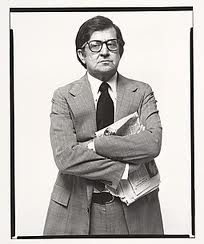
At issue is a book written in 1964 about the notorious Kitty Genovese murder, by A.M. “Abe” Rosenthal, who is described in today’s news story in the Times Arts section as “a new and ambitious metropolitan editor.” (An aside: when a newspaper calls one of its own “ambitious,” that’s usually a code word for something closer to “ruthless.”) Rosenthal is a legendary figure at the Times, known for ruling the newsroom as the paper’s managing editor for most of the 1970s and executive editor for most of the 1980s. In 1964, Rosenthal had already won the Pulitzer Prize, for his foreign reporting.

Genovese, who was 28, was murdered around 3 a.m. as she was returning from work to her apartment in Queens. She was attacked, stabbed to death, and raped. What happened next imageshelped propel the Genovese case into the realm of urban myth and pop sociology.

Rosenthal, who was an editor, not a reporter, was having lunch one day with the NYC police commissioner, and they were naturally discussing the Genovese case. The commish mentioned that 38 people had witnessed the crime but did nothing to stop it or to summon help. That kind of a fact (if fact it be!) is catnip to a reporter, and Rosenthal was off to the races with a version of the Kitty Genovese story that was almost certainly exaggerated. According to today’s story:

Mr. Rosenthal quickly mapped out a series of articles centered around a tale of community callousness, and then followed in June with his quick-turnaround book, published by McGraw-Hill. National and international interest in the issue spiked, and soon the Kitty Genovese case became a sociological phenomenon studied intensely for clues to behavioral indifference.

Notice, in the above paragraph from today’s story, the use of the words “quickly,” “quick” and “soon.”

images-2In any case, the Rosenthal book about the Genovese case became an overnight  that helped to establish in the public mind the notion that big cities are scary collections of anonymous people who don’t care about each other.

Now comes a publisher, Melville House, which has re-released the Rosenthal book in a digital format, with the original — and misleading — material intact. Let’s not kid ourselves about “digital reissues.” They are a way for publishers to extract some more money out of their backlist titles. Those are books published long ago that they are probably out of print and no one is buying them any more. Along comes the Internet, and those books can get a second life on-line.

Trouble is, what about a non-fiction book that has known errors of fact or interpretation? Should it be re-issued in its original text? Should it be corrected, revised, or updated?

Here’s how the Times puts it today:

In the years since, however, as court records have been examined and witnesses reinterviewed, some facts of both the coverage and the book have been challenged on many fronts, including the element at the center of the indictment: 38 silent witnesses. Yet none of the weighty counter-evidence was acknowledged when Mr. Rosenthal’s book was reissued in digital form by Melville — raising questions of what, if any, obligation a publisher has to account for updated versions of events featured in nonfiction titles.

It could be argued that at a certain point, a work of journalism becomes valuable as an artifact of its own era. It becomes a document (or “primary source”) that allows later generations to look back and understand why people use to share certain beliefs, even if those beliefs are later discredited. So, a historian or anyone else who is curious about the changing perceptions of urban crime during the 1960s would want to read the Rosenthal book in its original form, because it sheds light on its period. That, it seems to me, is a perfectly valid way of thinking about historic works of journalism. All the publisher has to do is to say so.

Alternatively, of course, a publisher could commission someone to produce a “new, revised” version that would update, correct, or revise a flawed original. In that case, future historians will probably want to have access to both the original and the update.

For another perspective, here is a passage from Wikipedia:

In September 2007, the American Psychologist published an examination of the factual basis of coverage of the Kitty Genovese murder in psychology textbooks. The three authors concluded that the story is more parable than fact, largely because of inaccurate newspaper coverage at the time of the incident.[10] According to the authors, “despite this absence of evidence, the story continues to inhabit our introductory social psychology textbooks (and thus the minds of future social psychologists).” One interpretation of the parable is that the drama and ease of teaching the exaggerated story makes it easier for professors to capture student attention and interest.

So, it would appear that there is more revisionism to be done.

[Incidentally, today’s Times story omits another awkward fact: the Times is still something of a Rosenthal paper. Abe’s son, Andrew, is a “masthead editor” at the paper, where he is in images-1charge of the Times‘ editorial pages.]

Leave a comment

Filed under Uncategorized

Stanley Karnow, 1925-2013

Today brings news of the passing of Stanley Karnow, who wrote one of the most-cited works trying to figure out what happened during the U.S. war in Vietnam. He was an exemplar of the journalist-turned-historian.

Here is the Times obit, which mentions that Karnow was also on the Nixon “enemies list.”

Here is the AP version, which notes that Karnow got his start in journalism on his high school newspaper and at the Harvard Crimson.

The ultimate quote:

‘‘What did we learn from Vietnam?’’ Mr. Karnow later told AP. ‘‘We learned that we shouldn’t have been there in the first place.’’

imgres


Leave a comment

Filed under history, Journalism

The Civil War at 150

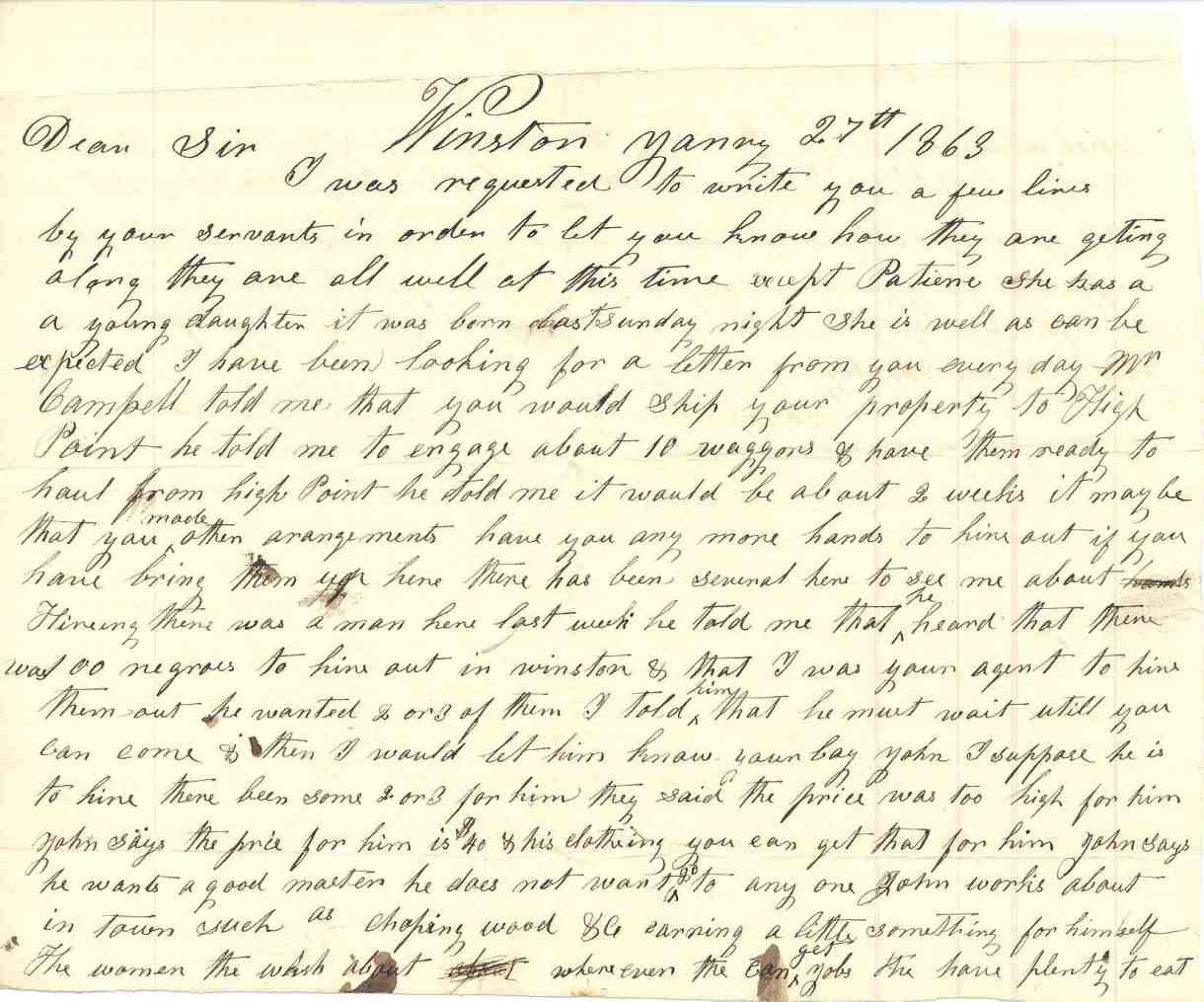
Don’t miss this project at the Wilson Library of the University of North Carolina (where I went to grad school in history). The library is posting a letter written by a Civil War soldier on the exact day on which it was written 150 years ago. (Hint: practice reading hand-writing!)

Here’s today’s entry:

18630127_01

1 Comment

Filed under history

Book notes

By Christopher B. Daly

A couple of updates from the world of letters:

–My B.U. colleague Amy Sutherland has a Q+A with the estimable Tracy Kidder in the Boston Globe. A brief highlight:

BOOKS: Anything else you avoid?

KIDDER: Most biographies are too long. But I loved “King Leopold’s Ghost” by Adam Hochschild. I don’t want to read any more memoirs about dysfunctional families. I don’t think it’s a form that should be condemmed. It’s just there’s been a surfeit of it.

I certainly agree with his point about biographies: they have become so vast that they are approaching the point where they are both un-readable and un-writable. There are a number of biographies I’d like to read and a handful I’d like to write, but the prospect of either is daunting. Bring back the short biography!

–My friend Amy Wilentz will be speaking this Friday at the Harvard Bookstore at 7 p.m. aboutWilentzAmy_creditPaulaGoldmanher new book on Haiti, which has been getting great reviews. Come if you can.


–I found this review in today’s NYTimes irritating. What bothers me is the premise that Adam Begley brought to his reading of a new history of Venice by Thomas F. Madden, titled Sunken Treasure. The reviewer takes the author to task for writing a book of history that tackles a great subject, synthesizes a tremendous amount of material, and writes a readable version for intelligent general readers. Where’s the harm?

But if it’s new, it’s not innovative. Madden has written a conventional narrative history, sweeping in scope and calmly, blandly authoritative. Though he’s a professional historian who teaches at St. Louis University, he seems more proud of his storytelling than his scholarship.

That view is what drives the mania among academic historians for writing books with novel arguments on arcane subjects. Later in the review, Begley calls Madden a “breezy, cheerful, evenhanded” debunker of myths. Begley begrudgingly allows that the last general history of Venice was written a generation ago, and that book dropped the tale in 1797. Madden has tapped newer research, brought the story up to the present, and done so in an engaging way. Why is that not enough?

Painting by Gentile Bellini/Galleria dell'Accademia, Venice (1496; detail)/Photographed by Erich Lessing, Art Resource, NY

Painting by Gentile Bellini/Galleria dell’Accademia, Venice (1496; detail)/Photographed by Erich Lessing, Art Resource, NY


Leave a comment

Filed under Uncategorized

The power of story

by Christopher B. Daly

Narratives in the news:

–Here is a smart piece about why some of us are drawn to TV narratives like Downton and other shows with strong narratives.

–Here is a smart piece about the power of narrators (although I think there is a bit of confusion here between narrators and protagonists, which are not the same).

1 Comment

Filed under history, Journalism

Rave review for “Covering America”

By Christopher B. Daly 

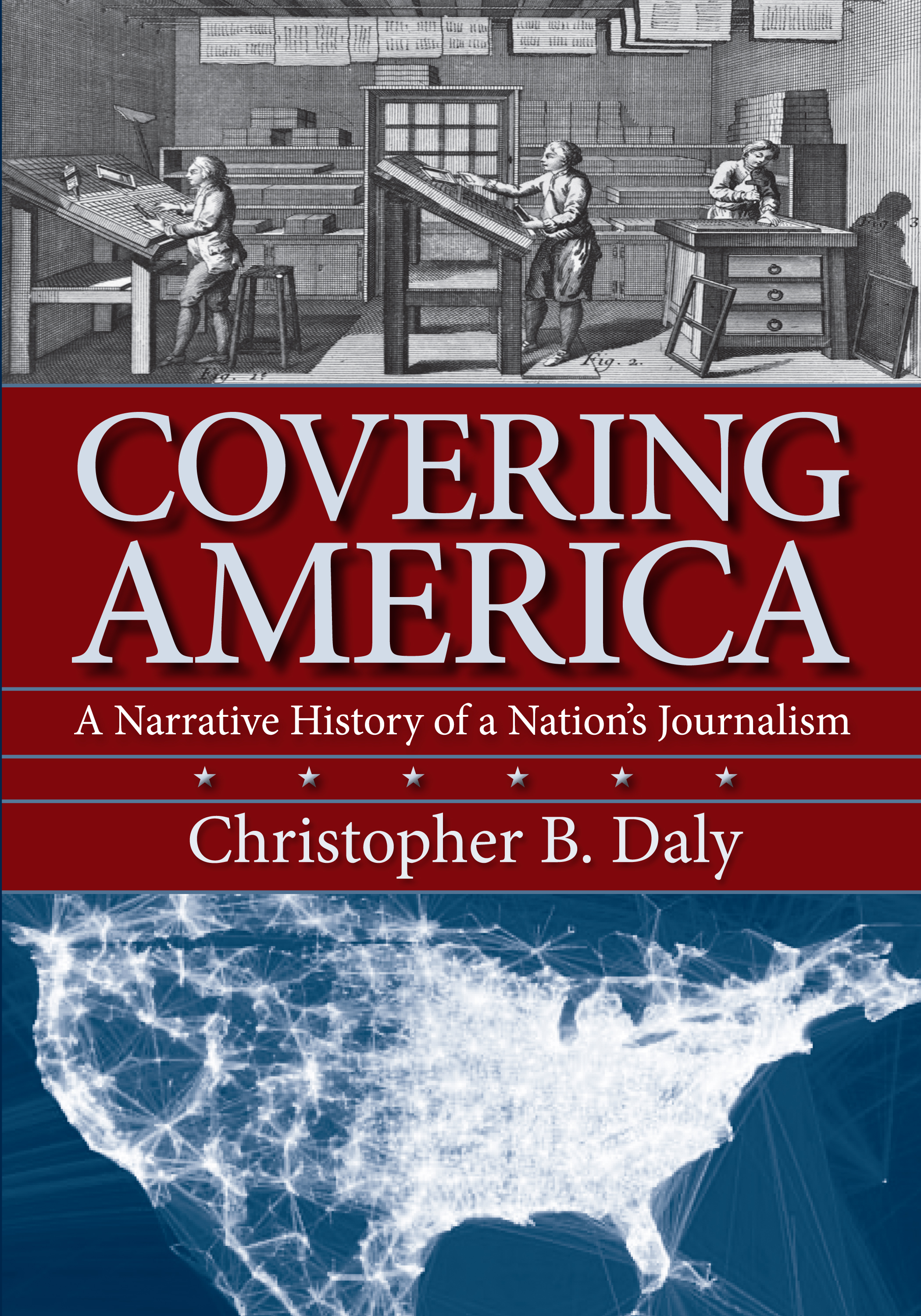
My book Covering America drew an insanely enthusiastic review in the Providence Journal on Sunday. The timing reminds me: IMHO, this book would make a great holiday gift for anyone who cares about American journalism, American history, American politics, the tech revolution in news, Jefferson/Lincoln/FDR, WWI/WWI/Vietnam, and a whole bunch of other stuff.

Have I left anyone out?

Leave a comment

Filed under Covering America, history, Journalism, journalism history

Notable historians die

By Christopher B. Daly

This week brings news of the deaths of two of the most prominent (and controversial) historians of the post-War period.

Eugene Genovese, a Marxist-turned-Catholic conservative. Author of a key work in the history of U.S. slavery: Roll, Jordan, Roll.


Eric Hobsbawm, a Communist nearly to the end. Author of a trilogy of essential works.


Rather than fight over who was a good person, we can do them and ourselves a favor by reading (or re-reading) their work and, in a spirit of free inquiry, judging it for ourselves.


Leave a comment

Filed under history

1968: A Hinge in History

[I recently finished reading a chunk of the new biography of Walter Cronkite that deals with the events of 1968. It put me in mind of the following essay, which I wrote for my book, Covering America, but had to cut for reasons of space. Enjoy.]


EARTH RISE, 1968.

This image was described in The Last Whole Earth Catalog as: “The famous Apollo 8 picture of Earthrise of the moon that established our planetary facthood and beauty and rareness (dry moon, barren space) and began to bend human consciousness.”

(photo by NASA)


1968: A HINGE IN HISTORY

By Christopher B. Daly

As the year 1968 began, the Beatles’ song from the year before was still playing on record-players and on radios:

I read the news today, oh boy…

 And what a flashing kaleidoscope of news it was. By turns amazing, shocking, depressing, inspiring, enraging, the news in 1968 seemed to have entered some uncharted realm. Things started normally enough. Americans woke on the first day of the year to read a UPI story reporting that the Census Bureau put the U.S. population at just over 200 million. During the first few days of January, they could also read about the exploits of the dashing O.J. Simpson, who rushed USC to victory in the Rose Bowl over Indiana. Newsweek reported that its own poll showed Republicans favoring Richard Nixon over his GOP rivals at the start of that presidential election year. Gary, Indiana, got a new “Negro” mayor, Richard Hatcher, whose first act was to appoint a white chief of police and order him to crack down on crime.

Then there was the news from Vietnam, all of it bad. During what was supposed to be a new year’s truce, Vietcong troops launched a sneak attack just a few minutes after midnight and “savagely mauled” ARVN forces, killing 19. The next day, the extent of the assault became clearer in a Times front-page story:

Vietcong guerrillas, attacking in regimental force, killed 26 American  infantrymen and wounded 111 early today in rubber plantation country near  Tayninh, 50 miles northwest of Saigon, United States officers said.

According to a Saigon newspaper, American psy-ops forces were blanketing Vietnam with propaganda leaflets. The only problem: six years into the war, Americans still had not learned to speak the language. The level of Vietnamese used in the leaflets ranged from “consistently awful” to “unintelligible.” From Hanoi came an AP report that North Vietnam had shot down 1,063 American warplanes in the previous year.  Trying to sum up the overall situation in a front-page piece on Jan. 1, Times correspondent Johnny Apple offered a “thumb-sucker”[i] that began this way:

SAIGON, South Vietnam, Dec. 31 — American officials at almost all  levels, both in Saigon and in the provinces, say they are under steadily increasing pressure from Washington to produce convincing evidence of progress, especially by the South Vietnamese….

So many portents and signals, and yet so much noise too. During the first week of 1968, readers could also find an AP story under the headline:

DUTY LIFTED ON BAGPIPES

Yes, President Johnson signed a bill lifting the 15% tax, but only after having certified that there “is no known commercial production of bagpipes in the United States.” (Who knew?) The Times reported that cigarette sales were up 7.5 percent, to 46.6 billion smokes, and the paper documented the new year’s social news, noting that 29 debutantes had been “presented” at the Waldorf Astoria. The Times also took note of the fashion trend of the era, the miniskirt, and asked the classic question during periods when the hemline is up: “Will It Go Down?” The paper waffled and said only that the issue was a “cliff-hanger” heading into 1968.

Readers would have also found the following item in the Times on the first day of the year, a sort of all-purpose headline that the newspaper could have kept on file for use through the year:

TOP OFFICIALS FRET OVER NATION’S ILLS

There was plenty to fret about: the problems of crime, housing, violence, race, and war were not getting any better. As the year continued, the headlines from the homefront kept growing larger and larger. At the end of February, the Kerner Commission weighed in on the previous year’s urban riots. “Our nation is moving toward two societies, one black, one white – separate and unequal,” the report warned, adding that the news media were part of the problem because “the media report and write from the standpoint of a white man’s world.”[ii] And, incidentally, the report pointed out that it was high time the news media hired some black reporters. Within weeks, more shocks: The U.S. abandoned the gold standard in March.

Then, in April, the news was suddenly wall-to-wall. In the estimation of the Times’ managing editor, Arthur Gelb, the first week of April 1968 was “the most crowded week of news since World War II.”[iii] It actually began on March 31. The president requested airtime on the TV networks to discuss the war. The advance text did not include the finishing lines, which were written at the last minute by LBJ himself. So, no one was prepared when Johnson suddenly announced: “… I shall not seek, and I will not accept, the nomination of my party for another term as your president.” A political earthquake, followed days later by the bulletins from Memphis: Martin Luther King Jr. shot – assassinated, really, almost like JFK. In no time, the fury caused by King’s death erupted in the streets – Newark, Baltimore, Chicago, Louisville, Washington, D.C., even on military bases in Vietnam

That spring, the whole world seemed to be freaking out. Students at Columbia, led by an SDS radical named Mark Rudd, took over buildings and demanded an end to Columbia’s involvement in the war and its imperial expansion into the surrounding neighborhood. A new show called “Laugh-In” – which featured drug jokes, a pop-art esthetic, non-sequiturs, and nonsense (“Sock it to me!”) – became the top hit on TV. In France, students and workers staged an uprising demanding change. The hottest show on Broadway was called “Hair,” and it had actual naked people on stage, along with some catchy anthem-melodies. Then, June 5: Bobby Kennedy won the Democratic primary in California and was making his way through a crowded hotel in L.A. when a lone gunman shot him, practically point-blank. The next day, RFK died, too. Another national funeral, another round of anguished self-examination. Were Americans “the people of the gun”?

The news kept coming. In late July, Pope Paul VI issued an encyclical condemning birth control. What a lot people heard was: sex is only for making babies. Thou shalt not have sex for the hell of it. (Well, screw that!) Within two weeks, the Republicans held their national political convention in Miami Beach, giving every possible signal that they were the party of straight, white, square people who accept hierarchy, who appreciate order, and who have no intention of turning the country over to a bunch of dirty hippies and crazy radicals. At the end of the month, the Democrats met in Chicago, and they staged a brawl inside the convention center and outside. Two gifted provocateurs, Abbie Hoffman and Jerry Rubin, told the world that their Yippie Party had big plans:

            We will burn Chicago to the ground!

We will fuck on the beaches!

We demand the Politics of Ecstasy!

Acid for all!

Abandon the creeping meatball!

YIPPIE![iv]


Provoked by such tactics and spoiling for a fight to begin with, the Chicago police erupted in a frenzy of beatings, letting the goddamn hippies know who was boss in Chicago. While the whole world watched, cops beat the kids – and they beat a few journalists, too, for good measure. A few weeks later, it was time to question another American tradition, the Miss America beauty pageant. Demanding an end to their “enslavement,” a group of radical feminists picketed the pageant in Atlantic City, setting up a “freedom trash can” on the Boardwalk which they filled with girdles, bras, high-heeled shoes, hair curlers and other things that pinched or demeaned women. The media went berserk, even inventing the myth that women took off their bras and burned them. In October, at the Olympics in Mexico City, two U.S. sprinters, Tommie Smith and John Carlos, went to the stand to get their medals and raised their gloved fists in a Black Power salute. Again, the whole world was watching. On Nov. 5, Richard Nixon and Spiro Agnew barely won the White House (43.4% for them, 42.7% for Humphrey, and 13.5% for George Wallace), but with less than 44 percent of the popular vote they got 100 percent of the power of the Executive Branch. In late November, the Beatles released another album – one with no apparent name, just a white cover – that featured a song called “Revolution.” Did they mean it?

Finally, just at the end of the year, the space program came through with some good news. Three astronauts managed to fly into space, get into orbit around the moon, see the dark side, and make it back home safe and sound. It had been quite a year.

 0   0   0   0

            During 1968, a year of miracles and horrors, something else was happening too. It never really qualified as “news,” but maybe it should have. Here are there, in twos and threes, millions of people, most of them under 30, were getting high for the first time, usually by smoking marijuana, then maybe some other psychotropic drug like hashish, mescaline, or LSD. Most of them were never quite the same afterward. Once they stepped through the “doors of perception” by deliberately altering their consciousness, they were not going to return to the “straight” world of alienated work, endless consumption, striving, conflict, and domination. Why should they? Why do that when life was a magical mystery tour, a carnival, a dream? Millions heard the call from Lennon and McCartney – “I’d love to turn you on” – and nodded. One result was a new divide in America, which had plenty of fault lines already: now the populace was self-dividing between hip and straight. These two cultures began to gawk at one another, even as they drifted further and further apart. The hip young people wanted nothing to do with the War in Vietnam, of course, but that was just the beginning. They wanted nothing to do with the whole world of hierarchy, power, Wall Street, thousand-year-old churches – basically, they rejected the idea that anyone should tell them what to do. They wanted a revolution, and it began with freeing their minds. They wrote about all manner of cosmic riddles and existential jokes: What color is time? What flavor is your hair? You ask, is the government too big? I wonder: Is the government real?

                        You tell me it’s the insti-tu-tion,

                        Well, you know,

                        You better free your mind instead…[v]

 One place to find the new culture was in music. Suddenly, the radio mattered, more than ever. New songs by Dylan or the Beatles were stunning, stopping people in their tracks. Pop music was not just silly love songs any more. Now, it could be about anything: it could be plastecine porters with looking-glass ties, or an opera about a blind boy who’s a wizard at pin-ball, or about the dark side of the moon. It could be made by men and women, it could be a sitar-player from India or an ancient black bluesman from the Delta, it could be fluffy and dreamy or it could be dark and scary, it could be the most fantastic, improvisational hodge-podge you could imagine.

Johnny’s in the basement,

mixin’ up the medicine,

I’m on the pavement,

thinking ‘bout the government…[vi]


(Who’s Johnny? What’s the government up to? Who knows? Who cares?) The thing was to open your mind, to seek, and to question everything. Music led the way.

In 1968, this music got a major new partner, in the form of a new magazine called Rolling Stone. It had been founded the year before in San Francisco, by a Berkeley dropout named Jann Wenner, but in 1968, it really began to take off, gaining national circulation – in part on the strength of young vagabonds who criss-crossed the country, following rock bands, going to concerts, always heading further down those long, long roads. They carried Rolling Stone with them, from Berkeley to Boston and from Austin to Madison, sharing it with friends, turning them on to a new voice that was right on their wavelength. Rolling Stone had caught the wave of hip culture, youth culture, and rock’n’roll. It was not the first “alternative” paper, and it was far from the only one; it was not even the only one covering the music scene, but Rolling Stone was one of a kind. It was not spying on the scene like Time or Newsweek, it was part of the scene. Like the music itself, each new issue of Rolling Stone was something of an adventure. Who would be on the cover? What taboo might fall? Whose weird new writing style might emerge from those acres of prose?

Out with the old.


[i] When a reporter goes into analysis mode – as for a Sunday “think piece” or a year-end summing-up piece – the writer is said to be preparing a “thumb-sucker.”

[ii] See Kerner Commission report, chapter 15, “The News Media and the Disorders.” Quote appears on page 366 in the New York Times edition, which includes an Introduction by Tom Wicker.

[iii] Arthur Gelb, City Room, pg. 480.

[iv] Quoted in Perlstein, pg. 291. To “abandon the creeping meatball” is, of course, nonsense, but it has a nice ring to it.

[v] Lennon/McCartney, Revolution 1, The Beatles (“The White Album”), 1968.

[vi] Bob Dylan, “Subterranean Homesick Blues,” 1965.

Leave a comment

Filed under history, Journalism, journalism history

CNN: the “E.R.” of TV news?

By Chris Daly

Insightful piece today by Brian Stelter in the Times. It raises the question: Is CNN like the emergency room of a hospital that cannot fill its inpatient beds? CNN is very busy during crises, but it becomes a lonely place during periods of routine news. That certainly rings true in my experience: on an election night, I’m a visitor of CNN for sure. If I hear a snatch of something startling on the radio and want to hear/see more right away, I will snap on CNN. If all hell is breaking loose somewhere, it’s usually my top choice (certainly far ahead of cable-news leader Fox News, which has so few correspondents who can jump on breaking news).

Fundamentally, this problem has been with CNN almost from the get-go. Here’s an excerpt from my book, Covering America, about the founding of CNN and its basic business problem. 

. . .By approaching cable news this way, [CNN founder Ted] Turner was coincidentally creating a new business model for TV journalism. Unlike the networks, CNN did not plan to build a huge entertainment division that would have to create or bid for programs. And unlike public television, CNN was not dependent on public subsidies, foundation grants, or donations from the audience. Instead, Turner was adapting an older business model from newspapers. In the CNN approach, TV news would be paid for through a “dual revenue stream.” Just as newspapers made money from two sources—advertising and subscriptions—so would CNN. The company would sell ads, and it would also have a steady stream of revenue coming in from the cable operators, who had to pay CNN a few pennies per customer per month, reflecting CNN’s share of the monthly cable TV bills that Americans were getting used to paying. With low costs and two fairly reliable streams of revenue, news on cable just might work.

Ready or not, on June 1, 1980, CNN made its debut. There were the inevitable mishaps (the cleaning lady who walked across the set behind the anchor while the cameras were rolling), but the impressive thing was that it worked. CNN started covering the news that day and has done so continuously ever since—days, nights, weekends, holidays. Only the AP could make a similar claim, (though it supplies news to the industry rather than directly to the public). Soon, Turner was showing the skeptics that it was in fact possible to put news on television round the clock. Yes, it was sometimes raggedy. And yes, there was a lot still to accomplish—including hammering out reciprocal video-sharing agreements with affiliates, hiring more and more staff, opening bureaus around the world. But it worked.

By the end of 1981, CNN was getting established. It was reaching 10 million households and was clawing its way to journalistic parity with the network news divisions.18 One key issue was what is known as “pool coverage.” This occurs in many settings when there is not enough room to accommodate all the media people who wish to cover some location or event, such as a courtroom, a presidential appearance with limited access, or the like. In those cases, the answer is a pool, in which all the journalists in each medium agree to cooperate. Typically, each medium gets to put one representative at the scene. In return for that access, the chosen journalist agrees to share the results with all the other members of the pool in the same medium. In addition, each member of the pool agrees to take a turn in providing the feed. This arrangement assumes, of course, that anyone participating in the pool will produce work of high enough quality to satisfy all the others. CNN was originally scorned by the networks, which refused to let CNN crews participate in the White House television pool coverage. It took a lawsuit (which cost Turner another $1 million), but eventually CNN was allowed in.

One of the early tests of CNN as a news organization came on March 30, 1981. President Reagan gave a speech that day to the AFL-CIO at the Washington Hilton. CNN covered the speech live and then, when it was over, switched to some filler material, about sewing in China. While that was airing, the police scanner in CNN’s Washington bureau barked: “Shots fired . . . Hilton Hotel.” Almost immediately, the veteran newscaster Bernard Shaw sat down in the anchor chair in the CNN Washington bureau and began reporting that shots had been fired at the president—a full four minutes before the networks. Shaw stayed in the chair for more than seven hours, and, with help from Dan Schorr, proved that the fledgling news service could keep up with the established networks. Through the evening, CNN kept breaking in with new details: a picture of the shooter’s home, a report on his motive, pictures of the vice president in Texas heading to Washington. According to one account of that day: “Such details were hitting the air in no particular sequence. CNN’s viewers got the story in the jumbled way a journalist receives fragments of information before transforming them into an orderly, polished report. The ‘process’ of gathering news determined the form in which that news was delivered.” Before CNN, viewers had received their news in measured doses at fixed times; now they were drinking straight from the fire hose.

For years, CNN cost more to produce than it brought in through the combined revenues of cable subscriptions and advertising. The network was burning through Ted Turner’s personal wealth at an unsustainable rate. The early years were a desperate race to get CNN included in enough viewers’ basic cable packages to pay for itself. Most of the costs of gathering and disseminating the news by cable were fixed; the great variable was the size of the audience. Beginning in 1978, from the pre-launch investments in people, property, satellite time, and equipment, CNN lost an estimated $77 million through 1984.20 But then in 1985, CNN began posting profits: $20 million that year and more in the coming years. In the grow-or-die spirit of modern capitalism, Turner soon started thinking about acquiring other businesses. At the same time, a profitable CNN was looking more attractive to other investors, who might try to take it over. By the end of the decade, CNN was earning almost $90 million a year and had an estimated value of $1.5 billion. At the decade mark, on June 1, 1990, it could be seen in 53 million homes in the United States and in eighty-four countries worldwide. CNN had nine U.S. bureaus and another eighteen overseas, with a global total of some 1,800 employees. CNN had arrived. . .


Leave a comment

Filed under broadcasting, CNN, Fox News, Journalism, journalism history, media