Tyler Hicks: photos from Timbuktu

By Christopher B. Daly

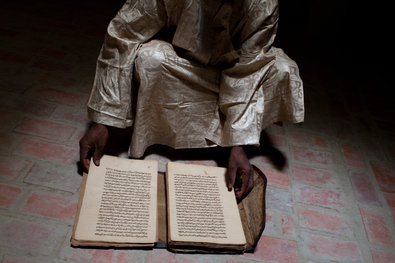
The intrepid Tyler Hicks, conflict photographer for The New York Times, has made it to Timbuktu, recording the campaign to oust the Islamic militants who briefly held the remote city and the aftermath of the city’s liberation. Hicks (a graduate of the program where I teach at Boston University) has been to all the major hot spots in recent years and has survived a number of threats, including kidnapping. We should all treasure his work:

An ancient manuscript saved from destruction. Photo by Tyler Hicks / NYT

An ancient manuscript saved from destruction.
Photo by Tyler Hicks / NYT


2 Comments

Filed under Journalism, New York Times, Photography, Photojournalism

Civil War at 150

By Christopher B. Daly

Among the many worthwhile efforts to recall the U.S. Civil War on its 150th anniversary is an attempt to add a visual dimension. The “Civil War 150 Pinhole Project” is reviving the technology of the pinhole camera to make dramatic images of re-enactors and others. A hat-tip to Michael Falco, a photographer based in NYC for making this happen.

Some results:

Antietam cornfield

Antietam cornfield

crossing_artillary

Leave a comment

Filed under history

Obama: Wrong on secrecy (cont.)

By Christopher B. Daly

Bully for the NYTimes for continuing to try to pry out the details of the Obama administration’s secret policy governing the secret use of drone weapons.

Shame on the Obama administration for continuing to try to stonewall the rationale for the policy. As a citizen, I feel entitled to see the argument for doing this. imgres3

Leave a comment

Filed under Journalism, President Obama, Uncategorized

How many Stonehenges in Boston?

By Christopher B. Daly 

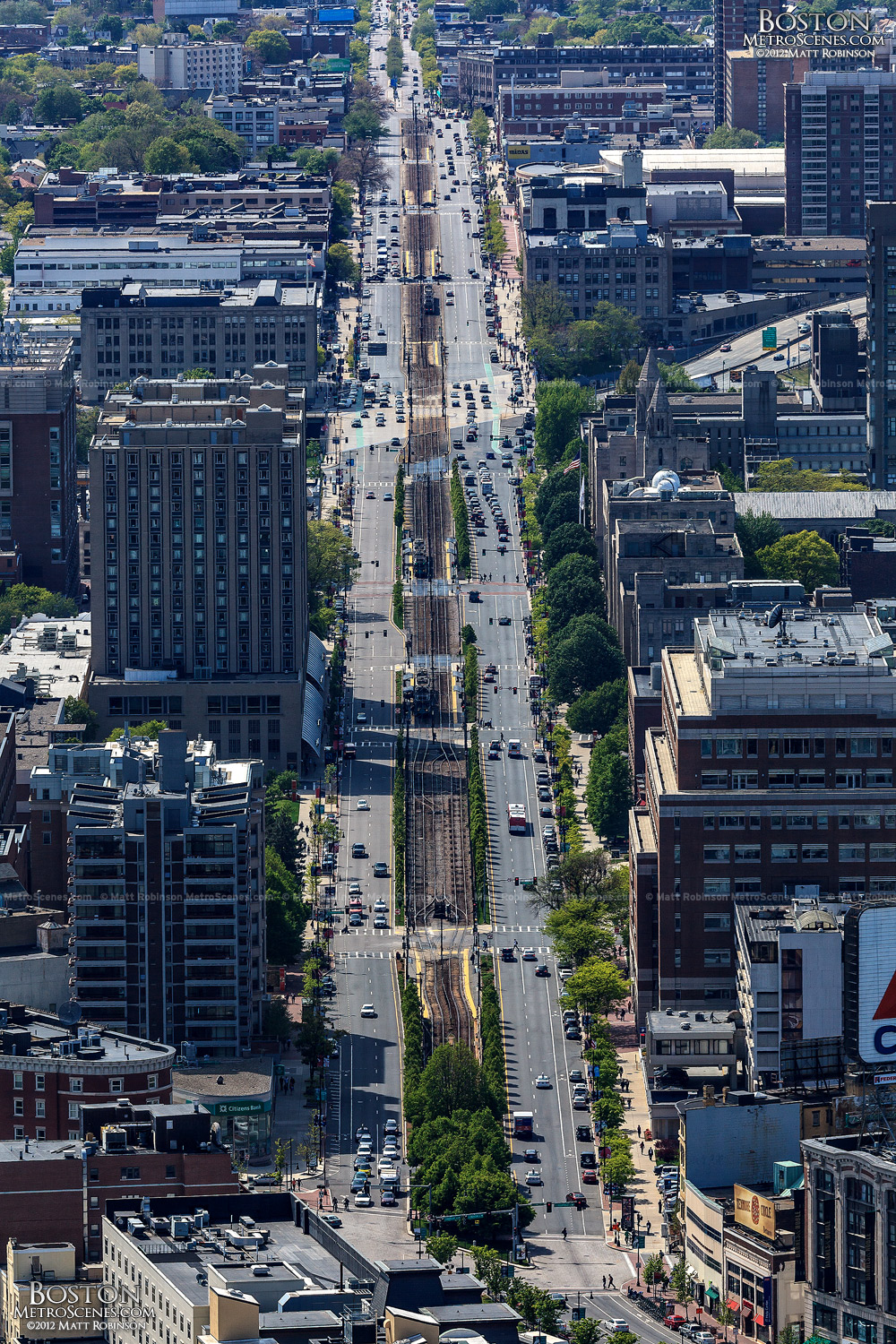
Here’s a really cool idea: there are certain days of the year when the sun sets at an exact point such that it aligns with some of the long avenues or whole chunks of gridded streets in Boston. This is a natural fact, based on the fact that the point on the horizon where the sun disappears marches with regularity from what appears to be the southwest to the northwest as the days lengthen from the winter solstice, on ~Dec. 21, until the summer solstice ~June 21. At that point, the process goes into reverse as the days shorten again.

This insight is not new. In fact, it was the basis for many ancient time-keeping schemes, notably Stonehenge in England, where the massive stones are aligned to measure the return of the sun to particular spots in the sky at regular intervals.

According to mapmaker Andrew Woodruff, writing in today’s Boston Globe, the same phenomenon plays out in several obvious places in the Boston area — notably, by own campus bostonhenge_for_WEB900px2at Boston University. One such alignment involves Commonwealth Avenue, a very wide boulevard, which heads straight west from Kenmore Square to Packard’s Corner with great unobstructed views. The next alignment of the setting sun is due to occur on April 4-5, followed by another shot on Sept. 6-7. (The same thing works in reverse for sunrises, but I am omitting those because I have no intention of getting to work that early and neither, apparently, do the overwhelming majority of my students.)

According to this sunset calculator, the sun should be setting on April 4 at 7:14 p.m. Since it’s a Thursday, I will be in class until 5 p.m., then back in my office, which is actually on Comm Ave. So, to be on the safe side, I plan to step out onto the avenue around 7:00. I plan to turn left and start shooting photos. If I make it to the high point where Comm Ave crosses over the Mass Pike in time, I should have a great vantage point, about a mile east and west.

See you there. I’m just hoping it’s not raining.

url


On April 4, I

Leave a comment

Filed under Boston

The Times loses institutional memory

By Christopher B. Daly 

New York Times public editor Margaret Sullivan, who is supposed to be looking out for us readers, acknowledges in her column today what many have long suspected — that is, the current round of staff reductions in the Times newsroom would target the older (higher cost) reporters and editors. That, in turn, means that the newsroom is losing some folks with some special virtues that are hard to make up for in younger hires.

1. They remember stuff. Even while older people start forgetting this and that (and I put my forefront of this trend), we have been around so long that we remember things that are hard to know any other way but by living through them. Does Ed Koch deserve a big send-off? Was he a jerk? Is something that just happened really “unprecedented” or just unusual? Should a newspaper publish everything it can get its hands on, or are some things better left alone?

2. Odds are, the older people are a little less intimidated by the people who hold formal power. They are the kind of people who (might) speak up in a meeting and say “So what?” or “Why?” Usually, the younger people are eager to agree and just want to know how high to jump. Case in point: Jonathan Landman. When he was on the Times city desk a decade ago, he had the nerve to doubt one of the paper’s rising stars — Jayson Blair. He tried to stop Blair from his serial inventions and plagiarism, and that is no easy thing to do in any newsroom.

So as they shuffle off to early retirements, a tip of the hat to some of those newsroom veterans. It will take a long time to replace them.

Leave a comment

Filed under Journalism, New York Times

On covering Ed Koch

By Christopher B. Daly 

Ed Koch, who died this week, was the mayor of NYC while I lived there, from the fall of 1976 to January of 1980. He was never my favorite politician, but he must have been fun to cover. Here is a collection of tales form the City Hall pressroom.

Ed Koch talking to reporters at Gracie Mansion, the city's official mayoral residence.

Ed Koch talking to reporters at Gracie Mansion, the city’s official mayoral residence.


Leave a comment

Filed under Journalism, journalism history

Washington Post downsizes

By Christopher B. Daly 

Seeing that the Washington Post is planning to sell its downtown D.C. headquarters, I guess I feel like a kid whose parents sell the old family home to move into a condo. It was such a thrill to go there for meetings when I was the paper’s New England correspondent during the 1990s. The Post was still printing money in those days, and there was a great feeling of energy and clout about the place. 

Actually, I remember my very first visit. I was seriously disappointed about the drab appearance of the exterior. It met the street like a cheap commercial building — all concrete and shadows. It made me wish that Mrs. Graham had struck a deal with I.M. Pei to design a headquarters in the shape of a typewriter!

Anyway, all things must pass. And I am sure that the Post offices in DC are more valuable as real estate than as a home for a shrinking workforce.

imgres

Leave a comment

Filed under Journalism, journalism history, Uncategorized

News from Timbuktu

By Christopher B. Daly 

Could there be a more exotic dateline than this one?:

TIMBUKTU, Mali

That’s the dateline on today’s news from west Africa. The Times’s Lydia Polgreen, hot on the heels of the Islamic radicals being chased out by the newly reinforced Malian army, offers readers a first-day story. The story may not be perfect or complete, but it is impressive as hell that a legacy news organization can get a correspondent to a place that is synonymous with remoteness.

One highlight of the coverage is this photo (by Benoit Tessier of Reuters) of two guys who obviously know a thing or two about survival:

Mali-articleLarge


The story contains a lot of heartbreak and misery, but to my mind, the worst part was the public amputation ordered by the Islamists during their brief reign of terror. I was also struck by this juxtaposition in the piece, near the end:

After the young man’s hand was cut off, the Islamists held it aloft and shouted “God is great” over and over, he said.

Dr. Maiga and his team hustled the young man into the ambulance and rushed him into the operating room to cauterize the wound, giving him powerful painkillers.

“I did what I had to do,” he said. “God help us.”

So, there you have it: one loving god on both sides. I’d say “heaven help us,” but I wouldn’t count on it.


Leave a comment

Filed under Journalism, New York Times

First draft of history?

By Christopher B. Daly

Today’s NYTimes carries a fascinating piece about a subject that has to be a difficult issue for the paper — the New York Times itself. The piece opens with the observation that “Journalism is meant to be the first draft of history” — which is a paraphrase of a quotation usually attributed to Phil Graham, the one-time publisher of the Washington Post, who declared that “journalism is the first rough draft of history.” (It’s curious that today’s Times piece, by Leslie Kaufman, omitted the word “rough,” which certainly belongs in that formulation, as we shall see.)

At issue is a book written in 1964 about the notorious Kitty Genovese murder, by A.M. “Abe” Rosenthal, who is described in today’s news story in the Times Arts section as “a new and ambitious metropolitan editor.” (An aside: when a newspaper calls one of its own “ambitious,” that’s usually a code word for something closer to “ruthless.”) Rosenthal is a legendary figure at the Times, known for ruling the newsroom as the paper’s managing editor for most of the 1970s and executive editor for most of the 1980s. In 1964, Rosenthal had already won the Pulitzer Prize, for his foreign reporting.

Genovese, who was 28, was murdered around 3 a.m. as she was returning from work to her apartment in Queens. She was attacked, stabbed to death, and raped. What happened next imageshelped propel the Genovese case into the realm of urban myth and pop sociology.

Rosenthal, who was an editor, not a reporter, was having lunch one day with the NYC police commissioner, and they were naturally discussing the Genovese case. The commish mentioned that 38 people had witnessed the crime but did nothing to stop it or to summon help. That kind of a fact (if fact it be!) is catnip to a reporter, and Rosenthal was off to the races with a version of the Kitty Genovese story that was almost certainly exaggerated. According to today’s story:

Mr. Rosenthal quickly mapped out a series of articles centered around a tale of community callousness, and then followed in June with his quick-turnaround book, published by McGraw-Hill. National and international interest in the issue spiked, and soon the Kitty Genovese case became a sociological phenomenon studied intensely for clues to behavioral indifference.

Notice, in the above paragraph from today’s story, the use of the words “quickly,” “quick” and “soon.”
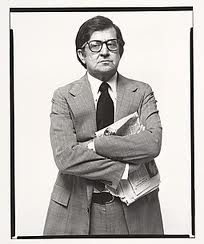
images-2In any case, the Rosenthal book about the Genovese case became an overnight  that helped to establish in the public mind the notion that big cities are scary collections of anonymous people who don’t care about each other.

Now comes a publisher, Melville House, which has re-released the Rosenthal book in a digital format, with the original — and misleading — material intact. Let’s not kid ourselves about “digital reissues.” They are a way for publishers to extract some more money out of their backlist titles. Those are books published long ago that they are probably out of print and no one is buying them any more. Along comes the Internet, and those books can get a second life on-line.

Trouble is, what about a non-fiction book that has known errors of fact or interpretation? Should it be re-issued in its original text? Should it be corrected, revised, or updated?

Here’s how the Times puts it today:

In the years since, however, as court records have been examined and witnesses reinterviewed, some facts of both the coverage and the book have been challenged on many fronts, including the element at the center of the indictment: 38 silent witnesses. Yet none of the weighty counter-evidence was acknowledged when Mr. Rosenthal’s book was reissued in digital form by Melville — raising questions of what, if any, obligation a publisher has to account for updated versions of events featured in nonfiction titles.

It could be argued that at a certain point, a work of journalism becomes valuable as an artifact of its own era. It becomes a document (or “primary source”) that allows later generations to look back and understand why people use to share certain beliefs, even if those beliefs are later discredited. So, a historian or anyone else who is curious about the changing perceptions of urban crime during the 1960s would want to read the Rosenthal book in its original form, because it sheds light on its period. That, it seems to me, is a perfectly valid way of thinking about historic works of journalism. All the publisher has to do is to say so.

Alternatively, of course, a publisher could commission someone to produce a “new, revised” version that would update, correct, or revise a flawed original. In that case, future historians will probably want to have access to both the original and the update.

For another perspective, here is a passage from Wikipedia:

In September 2007, the American Psychologist published an examination of the factual basis of coverage of the Kitty Genovese murder in psychology textbooks. The three authors concluded that the story is more parable than fact, largely because of inaccurate newspaper coverage at the time of the incident.[10] According to the authors, “despite this absence of evidence, the story continues to inhabit our introductory social psychology textbooks (and thus the minds of future social psychologists).” One interpretation of the parable is that the drama and ease of teaching the exaggerated story makes it easier for professors to capture student attention and interest.

So, it would appear that there is more revisionism to be done.

[Incidentally, today’s Times story omits another awkward fact: the Times is still something of a Rosenthal paper. Abe’s son, Andrew, is a “masthead editor” at the paper, where he is in images-1charge of the Times‘ editorial pages.]

Leave a comment

Filed under Uncategorized

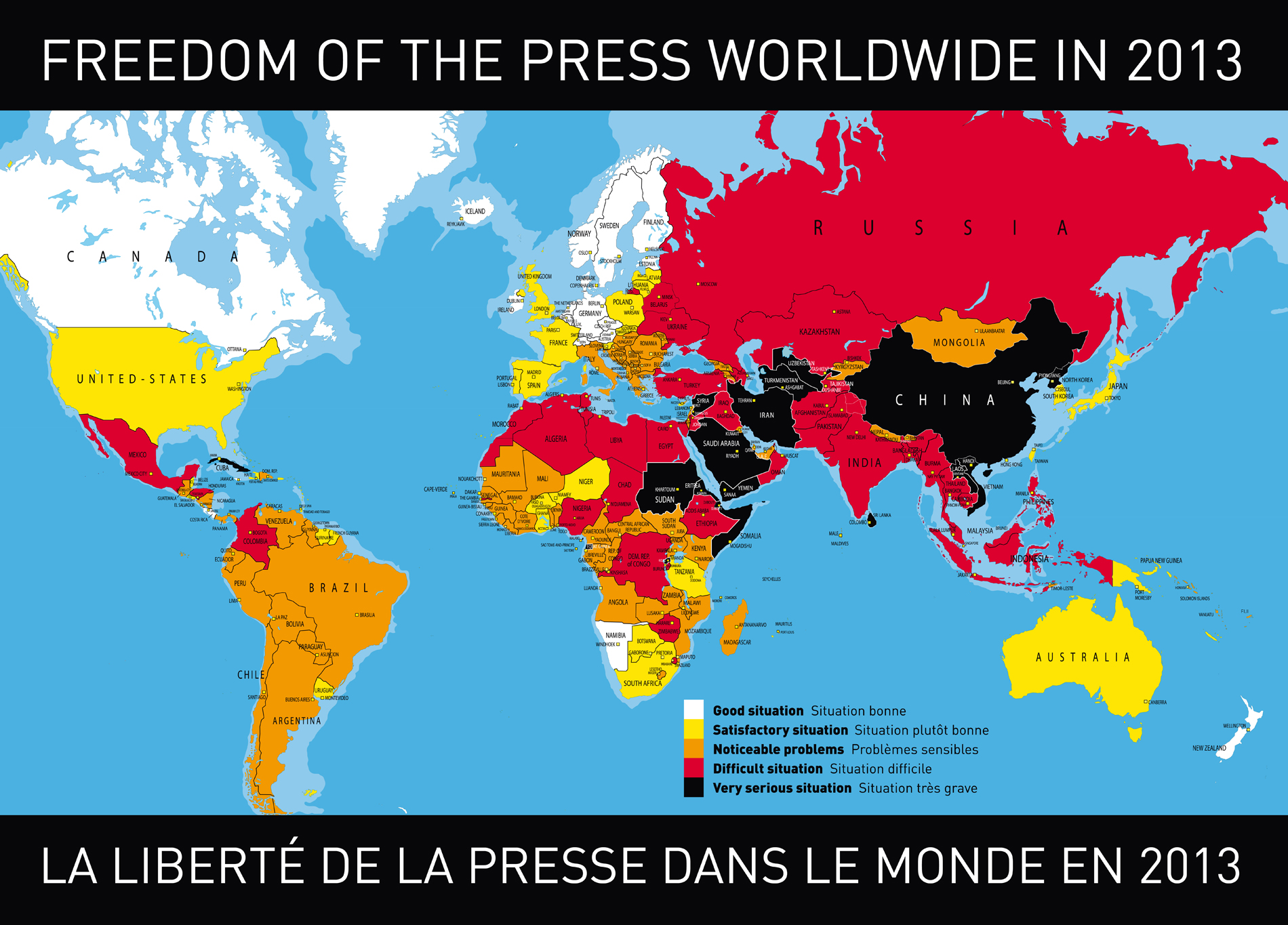
The global state of press freedom

It’s not very good, according to the latest assessment from Reporters without Borders. Here are the details, from the Paris-based advocacy group’s latest report. (What does it mean when there is more press freedom in Germany than in America?)

Here is the big picture:

Web

3 Comments

Filed under Journalism