Category Archives: Uncategorized

Harper Lee: gouged by her literary agent?

By Christopher B. Daly 

Vanity Fair magazine has a widely cited story about Harper Lee, author of the beloved novel To Kill a Mockingbird. [That link is only to a story about the story; VF is not giving anything away for free.] According to the magazine, Lee may have been cheated out of royalties by her literary agent.

Many of the news stories I have read and heard routinely refer to Lee as a “recluse,” although I would say she is somewhere on the spectrum of writers who just don’t want to be bothered.

They also routinely refer to her with astonishment as the author of only a single book. That may be overstating it. For one thing, it is impossible to completely rule out the possibility that she has published other things under one or more noms de plume. Also, it should be noted that Lee had a significant role in the creation of another literary classic, In Cold Blood. Truman Capote is credited as the sole author, but the fact was that Lee — a childhood friend of Capote from Alabama — accompanied Capote on his reporting forays in Kansas and served as his note-taker, fixer, amanuensis and god-knows-what-else. Capote never gave her adequate credit, and Lee has declined to claim it. But she deserves it.

i.2.harper-lee-to-kill-a-mockingbird

2 Comments

Filed under journalism history, Uncategorized

Surveillance roundup

[NSA Out]*

*Now, there’s some metadata for you. Back in the day when I worked for the Associated Press, we had to “slug” our material with various directives, indicating who had access to the material and whether users were free to use another news agencies photos or had to use AP photos. We often labeled our “content” with warnings like the one above. I only wish I could label all my emails with a warning to the NSA to leave them alone. Until then, I am looking for a user-friendly encryption system. If you use one that you recommend, please leave a comment below. If you are from the NSA, stop reading NOW.

–If true, this statement from Edward Snowden is important, because it would have a direct bearing on his possible guilt under the Espionage Act.

–If sincere, this statement from a former judge on the super-secret secrecy court is interesting. Like Obama, this guy now welcomes a debate over our policy on secrecy (which was supposed to remain secret, thus preventing the very debate he now welcomes).

–If it weren’t laughable, this story about our allies would be poignant. [“I’m shocked, shocked, to find out that spying is going on here, Rick.”]

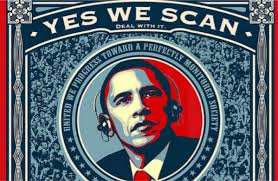
BTW, do you have clearance to read this? 

imgres3

If not, report yourself to the NSA immediately. Or to one of our allies. Or just wait and let your ISP or telecom company rat you out. 

1 Comment

Filed under broadcasting, First Amendment, Journalism, leaks, Supreme Court, Uncategorized

Media executives pay

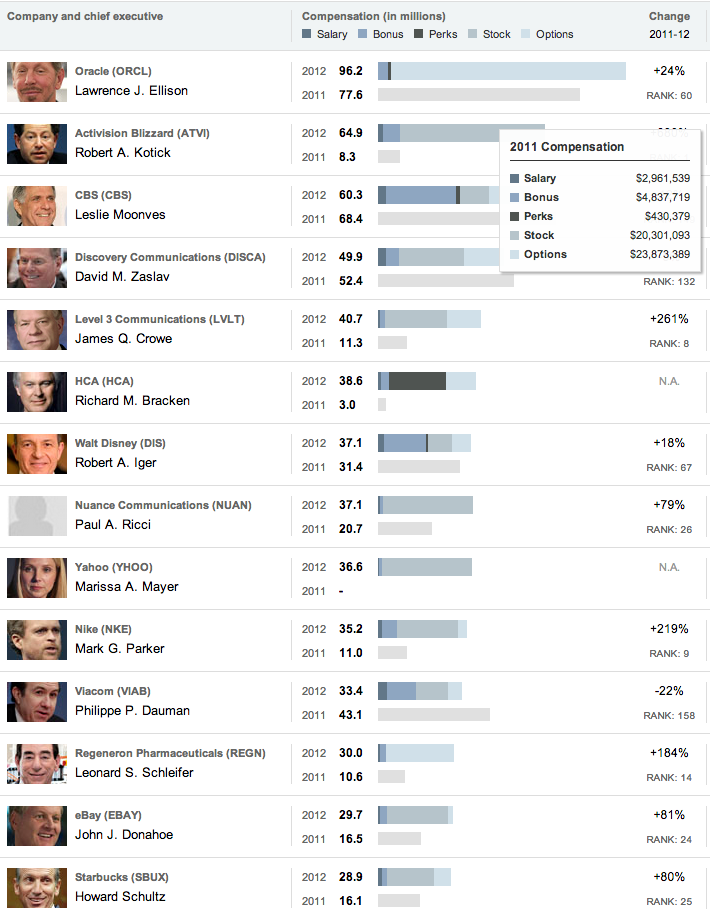
It’s ridiculous to find so many heads of media companies (often with journalistic subsidiaries) on this list of top-paid U.S. executives. If their companies are doing so well, why aren’t they hiring more journalists?

Screen Shot 2013-07-01 at 12.04.14 PM

1 Comment

Filed under Uncategorized

TV in courtrooms? TV in statehouses?

By Christopher B. Daly

In America, where the people attempt to rule themselves, why should we not have access to even the innermost reaches of our executive, legislative and judicial branches of government? It seems to me that if we really believe in transparency, we should demand it. We should operate on the assumption that all government operations are open unless there is a really good case for closing them.

Two cases in point:

–The Whitey Bulger trial in Boston is a matter of intense interest to a couple of million people in eastern Massachusetts and lots of other individuals around the country. But we cannot watch his trial on television, because video cameras are banned from federal courts. Instead, we make do with the daily work of “sketch artists,” pursuing an odd hybrid of fine art and journalism that should have gone out of business by now. TV cameras have been operating for decades in most state-level courts, and guess what? The quality of justice in the state courts has not diminished measurably.

(LEFT TO RIGHT) CHRISTINE CORNELL; JANE FLAVELL COLLINS; MARGARET SMALL Boston Globe

(LEFT TO RIGHT) CHRISTINE CORNELL; JANE FLAVELL COLLINS; MARGARET SMALL
Boston Globe

–The recent filibuster in the Texas Legislature made a hero of state Sen. Wendy Davis (and her pink running shoes). Last week, she borrowed a tactic from conservatives and waged a real, old-fashioned filibuster in order to block a bill that would have seriously rolled back access to abortion in Texas. Yes, she was aligned politically with the liberal agenda. Yes, she was very telegenic. But the only reason that she could rise to her current level of stardom is the presence of television cameras that routinely record and transmit the people’s business being done in the legislature.

Sen. Wendy Davis faces the cameras.

Sen. Wendy Davis faces the cameras.

Obviously, we the people cannot attend every court hearing or legislative debate. For one thing, we are busy. For another, we would never all fit in the tiny public galleries available in most courtrooms or legislative chambers. We need access.

Let those cameras in!

(And if you are worried about the presence of cameras touching off an epidemic of grandstanding, forget it. Our litigators and legislators are already grandstanding every day. We’re just missing a lot of it.)

1 Comment

Filed under broadcasting, Journalism, Politics, Uncategorized

NSA Leak: Is Greenwald a journalist or activist? (Does it matter?)

By Christopher B. Daly

In his NYTimes column today, David Carr raises a somewhat misleading question about Glenn Greenwald, who broke the story about the illegal, secret NSA spying on innocent Americans. Carr poses the question: is Greenwald a journalist or an activist?

I think that’s the wrong question, for several reasons.

First, as a historian of journalism, I start with looking at the history of American journalism. For more than a century, back in the early days of newspapers in Colonial America and during the first few decades of the early national period, there was no such thing as “objectivity” in the newspaper business, and there were no full-time reporters.

Thomas Paine (Library of Congress)

Thomas Paine (Library of Congress)

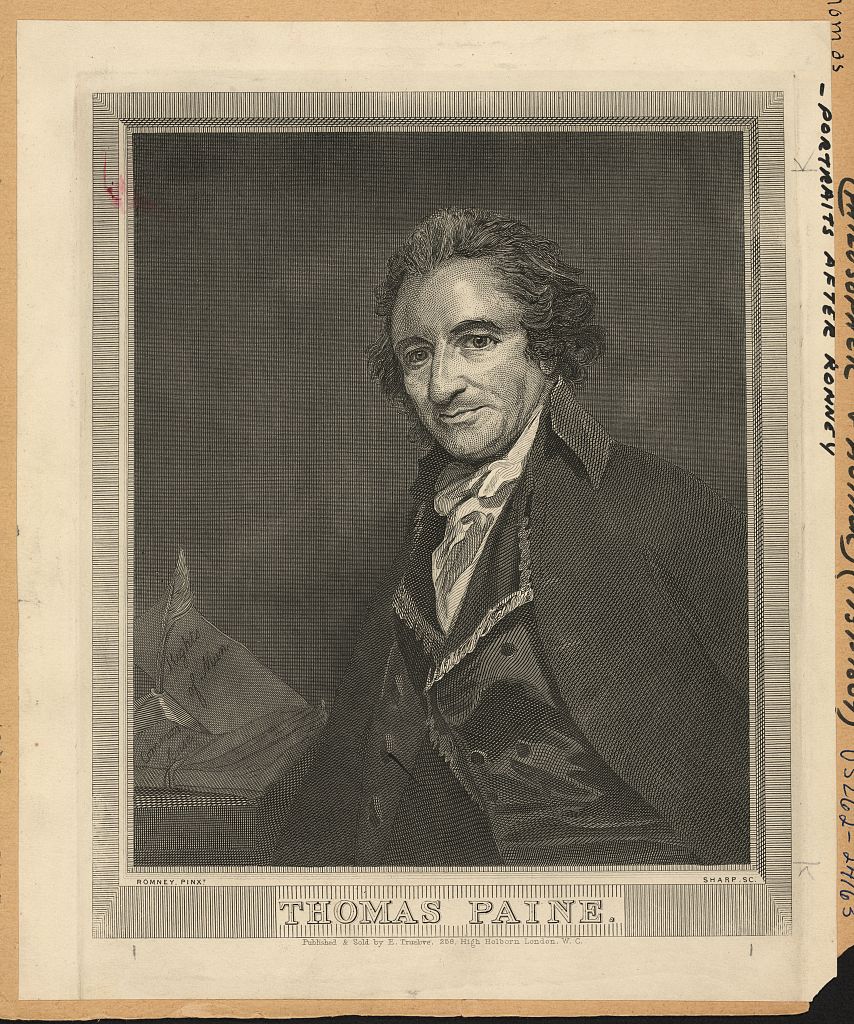
That is, the entire industry was based on content created by people with an ax to grind. Often, they were political activists (like Sam Adams or Tom Paine) or surrogates for office-holders (like James Callender).

The idea that a journalist should be defined as a full-time, professional fact-gatherer who has no political allegiances is not only unrealistic, but it is already a historical artifact. If that definition of a journalist ever made sense, it was during a period (the mid and late 20th century) that is now over. Today, the term “journalist” embraces all sorts of folks with different business models, different priorities, and different media. So be it.

Glenn Greenwald is actually a case in point for this new media landscape. He is not just a reporter. He is a lawyer-litigator, an author, a columnist, a blogger, and an advocate. He is also gay and living in a DOMA-induced exile in Brazil. In all he does, he appears to have strong convictions (or biases, if you prefer). He makes no bones about his allegiances. In a sense, he is the compleat modern journalist — global, multi-platform, high-impact.

I don’t agree with him on everything, but I value what he does. And I appreciate knowing where he’s coming from — unlike some journalists who actually have an agenda but deny it.


1 Comment

Filed under history, journalism history, media, Uncategorized

NSA Spying: Obama says he’s really, really not spying on us.

By Christopher B. Daly

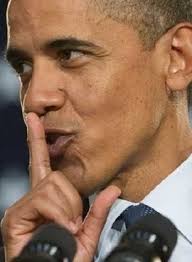
Turns out, Obama is sorry about the fact that we think he is secretly spying on innocent Americans. He’s sorry he has been doing it since he took office. He’s sorry that he kept it a secret from us. He’s so sorry that now he welcomes a public imgresdebate about routinely spying, in peacetime, on millions of Americans not even suspected of a crime. According to a story in today’s NYTimes, Obama is so sorry about secretly spying on innocent Americans that he mentions it every chance he gets. Whenever a crowd gathers, he attempts to reassure us that he is not secretly spying on innocent Americans.

Just one thing: he’s not so sorry about secretly spying on innocent Americans that he will actually stop doing it. Even though he could give the order before lunch and end it immediately. No, he’s not that sorry. He’s also not so sorry that he  will actually stop secretly spying on innocent Americans.

Anybody confused?

Here’s Obama:

“The American people don’t have a Big Brother who is snooping into their business. . .I’m confident of that. But I want to make sure everybody is confident of that.”

Well, there is one thing you could do: stop spying on us.

Then, we could have that debate about whether it is a good idea for the government to be secretly spying on innocent Americans.

images

Leave a comment

Filed under Uncategorized

Monday morning roundup

Odds & Ends:

–Here’s David Carr on the “British invasion” of the high end of American media. (Why don’t they ever try to take our unpaid internships and crummy starting jobs?)

–Here’s the Times’ attempt to keep with Edward Snowden. What I found remarkable about this story — which was, after all, quite inconclusive — was the combined throw-weight of the team of reporters. In addition to the triple byline, I count seven more bylines in the credit line at the bottom. That’s 10 reporters on three continents, not to mention interns, news aides, editors, photographers, and photo editors. Take that, HuffPo!

–Here’s a Times feature on the antiquated ways of SCOTUS. These are not merely quaint. I believe they are snubbing their noses at all the rest of us, because they can. They are among the most unaccountable holders of power in the country. Perhaps an occasional impeachment (yes, it can be done and has been) would get their attention.


2 Comments

Filed under Uncategorized

Why I hate fishing

By Christopher B. Daly

Actually, this is just one reason: Many people who fish (not all, granted) leave a lot of junk behind.

I recently found this attractive nuisance on the ground near Crystal Lake in Newton, Mass. — just seconds before my puppy found it and did what she does with everything, which is to say, tried to eat it. 

IMG_2658

Leave a comment

Filed under Uncategorized

Who will own the Boston Globe?

By Christopher B. Daly 

The New York Times Co. has declared its intention (again) to sell the Boston Globe and has solicited bids. They are due on June 27. Since the Globe employs the largest team of journalists in New England, the outcome of that process is of interest to every resident of the region.

So, as a public service, here is a handicapping of the field of bidders. (the Globe itself identified eight potential buyers — both individuals and groups — but reported today that the “Kraft group” has dropped out. Perhaps Robert Kraft is too busy overseeing his wayward football players or squiring his babe/girlfriend to charity events?)

Note: As the estimable blogger/professor Dan Kennedy has pointed out, the Globe sale includes not just the business but some pretty significant tangible assets, including a big chunk of property in Dorchester that is ripe for development into something more attractive than the uber-utilitarian Globe building, plus what is probably the biggest array of printing presses in New England, not to mention a fleet of boxy green trucks.

The field:

LOCAL

–The Comeback Kids: Two members of the Taylor family, which founded the Globe in 1873 and ran it until 1993, are interested. Cousins Ben and Steve Taylor have teamed up with former magazine executive Jack Griffin. For the Taylors, this would be a way to recycle some of the vast pile of money they took from the Sulzberger family when the Times Co. overpaid for bought the Globe from the Taylors for $1.1 billion. It would fascinating to know what the Taylors have done with that $1.1 billion over the last 20 years. If they had invested it in the Dow Jones Industrials, their haul would be worth about $4.5 billion today. So, they could easily afford to buy back the Globe at its steeply discounted current value. Estimates vary wildly, but it’s hard to imagine it could bring in $200 million. FYI, Griffin was a heavy-hitter in the magazine business: he was a top exec at Conde Nast, Meredith, and TIME Inc. until he set up a magazine consulting company, Empirical Media. He made an earlier play for the Globe with Aaron Kushner, but Kushner appears to have no role in this round of bidding.

–Rick Daniels, is a former president of the Boston Globe Co. (2001-2006). A Cohasset resident and B.U. alum, Daniels was an executive with GateHouse Media, which publishes the Patriot Ledger, the Brockton Enterprise, and the MetroWest newspaper, from 2007 to 2012. He is teamed with Heb Ryan of Boston Post Partners LLC, a private equity firm with an insanely discreet website. (Eds: Heb is cq; his full name is Heberden.)

John J. Gormally Jr., president of Gormally Broadcasting LLC in Springfield. Gormally owns an ABC affiliate WGGB-TV and a Fox affiliate, and it publishes BusinessWest , which calls itself “The Business Journal of Western Massachusetts.”

–Shannon Liss-Riordan, a Boston labor attorney at Lichten & Liss-Riordan, who call themselves “The Labor, Employment & Class Action Specialists” — which should serve Liss-Riordan in sorting out the Globe’s famously contentious and expensive labor agreements. A 1996 Harvard Law School grad, she has made a career of sticking up for the little guy, representing thousands of waiters and waitresses in forcing their employers to fork over their  tips — including a big 2006 jury verdict in a case against Hilltop Steak House. Unclear where she would round up the necessary millions.


NOT LOCAL

–Robert Loring, founder and managing partner of Revolution Capital Group, which is based in Los Angeles. Loring, 48, a B.C. grad, was involved in the deal in which Revolution Capital bought the Tampa Tribune last year and bought the Clearwater (Fla.) Gazette two months ago. Since they are in the money business and sometimes in the newspaper-buying business, this seems like a plausible bidder.

–Jahm Najafi, another founder of another private equity firm, this one based in Phoenix. Nafafi, a Harvard Business School grad, is an owner of the Phoenix Suns but no newspapers. The closest thing to a newspaper is a publication we have all looked at: SkyMall.

–Douglas F. Manchester, a conservative businessman from Southern California, was a key donor in the campaign to ban gay marriage in California. “Papa Doug” has had a long career of running lots of companies, including the merged daily newspapers serving San Diego, the Union and the Tribune, which he inelegantly re-named the “U-T.” This is small, but I gotta say, he seems very un-Boston.

0   0   0   0   0   0

Overall, it’s disappointing that there aren’t more local bidders and that there are zero minority applicants. 


2 Comments

Filed under Uncategorized

Abolish the NCAA (Cont.)

By Christopher B. Daly

Here we go again. More evidence that the NCAA lacks a meaningful educational purpose and really operates as a professional sports league for the big sports. A federal judge is weighing whether to let all former NCAA athletes to join together to file a class-action lawsuit against the NCAA, demanding a share of the Association’s “profits.”

Here’s Fortune’s story.

Here’s Deadspin.


1 Comment

Filed under Uncategorized