Category Archives: Uncategorized

Ted Cruz, meet Ted Geisel (aka, Dr. Seuss)

By Christopher B. Daly 

imgres

When Sen. Ted Cruz conducted his semi-filibuster in the Senate the other day, I wondered if he had any idea who he was quoting when he read from Green Eggs and Ham. Cruz, the conservative Republican from Texas who holds two Ivy League degrees (Princeton and Harvard Law), chose an unexpected author — not because Dr. Seuss wrote what are ostensibly children’s books. But because Dr. Seuss was actually Theodore Geisel, a staunch left-winger.

In the early years of his career, Geisel drew political cartoons for the left-wing daily newspaper PM, which I have written about here. He attacked not only Hitler but also those Americans who wanted to downplay the threat posed by the Nazi dictator.

seuss-5

As Dr. Seuss, the cartoonist went on to write dozens of books that, like the best children’s books, speak to many audiences on several levels. In most of his books, the recurring themes are hardly those favored by the Tea Party, whose support Cruz is seeking. Dr. Seuss emphasized such subversive and radical ideas as tolerance, mutual respect, sharing, not judging people by their appearance, nuclear disarmament, and open-mindedness.

When Cruz was speaking, I hope his followers were listening.


1 Comment

Filed under Uncategorized

Stop the presses: The rich head to court

By Christopher B. Daly 

It is heartwarming, I suppose, to think that the legacy media created fortunes that were big enough to fight over. Today’s Times brings word of a classic intergenerational brawl among the well-to-do, involving how to spread the wealth created by the Hudson News empire. Who knew that there was so much money to be made selling Vogue and Esquire in airport terminals?

In this case, I’m not actually sure whom to root for. (The news coverage would benefit from an infographic or two, beginning with a family tree.) It is a bench trial in New Jersey Superior Court, so pretty much anything goes. I guess I’ll side with Samantha Perelman, on the grounds that youth must be served. Besides, one of her attorneys is a former college classmate — Paul K. Rowe. Now a super-litigator, Rowe comes by his media credentials honestly: he was an editor of the Harvard Crimson.

imgres-1

Leave a comment

Filed under Uncategorized

Most important media story of the year?

By Christopher B. Daly

this oneIt may well turn out to be , announced with little fanfare a few days ago:

New York Times Company to Pay a 4-Cent Dividend

What that means is that the NYTimes newspaper has become profitable again — so profitable that the folks who run the company feel they have enough cash to pay their stockholders again. Most importantly, that means that the cousins of the current publisher, Arthur Sulzberger Jr., will once again benefit financially from owning the NYT Company. For the past five years, that has been a losing proposition for them. The value of their shares of stock crashed, and the stock stopped paying a dividend.

Cousin Arthur has been in the same boat. But in his case, he at least has the fun and challenge of trying to run the world’s greatest news operation every day. The others, who are mostly not involved with the paper, had to just sit and wait. How long they would be content to do so was a question of some urgency for those who care about the Times.  

imgres

Leave a comment

Filed under Uncategorized

Hitting “Like” on Facebook gets free-speech protection

By Christopher B. Daly 

imgres

History keeps happening. Now, a U.S. appeals court has ruled that the activity of hitting “Like” on a Facebook is a form of expression that deserves free-speech protections under the First Amendment.

An earlier ruling in a lower federal court went the other way. But on Wednesday (9/18), the 4th Circuit Court of Appeals in Richmond reversed and said an employee who “liked” a political candidate was engaging in political speech and therefore cannot be punished by his employer.

From the AP story in today’s Boston Globe:

Facebook and the American Civil Liberties Union, which filed friend of court briefs in the case, applauded Wednesday’s ruling.

‘‘The Constitution doesn’t distinguish between ‘liking’ a candidate on Facebook and supporting him in a town meeting or public rally,’’ said Ben Wizner of the ACLU .

This ruling seems not only common-sensical, but it also seems to right a terrible wrong: when the Supreme Court said that spending equals speaking, that gave rich Americans a tremendous advantage in the competition to make points in the public sphere. This ruling says that using Facebook is a form of speaking, too, so it deserves protection.

The First Amendment lives. Let’s keep it going.

1 Comment

Filed under First Amendment, Supreme Court, Uncategorized

Fun with maps

By Christopher B. Daly 

Here are two maps that don’t just sit there. Both are interactive, so have a great time with them.

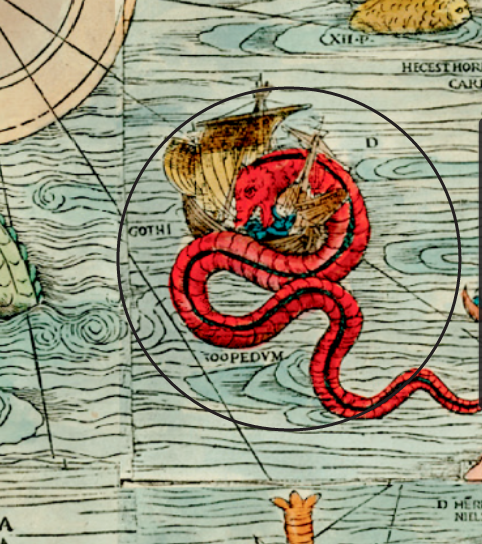
Here’s a gorgeous medieval map from “Future Tense,” via Slate. It shows the North Atlantic as envisioned by Scandinavian navigators who had to venture out there in small wooden boats. No wonder they saw monsters.

Screen Shot 2013-09-08 at 6.29.25 PM

Here’s one from the Smithsonian that lets you superimpose a map of New York City from 1836 over one from today (or vice-versa).

Screen Shot 2013-09-08 at 6.30.40 PM

Leave a comment

Filed under Uncategorized

The Surveillance State, cont.


By Christopher B. Daly

imgres3Although most of the stories about the NSA and the rise of the Surveillance State are individually demoralizing, I guess it is a good thing that there are so many of them. Many thanks to the NYTimes, the Guardian, WaPo, ProPublica, and everyone else who is helping to move the ball down the field.

Some recent coverage and comments:

–The Guardian calls on private engineers to “take back the Internet.” Can that even be done?

ProPublica and the Times drop the latest bomb from Edward Snowden.

–A physicist serving in the House (how often do you get to type a phrase like that?) proposes a bill to ban the practice.

–Director of National Intelligence James R. Clapper turns media critic, telling us that all these revelations are “not news.” (Nothing to see here. Move along, folks.)

Plus, more:


Leave a comment

Filed under Uncategorized

New AP book of Vietnam War photos

By Christopher B. Daly

Thanks to The Associated Press, there’s a new book of news photographs from the American war in Vietnam that will remind us of all the chaos, confusion, heroism, beauty, and tragedy of those years — as seen through the eyes of AP photographers and correspondents.

From today’s preview in the NYTimes:

Now, amid a flurry of anniversary commemorations of that tumultuous era and a surge of interest in war photography, The A.P. has, for the first time, culled its estimated 25,000 Vietnam photographs and reprinted some 250 in a book, “Vietnam: The Real War,” with an introduction by Pete Hamill, to be published by Abrams on Oct. 1.

Chuck Zoeller, the agency’s manager of special projects, said the dozens of rarely seen photographs in this collection include color plates of United States prisoners of war in a Hanoi prison in 1972 and historical images from the French colonial period. There is a photo of President John F. Kennedy in Florida, reviewing a commando unit back from action as early as 1962. And there are troubling scenes: Vietcong prisoners being kicked and subjected to water torture by South Vietnamese troops. A Vietnamese family of four, dead on a blanket, killed in a stampede as panicked refugees fled the advancing North Vietnamese in 1975.

Several of the most powerful photos from the era appear in my 2012 book, Covering America, because they not only documented the news but in several cases they also made news. They were that powerful. I am thinking of Mal Browne’s photo of a Buddhist monk burning himself to death in 1963 or the photo of the “napalm girl” in 1972 by Nick Ut. 

Here’s another heart-breaking photo from the new compilation, taken by the AP’s photo editor in Vietnam, Horst Faas (who died last year, as did Browne):

A Vietnamese farmer holds the body of his dead child while a group of South Vietnamese soldiers looks on.  Photo: Horst Faas.

A Vietnamese farmer holds the body of his dead child while a group of South Vietnamese soldiers looks on.
Photo: Horst Faas.

4 Comments

Filed under Photojournalism, Uncategorized

Bezos to Post: “Don’t be boring!”

By Christopher B. Daly 

This seems like good news: Jeff Bezos, the new owner of The Washington Post, went into the lions’ den to greet the news staff and came out a hero. By the Post’s own account, Bezos made a hit during his day of meetings.

Among his thoughts:

–“Don’t be boring.” (Good advice for a newspaper, but too often honored in the breach.)

–“What has been happening over the last several years can’t continue to happen,” he said. “If every year we cut the newsroom a little more and a little more and a little more, we know where that ends.”

— “All businesses need to be forever young.. . ”

The Bezos visit caused an explosion on Twitter, including many posts by Posties. See #bezospalooza

Is this man ready for the Style section?  Post photo

Is this man ready for the Style section?
Post photo

Leave a comment

Filed under Journalism, journalism history, publishing, Uncategorized

The surveillance state (cont.)

by Christopher B. Daly 

imgres3Why do we have to find out what our government is doing from newspapers?

(And while we are thinking about that, let’s give thanks to those papers that are big enough and tough enough and devoted enough to pry these secrets out of the government on behalf of all of us. A tip of the hat to the Post and the Times.)

Here’s the Post’s Thursday story. (Which includes a nice graphics package unpacking the “Black Budget,” which we were never supposed to see.)

Here’s today’s Times story.

Turns out, we spend more than $50 billion a year on spying (some of it illegally aimed at law-abiding American citizens).


1 Comment

Filed under Uncategorized

Warning: Study history before entering the Mideast

By Christopher B. Daly

With the United States government poised on the brink of intervening militarily in the Mideast, this would be a good time (if it’s not too late) to study the history of the region. Too often, we go wading ashore or dropping bombs on countries that we know nothing about. We expect the people in those countries to be just like us, or else they better get ready to become just like us. Of course, they are not just like us, and they have no intention of changing.

One place to start is today’s op-ed by David Brooks, who (heaven help him) at least tries to do some homework before sounding off.

A much better place to go is the history of the region written by David Fromkin (a BU colleague). His 1989 history, A Peace to End All Peace, tells the sad tale of how the Great Powers carved up the imagesMideast at the end of World War I. When the Ottoman Empire collapsed, European diplomats and bureaucrats drew lines in the sand ( actually, they drew lines on maps) and declared the results to be “nations,” even if the people drawing the lines had never been to those places. Ever since, those “nations” have been beset by internal conflicts, such as the one playing out in Syria, because they are made up of unnatural groupings of different peoples, many of whom have ancient hatreds and resentments of people who are supposed to be their countrymen.

If only a single high-ranking member of the George W. Bush administration had read Fromkin’s book, we might never have invaded Iraq. Now, we better hope that someone in the Obama administration has read the history.

1 Comment

Filed under Uncategorized