Category Archives: Uncategorized

When the “ball drop” building housed the NY Times

By Christopher B. Daly 

Many eyes will be focused on the ludicrous famous “ball drop” tonight in Times Square to mark the arrival of the new year in the eastern United States. Many TV cameras and uncounted phone cameras will be aimed southward toward a narrow building. Here is an earlier view of the exact same building, taken in 1908. That’s when the building served as the recently finished headquarters of the New York Times newspaper. The paper’s owner, Adolph Ochs, was proud of the landmark building as a reflection of the Times‘ growing profits and prestige. He was so proud that he prevailed on the New York city government to rename the spacious intersection of Broadway and 7th Ave. from Longacre Square to Times Square.

The Times soon outgrew this slender masterpiece and moved about a block away to a much larger, stouter French-style building for most of the 20th Century. (The paper, now published by Och’s great-grandson, is currently located a few blocks away on 8th Ave.)

So, as the ball drops tonight, show this picture to your guests and raise a glass to Adolph Ochs.

Oh, and happy new year!

NYT Bldg 1908


Leave a comment

Filed under Uncategorized

Million+ historic photos put online

By Christopher B. Daly 

Don’t miss: if you are a historian, researcher, or dedicated browser, visit the new flickr site of The British Library. The library recently made news by posting more than 1 million historic images — all digitized, all in the public domain, and all available for use now. Plus, there’s metadata for each one. The site is not as easy to navigate (it’s actually a bit overwhelming) as the U.S. Library of Congress site for the Prints & Photographs Division, but I’m hardly complaining.

It’s also based on flickr, so you need to have an account to take full advantage. (I tried to re-activate my old Yahoo account — Yahoo bought flickr a few years ago — but it was so cumbersome and annoying that I gave up, for now. I got these images by dragging them in from news sites.)

British Library Flickr


blflickr5_0

Leave a comment

Filed under history, journalism history, Photography, Photojournalism, Uncategorized

Read the judge’s ruling in the NSA case!

By Christopher B. Daly 

OK, my fellow Americans, here’s the chance to empower yourself for the coming debates over secrecy and surveillance and security. READ the judge’s ruling in the NSA case

After you’ve read it, leave comments and let others know what you think.

That, it seems to me, is the least we can all do as free citizens of a free country.

Now, I gotta get back to reading it.

Leave a comment

Filed under Uncategorized

The online life

Here is a new piece by MIT prof and internet theorist Sherry Turkle.

Here is a new piece by NYTimes tech columnist Nick Bilton.

Here is a new piece about the NSA.

All of which prompt this reflection, from Ben Franklin, writing under a pseudonym as Poor Richard:

Three can keep a secret — if two of them are dead.

Leave a comment

Filed under Uncategorized

Can we ever catch up to Shanghai?

That’s one question that could be asked about the latest round of global testing of 15-year-olds. This Boston Globe graphic makes it easy to see where we stand. (If you believe in testing.)

03test

Kids from Massachusetts may be in striking distance, but that US average is not all that impressive. Try chanting this: We’re Number 30!

Leave a comment

Filed under Uncategorized

Surveillance state: Why it’s wrong

Here is a letter to the NYTimes from someone I have probably never agreed with before about anything. But it points up some of our universal interests as citizens of a free country.

The National Security Agency’s indiscriminate surveillance of American citizens contradicts the Constitution’s moral cornerstones: It is better to be the victim of injustice than to be complicit in it; we knowingly take risks under the Fourth Amendment to avoid injuring the innocent; the right to be left alone is the most cherished right among civilized peoples; and every citizen is crowned with a strong presumption of loyalty and love of country. When these cornerstones are chronically flouted, liberty withers and dies.

BRUCE FEIN
Washington, Nov. 26, 2013

The writer, a former associate deputy attorney general in the Reagan administration, is the author of “American Empire Before the Fall.”


Leave a comment

Filed under Uncategorized

New York mag cuts back on print edition

By Christopher B. Daly 

[Update: Here is a glass-half-full response to Carr, which I think makes a lot of sense.]

David Carr uses his NYTimes “Media Equation” column today to describe the changes going on at New York magazine under its phenomenally successful current editor, Adam Moss. The magazine is scaling back its print version from nearly weekly now to

“You can’t help but get wistful about it,” said Adam Moss, the editor in chief of New York. Photo: Fred R. Conrad/NYT

“You can’t help but get wistful about it,” said Adam Moss, the editor in chief of New York.
Photo: Fred R. Conrad/NYT

every other week. The culprit: the high cost of printing and distribution versus the dropping value of print advertising.

The good news: the printing cutback is being done in service of strengthening the online version, which is the magazine’s future.

Meanwhile, New York is actually thriving by some measures: the website is going gangbusters and is considered must reading among younger “readers” in Manhattan and Brooklyn (as well as aspirational districts around the rest of the world).

As a supplement to Carr’s column, I am offering a couple of excerpts from my book Covering America that touch on the early days of New York, under its founding editor, Clay Felker:

. . . Another reason for the success of the New Journalism was institutional. Like the innovators of any new creative movement, the practitioners of this hybrid form of journalism needed patrons. They did not find them among the lords of the newsroom, the editors of America’s daily newspapers, who mostly thought these writers had lost their bearings (and maybe their sanity). Instead the New Journalists found sympathy, encouragement, expense accounts, and pretty good pay at a handful of magazines with extraordinary editors. One of the most influential was Clay Felker, who edited the Sunday supplement published by the Herald Tribune. It was an incubator for the talents of the young Tom Wolfe and a columnist named Jimmy Breslin. Felker, who had previously worked at Esquire, stayed at the Trib, cultivating good new writers—such as Gloria Steinem—wherever he could find them, until the newspaper folded in 1967. Then he took the nameplate of the Trib’s Sunday magazine, New York, and turned it into the prototype “city magazine.” In the early days, New York magazine also served as one of the unofficial headquarters of the New Journalism. A second clubhouse was not far away in Manhattan, at the offices of Esquire magazine. Under editor Harold Hayes, Esquire published many of the foundational pieces of the New Journalism, including Norman Mailer’s 1960 meditation on JFK, “Superman Comes to the Supermart,” and Gay Talese’s famous profiles of Joe DiMaggio and Frank Sinatra. Elsewhere in Manhattan, literary agents and editors at book publishing houses were starting to talk to some of these hotshot young writers, and some of those journalists quit their newspaper jobs to become full-time writers. . . 

Here’s another excerpt, about Felker and Gloria Steinem:

. . . One of the most prominent and influential women who changed the perception of feminism was a journalist and political activist who helped found a magazine that captured the new zeitgeist—Gloria Steinem. With obvious talent, intelligence, and (as was always remarked) good looks, Steinem became a highly visible figure who helped to lead both a magazine and a movement.

After a difficult childhood in Toledo, where she saw firsthand the vulnerability of women in traditional roles after her father left her mother, Steinem went to Smith College. Following her graduation in 1956, she traveled around India before landing in New York City, where she began to work as a freelance magazine writer. She worked hard and took all kinds of assignments. In an effort worthy of Nellie Bly, Steinem even went undercover for an article about working as a Playboy bunny. She thrived as a freelance writer, and she became a rising star. But still, as a “girl reporter,” she knew there were limits. (The low point: a piece for the New York Times magazine about textured stockings.) Over the course of the decade, even as she kept writing, Steinem became an activist in the civil rights, antiwar, and farm workers’ movements.

She found a congenial base at New York magazine, where editor Clay Felker allowed Steinem to tackle bigger and better assignments. Eventually she wrote the magazine’s “City Politic” column, which meant she was covering national politics and all the major issues. She liked Felker, and he advanced her career immeasurably, but in the end they came to an impasse: he was interested in pro-feminist articles only if they were paired with articles from an opposing point of view. “That’s why I gradually stopped writing for New York,” Steinem later explained. “It was just too painful to be only able to do it in the context of two women fighting.” . . .

1 Comment

Filed under Journalism, journalism history, Uncategorized

Journalism internships

By Christopher B. Daly 

Once again, NYTimes media columnist David Carr has put his finger on an issue that deserves more attention: the unpaid internship.

The practice of granting internships to college students for no pay has become rampant in the news business. Some journalistic organizations offer academic credit — or, more precisely, they insist that the student’s university award academic credit for the internship, so that the internship is not technically un-compensated.

In practice, we all know that many internships are worthwhile, for both parties. The intern gets some valuable experience, a list of professional contacts, and a line on his/her resume. The sponsoring newsroom gets some eager, bright help. That’s why they are so difficult to eliminate.

It’s also far from the whole story.

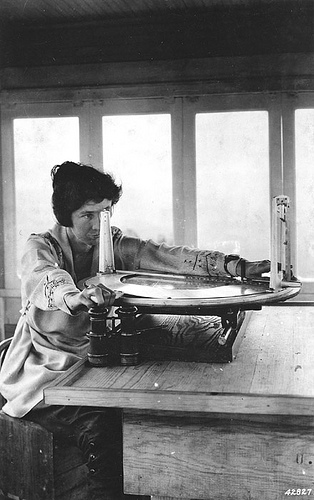
We also know that many internships are exploitative. The students may be relegated to delivering lattes to the boss, and they are passing up the opportunity to do something else. (In many cases, I think my students would be better off getting a real, paid  job doing something out of their realm — being a firespotter in a National Forest (Kerouac),

3663060280_3881ee68c3


or working on a tramp steamer (E.B. White),

imgres

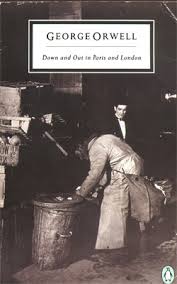
or washing dishes in a restaurant (Orwell).

imgres-1


What writers need above all is material, the kind you can only get from life itself.


Leave a comment

Filed under Uncategorized

Journalists and drones

By Christopher B. Daly 

As with any new technology, aerial drones can be put to many uses, as a story in today’s Times details. They were introduced as a high-tech supplement to America’s military and spy arsenal. DRONE-popupBut now, some clever journalists are coming up with ways to turn drones to their own needs. After all, they are comparatively cheap (relative to, say, the cost of buying or renting a helicopter), highly effective, and in many cases, still legal.

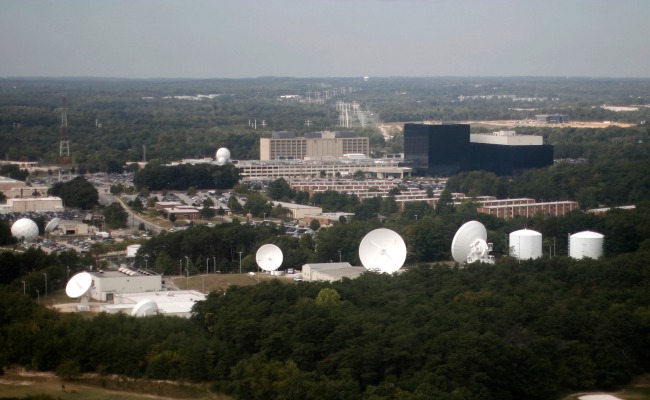
I think it would be poetic justice if the NYTimes bought a drone and stationed it above the CIA headquarters in Langley, Va., or if the Guardian bought one and parked it above the NSA. Just to keep an eye on things and “watch the watchers.”

(note to spymasters and prosecutors: Just kidding!)

Secret stuff. You probably shouldn't even be looking at this.

Secret stuff. You probably shouldn’t even be looking at this.

Leave a comment

Filed under Uncategorized

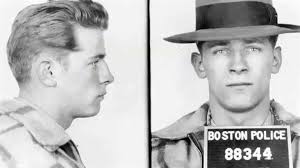
Whitey Bulger: Life without parole

By Christopher B. Daly 


In the end, the sentencing of James “Whitey” Bulger was oddly unsatisfying. Bulger  — the lord of the underworld, the big man with the killer’s coldness, the guy who struck fear into so many for so long – left the public stage without so much as a whimper. Playing the role of a stand-up guy (or at least, his version of one) all the way to the bitter end, Bulger not only refused to testify, he also refused to even make eye contact with his victims’ families.


To make matters worse, Bulger committed one last robbery: he robbed all of us in the Boston area of the satisfaction of a real showdown with the forces of images-1justice. Bulger should have been on the witness stand (and his testimony should have been on television), but he denied us that. It was a petty crime, compared to all his monstrous crimes against individuals, but it was one more shot at a public that grew tired of him long ago.


His trial over, Bulger will now spend the rest of his few remaining days in prison, where he belongs. So be it. I don’t believe in the death penalty on other days, and I will stick to my position on this one. I will not give Bulger the satisfaction of getting me to make an exception for him. I will choose not to sink to his level. (No more special treatment for you, pal.)


The whole process of putting Bulger on trial took so long that when the final stages unfolded in federal court last week, there was an odd quality of a formality about it. After all, Bulger’s capture took place more than two years ago. Ever since, it was more or less assumed that Bulger would be found guilty and given a life term.


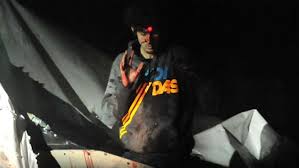
Indeed, the thoroughly predictable and highly scripted process of a criminal trial was overshadowed this year by a lot of other local news of spontaneous origin. In April came the horrible crime of the Boston Marathon bombing, in which a couple of miserable losers decided to try to rob us all of something wonderful — the

Dhokhar Tsarnaev surrendering, with his forehead marked by a sniper's infrared.

Dhokhar Tsarnaev surrendering, with his forehead marked by a sniper’s infrared.

spirit that always used to bloom in Boston on Marathon Monday, a mix of having fun and playing hooky and being nice to out-of-towners and trying to hurry spring along.


That was followed this year (simply in time, not in a great cosmic reckoning, as some would have it) by the quite unexpected rise of the Red Sox, who gave us something of a civic bouquet this year — not by winning the World Series, which was nice but a bit much. No, I think the Sox’ real gift to us this year came from seeing them having fun playing a child’s game as if it mattered and seeing them outperform expectations. All that, plus beards — what a treat.


*       *       *       *


Yet, there is still some unfinished business in the Bulger matter. Whitey Bulger owes us all the answers that we didn’t get when he chose not to testify. He may try to tell his story – on his terms, of course, with a book or letters – but he should have had to sit in the dock, under oath, and face questions not of his choosing.


For that matter, his brother Billy (the former president of the state Senate) images-2owes us some answers, too. What did he know about his brother, and when did he know it? Billy owes us these answers because he was not a private person all those years. He’s not in the same category as the third Bulger brother or their sister. No, Billy was at or near the center of public power during the very same years and in the very same city that Whitey was at or near the center of criminal power.


I will not compare or contrast the two brothers, except to say that as a journalist who covered Billy during that period and who often got the back of his hand, I believe that even rough justice demands that he give answers to the people whose money he spent and whose government he hijacked. No more of his grinning and winking and ducking. What did he know and when?


Other unfinished business?


There’s the FBI, for one. The agency has yet to offer a convincing explanation of how Whitey Bulger could have drafted the FBI’s Boston office into his protection racket or of how the agency is preventing a repeat by some other hoodlum.


Then there is the matter of how anybody could have fallen for the blarney that Whitey was a good guy who was keeping drugs out of South Boston or that Billy was a good guy because he gave away some turkeys at the holidays. Both of the Bulgers got too much power, and we are the ones who let them get away with it.


So, in the end, I suppose, the final reckoning is not with them but with ourselves. That’s a sentence with no parole, no appeal. In a way, we’re lifers, too.


1 Comment

Filed under Boston, history, Journalism, Politics, Uncategorized