Category Archives: President Obama

It’s raining leaks!

By Christopher B. Daly 

imgres3Today’s news brings a very curious twist on the theme of national-security leaks. This time, the suspected leaker is not a low-level functionary like Bradley Manning or Edward Snowden but a high-ranking military official — in fact, the former No. 2 in the entire military command structure. According to a report first broken by NBC News, retired Marine Gen. James E. “Hoss” Cartwright is under investigation in connection with the leak of classified information about American cyberattacks against Iran, intended to disable or slow down Iran’s program to build a nuclear weapon. (The coverage in today’s NYTimes is rather circumspect, which makes sense, considering that the Times was the recipient of the leak. The paper quotes NYT executive editor Jill Abramson saying she doesn’t discuss such things.)

I wonder if Cartwright’s rank will make any difference here. After all, he’s not some some “29-year-old hacker,” — as President Obama pooh-poohed Snowden on Thursday, while adroitly trying to keep the Snowden/NSA leak from screwing up great-power relations with China and Russia. (Funny thing: at other times, Obama is quite willing to characterize Snowden as a threat to our very existence. Also, an update: Snowden turned 30 last week.)

Back to Cartwright. Far from being a hacker, Cartwright, who was named vice chairman of the Joint Chiefs by President28stuxnet1-img-articleInline Bush and who served under Obama as well, was at the epicenter of the military/national security power structure. I wonder how the top brass and the national-security establishment feel about leaks now, when one apparently came from one of their own. Where’s the outrage? Will we be seeing Sens. McCain and Graham or former veep Cheney going on Sunday TV talk shows demanding his head?

We might also ask: Why would Hoss Cartwright do such a thing? He’s not commenting, but we can just imagine. Maybe he wanted to see the U.S. get credit for “doing something” about the Iranian threat. Maybe he wanted to let Americans know that we had the technical means to mess up their weapons program without having to attack or invade Iran by conventional means. Maybe he was ordered to make the leak by someone who out-ranked him (perhaps the Chair of the Joint Chiefs, or the National Security Adviser, or the Secretary of Defense, or the President himself?)

The Washington Post, after pointing out that the cyberattack on Iran included a computer virus named Stuxnet and was part of a broader program code-named “Olympic Games,” adds this tantalizing hint:

Cartwright, who helped launch that campaign under President Bush and pushed for its escalation under Obama. . .

Maybe Cartwright thought his favored program was threatened in some way by someone else in the national security apparatus.

As I have long maintained, the reaction to leaking is very much in the eye of the beholder. If the leaker is powerful enough, the act of leaking is not a crime but just politics by another means.

For the record: As far as we know, Cartwright would be the eighth target of an Espionage Act investigation undertaken in the Obama administration’s record-breaking campaign to punish leakers.

Speaking of cyberattacks, U.S. officials seems to be scrambling to find a path through this 28cyber1-img-popuppolicy thicket. On the one hand, Joint Chiefs Chairman Martin Dempsey is hurrying to write new rules for warfare in cyberspace, according to another article in today’s NYTimes. (Don’t hold your breath waiting to participate in this process yourself: any such rules are classified. So there!) Here’s the takeaway:

[Dempsey] said that, globally, new regulations were needed to govern actions by the world community in cyberspace. He said that the Chinese did not believe that hacking American systems violated any rules, since no rules existed.

And, finally, for an example of what’s at stake in terms of commerce, today’s Boston Globe has an eye-popping story about how the Chinese allegedly steal commercial secrets. If you thought they just stole plans for making plastic tschotschkes, think again. This one involved the design for wind turbines, which the Chinese had the nerve to sell back to us!

It’s enough to make the head spin. How am I supposed to keep up with the Whitey Bulger trial, the Hernandez case, or the trade of both Paul Pierce and Kevin Garnett to the Brooklyn Nets????

p.s. For a fun and puzzling exercise in mind-games, go to the NYT homepage and enter the term “stuxnet” in the search box. If you can figure out the results, please explain in a comment below. 

1 Comment

Filed under Journalism, journalism history, leaks, media, New York Times, Obama, Politics, President Obama, Wikileaks

Obama welcomes debate . . . on his secret program

By Christopher B. Daly 

President Obama says that when it comes to deciding on the wisdom of the government’s vast data-mining operations, “I welcome this debate.” What he did not say is that we could not have such a debate unless journalists reported on leaks of classified information. The executive branch’s Plan A was to do all this in secret and never debate it.

Here is a transcript of his remarks Friday on the subject. Taken as a whole, it is quite thoughtful, nuanced, and worth considering. But it is based on a fundamentally misleading premise (which I have highlighted in bold).


Obama’s Remarks on Health Care and Surveillance

The following is a [partial — cbd] transcript of President Obama’s remarks about the health care overhaul and response to a question about electronic surveillance in San Jose, Calif., as provided by the White House:


QUESTION: Mr. President?


MR. OBAMA: I’m going to take one question. And then, remember, people are going to have opportunities to also — answer questions when I’m with the Chinese President today. So I don’t want the whole day to just be a bleeding press conference. But I’m going to take Jackie Calmes’ question.


QUESTION: Mr. President, could you please react to the reports of secret government surveillance of phones and Internet? And can you also assure Americans that the government — your government doesn’t have some massive secret database of all their personal online information and activities?


MR. OBAMA: Yes. When I came into this office, I made two commitments that are more important than any commitment I made: Number one, to keep the American people safe; and number two, to uphold the Constitution. And that includes what I consider to be a constitutional right to privacy and an observance of civil liberties.


Now, the programs that have been discussed over the last couple days in the press are secret in the sense that they’re classified. But they’re not secret in the sense that when it comes to telephone calls, every member of Congress has been briefed on this program. With respect to all these programs, the relevant intelligence committees are fully briefed on these programs. These are programs that have been authorized by broad bipartisan majorities repeatedly since 2006.


And so, I think at the outset, it’s important to understand that your duly elected representatives have been consistently informed on exactly what we’re doing. Now, let me take the two issues separately.


When it comes to telephone calls, nobody is listening to your telephone calls. That’s not what this program is about. As was indicated, what the intelligence community is doing is looking at phone numbers and durations of calls. They are not looking at people’s names, and they’re not looking at content. But by sifting through this so-called metadata, they may identify potential leads with respect to folks who might engage in terrorism. If these folks — if the intelligence community then actually wants to listen to a phone call, they’ve got to go back to a federal judge, just like they would in a criminal investigation.


So I want to be very clear — some of the hype that we’ve been hearing over the last day or so — nobody is listening to the content of people’s phone calls. This program, by the way, is fully overseen not just by Congress, but by the FISA Court — a court specially put together to evaluate classified programs to make sure that the executive branch, or government generally, is not abusing them, and that it’s being carried out consistent with the Constitution and rule of law.


And so, not only does that court authorize the initial gathering of data, but — I want to repeat — if anybody in government wanted to go further than just that top-line data and want to, for example, listen to Jackie Calmes’ phone call, they would have to go back to a federal judge and indicate why, in fact, they were doing further probing.


Now, with respect to the Internet and emails — this does not apply to U.S. citizens and it does not apply to people living in the United States. And again, in this instance, not only is Congress fully apprised of it, but what is also true is that the FISA Court has to authorize it.


So in summary, what you’ve got is two programs that were originally authorized by Congress, have been repeatedly authorized by Congress, bipartisan majorities have approved on them, Congress is continually briefed on how these are conducted. There are a whole range of safeguards involved, and federal judges are overseeing the entire program throughout. We’re also setting up — we’ve also set up an audit process, when I came into office, to make sure that we’re, after the fact, making absolutely certain that all the safeguards are being properly observed.


Now, having said all that, you’ll remember when I made that speech a couple of weeks ago about the need for us to shift out of a perpetual war mindset, I specifically said that one of the things that we’re going to have to discuss and debate is how are we striking this balance between the need to keep the American people safe and our concerns about privacy? Because there are some tradeoffs involved.


I welcome this debate. And I think it’s healthy for our democracy. I think it’s a sign of maturity, because probably five years ago, six years ago, we might not have been having this debate. And I think it’s interesting that there are some folks on the left but also some folks on the right who are now worried about it who weren’t very worried about it when there was a Republican President. I think that’s good that we’re having this discussion.


But I think it’s important for everybody to understand — and I think the American people understand — that there are some tradeoffs involved. I came in with a healthy skepticism about these programs. My team evaluated them. We scrubbed them thoroughly. We actually expanded some of the oversight, increased some of safeguards. But my assessment and my team’s assessment was that they help us prevent terrorist attacks. And the modest encroachments on the privacy that are involved in getting phone numbers or duration without a name attached and not looking at content, that on net, it was worth us doing. Some other folks may have a different assessment on that.


But I think it’s important to recognize that you can’t have 100 percent security and also then have 100 percent privacy and zero inconvenience. We’re going to have to make some choices as a society. And what I can say is that in evaluating these programs, they make a difference in our capacity to anticipate and prevent possible terrorist activity. And the fact that they’re under very strict supervision by all three branches of government and that they do not involve listening to people’s phone calls, do not involve reading the emails of U.S. citizens or U.S. residents absent further action by a federal court that is entirely consistent with what we would do, for example, in a criminal investigation — I think on balance, we have established a process and a procedure that the American people should feel comfortable about.


But, again, these programs are subject to congressional oversight and congressional reauthorization and congressional debate. And if there are members of Congress who feel differently, then they should speak up. And we’re happy to have that debate.


Okay? All right. And we’ll have a chance to talk further over the course of the next couple of days.


QUESTION: Do you welcome the leaks, sir? Do you welcome the leaks? Do you welcome the debate?

MR. OBAMA: I don’t welcome leaks, because there’s a reason why these programs are classified. I think that there is a suggestion that somehow any classified program is a “secret” program, which means it’s somehow suspicious.

The fact of the matter is in our modern history, there are a whole range of programs that have been classified because — when it comes to, for example, fighting terror, our goal is to stop folks from doing us harm. And if every step that we’re taking to try to prevent a terrorist act is on the front page of the newspapers or on television, then presumably the people who are trying to do us harm are going to be able to get around our preventive measures. That’s why these things are classified.

But that’s also why we set up congressional oversight. These are the folks you all vote for as your representatives in Congress, and they’re being fully briefed on these programs. And if, in fact, there was — there were abuses taking place, presumably those members of Congress could raise those issues very aggressively. They’re empowered to do so.

We also have federal judges that we put in place who are not subject to political pressure. They’ve got lifetime tenure as federal judges, and they’re empowered to look over our shoulder at the executive branch to make sure that these programs aren’t being abused.

So we have a system in which some information is classified, and we have a system of checks and balances to make sure that it’s not abused. And if, in fact, this information ends up just being dumped out willy-nilly without regard to risks to the program, risks to the people involved — in some cases, on other leaks, risks to personnel in a very dangerous situation — then it’s very hard for us to be as effective in protecting the American people.

That’s not to suggest that you just say, trust me; we’re doing the right thing; we know who the bad guys are. And the reason that’s not how it works is because we’ve got congressional oversight and judicial oversight. And if people can’t trust not only the executive branch but also don’t trust Congress and don’t trust federal judges to make sure that we’re abiding by the Constitution, due process and rule of law, then we’re going to have some problems here.

But my observation is, is that the people who are involved in America’s national security, they take this work very seriously. They cherish our Constitution. The last thing they’d be doing is taking programs like this to listen to somebody’s phone calls.

And by the way, with respect to my concerns about privacy issues, I will leave this office at some point, sometime in the last — next three and a half years, and after that, I will be a private citizen. And I suspect that, on a list of people who might be targeted so that somebody could read their emails or listen to their phone calls, I’d probably be pretty high on that list. It’s not as if I don’t have a personal interest in making sure my privacy is protected.

But I know that the people who are involved in these programs, they operate like professionals. And these things are very narrowly circumscribed. They’re very focused. And in the abstract, you can complain about Big Brother and how this is a potential program run amuck, but when you actually look at the details, then I think we’ve struck the right balance.

Thank you very much, guys.


Leave a comment

Filed under First Amendment, Journalism, Obama, President Obama

Obama: Wrong on spying, secrecy, leaks.

By Christopher B. Daly

imgres3The outrages just keep piling up. President Obama, Attorney General Eric Holder, and their advisers just don’t get it: the government exists to help the people do the things they want to do but can’t do without joining together. It does not exist for its own sake. It does not exist to expand its own power. It does not exist to spy on its own citizens. As liberals, lawyers, and constitutional scholars, they should know all this. What is wrong with these people?

The latest scandal involves the notorious NSA (for “No Such Agency”). As Glenn Greenwald disclosed in a Guardian exclusive, the NSA is collecting phone records from Verizon for every call made by every Verizon customer, domestic and international. To quote Greenwald:

The document shows for the first time that under the Obama administration the communication records of millions of US citizens are being collected indiscriminately and in bulk – regardless of whether they are suspected of any wrongdoing.

 As they run for cover, the officials involved are going to claim that “it’s all perfectly legal,” because they got a judge to sign off on it, through the special courts set up by the Foreign imagesIntelligence Surveillance Act. (FISA) This is one of many legacies of the over-reaction to the 9/11 attack and the Bush administration’s ensuing “war on terror.” In the name of fighting terror, which is diminishing, U.S. officials in Congress, the executive branch, and the courts have

–unleashed a secretive spy agency

–to spy on Americans

–using a legal OK from a secret court.

It should be noted that, of course, the whole operation is secret. We were never supposed to learn that our phone records are being routinely collected on a vast scale. (Note: as far as we know, they are not recording the content of those calls, only metadata such as the number being called, timing, duration, location, etc.) If it were not for an investigative reporter ferreting out stuff he is not supposed to find out, we the people would never know about this.

It’s possible that the American people, informed of this huge data grab, will decide this is a good and wise thing to do. Fine. If that’s the consensus, I will abide by that. But we at least deserve to know what’s going on and debate whether it is a wise use of our government’s power.

On the subject of leaks, here is a thought exercise: what disclosures of information would you rather NOT know about? Would you want to close your eyes to Abu Gharib? the “Fast and Furious” screw-up? The IRS abuses?

There are countries where secrets stay secret, and I would not want to live in any of them.

0       0       0      0      0      0

The NSA case brings up another question: why do the telecom companies roll over so readily every time the government comes calling?

Here is a report from the indispensable Electronic Frontier Foundation showing which companies turn over what kinds of data.

Here is an analysis from TNR about why the telecoms are different from social media companies. Worth considering.

0     0      0     0     0

Another question: Does the NSA data grab include phone records for the White House? For the Holder residence? For the home or office numbers of the members of the House and Senate images-1Intelligence committees? For any journalists who have perfectly good reasons to make phone calls to Yemen, Somalia, Pakistan and other terror hideouts? Does it include the home phone of the judge who signed the secret order?


One more: Does no one remember the Church committee hearings or findings?

Sheesh. 


1 Comment

Filed under First Amendment, Journalism, leaks, Politics, President Obama

Obama: Wrong on the Constitution, Stupid on the Politics

By Christopher B. Daly 

imgres3By approving or tolerating the abuses of power involved in the AP and Fox News cases, President Obama has positioned himself on the wrong side of the First Amendment. He is moving in the direction of making journalism a criminal activity.

For a former constitutional law professor, that is beyond disappointing.

For a politician who needs the press to govern, that is just stupid.

More evidence comes from the group Reporters Without Borders, an international journalism-advocacy group that supports press freedom in places like Morocco and Bahrain. Now, they feel the need to express concern about the state of press freedom in the United States, where the concept was born. Sheesh.

Also, don’t miss this comment from Ryan Lizza in The New Yorker.

Leave a comment

Filed under First Amendment, Fox News, Journalism, Obama, Politics, President Obama, The New Yorker, Uncategorized

Poll: Americans back AP

By Christopher B. Daly

OK, that’s not exactly what this new Pew poll shows. But it does indicate that a healthy plurality “get it” when it comes to government spying on journalists.

5-20-13-3

Here’s the take-away:

Criticism of the DOJ is substantially higher among those who are paying attention to the story. By a 55% to 35% margin people who have followed reports about the AP phone records at least fairly closely disapprove of the DOJ’s actions. Attentive Republicans are particularly critical: they disapprove by a 66% to 28% margin.

2 Comments

Filed under First Amendment, Journalism, journalism history, Obama, Politics, President Obama, publishing

Where Obama is dangerously wrong about journalism

imgres3Don’t miss this excellent piece by Glenn Greenwald, which ran recently in The Guardian. In it, Greenwald — a lawyer, journalist, and prize-winning author — carefully builds a case about what the Obama administration is doing. In short, he argues that the DoJ (with Obama’s certain knowledge) is taking steps to make it a crime to do many of the activities that constitute investigative journalism. The focus is the case involving Fox News’ James Rosen, but most of these thoughts apply to many other cases as well.

This is something that all journalists, all political progressives, and all Obama supporters need to grasp. The president is wrong on this, and his people are out of control.

The take-away:

Under US law, it is not illegal to publish classified information. That fact, along with the First Amendment’s guarantee of press freedoms, is what has prevented the US government from ever prosecuting journalists for reporting on what the US government does in secret. This newfound theory of the Obama DOJ – that a journalist can be guilty of crimes for “soliciting” the disclosure of classified information – is a means for circumventing those safeguards and criminalizing the act of investigative journalism itself. These latest revelations show that this is not just a theory but one put into practice, as the Obama DOJ submitted court documents accusing a journalist of committing crimes by doing this.

That same “solicitation” theory, as the New York Times reported back in 2011, is the one the Obama DOJ has been using to justify its ongoing criminal investigation of WikiLeaks and Julian Assange: that because Assange solicited or encouraged Manning to leak classified information, the US government can “charge [Assange] as a conspirator in the leak, not just as a passive recipient of the documents who then published them.”

1 Comment

Filed under broadcasting, First Amendment, Fox News, Journalism, journalism history, leaks, Obama, Politics, President Obama

AP phone scandal

A hat-tip to Jack Ohman, editorial cartoonist at the Sacramento Bee

Oh, man, did he nail this one:

N67ER.St.4


(I just don’t know why he had to depict the AP “desk man” as an out-of-shape, stressed white guy with his tie at half-mast. Oh, wait. . .)

Leave a comment

Filed under Journalism, President Obama

A trial about secrets, tried in secret

By Christopher B. Daly 

No getting around it: the Obama administration is badly abusing its power in its handling of the “Wikileaks” case against Army Pfc. Bradley Manning. Forget about Manning for the moment. The issues involved in his case are of great interest to the general public. We have a stake in whether he receives a fair, public trial. If his case were in a civilian court instead of a military court martial, none of the shenanigans outlined in David Carr’s column today in the New York Times would be tolerated — or, at least, they would be corrected on appeal.

The military’s handling of this case is embarrassing our country in the eyes of the world, and it insulting to the citizens of the United States. I don’t know if he is guilty or not; I don’t know if the military is railroading him or not. But I know for sure that it appears as though the military is railroading the guy, and that is bad enough.

Just a sample from today’s Carr column:

imgres3Finally, at the end of last month, in response to numerous Freedom of Information requests from news media organizations, the court agreed to release 84 of the roughly 400 documents filed in the case, suggesting it was finally unbuttoning the uniform a bit to make room for some public scrutiny.

Then again, the released documents contained redactions that are mystifying at best and at times almost comic. One of the redacted details was the name of the judge, who sat in open court for months.

A disgrace.

Update: the AEJMC, the country’s biggest group of journalism scholars and educators, just issued this statement on prosecuting leaks.

1 Comment

Filed under Journalism, media, Politics, President Obama, Wikileaks

Monday roundup: awards, complaints, etc.

Christopher B. Daly 

As so often happens, Monday morning brings a bunch of things to consider:

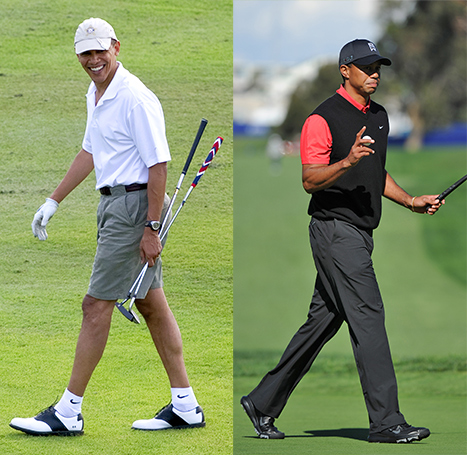
–The White House press corps is pissed about being kept away from Obama and Tiger Woods. Rightly so. Why schlep to Florida if you can’t go golfing?

This photo is a composite!

This photo is a composite!


–David Carr has a fascinating example of what I like to call The Power of Reporting. He tells how one reporter got out of the office to examine the apparent truth of a dramatic photo. 


Photo by Stephanie Sands


Photo by Stephanie Sands


–The new Polk Awards are out (they are something like the Golden Globes vis-a-vis the Academy Awards). 2012 was a good year to be reporting about the inexplicable fortunes amassed by the families of some of China’s most powerful men. Among the winners: David Corn of Mother Jones (for breaking the story about Mitt Romney’s fateful “47 percent” comment) and David Barboza of the New York Times for his series from China “Princelings.” Congrats to all winners. Good luck in the competition for the Pulitzer Prizes (due out in April).

–The NYTimes Public Editor, Margaret Sullivan, continues to explore the dust-up between Times auto writer John Broder and the head of Tesla Motors, Elon Musk.

[Full disclosure: I am wildly biased on this issue by my desire to own a Tesla some day.]


Leave a comment

Filed under Journalism, New York Times, Politics, President Obama

Obama wavering on secrecy

By Christopher B. Daly

Slowly, but perhaps inevitably, President Obama is yielding to public pressure and taking baby steps toward the transparency he promised all along. He has said he will allow the leaders of the House andimgres3 Senate Intelligence Committees to look at the legal memo that purports to justify the administration’s policy of killing Americans overseas under certain conditions using unmanned drones.

Can a leak of the document be far behind?

Even after that happens (as seems equally inevitable), I want to know:

–What authorizes Obama to make this policy on his own?

–What authorizes Obama to pick the targets for assassination?

–What authorizes Obama to hide this policy and dribble it out only when cornered by the people?

He was supposed to be a leader in the campaign for transparency, not a reluctant truant. Oh, well. Sometimes the people have to lead the leaders.

Famous drone target.

Famous drone target.

Leave a comment

Filed under Journalism, President Obama