Category Archives: journalism history

Let cameras into court

By Christopher B. Daly 

As I recently argued, we the people deserve to have cameras in all our courtrooms (except maybe juvenile court) and our legislative bodies.

The latest case in point: the appearance in U.S. District Court in Boston yesterday by Dzhokhar Tsarnaev, the surviving suspect in the Boston Marathon bombing case. Radiating out from downtown Boston, millions of people have a keen interest in this case, and they all have a right to see this defendant. We have a right to hear him say “Not guilty.” We have a right to observe the performance of the government parties — the prosecutors, the judge, the guards, etc. We have the right to watch our government.

Instead, what we get is a chalk sketch like this one:

Suspected terrorist Margaret Small/AP

Suspected terrorist
Margaret Small/AP

We can do better, and we the people deserve better. 

If anybody knows of a good argument for continuing to ban cameras from federal courts, please leave a comment.


6 Comments

Filed under Boston, broadcasting, journalism history, media, Photojournalism, Supreme Court

The re-making of the news media

By Christopher B. Daly 

We are living through a period of great flux in the news business. There are new ventures, new hybrids, new devices for gathering and disseminating information, documents, and polemics. It’s a treat to have a front-row seat (Goodbye, Google Reader! Hello, Feedly!), but it can be disorienting at times.

To wit: the decision by the mighty Time Warner media conglomerate to abandon its shiny, still-new namesake building at Columbus Circle in Manhattan and decamp to a still-unfinished tower in a lower-rentPennStation district the developers refer to as Hudson Yards. (Does anybody really call it that? It’s really a vast wasteland on the Far West Side between Chelsea and Hells Kitchen, but it is slowly becoming a new media hub within Manhattan.)

But not to be missed is a more powerful trend sweeping through much of Big Media: the break-up of many of the big conglomerates. At Time Warner, at News Corp., and at Tribune Co., the same de-conglomeration process is underway: the division of those big companies into a print division and a (for lack of a better word) video division.

–Time Warner is spinning off its magazine division, which has been the cornerstone of the Time empire since Henry Luce founded Time magazine in 1923.

–News Corp. took out a double-truck ad in the NYTimes on Monday to signal its separation into two divisions. One made up of the Wall Street Journal, the NYPost and many, many other newspapers along with some magazines, almost all of which lose money. The other is a new company (called “21st Century Fox”) made up of the highly profitable television, cable, and movie-making subsidiaries. (The new video division began trading on the stock market on July 1; shares opened at $29 and basically stayed there all day. The new print division has not started trading yet.)

–Tribune Co., which traces its roots to the Chicago newspaper empire founded by Joseph Medill and taken over by his grandson, Col. Robert R. McCormick, announced this week that it is going to spend $2.7 billion to buy 19 local television stations around the country. At the same time, Tribune Co. is trying to sell “some or all of its newspaper properties,” including the cornerstone Chicago Tribune, according to a story in today’s NYT business section.

–The New York Times Co., which traces its roots to the founding of the New-York Daily Times newspaper in 1851, began selling off its broadcast units about six years ago and completed the process a few years later. The Times Co. is apparently pursuing a strategy of shrinking to its core business and trying to defend the castle keep with a paywall.

The big open question: What will any of this mean for the quality of the journalism that is carried out by these companies?

Stay tuned.

Leave a comment

Filed under broadcasting, Journalism, journalism history, New York Times, publishing

NSA Leak: Is Greenwald a journalist or activist? (Does it matter?)

By Christopher B. Daly

In his NYTimes column today, David Carr raises a somewhat misleading question about Glenn Greenwald, who broke the story about the illegal, secret NSA spying on innocent Americans. Carr poses the question: is Greenwald a journalist or an activist?

I think that’s the wrong question, for several reasons.

First, as a historian of journalism, I start with looking at the history of American journalism. For more than a century, back in the early days of newspapers in Colonial America and during the first few decades of the early national period, there was no such thing as “objectivity” in the newspaper business, and there were no full-time reporters.

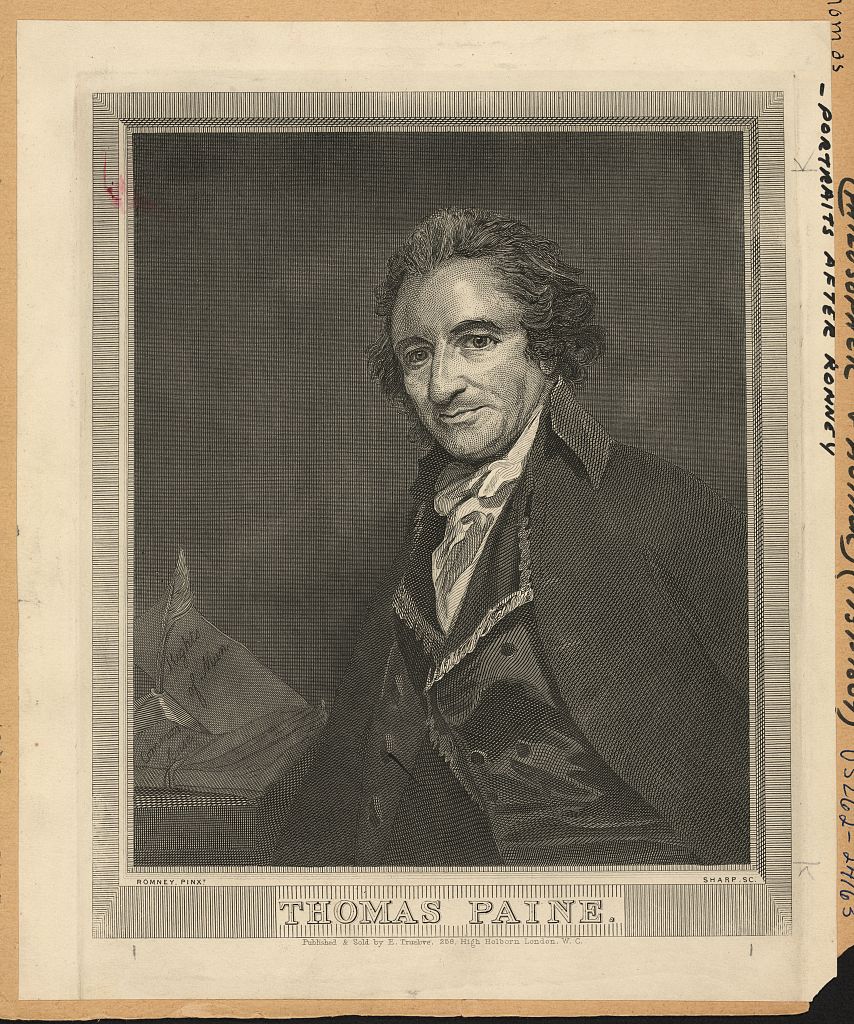
Thomas Paine (Library of Congress)

Thomas Paine (Library of Congress)

That is, the entire industry was based on content created by people with an ax to grind. Often, they were political activists (like Sam Adams or Tom Paine) or surrogates for office-holders (like James Callender).

The idea that a journalist should be defined as a full-time, professional fact-gatherer who has no political allegiances is not only unrealistic, but it is already a historical artifact. If that definition of a journalist ever made sense, it was during a period (the mid and late 20th century) that is now over. Today, the term “journalist” embraces all sorts of folks with different business models, different priorities, and different media. So be it.

Glenn Greenwald is actually a case in point for this new media landscape. He is not just a reporter. He is a lawyer-litigator, an author, a columnist, a blogger, and an advocate. He is also gay and living in a DOMA-induced exile in Brazil. In all he does, he appears to have strong convictions (or biases, if you prefer). He makes no bones about his allegiances. In a sense, he is the compleat modern journalist — global, multi-platform, high-impact.

I don’t agree with him on everything, but I value what he does. And I appreciate knowing where he’s coming from — unlike some journalists who actually have an agenda but deny it.


1 Comment

Filed under history, journalism history, media, Uncategorized

It’s raining leaks!

By Christopher B. Daly 

imgres3Today’s news brings a very curious twist on the theme of national-security leaks. This time, the suspected leaker is not a low-level functionary like Bradley Manning or Edward Snowden but a high-ranking military official — in fact, the former No. 2 in the entire military command structure. According to a report first broken by NBC News, retired Marine Gen. James E. “Hoss” Cartwright is under investigation in connection with the leak of classified information about American cyberattacks against Iran, intended to disable or slow down Iran’s program to build a nuclear weapon. (The coverage in today’s NYTimes is rather circumspect, which makes sense, considering that the Times was the recipient of the leak. The paper quotes NYT executive editor Jill Abramson saying she doesn’t discuss such things.)

I wonder if Cartwright’s rank will make any difference here. After all, he’s not some some “29-year-old hacker,” — as President Obama pooh-poohed Snowden on Thursday, while adroitly trying to keep the Snowden/NSA leak from screwing up great-power relations with China and Russia. (Funny thing: at other times, Obama is quite willing to characterize Snowden as a threat to our very existence. Also, an update: Snowden turned 30 last week.)

Back to Cartwright. Far from being a hacker, Cartwright, who was named vice chairman of the Joint Chiefs by President28stuxnet1-img-articleInline Bush and who served under Obama as well, was at the epicenter of the military/national security power structure. I wonder how the top brass and the national-security establishment feel about leaks now, when one apparently came from one of their own. Where’s the outrage? Will we be seeing Sens. McCain and Graham or former veep Cheney going on Sunday TV talk shows demanding his head?

We might also ask: Why would Hoss Cartwright do such a thing? He’s not commenting, but we can just imagine. Maybe he wanted to see the U.S. get credit for “doing something” about the Iranian threat. Maybe he wanted to let Americans know that we had the technical means to mess up their weapons program without having to attack or invade Iran by conventional means. Maybe he was ordered to make the leak by someone who out-ranked him (perhaps the Chair of the Joint Chiefs, or the National Security Adviser, or the Secretary of Defense, or the President himself?)

The Washington Post, after pointing out that the cyberattack on Iran included a computer virus named Stuxnet and was part of a broader program code-named “Olympic Games,” adds this tantalizing hint:

Cartwright, who helped launch that campaign under President Bush and pushed for its escalation under Obama. . .

Maybe Cartwright thought his favored program was threatened in some way by someone else in the national security apparatus.

As I have long maintained, the reaction to leaking is very much in the eye of the beholder. If the leaker is powerful enough, the act of leaking is not a crime but just politics by another means.

For the record: As far as we know, Cartwright would be the eighth target of an Espionage Act investigation undertaken in the Obama administration’s record-breaking campaign to punish leakers.

Speaking of cyberattacks, U.S. officials seems to be scrambling to find a path through this 28cyber1-img-popuppolicy thicket. On the one hand, Joint Chiefs Chairman Martin Dempsey is hurrying to write new rules for warfare in cyberspace, according to another article in today’s NYTimes. (Don’t hold your breath waiting to participate in this process yourself: any such rules are classified. So there!) Here’s the takeaway:

[Dempsey] said that, globally, new regulations were needed to govern actions by the world community in cyberspace. He said that the Chinese did not believe that hacking American systems violated any rules, since no rules existed.

And, finally, for an example of what’s at stake in terms of commerce, today’s Boston Globe has an eye-popping story about how the Chinese allegedly steal commercial secrets. If you thought they just stole plans for making plastic tschotschkes, think again. This one involved the design for wind turbines, which the Chinese had the nerve to sell back to us!

It’s enough to make the head spin. How am I supposed to keep up with the Whitey Bulger trial, the Hernandez case, or the trade of both Paul Pierce and Kevin Garnett to the Brooklyn Nets????

p.s. For a fun and puzzling exercise in mind-games, go to the NYT homepage and enter the term “stuxnet” in the search box. If you can figure out the results, please explain in a comment below. 

1 Comment

Filed under Journalism, journalism history, leaks, media, New York Times, Obama, Politics, President Obama, Wikileaks

NSA Leak: Why not the Times?

By Christopher B. Daly

Since the disclosure of the NSA leaks story, a fair amount of media commentary has focused on the thinking of the self-identified leaker, Edward Snowden, who got access to secrets by working for a government contractor. Many have compared him to Daniel Ellsberg, who got access to secrets by working for a government contractor, then divulged the Pentagon Papers in 1971 to the New York Times. 

Some wonder why Snowden chose to cooperate with Glenn Greenwald (who is a lawyer/activist/blogger/freelancer) rather than a traditional media heavyweight such as the New York Times. Some of the concern is misplaced, I believe, since Snowden also shared his NSA leak with the estimable Barton Gellman of the Washington Post.

As far as the Times goes, the newspaper’s own Public Editor, Margaret Sullivan, aired out the question in her most recent posting.

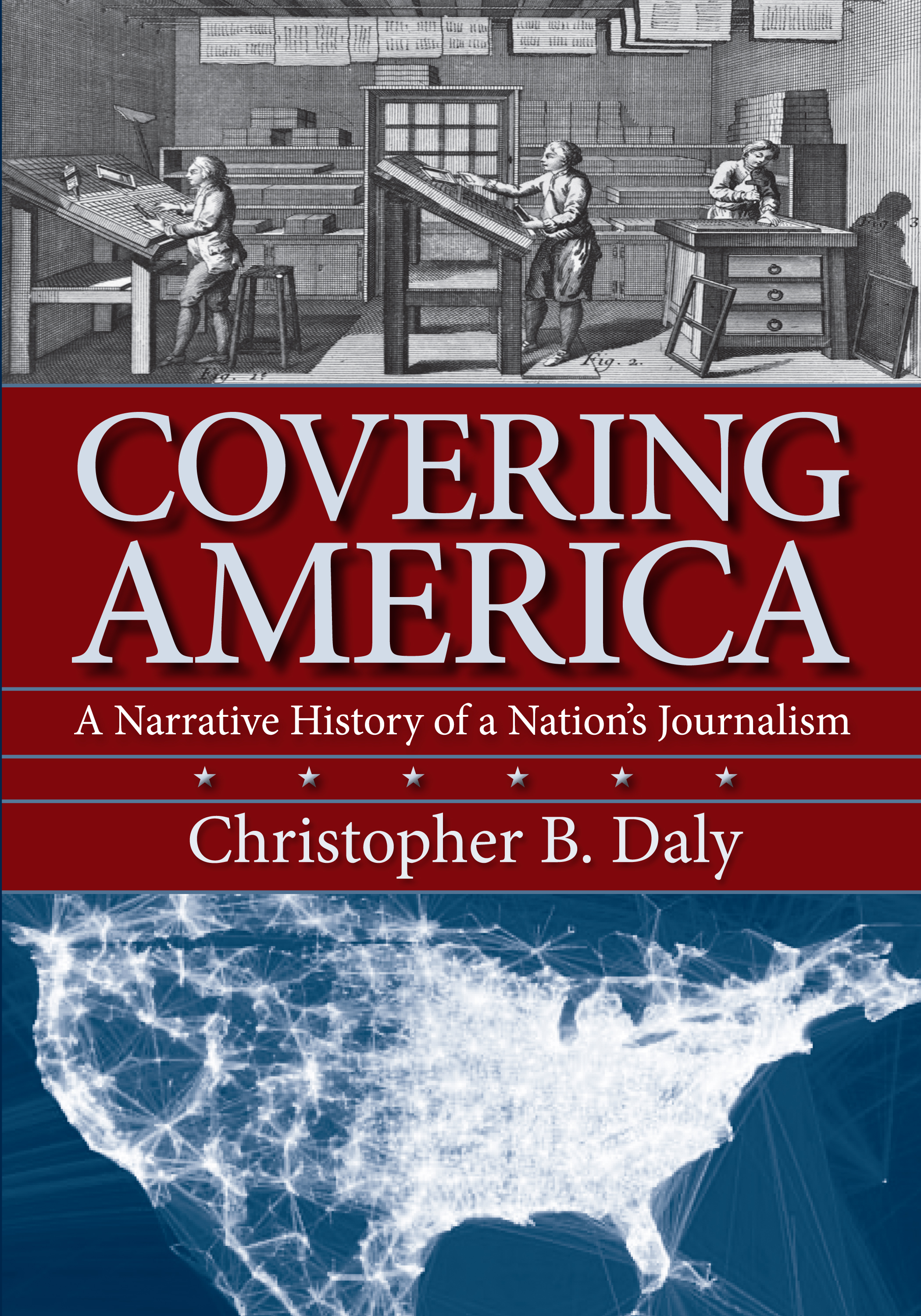
I think it is worth recalling some of the history of the Pentagon Papers case (which you can read at greater length in chapter 11 of my book, Covering America.) By his own CA cover finalaccount, Ellsberg had a political goal — ending the U.S. war in Vietnam. To that end, he first tried to leak the classified documents to members of Congress, on the theory that they could use their congressional immunity to read the papers aloud on the floor of the House or Senate. Because of their immunity, they could not be prosecuted for anything said as part of the proceedings of Congress and their remarks would be on the public record.

When the office-holders balked, Ellsberg turned his thoughts to the media. There I think it is indicative that he did not approach the Times as an institution. Indeed, the Times — in 1971 — was not well known for challenging the federal government. Instead, Ellsberg was targeting an individual journalist whom he thought he could trust: Neil Sheehan.

Ellsberg and Sheehan had a bit of history. They had met when Ellsberg was serving in the Marines in Vietnam and Sheehan was working for United Press in its Saigon bureau. Ellsberg had a sense that Sheehan was a skeptic about the war. Later, Sheehanimgres-1 joined the Times, and he was working as a reporter in the Times Washington bureau in 1971. Under the terms of employment for Times reporters, he was supposed to keep his political views to himself. On March 28, 1971, Sheehan wrote a lengthy multi-book review for the Times Sunday Book Review in which took seriously the idea that there should be war-crimes trials for the U.S. policy-makers who kept us in Vietnam. When Ellsberg read that review, he knew he had found the right journalist.

Three months later, Sheehan wrote the first front-page article in the series that became known as the Pentagon Papers.

imgres

4 Comments

Filed under Journalism, journalism history, leaks, New York Times, Uncategorized

NYTimes videos revisit recent past

By Christopher B. Daly 

Without much fanfare, the New York Times has been engaging in an interesting experiment that revisiting old news stories to address the ageless qusetion: “Oh, yeah . . . whatever happened to that?”

Rev. Al, back in the day.

Rev. Al, back in the day.

The service is a partnership between the Times video section and a private non-profit called “RetroReport.” (It’s not that easy to find on the Times site, but here is the link to the page that lists all seven such reports done to date.) According to the partner’s website, RetroReport’s mission is to produce video follow-ups to big stories from a decade or more ago that dropped off the radar of the news business. Recent examples include revisiting the Tawana Brawley case, the Biosphere 2 experiment, and the Y2K hubbub. The folks at RetroReport seem to be a mix of young documentarians and some heavy-hitting alumni of top-shelf operations like 60 Minutes, the Ken Burns films, and PBS.

This is a potentially great idea that brings the Times into the realm of creating the second draft of history as well as the first. In a sense, the Times has entered the field

Biosphere 2. Remember?

Biosphere 2. Remember?

of historical revisionism, giving its audience the chance to re-evaluate stories that once seemed to have one point or significance only to find that new evidence or new concerns have cast the recent past in a different light.

One theme that emerges from these early versions: a lot of stories are wrong the first time around.

Another theme: Despite the predictions, the sky rarely falls.

History keeps happening.


1 Comment

Filed under history, Journalism, journalism history, media, New York Times, Photojournalism

Politico goes on a hiring spree

By Christopher B. Daly 

imagesWith all due respect, I think the Times “buried the lead” in today’s story about Politico. The story focuses on the hiring of Susan Glasser, who, the Times notes diplomatically, “was known as a polarizing figure among national reporters during her tenure at The Washington Post.”

I don’t know. I was a regional correspondent for the Post, covering New England, from 1989 to 1997. Glasser did not join the Post until 1998, so we did not overlap. What I do know is that at the Post, she would have had few role models for images-1newsroom management, because the Post newsroom was terribly mismanaged during that period. With one notable exception (the estimable Bill Elsen), the editors I had to work with at the Post were not up to the job.

In a story from 2008, the Times described with happened to Glasser when she crashed as an AME (asst. managing editor, a powerful job at the Post) in charge of national news and had to be sacked by Len Downie.

When she was named an assistant managing editor in November 2006, Ms. Glasser was praised by Mr. Downie as “one of our most talented and visionary journalists.” Several Post reporters who spoke about Ms. Glasser on Tuesday said that they agreed with that description, and that Ms. Glasser, while often demanding, recognized that newspapers had to think more imaginatively had the era of declining circulation and the rise of the Internet.

But morale suffered under Ms. Glasser’s leadership, to the extent that in recent weeks a high-ranking Post editor surveyed people on the national staff to gauge just how bad feelings were running, people at the newspaper said. The morale report was conveyed recently to Mr. Downie, who was said to have been dismayed by the findings.

What is not to be missed there and what is so typical of the Post is that things were allowed to get so bad in the first place.

It’s also a bit of a mystery to me how Glasser was supposed to oversee national news when the Post had closed all its domestic bureaus.

Anyway, she left the Post later in 2008 and became the editor in chief of Foreign Policy. Now, she is jumping to Politico, where she will be in charge of two initiatives: long-form non-fiction (a new area for Politico, which has the journalistic equivalent of ADHD) and posting of opinion pieces by outside contributors. Both of those are welcome experiments for Politico, in my book, and I wish them well.

But the real headline in the Times story about Politico was in the literally final graf:

Mr. VandeHei said the site was putting “several million” dollars behind the new operations and would seek to hire a dozen new reporters.

Now, that is definitely good news. A serious digital news source is making enough money to expand and hire more reporters. Bravo.

Here is Politico’s own coverage of the move.

0          0        0        0       0

FYI, here’s what Susan Glasser said about herself on the Foreign Policy website:

Susan Glasser is editor in chief of Foreign Policy, the magazine of global politics, economics, and ideas. A longtime foreign correspondent and editor for the Washington Post, Glasser joined Foreign Policy in 2008 and has been spearheading the magazine’s ambitious expansion in print and online at ForeignPolicy.com. During her tenure, the magazine has won numerous awards for its innovative coverage, including the 2012 award for online general excellence from the Overseas Press Club and three National Magazine Awards, for digital excellence in reporting, blogging, and multimedia. FP’s ten nominations for the awards including being a 2011 finalist for “Magazine of the Year,” the industry’s highest honor.

Glasser spent four years as co-chief of the Post‘s Moscow bureau and covered the wars in Afghanistan and Iraq for the Post in the immediate aftermath of 9/11, including the battle of Tora Bora and the invasion of Iraq. After returning to Washington, she edited the Post’s weekly Outlook section and led its national news coverage. Together with her husband, New York Times White House correspondent Peter Baker, she wrote Kremlin Rising: Vladimir Putin’s Russia and the End of Revolution. Glasser previously worked for eight years at the Capitol Hill newspaper Roll Call, where she rose to be the top editor. She has served as chair of the Pulitzer Prize jury for international reporting and is a member of the World Economic Forum’s Global Agenda Council on the United States. A graduate of Harvard University, Glasser lives in Washington with Baker and their son.

Leave a comment

Filed under Journalism, journalism history, New York Times, Politics, publishing

Quote of the week

“To be a Fox journalist is a high honor, not a high crime.”

–Roger Ailes, chief executive of Fox News, in a memo to his staff.


Here’s the full text:

Dear colleagues,

The recent news about the FBI’s seizure of the phone and email records of Fox News employees, including James Rosen, calls into question whether the federal government is meeting its constitutional obligation to preserve and protect a free press in the United States. We reject the government’s efforts to criminalize the pursuit of investigative journalism and falsely characterize a Fox News reporter to a Federal judge as a “co-conspirator” in a crime. I know how concerned you are because so many of you have asked me: why should the government make me afraid to use a work phone or email account to gather news or even call a friend or family member? Well, they shouldn’t have done it. The administration’s attempt to intimidate Fox News and its employees will not succeed and their excuses will stand neither the test of law, the test of decency, nor the test of time. We will not allow a climate of press intimidation, unseen since the McCarthy era, to frighten any of us away from the truth.

I am proud of your tireless effort to report the news over the last 17 years. I stand with you, I support you and I thank you for your reporting with courageous optimism. Too many Americans fought and died to protect our unique American right of press freedom. We can’t and we won’t forget that. To be an American journalist is not only a great responsibility, but also a great honor. To be a Fox journalist is a high honor, not a high crime. Even this memo of support will cause some to demonize us and try to find irrelevant things to cause us to waver. We will not waver.

As Fox News employees, we sometimes are forced to stand alone, but even then when we know we are reporting what is true and what is right, we stand proud and fearless. Thank you for your hard work and all your efforts.

Sincerely,

Roger Ailes


1 Comment

Filed under Fox News, Journalism, journalism history

The case against Obama on secrecy

By Christopher B. Daly

imgres3It gives me no satisfaction to say that President Obama has been worse than disappointing when it comes to his treatment of journalists (and their sources) or his retreat from transparency (and thus accountability) in government.

It has to be said: The president has engaged in “a long train of abuses . . . pursuing invariably the same Object.”

The case against him is laid out in this open letter from whistleblowers, posted in the Guardian. This is the most comprehensive indictment I have seen to date.

In his lengthy speech yesterday about how he sees the war on terror, Obama threw in a brief passage near the end about the collateral damage that the war on terror is doing to the news media. It strikes me as too little, too late. Here it is:

The Justice Department’s investigation of national security leaks offers a recent example of the challenges involved in striking the right balance between our security and our open society. As Commander-in Chief, I believe we must keep information secret that protects our operations and our people in the field. To do so, we must enforce consequences for those who break the law and breach their commitment to protect classified information. But a free press is also essential for our democracy. I am troubled by the possibility that leak investigations may chill the investigative journalism that holds government accountable.

Journalists should not be at legal risk for doing their jobs. Our focus must be on those who break the law. That is why I have called on Congress to pass a media shield law to guard against government over-reach. I have raised these issues with the Attorney General, who shares my concern. So he has agreed to review existing Department of Justice guidelines governing investigations that involve reporters, and will convene a group of media organizations to hear their concerns as part of that review. And I have directed the Attorney General to report back to me by July 12th.

We’ll see what Eric Holder comes up with. But based on his record, I don’t expect much. So far, Holder has been part of the problem, not part of the solution.


Leave a comment

Filed under Fox News, Journalism, journalism history, media

Poll: Americans back AP

By Christopher B. Daly

OK, that’s not exactly what this new Pew poll shows. But it does indicate that a healthy plurality “get it” when it comes to government spying on journalists.

5-20-13-3

Here’s the take-away:

Criticism of the DOJ is substantially higher among those who are paying attention to the story. By a 55% to 35% margin people who have followed reports about the AP phone records at least fairly closely disapprove of the DOJ’s actions. Attentive Republicans are particularly critical: they disapprove by a 66% to 28% margin.

2 Comments

Filed under First Amendment, Journalism, journalism history, Obama, Politics, President Obama, publishing