Tag Archives: New York Times

NYTimes videos revisit recent past

By Christopher B. Daly 

Without much fanfare, the New York Times has been engaging in an interesting experiment that revisiting old news stories to address the ageless qusetion: “Oh, yeah . . . whatever happened to that?”

Rev. Al, back in the day.

Rev. Al, back in the day.

The service is a partnership between the Times video section and a private non-profit called “RetroReport.” (It’s not that easy to find on the Times site, but here is the link to the page that lists all seven such reports done to date.) According to the partner’s website, RetroReport’s mission is to produce video follow-ups to big stories from a decade or more ago that dropped off the radar of the news business. Recent examples include revisiting the Tawana Brawley case, the Biosphere 2 experiment, and the Y2K hubbub. The folks at RetroReport seem to be a mix of young documentarians and some heavy-hitting alumni of top-shelf operations like 60 Minutes, the Ken Burns films, and PBS.

This is a potentially great idea that brings the Times into the realm of creating the second draft of history as well as the first. In a sense, the Times has entered the field

Biosphere 2. Remember?

Biosphere 2. Remember?

of historical revisionism, giving its audience the chance to re-evaluate stories that once seemed to have one point or significance only to find that new evidence or new concerns have cast the recent past in a different light.

One theme that emerges from these early versions: a lot of stories are wrong the first time around.

Another theme: Despite the predictions, the sky rarely falls.

History keeps happening.


1 Comment

Filed under history, Journalism, journalism history, media, New York Times, Photojournalism

Readers to the rescue! NYTimes gains in circulation

By Christopher B. Daly 

Yes, the New York Times company reported a sharp drop in earnings this week.

Yes, the figures for advertising revenue were wretched and getting worse.

BUT, buried in the financial details, there is some potentially important good news: Money coming in from circulation is rising. In fact, it rose 6.5% in the first quarter of this year compared to the same quarter a year ago. Therein may lie the salvation of the most important news organization in the country.

The reason is that “circulation revenue” is all the money coming in from the subscriptions to the traditional print edition, the dollars paid by folks picking up a copy of the Times at newsstands, and — most important of all — the money coming in from digital subscribers who bumped into the Times “paywall” and decided to pony up and pay for full access to the Times online. They are important because they are the future. In the digital era, the key metric is whether you can make money online. Historically, newspapers depended on a “dual revenue stream” of money coming from both circulation and advertising. For more than a century, both sources increased, and they fluctuated around a ratio of 50/50 in terms of total revenues.

If the Times can continue to gain readers who will pay, then there is no reason it could not sustain itself mainly on the basis of its own readers — who are, ultimately, a better base for journalism than advertisers. Thank you, Tiffany and Bloomingdales, and may your ad spending continue. But ultimately, the Times might be better off if it were funded like the old PM newspaper, or I.F. Stone’s Weekly, or NPR, or the AP or other news organizations that do not depend on advertising.

According to the latest figures, readers now account for a majority of the Times revenues.

Here’s a chart from the company’s press release.


First Quarter
2013 2012 % Change
Revenues
Circulation $ 241,789 $ 226,994 6.5 %
Advertising 191,167 215,234 -11.2 %
Other(a) 32,977 33,204 -0.7 %
Total revenues 465,933 475,432 -2.0 %

When I looked at the numbers more closely, here’s what I found on a percentage basis:

First quarter

[                                 2013               2012

Revenues

Circulation             51.8%          47.7%

Advertising            41.0%          45.2%

Other                          7.1%             6.9%

So, it appears that “the people formerly known as the audience” are pointing the ( or a?) way forward.

Readers to the rescue!

chart

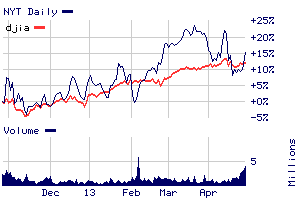
This chart (which I customized using a tool on the NYTCo corporate site) shows how the NYTCo stock has performed in the last six months, compared to the Dow Jones average, which has been on a tear. 

Leave a comment

Filed under business, Journalism, journalism history, New York Times, Uncategorized

Wikileaks defendant gets a break

By Christopher B. Daly 

Among the many public services rendered by the New York Times, one is the coverage of the “Wikileaks case” being prosecuted in a U.S. court martial against Pfc. Bradley Manning. The case is taking place at Fort Meade, Maryland, which is about midway between Washington and Baltimore. That means that New York Times reporter Charlie Savage (formerly of the Boston Globe) has to

Welcome!

Welcome!

schlep out there every day when hearings are held and submit to all the rigamarole of entering a U.S. military base and the extra challenges of covering a court martial.

Because Savage is there and because he is well-versed in the law of the case, Savage is alert to the meaning of a lot of the pre-trial maneuvering. In today’s story, he informs us that Bradley caught a rare break this week: the judge ruled that the government will have a higher burden of proof than had originally been thought. The issue involves some arcane provisions of the Espionage Act of 1917 (as amended), but the judge’s ruling on the burden of proof goes right to the heart of the case. Put simply, it comes down to this:

When Private Manning leaked all those secret files to WikiLeaks (and he has already admitted doing so), did he have an intent to harm the United States? Did he have a “reason to believe” that the leaks would help a foreign enemy of the U.S.? And can the government prove that he had such a state of mind?

That really tips the balance in the defendant’s favor, because one can imagine a whole host of intentions that a leaker could plausibly have that would fall short of the “aiding the enemy” standard. Like Daniel Ellsberg — the leaker in the Pentagon Papers case — Manning could have been acting with an intent of changing U.S. war policy, or simply hastening an end to a war he considered unjust.

The government side, including military lawyers, had wished to proceed to trial under a different set of rules. Here’s how Savage paraphrased the government’s position:

A military legal spokesman argued that the decision may make little difference because the judge previously ruled that Private Manning’s motive — whether he thought of himself as trying to help society — was irrelevant to whether he intentionally broke the law. The fact that many of the documents were classified, he said, was a reason for Private Manning to believe that their disclosure could cause harm.

In other words, the classification system is always correct and any violation of its rules is, on its face, a crime. That, of course, is an invitation to those in power to cover their asses in perpetuity by classifying any information that they don’t want to see the light of day. In that case, we would never learn any of the disclosures that came to light through the Pentagon Papers or  Wikileaks. We, as citizens, could not even debate whether our elected officials are doing a good job, because we would have no evidence to work with.

It’s not an overstatement to say that, no matter what happens to Manning in the end and no matter how we feel about the wisdom of the war in Iraq, we should all thank the Times for looking out for the rights of all of us.

0    0      0       0        0

Extra credit:

Savage’s story also gives us a glimpse of the conditions under which the reporters covering the trial have to work:

Military authorities, meanwhile, said that while court was in session they would ban cellphones and air cards and turn off the wireless Internet in a media center where reporters and activist bloggers watch a closed-circuit feed from the courtroom. The steps were a response to the release on the Internet by the Freedom of the Press Foundation of a bootleg recording of Private Manning’s statement in February. Colonel Lind emphasized that recordings were not allowed at any court-martial proceeding.

“To date I have not ordered persons to be screened for phones and recording devices,” she said. “I hope I won’t have to. I trust you will all follow the rules and we will not have any additional violations of the court’s rules.”

Got that?


Leave a comment

Filed under Uncategorized

NYTimes: going global with the brand

By Christopher B. Daly

If you ran the New York Times and enjoyed the prestige that comes with doing great journalism and having a large, talented staff, why would you run any of your enterprises under another name? That seems to be the thinking behind the latest business move by the Times: renaming the venerable International Herald Tribune into The International New York Times. It makes sense, particularly if the Times executives have already made the decision to hang onto the old IHT and not spin it off, as they recently chose to to with the Boston Globe and Worcester Telegram & Gazette.

The IHT — which the Times has owned outright since it bought out its partner The Washington Post Co. in 2003 — is already subtitled “The global edition of the New York Times,” so it is only a short step to turn that into the new name.

From the Times’ own story about the change:

Stephen Dunbar-Johnson, publisher of The International Herald Tribune, noted that for most of the newspaper’s long history, it has had New York in its name. The paper (www.ihtinfo.com) was first published in 1887 as the European edition of The New York Herald. Through a series of ownership changes, it became The New York Herald Tribune in 1959.

The paper became The International Herald Tribune in 1967 when The Washington Post Company and the Times Company invested in the paper to keep it afloat after the New York Tribune folded. In 1991, the Post and Times companies became co-owners of the paper. The Times Company bought out The Washington Post Company’s share and became its sole owner in 2003.

The announcement is part of the company’s larger plan to focus on its core brand and building its international presence, the spokeswoman said. On Feb. 20, the Times Company said it was exploring offers to sell The Boston Globe and its other New England media properties. Last year, the company sold its stake in Indeed.com, a jobs search engine, and the About Group, the online resource company.

imgres

1 Comment

Filed under Journalism, New York Times

Monday roundup: awards, complaints, etc.

Christopher B. Daly 

As so often happens, Monday morning brings a bunch of things to consider:

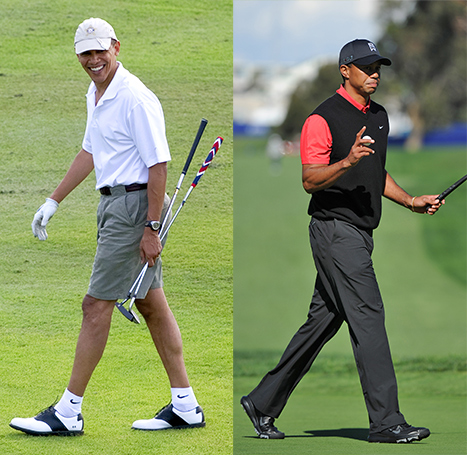
–The White House press corps is pissed about being kept away from Obama and Tiger Woods. Rightly so. Why schlep to Florida if you can’t go golfing?

This photo is a composite!

This photo is a composite!


–David Carr has a fascinating example of what I like to call The Power of Reporting. He tells how one reporter got out of the office to examine the apparent truth of a dramatic photo. 


Photo by Stephanie Sands


Photo by Stephanie Sands


–The new Polk Awards are out (they are something like the Golden Globes vis-a-vis the Academy Awards). 2012 was a good year to be reporting about the inexplicable fortunes amassed by the families of some of China’s most powerful men. Among the winners: David Corn of Mother Jones (for breaking the story about Mitt Romney’s fateful “47 percent” comment) and David Barboza of the New York Times for his series from China “Princelings.” Congrats to all winners. Good luck in the competition for the Pulitzer Prizes (due out in April).

–The NYTimes Public Editor, Margaret Sullivan, continues to explore the dust-up between Times auto writer John Broder and the head of Tesla Motors, Elon Musk.

[Full disclosure: I am wildly biased on this issue by my desire to own a Tesla some day.]


Leave a comment

Filed under Journalism, New York Times, Politics, President Obama

Tesla v. NYTimes

By Christopher B. Daly

I have been hanging fire on this one, but now comes a terrific blogpost by Dave Weinberger that not only has a wise take on the whole thing, but it also contains most of the relevant links. That way, you can see all the original contributions to this fascinating dust-up between  the New York Times and Tesla Motors. My problem is, I want them both to be right (and adult about it), so I am waiting for more data to emerge.

Vroom or bust?

Vroom or bust?

Leave a comment

Filed under Journalism, New York Times, Uncategorized

Times’ paywall is paying very well

By Christopher B. Daly

Buried in the business section of today’s New York Times is a story with some very encouraging news about the future of quality journalism. The story concerns the New York Times Company itself. There’s a lot of noise in there about the sales of assets such as About.com. There’s also the usual gloomy news about the continuing declines in print advertising (down 5.6 percent).

But there are also two positive signals in all the details:

1. Digital advertising revenues rose 5.1 percent. That’s the money the Times makes from selling the electronic ads that appear in the online version. They are rising from a small base, to be sure, but they represent the ad dollars of the future.

2. The biggest good news: revenue from circulation grew 16.1 percent. In other words, the Times‘ paywall is paying very well. I would say this story “buried the lead” — because this is the biggest news in a while. The increase in circulation revenue is certainly not coming from a surge in subscriptions to the old-fashioned print version of the paper; nor is it from an upswing in newstand sales. It is coming from people who bump into the Times‘ online “paywall” and decide that it’s worth paying for the Times‘ content online. That may well turn out to be the paper’s salvation: the readers.

Here’s an excerpt from the NYTCo official earnings statement:

Paid subscribers to The New York Times and the International Herald Tribune digital subscription packages, e-readers and replica editions totaled approximately 640,000 as of the end of the fourth quarter of 2012, an increase of approximately 13 percent since the end of the third quarter of 2012.

That’s impressive. Readers in those numbers (plus some more, of course) could carry the paper into the digital future.

Can a restored dividend be far behind?


Here’s a chart of the company’s stock performance. NYTCo stock is up today, but it has a long way to go to get back to the glory days of a decade ago.

NYTCo stock

NYTCo stock

Leave a comment

Filed under Journalism, New York Times, publishing

The Times loses institutional memory

By Christopher B. Daly 

New York Times public editor Margaret Sullivan, who is supposed to be looking out for us readers, acknowledges in her column today what many have long suspected — that is, the current round of staff reductions in the Times newsroom would target the older (higher cost) reporters and editors. That, in turn, means that the newsroom is losing some folks with some special virtues that are hard to make up for in younger hires.

1. They remember stuff. Even while older people start forgetting this and that (and I put my forefront of this trend), we have been around so long that we remember things that are hard to know any other way but by living through them. Does Ed Koch deserve a big send-off? Was he a jerk? Is something that just happened really “unprecedented” or just unusual? Should a newspaper publish everything it can get its hands on, or are some things better left alone?

2. Odds are, the older people are a little less intimidated by the people who hold formal power. They are the kind of people who (might) speak up in a meeting and say “So what?” or “Why?” Usually, the younger people are eager to agree and just want to know how high to jump. Case in point: Jonathan Landman. When he was on the Times city desk a decade ago, he had the nerve to doubt one of the paper’s rising stars — Jayson Blair. He tried to stop Blair from his serial inventions and plagiarism, and that is no easy thing to do in any newsroom.

So as they shuffle off to early retirements, a tip of the hat to some of those newsroom veterans. It will take a long time to replace them.

Leave a comment

Filed under Journalism, New York Times

News from Timbuktu

By Christopher B. Daly 

Could there be a more exotic dateline than this one?:

TIMBUKTU, Mali

That’s the dateline on today’s news from west Africa. The Times’s Lydia Polgreen, hot on the heels of the Islamic radicals being chased out by the newly reinforced Malian army, offers readers a first-day story. The story may not be perfect or complete, but it is impressive as hell that a legacy news organization can get a correspondent to a place that is synonymous with remoteness.

One highlight of the coverage is this photo (by Benoit Tessier of Reuters) of two guys who obviously know a thing or two about survival:

Mali-articleLarge


The story contains a lot of heartbreak and misery, but to my mind, the worst part was the public amputation ordered by the Islamists during their brief reign of terror. I was also struck by this juxtaposition in the piece, near the end:

After the young man’s hand was cut off, the Islamists held it aloft and shouted “God is great” over and over, he said.

Dr. Maiga and his team hustled the young man into the ambulance and rushed him into the operating room to cauterize the wound, giving him powerful painkillers.

“I did what I had to do,” he said. “God help us.”

So, there you have it: one loving god on both sides. I’d say “heaven help us,” but I wouldn’t count on it.


Leave a comment

Filed under Journalism, New York Times

Uh-oh. Layoffs loom at NYT

Here’s the New York magazine version, complete with the memo from Jill Abramson.

No matter how you slice it, this is not good news.

NYT executive editor Jill Abramson

NYT executive editor Jill Abramson


4 Comments

Filed under New York Times