Tag Archives: journalism

News media: Let’s impose a blackout on mass shoooters

By Christopher B. Daly 

The headlines are both horrifying and all too familiar: another town in America is the location for another mass shooting. My hunch is that to some degree, each new one is partly a product of all the preceding ones. The idea for it, the methods, the script — it’s all there in the coverage of almost every mass shooting.

Thanks to the folks at Vox for compiling this dreadful map, showing all the mass shootings since Sandy Hook (that’s 74, in about 18 months, or about one a week).

Screen_Shot_2014-06-10_at_1.48.46_PM

So, here’s an idea that goes against my grain and against the instincts of most of my colleagues in the news business: Let’s stop covering mass shootings.

Or, at least, let’s stop covering them in a way that glorifies the killer or provides a scenario for any copycat to follow.

Let me state: I believe the main reason for this horror is the specific combination of a scarcity of mental health care and an abundance of high-capacity firearms. Those two forces strike me as the overwhelmingly clear reason for our national plague of mass shootings. But there’s not much that anyone I know can do about either problem.

So, to the extent that coverage of massacres begets more massacres, let’s change the coverage. How?

For one thing, we should consider a moratorium on even naming the shooter. And no photos. And no follow-up profiles of a troubled young man who seemed a little weird to some people (but not that weird) and  not at all weird to other people and then, suddenly — blam! he became deeply psychotic and started firing.

I know something about those kind of stories, having written one for the Washington Post back in 1994 when a schizophrenic young man named John Salvi opened fire at two abortion clinics in Brookline, Mass., killing two people he had never met and wounding five others. Following journalistic protocol, I dropped everything and covered the shooting, then turned my efforts to the inevitable “profile of a killer.” Salvi’s story was one that is now all-too-familiar: young man grows increasingly aloof and unreasoning, no one does anything about it, and then he becomes almost totally isolated and captivated by voices or disordered thinking. Next he’s in a public place with an assault weapon.

In a sense, these shootings — tragically, awfully — do not meet a strict definition of news, because they have ceased to be rare. I would suggest that the news media refrain from covering these men and telling their individual stories so long as the shooter is:

–male

–white

–between 15 and 30

–at least a little “off” by someone’s criteria

–armed to the teeth in a way that would be impossible in almost any other country on Earth.

One Canadian news network did just that this week, following a rare multiple murder in Canada. Let’s impose a moratorium on this kind of story, at least until they become rare again.

2 Comments

Filed under Journalism, mental illness, publishing, schizophrenia

D-day media roundup

By Christopher B. Daly

On this historic occasion, here’s an array of historic media images from D-Day and the following couple of momentous days as the Allies fought their way off the beaches and began the horrible “hedgerow campaign.”

–Robert Capa’s iconic photos for LIFE magazine can be seen at this memorial page maintained by Magnum (the photo agency Capa helped to found.) These are the highest quality I have found yet.

D-Day invasion photo by Robert Capa

D-Day invasion photo by Robert Capa

–Recently discovered are these rare color moving images made by Hollywood film director George Stevens while he was volunteering to aid the war effort. (Thanks to The Telegraph (U.K.), via HNN.) Stevens directed “Shane” and “The Diary of Anne Frank,” among many others, including “Gunga Din” with Cary Grant and “Woman of the Year” with Hepburn and Tracy.

unnamed

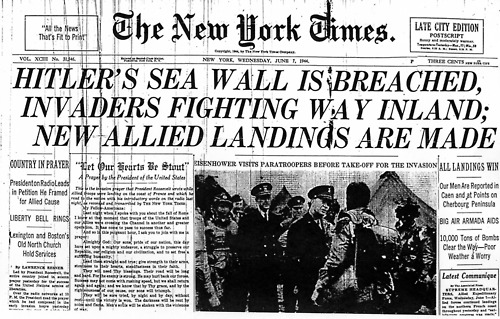
–Here is an image of the NYTimes special “extra edition” on June 6, 1944, with a “time stamp” of 6 a.m..

NYT D-Day Extra


Here is the front page from the following day:

D-Day plus 1

D-Day plus 1

–Here is the Times‘ own version of the June 6 paper.

–Here is a gallery on Google’s new “Cultural Institute,” where I compiled more images from the U.S. National Archives. (This is my first use of this feature. What do you think?) This gallery includes some great images of Higgins boats, which carried the day on June 6, when many of the heavier tank-landing craft (LSTs) got bogged down. Amazing fact: most of the Higgins boats were made of plywood, not steel.

–One more, from the Library of Congress, Prints & Photographs Division:

Americans in Times Square learn the news about D-Day

Americans in Times Square learn the news about D-Day


2 Comments

Filed under history, Journalism, journalism history, New York Times, Photography, Photojournalism

A pox on “A pox on both their houses”

By Christopher B. Daly 

I spend a lot of my waking hours at the intersection of Journalism and History, two empirical fields that share a lot of DNA. It’s an interesting place to hang out, and I wish more of the residents of each street would roam around more on the other street.

Today, a story in TPM about an item on a blog known as the 20Committee, nicely frames an issue that highlights one of the distinctions between the disciplines of journalism and history. The upshot is that journalists do us all a disservice when, in the name of non-partisanship or “fairness,” they throw up their hands and blame Democrats and Republicans equally for behaving in ways that are partisan, counter-productive, hypocritical or the like. As a former political journalist myself, I know this phenomenon well, and I know where it comes from: it is an adaptation to the pressure many American journalists feel to write as if they have no stake in the outcome, to show an aloof indifference to cause or candidate or party.

Many journalists, particularly in the mainstream media who work in the reporting tradition, apply this technique to coverage of hard problems like Obamacare or fracking or political spending. This is the problem often referred to as “false equivalence” or “false balance.”

But, I would submit, no historian who studies our current period in the future would be caught dead doing that. Every historian of our present situation will look at essentially the same facts and will exercise judgment.

[I will further predict that 95 percent of them will conclude that our current messes are the fault of Republicans. But, to use another favorite journalistic evasion, Only time will tell.]

Shutterstock/ Christos Georghiou

Shutterstock/
Christos Georghiou


1 Comment

Filed under broadcasting, CNN, Fox News, history, Journalism, journalism history, media, Politics, publishing

Remembering a funny journalist: Art Buchwald

I am very pleased to have had the chance to write about Art Buchwald. I grew up reading Buchwald’s syndicated column in the pages of the Boston Globe, so I jumped when the online project American National Biography asked me to research his life and write about him.

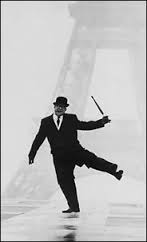
[ANB is a publishing project in partnership with Oxford U Press, and I was hoping that they could include some illustrations, but they could not. So I am posting one of my favorites here at the top of this post.]

Enjoy.

From the cover of Buchwald's book "I'll Always Have Paris"

From the cover of Buchwald’s book “I’ll Always Have Paris”

Buchwald, Art (20 Oct. 1925-17 Jan. 2007), journalist and humorist, was born Arthur Buchwald in Mount Vernon, New York. His father, Joseph Buchwald, a Jewish immigrant from Austria, was a draper in New York City; his mother, Helen Klineberger, whom he never met, was placed in a mental hospital shortly after Arthur’s birth and remained institutionalized for the rest of her life. Arthur was the couple’s fourth child and only son.

Arthur endured a Dickensian childhood in New York City, spending his younger years in a series of foster homes coordinated by the Hebrew Orphan Asylum. His father, who spoke little English, struggled to provide for Arthur and his three sisters, often failing to keep the family together. As a boy, Arthur turned to humor to ward off the many blows life dealt him. “Laughter was the weapon I used for survival,” he wrote in his 1993 memoir, Leaving Home.

Arthur Buchwald attended New York City’s public schools and was a fair student, but he excelled in English and writing. Much of his real education took place in the city’s streets and subways, which he roamed while working at odd jobs as a young teen. One job involved clerking in the mailroom at Paramount Pictures. At age fifteen he was reunited with “Pop” and his sisters in an apartment in Forest Hills in the borough of Queens.

When the United States entered World War II the sixteen-year-old Buchwald attempted to enlist, but his father refused to sign the required papers. During the summer of 1942 Buchwald worked as a bellboy at the Mount Washington Hotel in New Hampshire, where he had his first serious encounter with anti-Semitism. In an effort to impress a girlfriend, he ran away to South Carolina and enlisted in the marines after plying an alcoholic man with a bottle of whiskey to forge his enlistment papers.

The marine corps was not an obvious choice for Buchwald, who was not much of a physical specimen and knew nothing about guns or fighting. He survived basic training and developed a loyalty to the corps, later calling it the best foster home he ever had. Buchwald served as a munitions loader during the island-hopping campaign in the Pacific, seeing duty at Eniwetok, Kwajalein, Engebi, and other islands and atolls. He was discharged without a scratch on 12 November 1945.

After the war Buchwald decided to take advantage of the G.I. Bill. He hitchhiked across the country and enrolled at the University of Southern California (USC). When it was discovered that he did not have a high school diploma, Buchwald was allowed to continue taking classes but denied the chance to earn a degree. He edited the USC campus humor magazine, the Wampus, and he wrote a humor column for the student newspaper, the Trojan. More than forty years later USC awarded Buchwald an honorary degree, and the dean of journalism bestowed his cowl.

In 1948, flush with a veteran’s bonus granted by the state of New York, Buchwald left Los Angeles. Although he spoke not a word of French, he headed for Paris, hoping to emulate the life of Ernest Hemingway and other writers. Following a brief stint as an assistant to a stringer for Variety, Buchwald talked his way into writing a column about the city’s nightlife for the Paris Herald Tribune, which was widely read by Americans visiting Europe. With no credentials of any sort, he wrote a column titled “Paris After Dark” about the city’s nightlife and also contributed restaurant and movie reviews. In his column Buchwald developed a distinctive style, based on his stance as a bemused Everyman, perplexed by French words and customs, willing to humiliate himself for a laugh. His struggles with the French language and culture (dogs in restaurants!) became a source of amusement to his fellow Americans. Buchwald’s work in Paris also allowed the former orphan to rub elbows with the international jet set, and he continued to mingle with the talented and powerful throughout his life.

While in Paris he talked the owners of the Herald Tribune into running his column in their flagship paper in New York. In addition the Washington Post and other U.S. papers–eventually numbering eighty-five–ran his Paris pieces during the 1950s. One of his most famous columns was an attempt to explain Thanksgiving to the French. In fractured Franglais, Buchwald introduced such characters as “Kilometres Deboutish” (Miles Standish) and the “Peaux-Rouges” (redskins). The column was reprinted every November for the rest of his career.

While working in Paris, Buchwald met an American woman, Ann McGarry of Warren, Pennsylvania. Despite their religious differences (he was Jewish, she was Catholic) they were married on 11 October 1952 in London at Westminster Cathedral. They later adopted three children and remained married for forty years until they separated in 1992.

In 1962 Buchwald returned to the United States to begin a new phase of his career, settling in Washington, D.C. Shortly afterward he suffered his first major bout of depression, resulting in hospitalization. Although Buchwald often tapped his own life for material, he wrote relatively little about depression. When he resumed writing his column, it was a great success. The number of papers carrying the Buchwald column, via the Los Angeles Times Syndicate, rose to more than 450 by the end of the decade.

One of his most notorious columns involved the disputed burning of a bra outside the Miss America beauty pageant in Atlantic City, New Jersey, in 1968. A gathering of feminists protested the pageant by throwing items associated with gender oppression into a “Freedom Trash Can” and burning them. Several bras were probably destroyed in this fashion, along with many other items. In his column of 12 September 1968, though, Buchwald fixated on the brassieres, giving rise to the popular image of feminists as “bra-burners.”

During the 1970s and 1980s Buchwald was in frequent demand as a commencement speaker, delivering humorous advice to graduates and their families. He won a Pulitzer Prize for Commentary in 1982, and in 1986 he was admitted to the American Academy and Institute of Arts and Letters. In these years Buchwald was instantly recognizable: a rounded figure with a cigar, dressed in loud clothes and zany hats. Buchwald also rarely turned down a chance to appear in costume. One of his favorites was a (large) bunny suit worn at Easter.

As in Paris, Buchwald continued to mingle with the celebrated, forging fast friendships with the Washington Postpublisher Katharine Graham and the editor Ben Bradlee, among many others. Two of his most celebrated friendships involved the author William Styron and the television journalist Mike Wallace. All three men summered on Martha’s Vineyard, and all three suffered serious mental depression; they were known as the “blues brothers.”

In the late 1980s Buchwald threw himself into a lawsuit that became a milestone in American entertainment law. Buchwald had sketched an idea for a movie involving an African potentate who is overthrown while visiting the United States, resulting in comic complications. The idea was sold to Paramount and eventually developed into the major motion picture Coming to America, starring Eddie Murphy. Buchwald sued the film studio for breach of contract on the grounds that the Murphy film was “based on” Buchwald’s idea. The trial, which lasted three years in California State court in Los Angeles, resulted in an examination of the methods that Hollywood studios used to compensate creative contributors to the movies, under which many were promised a fraction of “net profits” that mysteriously never materialized. In the end Buchwald was awarded $150,000.

After he celebrated his eightieth birthday in 2005, Buchwald’s health began deteriorating. A blood clot in his right foot required amputation, followed by kidney failure. Rejecting dialysis, Buchwald chose to enter a Washington hospice instead. There his condition stabilized, and he became known as the “Man Who Would Not Die.” He received a long line of visitors, disarming them with wisecracks and reminiscences. After five months he checked out and spent the summer on Martha’s Vineyard. He died at his son’s home in Washington the following January and he was buried in a cemetery on Martha’s Vineyard next to his wife; nearby are the graves of Styron and Wallace.

Buchwald was a much-beloved journalist, humorist, and syndicated newspaper columnist whose career spanned six prolific decades. A successor to Mark Twain and Will Rogers as a popular political satirist enjoyed by millions, Buchwald took on both major parties, skewering generations of Washington officeholders. Even in his final illness he depended on humor for survival. Before his death Buchwald created a “video obituary” with the New York Times in which he spoke directly to viewers, saying, “Hi. I’m Art Buchwald, and I just died. . . .”


Bibliography 

Buchwald published more than thirty books, including three memoirs: Leaving Home (1993), I’ll Always Have Paris(1996), and Too Soon to Say Goodbye (2006). Also of interest is Ann Buchwald, Seems Like Yesterday (1980). Pierce O’Donnell and Dennis McDougal, Fatal Subtraction: The Inside Story of Buchwald v. Paramount (1992), discusses Buchwald’s legal case against Paramount. For general background on the world of journalism see W. Joseph Campbell,Getting It Wrong: Ten of the Greatest Misreported Stories in American Journalism (2010); Katharine Graham, Katharine Graham’s Washington (2002); and Richard Kluger, The Paper: The Life and Death of the New York Herald Tribune (1986). Obituaries appeared in the Washington Post and New York Times, 19 Jan. 2007.


Christopher B. Daly


Back to the top

Citation:
Christopher B. Daly. “Buchwald, Art“;
http://www.anb.org/articles/16/16-03592.html;
American National Biography Online April 2014.
Access Date: Thu May 01 2014 13:26:29 GMT-0400 (EDT)
Copyright © 2014 American Council of Learned Societies. Published by Oxford University Press. All rights reserved. Privacy Policy.
oi-logoAbout the Index

3 Comments

Filed under Journalism, journalism history, media

Trouble for oral history?

By Christopher B. Daly

As I like to tell my students: History keeps happening.

The past is always with us, and here’s a case in point: the arrest of Irish leader Gerry Adams as a result of an oral history project carried out at Boston College by researchers who promised their interviewees that the contents would remain confidential. As my friend and fellow journalism professor Dan Kennedy points out, the prosecution of this case represents just part of the Obama administration’s campaign to undermine the rights of reporters (and now, researchers too).

More reports keep coming in:


From today’s Boston Globe, stories about the impact on Boston College and on Adams himself, as well as a strong column by Kevin Cullen. (plenty of comments, too, naturally)

From today’s NYTimes, a good overview by Boston correspondent Kit Seelye.

And more, from the Irish Independent and the Irish Times.


3 Comments

Filed under First Amendment, history, Journalism

Inside the meme factory: The Clintons figured this out long ago

By Christopher B. Daly

When Hilary Clinton complained back in 1995 of a “vast right-wing conspiracy” trying to bring down her husband, she was not wrong. In fact, she and her husband’s political advisers were onto something: the interlocking network of conservative institutions set up since WWII to American politics to the right. As the Clintons realized, the right-wing think tanks and the right-wing media were mutually supportive in their campaign to concoct conservative political themes and inject them into the mainstream media. (Whether this system qualifies as a “consipracy” is a fine point, but Hilary was right to be paranoid: people were out to get her.)

A new batch of disclosures from the Clinton presidential library lay out the Clintons’ grasp of this phenomenon, circa 1995. They rightly identified Richard Mellon Scaife as a major source of funding for both conservative think tanks and media.

Scroll down past the heading sheets for a fascinating glimpse inside this usually hidden world.

Screen Shot 2014-04-23 at 9.01.39 AM

Leave a comment

Filed under history, Journalism, journalism history, media, Politics, publishing, Uncategorized

Interns should be paid!

By Christopher B. Daly 

The unpaid internship is a social evil. If a business is willing to have someone in the workplace and let them anywhere near work, then they should pay. As we know, most interns contribute something (and often quite a bit) to the places where they work, so it’s only fair to compensate them.

Let’s face facts: an internship is a temporary job with no security and no benefits. Most interns do not stay very long, and most places that use interns only use a handful. The total compensation of all interns cannot represent a lot of money to any business, including the news media. Employers exploit interns for a very simple reason: because they can!

Or, they used to be able to. Now, there are stirrings in NYC, the nation’s media capital. The state AG is cracking down on unpaid labor. Most recently, NYC mayor Bill de Blasio has signed an ordinance giving interns the right to sue employers if they are harassed or discriminated against.

Interns, arise!


3 Comments

Filed under Journalism

Inside the meme factory: GOP discovers “imperial presidency”

By Christopher B. Daly

In today’s NYTimes, a story purports to have discovered a trend among Republican congressmen, who are depicted as suddenly deciding to accuse President Obama of creating an “imperial presidency.”

Hmmm. . .

Whenever Republicans start using the same phrase for the same purpose, it behooves political journalists to dig a little deeper and figure out where the new phrase/slogan/soundbite is coming from. Usually, it has been hatched deep in the bowels of the conservative “meme factory” — that set of interlocking think tanks, consultants, and media that serves the conservative movement by providing it with a constant supply of talking points, slogans, and rallying cries.

Today’s story, by Ashley Parker, traced the new “meme” as far upstream as a recent report from the office of Rep. Eric Cantor, the Republican majority leader in the House, but that’s as far as she got. I suspect there are more tributaries to explore, even further upstream.

An excerpt:

Representative Eric Cantor, the majority leader, recently released an addendum to a 33-page report his office had already put out on the “imperial presidency.” And both Mr. Broun and Mr. Loudermilk used similar phrases when talking about the role they believe government should play.

“Our founding fathers truly believed that government should be a government of the people, by the people and for the people — not a government over the people,” Mr. Broun told a gathering of supporters recently.The day before, Mr. Loudermilk offered a nearly identical refrain: “This is a government that is of the people, not a government over the people,” he told supporters. “That’s the mentality that a lot of Washington has.”

The day before, Mr. Loudermilk offered a nearly identical refrain: “This is a government that is of the people, not a government over the people,” he told supporters. “That’s the mentality that a lot of Washington has.”

Imagine that — Loudermilk “offered a nearly identical refrain.” What a coincidence!


Leave a comment

Filed under Journalism, New York Times, Politics, President Obama

Reporting on autism: wrong or dumb?

By Christopher B. Daly

What does it mean that the two sides of this graphic are so out of whack?

Screen Shot 2014-03-30 at 3.01.00 PM

What it shows (according to Princeton prof. Sam Wang, in an article in today’s NYTimes Sunday Review) is that journalists way over-report the wrong things about autism. Whereas most articles are about vaccines, the science suggests that most autism is a product of genes and/or prenatal and very early stresses on mother and child. Hmmm…..

I had never even heard about “injury to the cerebellum at birth,” which turns out to be a major added-risk factor. How are we supposed to understand issues like this and — god forbid! — formulate public policy when journalists present such a distorted view of the science?

Sheesh.


1 Comment

Filed under broadcasting, Journalism, Uncategorized

What if traffic metrics had been used throughout journalism’s history?

By Christopher B. Daly 

That’s a question that came to mind today while reading David Carr’s latest. In his column, Carr identifies a trend (at least, a trend by journalism standards) of news organizations paying their contributors based on how much traffic their individual “stories” garner. If an item is really popular and brings a lot of eyeballs to the site, the “writer” of the piece earns more money. Conversely, if you write pieces that hardly anyone look at, you get paid less — or nothing.

It all sounds simple and fair and transparent and populist. (This approach puts the “piece” in piecework with a vengeance.)

Only it’s not. The problem with this approach is that it doesn’t take into account that journalism has other values besides popularity. Yes, we want readers/viewers, and we want as many as we can get. But we also want to serve our society by occasionally embarking on stories that are so expensive to investigate that they will never pay back any return on the investment of resources put into them. Or, we sometimes work on stories that matter intensely to a small group of people. And, from time to time, we run stories that turn just about everyone off but still make the world a slightly better place.

Let’s consider how a “metrics model” would have served journalism (and the world) over the last couple of centuries.

–The first story about sexual abuse by Catholic priests was hardly a candidate for “most-read” and yet it began a tidal wave of reporting that ultimately rocked the Vatican.

–The first Watergate story (the one with Al Lewis’ byline, on June 18, 1972) had only a tiny fraction of wapo-front_18june1972the readership that the “last” Watergate story 26 months later (the one with the headline “Nixon Resigns” on Aug. 9, 1974)

–Then there was Sy Hersh’s original story about Lt. William Calley and the massacre at My Lai.

One takeaway from those historical cases: some stories need time to build.

–Or what about the columnist Westbrook Pegler? Incredibly popular, but a crackpot who was wrong about everything. His metrics would have crushed the likes of Walter Lippmann (in terms of actual readers, not just people who said they read Lippmann.)

–The first-day stories about the Gettysburg Address barely mentioned Lincoln’s little speech, because (by the lights of the day) it was considered dull and inconsequential compared to the stem-winder of a speech given by the day’s main speaker, Edward Everett. (Who?)

–For a few weeks in 1835, the New York Sun had a wildly popular (and exclusive) story about life on the moon. The paper really racked up eyeballs — until the story was revealed as a hoax. Oh, well. It sure sold papers.

–Or, how about the summer and early fall of 2001? The media were in full cry to “prove” that

Egregious illustration of Chandra Levy.

Egregious illustration of Chandra Levy.

the disappearance of a missing Washington intern, Chandra Levy, was somehow connected to married congressman Gary Condit. (Who remembers them now?) You could look it up: this was a huge story for months in 2001, right up until 9/11. Anyone want to go back there?

Just as some stories need time to develop, some writers need time to develop.

What was Samuel Clemens’ first story, for the Territorial Enterprise in Virginia City, Nevada? If he had not been given time to develop as a writer, he would have ended up as the funniest steamboat pilot on the Mississippi, but there’d be no Innocents Abroad (his first big success), not to mention no Huckleberry Finn. What about the first news stories ever written by Ernest Hemingway? Is there a new Martha Gellhorn or Joan Didion chasing clicks today at Gawker?

If we only work on stories that are popular, we might soon become so popular that we won’t matter any more.

The original moonbats.  New York Sun, 1835

The original moonbats.
New York Sun, 1835

1 Comment

Filed under Journalism, journalism history, media, publishing, Uncategorized