Tag Archives: journalism

Watergate: Lessons learned and un-learned

By Christopher B. Daly

The Boston Globe’s estimable, veteran political reporter Brian Mooney has a front-page story addressing the question: what has happened to the “Watergate reforms” in the 40 years since the Watergate break-in that began the fall of Republican President Richard Nixon.

Turns out, one of the great post-Watergate reforms — the public financing of elections — is all but dead.

Not only that, but the larger trend of political changes in recent years mark a move away from the lessons learned in Watergate.

One lesson was that power corrupts. Therefore, the power that comes from making big donations to a politician was limited by the caps placed on individual giving. The Supreme Court, however, decided to get rich people back into the business of financing elections, through the Citizens United ruling.

Another lesson was that sunlight is the best disinfectant. Therefore, Congress required all candidates for federal office to account publicly for every dollar raised and every dollar spent. Not so for the new Super-PACs.

Another lesson was that money corrupts. Therefore, Congress almost got up the courage to ban all private donations and institute a system of 100% publicly funded elections. But they blinked and created a hybrid by which politicians had to opt in or out. When the amounts available through public financing failed to keep pace with the amounts candidates could get through private fund-raising, almost every serious mainstream candidate rejected public financing and started holding fund-raisers with wealthy donors.

It appears that the past is prologue.

graphic/ Boston Globe

graphic/ Boston Globe

1 Comment

Filed under Journalism, journalism history, Politics, Supreme Court

Leaks (cont.)

By Christopher B. Daly

The able legal-affairs reporter Charlie Savage and Scott Shane have an interesting update in today’s Times about the issue of national-security leaks. The upshot is that the Obama administration has (surprisingly perhaps) emerged as the all-time record-holder among all U.S. presidential administrations for prosecuting leaks. (The piece has a helpful sidebar — which was better looking in print than online — that summarizes nine known leaks cases.)

A couple of related questions:

–Which administration holds the record for generating leaks? (probably a two-term president like Nixon, Reagan, G.W.Bush? or like Clinton?)

–Isn’t it worthwhile to distinguish between different types of leaks?

A. We might differentiate between authorized and unauthorized leaks.

B. We might differentiate between leaks to journalists and leaks to others.

C. We might differentiate between leaks that do harm and those that do not.

For example, it is one thing for a traitor to steal operational secrets and sell or give them to agents of a hostile power. That’s the kind of leak that should properly trigger Congressional outrage and lead to criminal prosecutions. That kind of leak raises no First Amendment issues.

It is quite a different thing for a troubled official to tell a journalist about a secret policy so that the public can debate whether that policy is a good idea. It is this kind of leak that usually induces partisan posturing and leak investigations that fizzle. It is also the kind of leak that requires a careful weighing of the First Amendment implications.

Leave a comment

Filed under First Amendment, Journalism, leaks, New York Times, publishing

Questioning the President

By Christopher B. Daly 

Right-wing media are naturally having a field day over Neil Munro (not the Scottish writer and critic, but the person affiliated with the conservative website The Daily Caller who recently interrupted President Obama to shout questions about the president’s immigration policy). This part is really rich: What he shouted was something like, “Why do you favor foreigners over American workers?” [which is not only a loaded question, but one that sounds more like a provocation or a taunt than a question to which he seeks a real answer].

Turns out, Munro himself is a “foreigner” (born in Ireland) who is therefore enjoying a job that could be filled by an American.

The right-wing media say Bully for him! and take delight in anyone who disrespects this president (but god help anyone who disrespects the office, the flag, etc.). They say the rest of the media are a bunch of lapdogs who spend all day bowing down to the president.

I am actually of two minds about this one. My ambivalence is based on my experience. For a couple of years, I regularly took part in the state-level equivalent of the Rose Garden event. In fact, as the AP’s bureau chief, I usually asked the first question at the governor’s press conferences in Boston.

In that setting, pretty much everyone is a professional who is there to work. The chief executive has a message to convey, and reporters have questions to which they really need answers. Generally, there are ground rules that ensure that the working press can actually get its work done. Generally, those ground rules exclude grandstanding, taunting, heckling, and the rest, because those kind of activities are inimical to Q+A.

I have no objection to those activities, per se. I think our leaders need a good heckling from time to time. I just don’t see where this guy gets off breaking the ground rules and then acting as if he’s the injured party. There are reporters working at the White House who do not want to have to explain to their bosses that the reason they don’t have a story is that some bozo decided to turn the event into a shouting match.

I guess I come down this way:

If you want to heckle the president, go to a public event.

If you need to ask him a question, go to a press conference.

Leave a comment

Filed under Journalism, Politics

Happy Birthday, Ms.

By Christopher B. Daly 

Happy birthday to Ms. magazine. Hard to believe it is 40 years old.

The Times had a nice anniversary party story in the New York section, complete with this photo of Gloria Steinem.

Kristen Luce / NYTimes

Kristen Luce / NYTimes


For a lot more detail about the founding of Ms. in late 1971 and the launch in June 1972, go to chapter 11 in my new book, Covering America. It’s there on pages 348-351. Check it out.

Leave a comment

Filed under Journalism, journalism history

Newsroom half empty?

By Christopher B. Daly 

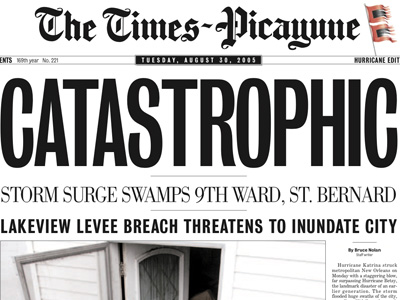
No one said this would be easy. The threatened layoffs have hit the newsroom of the New Orleans Times-Picayune (and other papers owned by the Advance Publications chain).

Things to keep in mind:

–Not all the layoffs are in the newsroom.

–Some of these folks will be replaced.

–The alternative could well be bankruptcy.


1 Comment

Filed under Journalism, media

Journalism on film

By Christopher B. Daly

Fun piece by columnist Dan Barry in the Times about the portrayal of journalists in U.S. feature films.

Two questions:

–How did he do this whole piece without ever mentioning the essential resource in this field: the Image of the Journalist in Popular Culture program at USC? Either he didn’t do a whole lot of research, or he didn’t want to steer readers to a more authoritative source?

–The Times piece is illustrated by a still b+w photo from the iconic film comedy “His Girl Friday.” So far, so good. But the photo is credited to “New York Public Library.” Now, the paper may have found the photo there, but that doesn’t mean the Library has the rights to it. In researching the illustrations for my book, Covering America, I found (to my regret) that the rights are owned by Sony Pictures Entertainment, which does not give away the right to reprint those images for free. For use of a different still from “His Girl Friday” in my book, Sony charged me $75.

[Note to Sony lawyers: I consider it “fair use” to post a copy of the version I paid for in this non-profit context for the purpose of illustrating my point.]

Still from the film classic “His Girl Friday,” set in a newsroom.

Leave a comment

Filed under Journalism, journalism history

News about the News

By Christopher B. Daly

As so often happens, the Monday business section of the New York Times delivers an array of stories about journalism and media worth reading. (Why doesn’t the paper have a “media” tab on its homepage?)

1. David Carr reports on talks between CNN, the ratings-challenged cable news pioneer, and Anthony Bourdain, the macho chef/traveler of Travel Channel fame. CNN execs are trying to address a problem I discuss in my new book (Covering America), which is much easier to formulate than to solve: what can a news-oriented cable channel do to fill all those hours when all hell is not breaking loose?

Bourdain could be part of the answer.

What else might help CNN? You comment; you decide!


2. Following up on the recent cutback in printing by the New Orleans Times-Picayune, comes a look at the broader trend, including some pros and cons.

3. From London, word that Rupert Murdoch’s troubles extend into an area he really cares about: the circulation figures of his newspapers.

4. From Shantou, a piece about how tricky it can be for Westerners to teach journalism to Chinese students in China. As a Westerner who teaches journalism to Chinese students in Boston, I can certainly sympathize. This piece also includes a bonus: an answer to the question of what Peter Arnett has been up to since he was forced out of CNN (in a failed attempt to pump up CNN’s prime-time audience ratings — see item #1 above).

So, there you go. (Just a typical Monday at the Times: four original, reported stories from across the globe that other people will be talking about for a week. )

Leave a comment

Filed under CNN, Journalism, publishing

The Warren-Brown Senate Race: “Organized Hatred”?

By Christopher B. Daly

The 19th Century historian Henry Adams – who was no dope – once shrewdly described Massachusetts politics as “the systematic organization of hatreds.” That was certainly true in his day. A question raised by the current U.S. Senate campaign is whether it is still true today.

Here’s why I say that. The presumptive Democrat, Elizabeth Warren, has had to spend weeks defending herself from the revelation by the Boston Herald that she once, long ago, gave the impression that she was part Cherokee.  The resulting brouhaha has changed the subject in the campaign and presumably worked to the advantage of the presumptive Republican candidate, Scott Brown.

Where did the original disclosure come from?

Let me emphasize that I don’t know what happened.

In fact, it is probably unknowable at present, due to the code of omerta that prevails among political operatives and political reporters. That code is something I do know a little about, having spent a few years as a political reporter covering Massachusetts politics.

In that role, I was the recipient of calls from parties unknown who, for reasons best known to them, decided to “drop a dime” into an untraceable payphone (I am dating myself here, I realize) and share some precious intelligence. I was sometimes invited to “take a walk” by a gimlet-eyed young operative; we would end up on a bench on the Common, and the guy would lean in close and give me the phone number of a divorce lawyer representing some disgruntled ex-spouse of a politician or cabinet member. I was invited to lunch at restaurants in the vicinity of Beacon Hill and slipped manila envelopes with documents inside, detailing the names of political donors whose relationships to each other were not obvious but turned out to be quite interesting once the tipster connected the dots. I got to know the system, thanks to these then-young political operatives.

So, here is what I surmise happened in the Senate race.

The Brown campaign did what all well-financed modern campaigns do: the candidate took a sliver of the millions he has raised and hired a team tasked with conducting “opposition research.” That is, you get a bunch of brainy young people together and you tell them to research everything about the political opposition.

And when they say everything, they mean everything: every indiscretion and every discrepancy. Every tax or mechanic’s lien. Every divorce, adoption, or inheritance. Every real estate transaction, including mortgage notes. Every arrest and every traffic violation. Every grade in school, every bad date, every expensive hairdo – EVERYthing.

The fruits of all that research are then handed over to the campaign’s senior aides and advisers, who stockpile them like ammunition. When they see an opportunity to use the information to their tactical advantage, they fire away. The campaign has some options. In one scenario, they can use the material directly and have their own candidate make a public accusation.

Or, they can play it “cute” and aim for a bank shot. They might decide to “leak” the information to the news media. That approach has several advantages. One is that the damaging material has the added credibility of reaching the public in the form of a news story. Another advantage of the leak is that the campaign can deny involvement or feign ignorance, safe in the knowledge that the reporter they went to will never rat them out.

           This can be especially effective if the campaign aides don’t even tell the candidate. Then, when the “news” breaks in the media, the candidate can act sincerely shocked and outraged and call for further investigations into the “troubling questions” raised by the news reports. That way, the story gains what we call “legs” – that is, it has the capacity to sustain itself as a continuing “story” involving denials, “fresh details,” and so on.

Did that happen in the case of the disclosure about Warren’s heritage? As I said, I don’t know. But it has all the hallmarks.

And what’s troubling about it is this: somebody knows. Quite likely, somebody in the campaign knows. If that’s the case, then there’s your real scandal right there. I say that because it points a finger at someone on Brown’s staff who must have gone through a thought process something like this:

            Oh, boy! This is great. We can leak this baby to the Herald, which we can depend on to slap it on Page 1. It will look on the surface like a “gotcha” story about a candidate’s hypocrisy. But as an added bonus, this story comes with a dog whistle: For those who can hear it, this is really a story about affirmative action. It’s a smear, intended to leave the impression that Elizabeth Warren is some kind of race whore, who gamed the system that so many white ethnics still hate.

            In their view, affirmative action is a big con game designed to put unqualified blacks, Hispanics and other minorities in line ahead of qualified white ethnics for the few good things in life. If we can get Warren associated with affirmative action, we can stir up those resentments, organize those hatreds, and peel off a couple thousand white ethnics who are independents or even some who are still Democrats. If we’re lucky, the “story” will get picked up by the echo chamber of right-wing talk radio. The eight ball drops into the corner pocket.


Did all that happen? I don’t know.

But someone does.

Leave a comment

Filed under Journalism, Politics, Uncategorized

News beyond newspapers

By Chris Daly

I heard a terrific piece today on WBUR, the local NPR affiliate. It was about “Toys for Elephants” — a project by students from the Massachusetts College of Art who took up the challenge of designing play objects for two mature elephants who live at the Buttonwood Park Zoo in New Bedford.

Here’s a link to the story by reporter Vicki Croke and producer George Hicks. (I hope I have that division of labor right, but it’s probably murkier than that.) It presents a really rich blend of multi-media: sound, still photos, video, and words.

Try that with your print newspaper!

[Actually, the Boston Globe did a version of the same story back in April, then posted a video version on the paper’s website. It’s a fine piece, too, but not as rich as the ‘BUR version.)

I don’t know anything about elephants, but these seem like two happy, engaged creatures.

Ruth and Emily /  photo by Susan Hagner for WBUR

Ruth, 54, and Emily, 49. / photo by Susan Hagner for WBUR

Leave a comment

Filed under broadcasting, Journalism

Glass half full?

By Chris Daly

The latest American newspaper to take a step back from daily print publication is the venerable Times-Picayune of New Orleans. Today’s New York Times reports that the 175-year-old newspaper is scaling back to printing three days a week. By doing so, the managers hope to capture the bulk of the advertising revenue they get from display ads in the print version, while reducing some of the “legacy” costs that go along with printing: the extra salaries for full-time printers and drivers; the cost of the newsprint paper; the overhead, etc.

The good news: the folks at the Times-Picayune have taken the first steps along the narrow, rickety, wobbly, rope bridge to the digital future. The Times-Picayune is not going out of business. Far from it. The cutback in printing is part of a larger strategy to save the paper, not destroy it. Just about every newspaper in the country is somewhere along that same timeline, whether they recognize it or not. They are all groping their way into the future — without a map (such as the map of New Orleans below, which was created by the Times-Picayune).

Bonus question: What does picayune mean? (answer below)


Picayune

From Wikipedia, the free encyclopedia
This article is about the obsolete Spanish coin. For other uses, see Picayune (disambiguation).

picayune was a Spanish coin, worth half a real. Its name derives from the French picaillon, which is itself from the Provençal picaioun, meaning “small coin.” By extension, picayune can mean “trivial” or “of little value.”

Aside from being used in Spanish territories, the picayune and other Spanish currency was used throughout colonial AmericaSpanish dollars were made legal tender in the United States by an act on February 9, 1793 until it was demonetized on February 21, 1857.[1] The coin’s name first appeared in Florida and Louisiana where its value was worth approximately six and a quarter cents, and whose name was sometimes used in place of the U.S. nickel.[2][3]

A daily newspaper published in the New Orleans market, the Times-Picayune, is named after the picayune.[4]

[edit]References

Wikisource has the text of the1911 Encyclopædia Britannicaarticle Picayune.
Look up picayune in Wiktionary, the free dictionary.
  1. ^ Spanish Silver: General Introduction Coin and Currency Collections – University of Notre Dame, Retrieved on April 7, 2008
  2. ^ Picayune, Probert Encyclopedia, Retrieved on April 10, 2008
  3. ^ Picayune, World Wide Words, Retrieved on April 8, 2008
  4. ^ McLeary, Paul (2005-09-12). “The Times-Picayune: How They Did It.”Columbia Journalism Review. Retrieved 2010-07-27.

2 Comments

Filed under Journalism, journalism history