Tag Archives: journalism history

Can journalism get by without advertisers?

By Christopher B. Daly 

Why should journalism depend on advertising? There is nothing logical, necessary or inevitable about it.

Originally, advertising was a trivial source of income for 18th Century newspapers. Instead, readers supported those newspapers by subscribing for fixed (and pretty lengthy) periods. there were few if any newsstand sales. That model worked for more than a century.

It was only in the 19th Century that newspaper publishers began seeking and relying on advertising revenues. This coincided with an explosion of spending on ads, so there was plenty of money sloshing around to allow newspapers to expand. By the end of the 19th Century, many newspapers derived half or more of all their revenues from ads.

When broadcasting came along in the 20th Century, most radio and television operations could not find a way to get their audience to pay, so they became almost completely dependent on advertising income. (NPR and PBS are exceptions; they depend on a shifting mix of foundation grants, “sponsors,” a shrinking direct government subsidy, and the direct financial support of “viewers (and listeners) like you.”)

There, in broad strokes, is a big part of the current existential crisis facing all the “legacy” media with a foot in the pre-digital past. They arose under a set of conditions that no longer exist. Advertisers have reduced their spending overall, and they have reallocated the remaining ad buy so that they can buy a growing amount of space online. They are not coming back to print or broadcasting.

So, if advertisers cannot be depended on to fund journalism, who’s left?

One answer is pointed to by David Carr in his column today. Ostensibly, his column is about HBO and the success of such tv “auteurs” as the creators of The Sopranos and The Wire. Carr observes that HBO never depended on ads, so HBO’s executives never had to worry about what kind of programming advertisers would accept. Instead, the only constituency they had to please was viewers, who flocked to the better (if violent) programs. It was a case of “viewers to the rescue.”

From Carr’s column:

As it turned out, what had been holding television back was not the audiences, but the advertisers. HBO, freed of those bonds as a pay TV service, bet on a show about a fat, conflicted gangster who spent time in a shrink’s office when he wasn’t ordering up murders from the back of a strip club called the Bada Bing.

HBO had figured out that the strategy followed by broadcast networks — trying to please all of the people at least part of the time — was a losing formula for a pay service. Instead it began producing remarkable programming for a discrete audience that would pay a premium for quality. That audience has ballooned to some 30 million viewers and turned HBO into an A.T.M. for Time Warner, a lesson that was not lost on other cable channels. This revolution will continue to be televised.

In cable TV, unlike traditional broadcasting, money comes from “subscribers” — i.e., you and me and everyone else who overpays Comcast or Verizon or some other cable provider. All our monthly bills go into a giant pot, and cable providers turn around and dole it out to the suppliers of programming — X for ESPN, Y for all the NBC properties, Z for Fox, and so on. The details are the result of negotiations based mainly on who’s hot and who is bringing in the biggest audience.

HBO is just one example of a model that could be used to pay for all sorts of creative and valuable original materials. Consider: if I buy a song on iTunes, there is no jingle that I have to listen to first (or in the middle!). If I buy a book, there’s no ad on page 178. In those markets, I expect to pay the full amount, without a  subsidy from advertisers.

Can the journalism that has been brought to us by newspapers, magazines, and television be funded without advertising?

Stay tuned.


Leave a comment

Filed under broadcasting, business, CNN

Literary criticism: a reader writes

By Christopher B. Daly

Recently, a reader posted a largely critical “customer review” of my book Covering America, on the book’s Amazon page. The writer of the criticism, Ralph Poore, is, of course, entitled to his opinion and the free expression thereof. At the same time, I have my right to engage his criticism and explain my views.

First, let me thank Mr. Poore for reading my book and for reading it quite carefully, to judge by the granularity of his comments.

Here’s his review and one of my reactions:

If you like East Coast, elitist views of journalism, then Christopher Daly’s Covering America is the book for you.

Daly focuses mainly on journalism east of the Hudson River. He makes occasional visits to news media along the Potomac River, but he frankly doesn’t find much of value beyond those two regions. He covers a lot of the familiar territory found in other journalism histories by profiling one or more journalists of their time.

Missing is the westward trek of newspapers and editors in the late 18th and 19th centuries. Missing, too, are many publications that have played important roles in the history of journalism and of the country.

To be fair, any book that purports to cover a topic across 320 years of history has to leave something out, else no one would be able to lift it. And Daly makes it clear that his book is a narrative “about the broad scope of journalism in America… [and] not an encyclopedia” (p. 6).
Fair enough.

As I wrote in the preface, my approach was not encyclopedic. My stated criterion for inclusion in my book was innovation — especially in one or more of the following dimensions:

–the economics of news,

–the technology of news gathering and dissemination

–the philosophy of news

–the sociology of the newsroom or the audience

–the politics of the power balance between journalism and other institutions.

As it happened, most of that innovation took place on the East Coast, particularly in New York City. I did not cause that, and I don’t apologize for it. That said, my book does at least mention papers outside the Northeast: the Washington Post, the Chicago Tribune, the Los Angeles Times, the St. Louis Post-Dispatch to name a few, as well as the Atlanta-based CNN.

Here’s the rest of his review. I am not going to reply point-by-point, but I would encourage any readers of this blog who have also read my book to jump in and share your views.

But what Daly leaves out is a lot, and it is often important. For example, in looking at press coverage during the Civil War, Daly’s examination stops at the Mason-Dixon Line. Of the Southern press he says only, “Across the South, many newspapers simply collapsed” (p. 110). The major Southern newspapers didn’t collapse, and never mind that Southern correspondents, including a few women, wrote some of the best war coverage by any reporter North or South.

As Daly’s narrative moves closer in time to the present, its sins of omission and commission, as well as its elitism (and frankly snarky comments about conservatives), become more pronounced. I primarily would like to deal with several examples from the mid-20th to 21st centuries to make my point.

East Coast elitists have an almost cult-like attachment to President Franklin D. Roosevelt and his New Deal programs. It comes as no surprise then that the journalists who Daly profiles in the 1940s for his “broad scope of journalism in America” never raise any questions about the efficacy of New Deal programs.

FDR’s policies cost billions of dollars often with no real benefit to the nation and in some cases caused real harm to real people, including my parents and grandparents. In FDR’s second term, unemployment lines were long and getting longer. Joblessness got worse after almost every New Deal program started.

Instead of an explanation of why journalists let this state of affairs slide, Daly gives us a portrait of gossip columnist and radio host Walter Winchell supporting Roosevelt: “At a time when most American newspapers were published by businessmen who supported the Republican Party and hated Roosevelt, Winchell…was one of the few prominent voices raised in support of fighting fascism” (p. 220).

Republicans, businessmen and Nazis vs. Winchell and Roosevelt. Really? Either this is sloppy writing or a deliberate attempt to associate the GOP with anti-democratic forces. The effect is the same in either case.

Skip ahead to the 1980-1999 period when Daly takes on conservatives directly. He writes: “Conservatives railed against a media system they said favored big government, welfare, immigrants, and alternative lifestyles while denigrating family, country, and God” (396-397).

Daly dismisses these concerns with a sheer nonsensical statement: “In part, many conservative critics were misreading the media–finding an ideological intention where journalists were actually asserting their professional values. Often, critics on the Right interpreted the journalistic ideals of independence and skepticism as political commitments to antiauthoritarianism or partisan liberalism” (397).

It is hard to see how Daly can reconcile conservatives as believing the media both favored “big government” and “antiauthoritarianism.” Those are polar opposites. And it had become clear to almost any observer west of the Hudson River that by this time period elite journalists had merged their ideological and professional values.

Finally, there is the issue of blatantly distorting the facts when it comes to Fox News. Daly cites a 2003 study by the Program on International Policy Attitudes (PIPA) at the University of Maryland that purports that Fox News viewers were more misinformed about the Iraqi war (p. 419-420). PIPA claims “those who watched Fox News almost daily were significantly more likely than those who never watched it to believe….” and then goes on to list a series of supposedly false statements.

Neither PIPA nor Daly cites a single supposedly wrong or misleading fact reported by Fox News.

The Wall Street Journal has examined the clear flaws in PIPA’s methods. The so-called false statements are actually just prejudiced questions about people’s opinions. The opinions just don’t reflect the beliefs of media elites and liberals.

WSJ points to more objective and fact-based surveys by the Pew Research Center for the People and the Press which ranked Fox News viewers as among the most informed. At the bottom of Pew’s list were regular consumers of CBS News, Access Hollywood and the National Enquirer.

All of this was known or should have been known by Daly while he was writing his book. For some reason he chose to ignore it.

Meanwhile, you will look in vain in Covering America for even a brief mention of high-profile cases of deliberate misinformation on the part of the East Coast, elite media. For example, you will NOT find Daly criticizing those media for:

Walter Duranty, the Pulitzer Prize winning Moscow Bureau Chief of The New York Times (1922-36) who lauded Stalin and denied widespread famine and mass starvation in the Ukraine.

Janet Cooke (1980), who fabricated a story about a child drug addict for the Washington Post and won a Pulitzer Prize.

ABC’s 20/20 (1978), CBS’s 60 Minutes (1980) and NBC’s Dateline (1993) all ran stories that fabricated safety problems with cars and trucks.

Christopher Newton, an Associated Press reporter who in at least 40 stories (2000- 2002) quoted sources who did not exist.

Jayson Blair (2003), whose fabricated stories in the New York Times brought down Executive Editor Howell Raines and Managing Editor Gerald Boyd.

CBS’s 60 Minutes host Dan Rather and producer Mary Mapes 60 Minutes who used forged documents (2004) about President George W. Bush’s service in the Air National Guard less than two months before the presidential election.

And Daly worries about Fox News viewers being misinformed? Really?

The flaws in Covering America are unfortunate. Daly was a reporter for the Associated Press and the Washington Post before he began teaching at Boston University. He knows how to tell a good story.

There is much in Daly’s narrative that is solid and even insightful at times. But to get at the good stuff, the careful reader has to constantly act as an investigative reporter, questioning assumptions and checking facts. It is a lot of work.

Leave a comment

Filed under Covering America, Journalism, journalism history

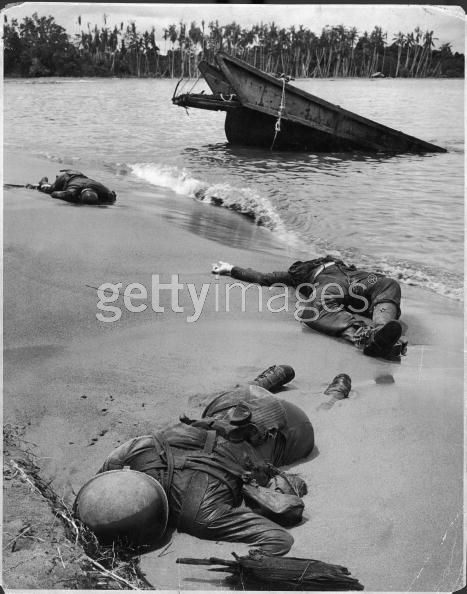
More on WWII photo censorship

Here is a new  Times “Lens” blog, with more on LIFE magazine photographer George Strock.

Photo by George Strock/ LIFE magazine.

Photo by George Strock/ LIFE magazine.


1 Comment

Filed under Uncategorized

Shameless self-promotion (Journalism history division)

By Christopher B. Daly

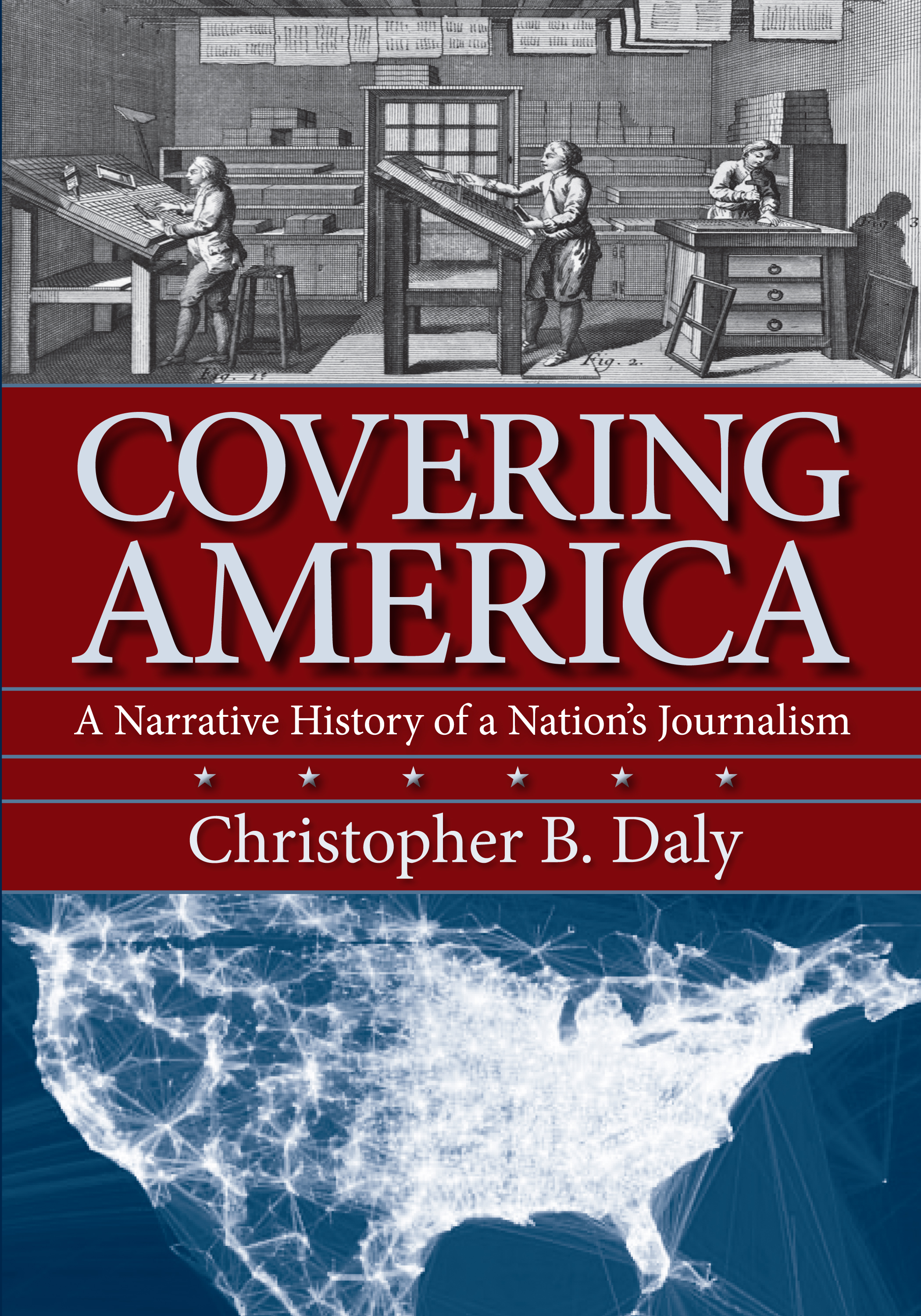
Finally, it’s here: the electronic version of my book about the history of U.S. journalism, Covering America.

Just in time for the anniversary of the rollout of the hardback, this prize-winning book is now available in all major formats:

Nook,

Kindle,

Apple iBook, (This is the format I am checking it out on, and it looks great.)

Google Play,

you name it.

I am very pleased because I know that some folks have been waiting for the e-book. These formats make the book quite a bit cheaper and dramatically lighter! For people who don’t feel drawn to the ~$50 hardcover, here’s your chance to read Covering America. The book won the 2012 Prose Award for Media and Cultural Studies, and it has been selling well and drawing rave reviews (except for one stinker on Amazon — sheesh).

Enjoy it, and write to me about your reactions. You can comment here, or email me: chrisdaly44@gmail.com

CA cover final


Leave a comment

Filed under broadcasting, CNN, Covering America, David Halberstam, FCC, First Amendment, Fox News, history, Huffington Post, Journalism, journalism history, leaks, Murdoch scandal, New York Times, NPR, Photography, Photojournalism, Politics, publishing, Supreme Court, The New Yorker

A(nother) review of “Covering America”

Shameless commerce division: Here’s a review I just came across.

[FYI, I use a “Google alert” to tell me about new mentions on the Web of the phrase “Covering America.” Turns out, they miss a lot of stuff. If you are using a google alert for something important, don’t assume that it’s catching everything. Do an active search once in a while.]

Here goes:

Information & Culture: A Journal of History

Covering America: A Narrative History of a Nation’s Journalism

By Christopher B. Daly.

[Amherst, Massachusetts: University of Massachusetts Press, 2012. 546 pp. $49.95.]

From the earliest days of European colonization of North America, the settlers were by

and large literate and able to afford reading materials. That was the backdrop for the

birth of the press in what eventually became the United States. Historian and one-time

reporter, Christopher B. Daly provides a narrative history of journalism, of its major

figures, institutions, and industry from 1704 to the early 2000s. He devotes much of his

narrative to the lives of individual publishers, such as printer Benjamin Franklin,

publisher James Gordon Bennett, and editor William Randolph Hearst, describing the

organizations they built, the publications they produced, and the effects they had on the

profession of journalism. The book is organized in two parts, the first covering events

from 1704 to the 1920s, the second where he focuses on the media from the 1920s to

the present. The first was all about print publications, from broadsides to newspapers

and magazines, while the second in addition included radio, television, and most

recently, the Internet.

While narrating the evolution of the press into the profession of journalism, he pays

considerable attention to their business organizations: how they made money and who

bought their products, because the vast majority of the work done by this sector of the

American economy was conducted by private enterprises. As with other industries,

media evolved in response to changes in the American economy, political attitudes,

desires of their customers (readers), and events in the life of the nation. Technologies

came that also altered the events of this industry, from the introduction of the telegraph

in the nineteenth century to the arrival of the Internet in the twentieth.

Daly argues that the history of journalism went through five cycles. The first (1704-

1832) involved a highly politicized and partisan press, while the second (1832-1900)

saw the commercialization of a national news industry with large newspapers, a national

readership, and the development of specialized workforces, such as full-time reporters.

The third era (1900-1974) witnessed the professionalization of news gathering and

reporting, both of which occurred during a time when electronic media came into its

own. The fourth period (1965-1995) Daly characterizes as the time when media

businesses conglomerated, with newspapers and radio and television becoming parts of

much larger enterprises, often run by executives with little or no background in

journalism. The fifth era (since 1995) introduces the period of the PC and the Internet.

Most readers familiar with the history of American newspapers, magazines, and

journalism will find no surprises in this synthetic well-written history up through World

War II. The chapters covering the next six decades, however, are some of the best in this

book, providing a history of journalism through the Cold War, the Vietnam period, and

recent national developments, most notably the arrival of the Internet. It is these later

chapters that provides much new material, and offers a synthesis of developments on

the part of the media, but that also contributes an analysis on the expanding role of

citizens in using their content. Consistent across all periods is his attention to

technological innovations, the economics of the media industry, the culture of the

profession, the political environment in which they operated, and finally on the work

values of the profession. He includes discussions about the African-American press and

the role of women in each period, beginning after the Age of Jackson and extending to

the present. In the process, he demonstrates that these communities initially had an

alternative, yet parallel, development alongside mainstream journalism that during the

twentieth century increasingly became more intertwined with the activities and

institutions of American journalism. This was particularly the case with African American

journalism. However, he barely discusses Hispanic journalism of the late twentieth

century, possibly because it may not yet have developed sufficiently to warrant attention

in such a broad treatment of American journalism.

This is a useful, very up-to-date one volume narrative summary of the story. It is not a

book based on archival research; rather, Daly relies extensively on secondary literature,

which he documents in notes and in a bibliography. For students of the history of

information, this is a welcome addition to the literature on who supplied many types of

publications to the American public and how they functioned. It is a practical volume for

both students of American history and for participants in American media, such as

journalists, editors and publishers. In the vernacular of today’s media, it is also “a good

read.”

James W. Cortada, IBM Institute for Business Value

Information & Culture

info@infoculturejournal.org

Published by University of Texas Press

Website © The University of Texas at Austin

School of Information

The University of Texas at Austin


Leave a comment

Filed under Journalism, journalism history

First draft of history?

By Christopher B. Daly

Today’s NYTimes carries a fascinating piece about a subject that has to be a difficult issue for the paper — the New York Times itself. The piece opens with the observation that “Journalism is meant to be the first draft of history” — which is a paraphrase of a quotation usually attributed to Phil Graham, the one-time publisher of the Washington Post, who declared that “journalism is the first rough draft of history.” (It’s curious that today’s Times piece, by Leslie Kaufman, omitted the word “rough,” which certainly belongs in that formulation, as we shall see.)

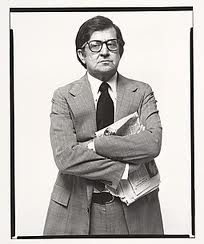
At issue is a book written in 1964 about the notorious Kitty Genovese murder, by A.M. “Abe” Rosenthal, who is described in today’s news story in the Times Arts section as “a new and ambitious metropolitan editor.” (An aside: when a newspaper calls one of its own “ambitious,” that’s usually a code word for something closer to “ruthless.”) Rosenthal is a legendary figure at the Times, known for ruling the newsroom as the paper’s managing editor for most of the 1970s and executive editor for most of the 1980s. In 1964, Rosenthal had already won the Pulitzer Prize, for his foreign reporting.

Genovese, who was 28, was murdered around 3 a.m. as she was returning from work to her apartment in Queens. She was attacked, stabbed to death, and raped. What happened next imageshelped propel the Genovese case into the realm of urban myth and pop sociology.

Rosenthal, who was an editor, not a reporter, was having lunch one day with the NYC police commissioner, and they were naturally discussing the Genovese case. The commish mentioned that 38 people had witnessed the crime but did nothing to stop it or to summon help. That kind of a fact (if fact it be!) is catnip to a reporter, and Rosenthal was off to the races with a version of the Kitty Genovese story that was almost certainly exaggerated. According to today’s story:

Mr. Rosenthal quickly mapped out a series of articles centered around a tale of community callousness, and then followed in June with his quick-turnaround book, published by McGraw-Hill. National and international interest in the issue spiked, and soon the Kitty Genovese case became a sociological phenomenon studied intensely for clues to behavioral indifference.

Notice, in the above paragraph from today’s story, the use of the words “quickly,” “quick” and “soon.”

images-2In any case, the Rosenthal book about the Genovese case became an overnight  that helped to establish in the public mind the notion that big cities are scary collections of anonymous people who don’t care about each other.

Now comes a publisher, Melville House, which has re-released the Rosenthal book in a digital format, with the original — and misleading — material intact. Let’s not kid ourselves about “digital reissues.” They are a way for publishers to extract some more money out of their backlist titles. Those are books published long ago that they are probably out of print and no one is buying them any more. Along comes the Internet, and those books can get a second life on-line.

Trouble is, what about a non-fiction book that has known errors of fact or interpretation? Should it be re-issued in its original text? Should it be corrected, revised, or updated?

Here’s how the Times puts it today:

In the years since, however, as court records have been examined and witnesses reinterviewed, some facts of both the coverage and the book have been challenged on many fronts, including the element at the center of the indictment: 38 silent witnesses. Yet none of the weighty counter-evidence was acknowledged when Mr. Rosenthal’s book was reissued in digital form by Melville — raising questions of what, if any, obligation a publisher has to account for updated versions of events featured in nonfiction titles.

It could be argued that at a certain point, a work of journalism becomes valuable as an artifact of its own era. It becomes a document (or “primary source”) that allows later generations to look back and understand why people use to share certain beliefs, even if those beliefs are later discredited. So, a historian or anyone else who is curious about the changing perceptions of urban crime during the 1960s would want to read the Rosenthal book in its original form, because it sheds light on its period. That, it seems to me, is a perfectly valid way of thinking about historic works of journalism. All the publisher has to do is to say so.

Alternatively, of course, a publisher could commission someone to produce a “new, revised” version that would update, correct, or revise a flawed original. In that case, future historians will probably want to have access to both the original and the update.

For another perspective, here is a passage from Wikipedia:

In September 2007, the American Psychologist published an examination of the factual basis of coverage of the Kitty Genovese murder in psychology textbooks. The three authors concluded that the story is more parable than fact, largely because of inaccurate newspaper coverage at the time of the incident.[10] According to the authors, “despite this absence of evidence, the story continues to inhabit our introductory social psychology textbooks (and thus the minds of future social psychologists).” One interpretation of the parable is that the drama and ease of teaching the exaggerated story makes it easier for professors to capture student attention and interest.

So, it would appear that there is more revisionism to be done.

[Incidentally, today’s Times story omits another awkward fact: the Times is still something of a Rosenthal paper. Abe’s son, Andrew, is a “masthead editor” at the paper, where he is in images-1charge of the Times‘ editorial pages.]

Leave a comment

Filed under Uncategorized

One of the greats

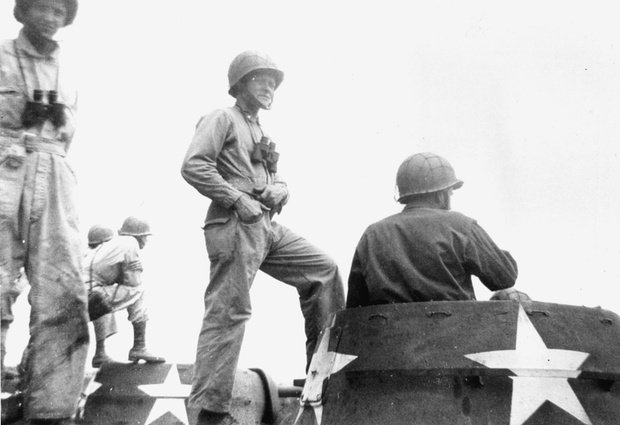
Sad news: the death of Eugene Patterson, a member of the “greatest generation” who really was a great journalist. Reading his obituary in the Times and the version in the Post today, I wondered how many tank commanders go into journalism any more. (After facing the Germans at Bastogne, why would he fear the KKK?)

This undated photo made during World War II, shows Eugene Patterson, commander of a tank platoon as Gen. George Patton’s 3rd Army drove through the German ranks. Newspaper editor and columnist Eugene Patterson, who helped fellow Southern whites understand the civil rights movement, has died, Saturday, Jan. 12, 2013. He was 89. Photo: AP.

This undated photo made during World War II, shows Eugene Patterson, commander of a tank platoon as Gen. George Patton’s 3rd Army drove through the German ranks. Newspaper editor and columnist Eugene Patterson, who helped fellow Southern whites understand the civil rights movement, has died, Saturday, Jan. 12, 2013. He was 89. Photo: AP.


Leave a comment

Filed under Journalism, journalism history

Rave review for “Covering America”

By Christopher B. Daly 

My book Covering America drew an insanely enthusiastic review in the Providence Journal on Sunday. The timing reminds me: IMHO, this book would make a great holiday gift for anyone who cares about American journalism, American history, American politics, the tech revolution in news, Jefferson/Lincoln/FDR, WWI/WWI/Vietnam, and a whole bunch of other stuff.

Have I left anyone out?

Leave a comment

Filed under Covering America, history, Journalism, journalism history

Newsweek: R.I.P.

By Christopher B. Daly 

Another legacy news institution dies. The latest print publication to fail to make the transition to a digital ecology is Newsweek — a fixture on the American scene since its founding in 1933. After decades as a profitable division of the Washington Post Co., the weekly news magazine peaked at a paid circulation of just over 3.1 million a week, in 2001. Less than a decade later, with circulation plummeting and debts mounting, the Post company sold Newsweek for one dollar, just to try to stop the bleeding, and the magazine merged with the Daily Beast. 


Newsweek was important as an alternative to the Luce empire’s older and bigger TIME magazine in the weekly news-magazine market, and it did some fine reporting and photography over the years. 

Technically, Newsweek is ceasing to publish in print. It will go online-only and be folded into the Daily Beast website, founded and run by Tina Brown.

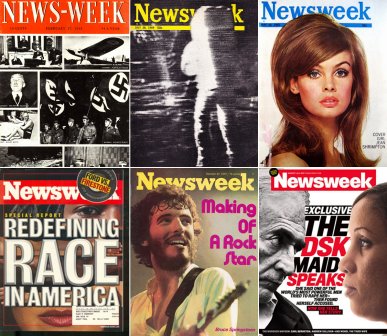
Here’s a collection of Newsweek covers from today’s Daily Beast site.


p.s. I hate writing these obits for legacy media, and I hope this is the last. — CBD


Leave a comment

Filed under Journalism, journalism history

Clay Shirky on the journalism business model

By Christopher B. Daly

The new issue of the Columbia Journalism Review has a terrific piece by Clay Shirky about the current efforts to rescue journalism by finding a new business model for the news business. (Don’t get discouraged by the misleading — confusing? — headline.)

Shirky, who teaches about these issues at NYU’s Carter Institute of Journalism, compresses a lot of the points I made in my recent book, Covering America, in chapter 3 (about the rise of the Penny Press) and in chapter 13 (about the collapse of the “dual revenue stream” that financed journalism from the 1830s to the 1990s). In my book, the final chapter adds some recent success stories, showing how some digital natives are making a go of it in the new environment — doing great, serious journalism and, importantly, making money at the same time.

In my view, too many of us suffer from the historical fallacy of thinking that the present is “normal” and reflects the way things have always been. A lot of people, especially those over 35 or so, operate on the assumption that it is normal for journalism to be practiced by full-time employees of large, profitable corporations. In fact, by taking the long view, as I do in my book, it can be seen that the way journalism was practiced in the late 20th Century was not inevitable, not necessary, and certainly not permanent. It is already fading into the past as a distinct historical period, giving way to a present in which people are still figuring out the future.

1 Comment

Filed under business, Covering America, Journalism, journalism history