WikiLeaks prosecution?

By Chris Daly


The WikiLeaks case continues to confound U.S. authorities.

As today’s Times points out in an article by legal correspondent Charlie Savage, the application of existing U.S. law to the novel circumstances created by the Internet is no simple matter.

It appears that the Obama administration has decided not to even bother trying to pursue a Pentagon Papers-style request for an injunction to prevent journalists from publishing. Their inaction seems to indicate that the Justice Department’s lawyers have concluded that they would not win such a request, probably because these disclosures do not meet the standard defined by the Supreme Court in 1971 in deciding the Pentagon Papers case. In that ruling, the court said, in essence, that if the government ever wanted to seek to impose prior restraint on journalists, the government would bear the burden of proof to show some immediate, serious threat to national security. Without defining exactly what kind of threat, they strongly implied that it would have to be something more grave than the kind of diplomatic embarrassment that seems to be the major consequence (at least thus far) from the WikiLeaks revelations of State Department cables.

That leaves the matter of possible criminal prosecution of WikiLeaks founder Julian Assange. He is under arrest in Britain (where he was obnoxiously denied bail even though he voluntarily surrendered) and faces charges of sexual assault in Sweden. Notably, he does not face any criminal charges (at least not yet) in the United States. This part of this incident is most closely parallel to the U.S. government’s criminal prosecution of Daniel Ellsberg in 1971 on the grounds that he had violated the 1917 Espionage Act and stolen government property.

When his case went to trial in 1973, it was famously thrown out when evidence came to light of the government’s multiple bad deeds toward Ellsberg, including breaking into his psychiatrist’s office in search of damaging confidential information (which the Nixon team, naturally, planned to use to discredit Ellsberg by giving it to the press — i.e., by committing another leak). In a dramatic denouement, the judge in the Ellsberg criminal case, Judge William Matthew Byrne Jr., had the decency to throw the case out.

Anyone looking for background on the Pentagon Papers case and the Ellsberg prosecution should start with two key books:

The Day the Presses Stopped, by David Rudenstine.

Secrets, by Daniel Ellsberg.

To be continued. . .

2 Comments

Filed under history, Journalism, journalism history, leaks, media, Wikileaks

New management

By Chris Daly

In Boston, we are lucky to have two NPR affiliates. One of them, WBUR (Full disclosure: the station’s broadcast license is held by Boston University’s trustees), just got a new general manager — Charlie Kravtez. He was the longtime head of news at New England Cable News, which bodes well. Universally respected, he seems like a good choice.

Best of luck to Kravetz and to ‘BUR.


Leave a comment

Filed under Boston, Journalism, NPR

Wikileaks, cont.

For handy reference, here is the New Yorker profile of WikiLeaks founder Julian Assange, which ran back in June.

Leave a comment

Filed under computers, Journalism, leaks, media, Politics, publishing, Wikileaks

TMI?

By Chris Daly

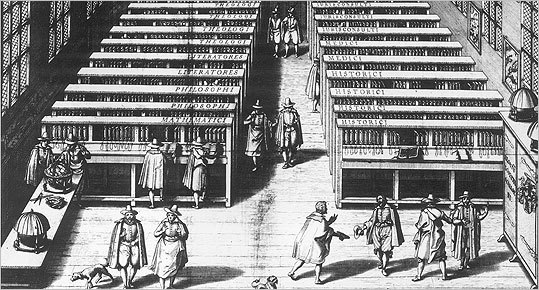
If you like to read about reading, or if you like to think about thinking, don’t miss this piece from the Sunday Boston Globe. Harvard prof. Ann Blair makes some interesting observations about the history of printing and the experience of living through an information explosion.

Here’s a chunk:

Human history is a long process of accumulating information, especially once writing made it possible to record texts and preserve them beyond the capacity of our memories. And if we look closely, we can find a striking parallel to our own time: what Western Europe experienced in the wake of Gutenberg’s invention of printing in the 15th century, when thousands upon thousands of books began flooding the market, generating millions of copies for sale. The literate classes experienced exactly the kind of overload we feel today — suddenly, there were far more books than any single person could master, and no end in sight. Scholars, at first delighted with the new access to information, began to despair. “Is there anywhere on earth exempt from these swarms of new books?” asked Erasmus, the great humanist of the early 16th century.

Leave a comment

Filed under blogging, computers, history, Journalism, media, publishing

Wiki-flood

Not to be missed among the deluge of “cables” is this statement by Times executive editor Bill Keller.

A Note to Readers: The Decision to Publish Diplomatic Documents

The articles published today and in coming days are based on thousands of United States embassy cables, the daily reports from the field intended for the eyes of senior policy makers in Washington. The New York Times and a number of publications in Europe were given access to the material several weeks ago and agreed to begin publication of articles based on the cables online on Sunday. The Times believes that the documents serve an important public interest, illuminating the goals, successes, compromises and frustrations of American diplomacy in a way that other accounts cannot match.

The Source of the Material

The documents — some 250,000 individual cables, the daily traffic between the State Department and more than 270 American diplomatic outposts around the world — were made available to The Times by a source who insisted on anonymity. They were originally obtained byWikiLeaks, an organization devoted to exposing official secrets, allegedly from a disenchanted, low-level Army intelligence analyst who exploited a security loophole. Beginning Sunday, WikiLeaks intends to publish this archive on its Web site in stages, with each batch of documents related to a particular country or topic. Except for the timing of publication, the material was provided without conditions. Each news organization decided independently what to write about the cables.

Reporting Classified Information

About 11,000 of the cables are marked “secret.” An additional 9,000 or so carry the label “noforn,” meaning the information is not to be shared with representatives of other countries, and 4,000 are marked “secret/noforn.” The rest are either marked with the less restrictive label “confidential” or are unclassified. Most were not intended for public view, at least in the near term.

The Times has taken care to exclude, in its articles and in supplementary material, in print and online, information that would endanger confidential informants or compromise national security. The Times’s redactions were shared with other news organizations and communicated to WikiLeaks, in the hope that they would similarly edit the documents they planned to post online.

After its own redactions, The Times sent Obama administration officials the cables it planned to post and invited them to challenge publication of any information that, in the official view, would harm the national interest. After reviewing the cables, the officials — while making clear they condemn the publication of secret material — suggested additional redactions. The Times agreed to some, but not all. The Times is forwarding the administration’s concerns to other news organizations and, at the suggestion of the State Department, to WikiLeaks itself. In all, The Times plans to post on its Web site the text of about 100 cables — some edited, some in full — that illuminate aspects of American foreign policy.

The question of dealing with classified information is rarely easy, and never to be taken lightly. Editors try to balance the value of the material to public understanding against potential dangers to the national interest. As a general rule we withhold secret information that would expose confidential sources to reprisals or that would reveal operational intelligence that might be useful to adversaries in war. We excise material that might lead terrorists to unsecured weapons material, compromise intelligence-gathering programs aimed at hostile countries, or disclose information about the capabilities of American weapons that could be helpful to an enemy.

On the other hand, we are less likely to censor candid remarks simply because they might cause a diplomatic controversy or embarrass officials.

Government officials sometimes argue — and the administration has argued in the case of these secret cables — that disclosures of confidential conversations between American diplomats and their foreign counterparts could endanger the national interest by making foreign governments more wary of cooperating with the United States in the fight against terrorists or other vital activities.

Providing an Analysis

Of course, most of these documents will be made public regardless of what The Times decides. WikiLeaks has shared the entire archive of secret cables with at least four European publications, has promised country-specific documents to many other news outlets, and has said it plans to ultimately post its trove online. For The Times to ignore this material would be to deny its own readers the careful reporting and thoughtful analysis they expect when this kind of information becomes public.

But the more important reason to publish these articles is that the cables tell the unvarnished story of how the government makes its biggest decisions, the decisions that cost the country most heavily in lives and money. They shed light on the motivations — and, in some cases, duplicity — of allies on the receiving end of American courtship and foreign aid. They illuminate the diplomacy surrounding two current wars and several countries, like Pakistan and Yemen, where American military involvement is growing. As daunting as it is to publish such material over official objections, it would be presumptuous to conclude that Americans have no right to know what is being done in their name.

In the coming days, editors and reporters will respond to readers on the substance of this coverage and the decision to publish. We invite questions at askthetimes@nytimes.com.


Leave a comment

Filed under history, Journalism, leaks, media, New York Times, Politics, Wikileaks

Olbermann Gave Lots Less than his Boss

By Chris Daly

So, Keith Olbermann of MSNBC has already nearly served his sentence for donating a total of $7,200 to Democrats.

First things first: The conditions under which he works are not a matter of theory, or constitutional interpretation, or wishful thinking, or anything else. He has a contract, which requires him to abide by NBC News policies. Any time a journalist accepts a check in return for full-time employment, he or she is no longer a free agent. If you take the money, you accept the rules. If you don’t like them, you can quit (and regain all your freedoms, except the freedom to cash those paychecks). So, that part of this flap is a no-brainer.

Still, we may want to step back from that and ask the broader question: In general, is it a good idea for journalists to donate to political candidates? (And a corollary: is it an equally good idea for reporters as for columnists or other opinion-mongers?)

Opinions vary (as they should). Some journalists have never bought into the ideal of political neutrality. There is a long tradition of advocacy journalism in America — in fact, it goes back much further in our history than the professional/objective model.

Fox News, for example, apparently does not impose a no-giving rule on its talent. Thus, not only did Rupert Murdoch donate to conservatives this season, so did Sean Hannity — without any punishment.

Back to Olbermann and MSNBC. He broke a company policy and got punished. That was the company’s prerogative, but was it a good idea? Was it hypocritical?

I would say there is a blatant double-standard, based on the track record of political donations by NBC executives. Find out about NBC president Robert Wright here. Go to the FEC records to see the donation record of Wright’s boss, Jeffrey Immelt, the chairman and CEO of GE  (which still owns NBC).


It seems to me that an argument can be made for banning and for allowing donations. What I can’t see is why it is OK to ban donations by the help but allow donations by the top brass.


Leave a comment

Filed under Fox News, Journalism, media, Olbermann, Politics

Over-exposed?

By Chris Daly

On the morning after the election, here is a question about the news media’s coverage of this election season:

What do the following all have in common?

Meg Whitman

Tom Tancredo

Carl Paladino

Carly Fiorina

Linda McMahon

Christine O’Donnell

Sharron Angle

Joe Miller*

For one thing, they are all Republicans.

For another thing, they all lost.

They all also enjoyed a bump from the news media that touted their candidacies. Each one was presented at one point or another as a serious contender for an important statewide office. Granted, some of these races were close. But it has to be asked: how is it that as recently as last weekend, someone could have gotten the impression from major media outlets that most or all of these people were going to win? Did reporters not understand the electorate in those states? Did they know but prefer a different narrative?

Hmmm…


*In Alaska, they are still counting votes, but Miller was running well behind the write-in candidate.


Leave a comment

Filed under Journalism, media, Politics

“Corrupt Bastards” context

Perhaps worth noting is this bit of context for Sarah Palin’s denunciation of the media. This suggests that the phrase “corrupt bastards” has a history in Alaska politics.
Also perhaps worth noting: According to Wikipedia, the one prominent Alaska Republican who was NOT implicated in the scandal was Lisa Murkowski — the very figure Palin is trying to defeat by backing Joe Miller.
For a state with a tiny population, Alaska sure generates some complicated political conflicts.

Leave a comment

Filed under Uncategorized

Leave a comment

Filed under Uncategorized

By Chris Daly

Senior Analyst


Dear readers of my blog: One thing I have learned from the whole Juan Williams-Fox-NPR dust-up is that you are really nobody in the media commentariat if you do not have a fancy title. And it seems like you are absolutely nobody unless you are called “Senior Analyst.”

Therefore and henceforth, whenever I express any opinions on this site, and whenever I analyze anything (which will be more or less all the time, or else what am I doing here?), I will identify myself as the site’s “Senior Analyst.”

My pay will remain the same, but now I will feel freer to analyze the hell out of whatever comes along. Just so you know.

Full disclosure: I am the “senior” analyst around here not because there are any “junior analysts” running around, but because there is no one above me on the organizational chart. (In fact, luckily for me, there is no boss who can fire me or even tell me to go see my psychiatrist. That is what makes this job different from all other jobs I ever had — in or out of the media.)


This just in: Wow. I just googled NPR to see if Juan Williams is still listed anywhere and to see if I could find his old title, and I notice that in my Google search, the first thing at the top is an ad urging me to “DEFUND NPR” (Yikes! If they are going to follow my advice in my previous post, they better get cracking before it’s too late.) In searching the NPR website, I could not find anything resembling a masthead, which is probably just as well. They usually just breed resentment. Anyway, when I searched the NPR site, the most recent item I could find that mentions Juan Williams going back before last week was on Sept. 28, when he was identified as a plain-ol’ “NPR News Analyst.”

Over on the Fox News website, Williams is pretty easy to find. (He just did a victory lap tonight on O’Reilly.) In the Fox News copy about Williams, he is also identified as a plain “Fox News Analyst,” so at least I outrank him. He will have to console himself with the $2 million contract Fox just gave him (presumably for accomplishing the impossible — making Fox News look more responsible than NPR; actually, maybe it’s not enough).

Hey: Who do I talk to around here about a raise???


Leave a comment

Filed under David Halberstam, journalism history, New York Times, Uncategorized