
Because of guys like this:

Nick Bilton asks: Where is his share of the value he has helped to create in Facebook by using it?
The essential value of the company is users. No users = no Facebook. So, in that sense the users are both the employees and the shareholders, no?
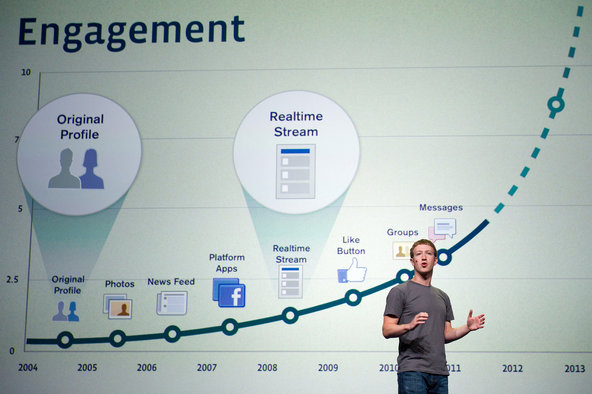
Photo by David Paul Morris/Bloomberg News.
Mark Zuckerberg speaking at a Facebook conference last September.
Filed under Uncategorized
By Chris Daly
Rupert Murdoch had a dream.
Unlike you or me, he is in a position to spend millions making his dreams come true. According to today’s Times, Murdoch is making headway with his 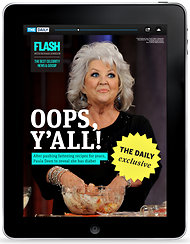 online-only, tablet-only news outlet, The Daily. He has something like 100,000 subscribers, many of them in the heartland. So, that’s a start.
I have to admit that I am not familiar with it, because Murdoch charges for access and because any money I would spend on it (even in the name of research) would end up in his pocket. So, I won’t subscribe. I don’t want you to subscribe either, I just want you to know about it.
Filed under blogging, Journalism
It’s Monday, so. . .
David Carr likes BuzzFeed. Like him, I am delighted to see any new outfit that A) makes money and B) hires journalists to do original reporting.
Personally, I think the BuzzFeed homepage is ugly. Does that count for anything?
The takeaway from Carr’s column:
Sitting in the coffee area of BuzzFeed’s offices on West 21st Street in Manhattan, he [BuzzFeed creator Jonah Peretti] pointed out that there is nothing more viral than news that no one else has, so it makes sense to create some.
Hmmm… Is he onto something?

Filed under Journalism
More on the drip-drip-drip investigation into misbehavior by Murdoch employees in the U.K.
Can the U.S. investigation(s) be far behind?
It’s sad to see journalists waging a cover-up, but I suppose no one wants to go to jail.
Filed under Journalism
By Chris Daly
The latest financial results from the New York Times Co. present another mixed bag. Overall, the company continues to struggle, for familiar reasons: advertising from printing the newspaper continues to decline.
On the bright side, though, the company is making headway in figuring out how to make money on the Web. Today’s Boston Globe carries a story — never an easy or welcome assignment, to write about the owners.
The key parts:
Digital advertising revenues at the News Media Group increased 5.3 percent to $71.1 million due to growth in national and retail display advertising.
And this:
Subscribers to digital packages and e-reader versions of The Times and the International Herald Tribune totaled approximately 390,000 as of the end of the fourth quarter, an increase of 20 percent from the third quarter.
So, the trends are good, but the scale of online advertising is still not enough to float a company that had total revenues of $2.3 billion last year. Look for the Times Co. to sell off more of its assets in order to protect the flagship.
Latest stock price: $7.70 a share
All-time high: $51.88 a share (July 2002)
Filed under Uncategorized
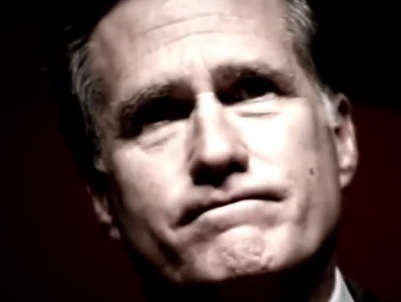
In light of Mitt Romney’s verbal stumble this week, it is worth remembering this political definition from journalist Michael Kinsley:
A gaffe is when a politician tells the truth.
Brilliant.
Filed under Politics
If you are on the BU campus this Wednesday, we are lucky to be hosting a visit by Carlotta Gall, who has covered Afghanistan and Pakistan for the New York Times for more than a decade. Forget the analysts. Forget the politicians. Here comes someone who really knows what she’s talking about.
Place: CAS, 223. Time: 4 p.m.

Filed under Journalism, New York Times
by Chris Daly
For years, I had heard about a newspaper that once existed in New York City that carried no advertising.
How could this be? I wondered.
Years later, I had the chance to explore the history of that newspaper, which was called PM. For eight madcap years during the 1940s, PM defied many of the assumptions about the news media and offered New Yorkers a daily paper that was smart, funny, and avowedly left-wing.
As it turned out, the paper’s founding editor was Ralph Ingersoll — one of the most important journalists of the 20th Century whom no one has ever heard of. To my great good fortune, it also turned out that Ingersoll decided to donate all his papers to Boston University. That’s where I caught up with them and discovered that Ingersoll was a great keeper of records and a serial drafter of his own memoir.
The result is an article that I wrote for the Columbia Journalism Review, which posted it to the CJR website today. Enjoy.
(BTW: In the CJR piece, I did not write the headline!)

Filed under Journalism, journalism history, publishing, Uncategorized
By Chris Daly
I just finished a book that surprised me — Second Read: Writers Look Back at Classic Works of Reportage.
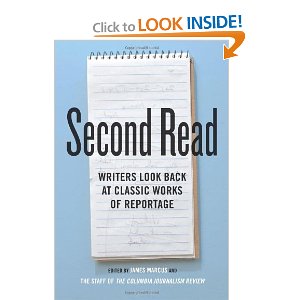
I found it surprising because when I first picked it up, I thought it would be yet another anthology of great works of journalism, perhaps with brief headnotes introducing each one. Instead, this is a collection of well-considered essays by contemporary writers about some of the great works in the history of (mainly American) journalism. The overall editor is James Marcus of Columbia’s J-School, and he drew on the faculty and the masthead of CJR for most of the entries.
A few of these essays pointed me to works that I have never read and now want to catch up with (DeFoe’s “A Journal of the Plague Year,” Paul Gallico’s “Farewell to Sport,” Cornelius Ryan’s “The Longest Day”).
Others were meditations on familiar works that made them fresh again (Evan Cornog on Liebling’s “Ear of Louisiana,” Scott Sherman on Frady’s “Wallace,” David Ulian on Didion’s “Slouching Toward Bethlehem”).
My only regret is that this book does not include the originals — or at least significant excerpts — that are being celebrated. I am sure a publisher can explain why this book can make a little money at 184 pages and would lose a fortune at 1,840 pages. Oh, well. Off to the library to hunt down the originals.
If you have any interest in journalism history or “literary journalism,” don’t missSecond Read.
Filed under Journalism, journalism history, media
 Prof Chris Daly's Blog