Fun with maps

By Christopher B. Daly 

Here are two maps that don’t just sit there. Both are interactive, so have a great time with them.

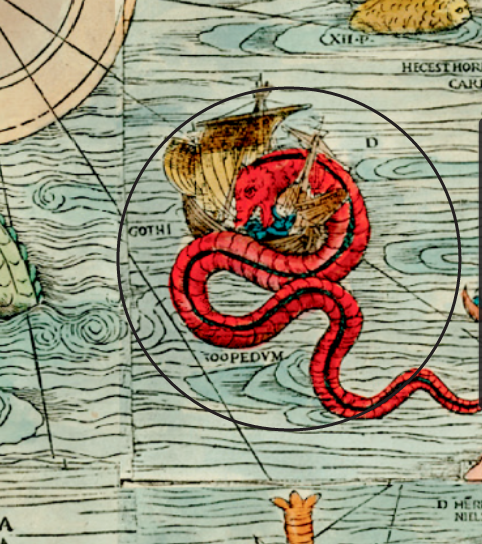
Here’s a gorgeous medieval map from “Future Tense,” via Slate. It shows the North Atlantic as envisioned by Scandinavian navigators who had to venture out there in small wooden boats. No wonder they saw monsters.

Screen Shot 2013-09-08 at 6.29.25 PM

Here’s one from the Smithsonian that lets you superimpose a map of New York City from 1836 over one from today (or vice-versa).

Screen Shot 2013-09-08 at 6.30.40 PM

Leave a comment

Filed under Uncategorized

The Surveillance State, cont.


By Christopher B. Daly

imgres3Although most of the stories about the NSA and the rise of the Surveillance State are individually demoralizing, I guess it is a good thing that there are so many of them. Many thanks to the NYTimes, the Guardian, WaPo, ProPublica, and everyone else who is helping to move the ball down the field.

Some recent coverage and comments:

–The Guardian calls on private engineers to “take back the Internet.” Can that even be done?

ProPublica and the Times drop the latest bomb from Edward Snowden.

–A physicist serving in the House (how often do you get to type a phrase like that?) proposes a bill to ban the practice.

–Director of National Intelligence James R. Clapper turns media critic, telling us that all these revelations are “not news.” (Nothing to see here. Move along, folks.)

Plus, more:


Leave a comment

Filed under Uncategorized

New AP book of Vietnam War photos

By Christopher B. Daly

Thanks to The Associated Press, there’s a new book of news photographs from the American war in Vietnam that will remind us of all the chaos, confusion, heroism, beauty, and tragedy of those years — as seen through the eyes of AP photographers and correspondents.

From today’s preview in the NYTimes:

Now, amid a flurry of anniversary commemorations of that tumultuous era and a surge of interest in war photography, The A.P. has, for the first time, culled its estimated 25,000 Vietnam photographs and reprinted some 250 in a book, “Vietnam: The Real War,” with an introduction by Pete Hamill, to be published by Abrams on Oct. 1.

Chuck Zoeller, the agency’s manager of special projects, said the dozens of rarely seen photographs in this collection include color plates of United States prisoners of war in a Hanoi prison in 1972 and historical images from the French colonial period. There is a photo of President John F. Kennedy in Florida, reviewing a commando unit back from action as early as 1962. And there are troubling scenes: Vietcong prisoners being kicked and subjected to water torture by South Vietnamese troops. A Vietnamese family of four, dead on a blanket, killed in a stampede as panicked refugees fled the advancing North Vietnamese in 1975.

Several of the most powerful photos from the era appear in my 2012 book, Covering America, because they not only documented the news but in several cases they also made news. They were that powerful. I am thinking of Mal Browne’s photo of a Buddhist monk burning himself to death in 1963 or the photo of the “napalm girl” in 1972 by Nick Ut. 

Here’s another heart-breaking photo from the new compilation, taken by the AP’s photo editor in Vietnam, Horst Faas (who died last year, as did Browne):

A Vietnamese farmer holds the body of his dead child while a group of South Vietnamese soldiers looks on.  Photo: Horst Faas.

A Vietnamese farmer holds the body of his dead child while a group of South Vietnamese soldiers looks on.
Photo: Horst Faas.

4 Comments

Filed under Photojournalism, Uncategorized

Bezos to Post: “Don’t be boring!”

By Christopher B. Daly 

This seems like good news: Jeff Bezos, the new owner of The Washington Post, went into the lions’ den to greet the news staff and came out a hero. By the Post’s own account, Bezos made a hit during his day of meetings.

Among his thoughts:

–“Don’t be boring.” (Good advice for a newspaper, but too often honored in the breach.)

–“What has been happening over the last several years can’t continue to happen,” he said. “If every year we cut the newsroom a little more and a little more and a little more, we know where that ends.”

— “All businesses need to be forever young.. . ”

The Bezos visit caused an explosion on Twitter, including many posts by Posties. See #bezospalooza

Is this man ready for the Style section?  Post photo

Is this man ready for the Style section?
Post photo

Leave a comment

Filed under Journalism, journalism history, publishing, Uncategorized

The surveillance state (cont.)

by Christopher B. Daly 

imgres3Why do we have to find out what our government is doing from newspapers?

(And while we are thinking about that, let’s give thanks to those papers that are big enough and tough enough and devoted enough to pry these secrets out of the government on behalf of all of us. A tip of the hat to the Post and the Times.)

Here’s the Post’s Thursday story. (Which includes a nice graphics package unpacking the “Black Budget,” which we were never supposed to see.)

Here’s today’s Times story.

Turns out, we spend more than $50 billion a year on spying (some of it illegally aimed at law-abiding American citizens).


1 Comment

Filed under Uncategorized

Warning: Study history before entering the Mideast

By Christopher B. Daly

With the United States government poised on the brink of intervening militarily in the Mideast, this would be a good time (if it’s not too late) to study the history of the region. Too often, we go wading ashore or dropping bombs on countries that we know nothing about. We expect the people in those countries to be just like us, or else they better get ready to become just like us. Of course, they are not just like us, and they have no intention of changing.

One place to start is today’s op-ed by David Brooks, who (heaven help him) at least tries to do some homework before sounding off.

A much better place to go is the history of the region written by David Fromkin (a BU colleague). His 1989 history, A Peace to End All Peace, tells the sad tale of how the Great Powers carved up the imagesMideast at the end of World War I. When the Ottoman Empire collapsed, European diplomats and bureaucrats drew lines in the sand ( actually, they drew lines on maps) and declared the results to be “nations,” even if the people drawing the lines had never been to those places. Ever since, those “nations” have been beset by internal conflicts, such as the one playing out in Syria, because they are made up of unnatural groupings of different peoples, many of whom have ancient hatreds and resentments of people who are supposed to be their countrymen.

If only a single high-ranking member of the George W. Bush administration had read Fromkin’s book, we might never have invaded Iraq. Now, we better hope that someone in the Obama administration has read the history.

1 Comment

Filed under Uncategorized

Seamus Heaney, RIP

By Christopher B. Daly

Alas, we have lost the great Irish poet of our time. (How long can such a small island make such outsized gifts to the world’s literature?)

imagesOne thing I loved about Heaney was the way that many of his poems reminded me of my favorite poems by Robert Frost. With both poets, I could find myself reading along and thinking: well, this is awfully concrete and traditional — stuff about rocks and fields and waves. Then, whammo! Suddenly, I would realize that the poem is actually about the meaning of life or the nature of the self or the ordering of the generations or something other profound church-like theme. It’s like walking across a familiar field and finding yourself on the edge of a deep well.

Also not to be missed: Heaney’s great translation of “Beowulf.” Here’s a way to appreciate it:

Step 1: Clear your decks for a while.

Step 2: On YouTube, call up this version of Heaney reading his own text.

Step 3: Open the text so you can follow along as Heaney speaks.

Step 4: Fall into a great poem.

After that, enjoy these two Heaney poems, two of my favorites. Then, leave a comment with your favorite Heaney poem, fragment, or remembrance.

Digging

BY SEAMUS HEANEY

Between my finger and my thumb
The squat pen rests; snug as a gun.
Under my window, a clean rasping sound
When the spade sinks into gravelly ground:
My father, digging. I look down
Till his straining rump among the flowerbeds
Bends low, comes up twenty years away
Stooping in rhythm through potato drills
Where he was digging.
The coarse boot nestled on the lug, the shaft
Against the inside knee was levered firmly.
He rooted out tall tops, buried the bright edge deep
To scatter new potatoes that we picked,
Loving their cool hardness in our hands.
By God, the old man could handle a spade.
Just like his old man.
My grandfather cut more turf in a day
Than any other man on Toner’s bog.
Once I carried him milk in a bottle
Corked sloppily with paper. He straightened up
To drink it, then fell to right away
Nicking and slicing neatly, heaving sods
Over his shoulder, going down and down
For the good turf. Digging.
The cold smell of potato mould, the squelch and slap
Of soggy peat, the curt cuts of an edge
Through living roots awaken in my head.
But I’ve no spade to follow men like them.
Between my finger and my thumb
The squat pen rests.
I’ll dig with it.

From “The Cure at Troy”

History says, Don’t hope
On this side of the grave,
But then, once in a lifetime
The longed-for tidal wave
Of justice can rise up
And hope and history rhyme.


Leave a comment

Filed under Uncategorized

Abolish the NCAA (cont.)

Here’s the latest confirmation that big-time college sports have no educational purpose and no reason for being on campus.

As the NYTimes reports:

The games will not just be televised by ESPN. They are creations of ESPN — demonstrations of the sports network’s power over college football.

The teams were not even on each other’s schedules until ESPN, looking to orchestrate early-season excitement and ratings, went to work. The 2013 Chick-fil-A Kickoff Classic came together more than two years ago when one of the network’s programming czars noticed that Alabama was not scheduled to play this Labor Dayweekend, brought the Tide on board and found a worthy opponent.

Far beyond televising games, ESPN has become the chief impresario of college football. By infusing the sport with billions of dollars it pays for television rights — more than $10 billion on college football in the last five years alone — ESPN has become both puppet-master and kingmaker, arranging games, setting schedules and bestowing the gift of nationwide exposure on its chosen universities, players and coaches.

Turns out, the college teams are just content-creators for ESPN.

Sheesh.

Every Monday morning during the season, a group of schedulers meets on ESPN’s campus to decide which games to broadcast and which channels will carry them. Under its contracts with conferences, ESPN has the right to set kickoff times. Joe Faraoni/ESPN

Every Monday morning during the season, a group of schedulers meets on ESPN’s campus to decide which games to broadcast and which channels will carry them. Under its contracts with conferences, ESPN has the right to set kickoff times.
Joe Faraoni/ESPN

Leave a comment

Filed under Uncategorized

New owner of Boston Globe: John Henry

By Christopher B. Daly

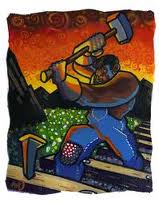
So, now we know: the new owner of the Boston Globe is John W. Henry II, a Boston-based investor who owns the Boston Red Sox and the Liverpool soccer club. Henry (not the legendary “steel-drivin’ man” of the contest against a images-1steam engine) is a son of soybean farmers who dropped out of college and made a fortune in commodity trading and other investments.

In recent years, he turned his interests to owning sports franchises and now, he is taking over ownership of the largest news organization in New England. I have no idea what his intentions are (or how he plans to handle the massive conflict of interest that Globe journalists will suffer when reporting on his other ventures). But I wish him well.

images


The sale completes a chapter in the long history of the New York Times, which bought the Globe 20 years ago for $1.1 billion — a record in U.S. newspaper sales. The Times owners, primarily the Sulzberger family, were forced to sell the Globe for a mere $70 million in cash (which is the kind of money that guys like John Henry spend on a house or two). In other words, the stewards of the most important journalistic institution in America just took a bath of more than $1 billion, which they could scarcely afford to lose. I don’t know how Arthur Sulzberger Jr. remains on speaking terms with his cousins.


2 Comments

Filed under Uncategorized

Glass half full: NYT posts a profit due to online readers

By Christopher B. Daly 

The NYTimes Co. reports some good news: the company operated in the black last quarter, and it did so no thanks to advertising. What carried the news operation into profitability was the surge in online readers who are actually paying for content. Here are the key results:

Circulation revenue rose 5.1 percent, to $245.1 million, from $233.3 million. But that gain was largely offset by a 5.8 percent decline in advertising revenue, to $207.5 million.

The number of paid subscribers to the Web site, e-reader and other digital editions of The Times and The International Herald Tribune grew to 699,000, a jump of more than 35 percent from the period a year earlier. Digital subscriptions to The Boston Globe and BostonGlobe.com rose to 39,000, an increase of nearly 70 percent from 23,000 a year earlier.

If you are a paying customer of the Times, pat yourself on the back. If not, PAY UP!

Leave a comment

Filed under Uncategorized