Category Archives: Uncategorized

Obama: Wrong on secrecy (NYTimes version)

imgres3No surprise: the New York Times, whose reporters filed a FOIA request in this case, agrees with me that the Obama administration has engaged in excessive secrecy around the legal rationale for its drone program.

Here’s the Times editorial:

Misplaced Secrecy on Targeted Killings

For years, President Obama has been stretching executive power to claim that the authorization to use military force against Al Qaeda gives him the unilateral authority to order people killed away from any battlefield without judicial oversight or public accountability — even when the target is an American citizen.

On Wednesday, a federal judge in Manhattan came down on the side of preserving secrecy regarding how this dangerous view of executive power gets exercised. Judge Colleen McMahon refused to require the Justice Department to disclose a memorandum providing the legal justification for the targeted killing of a United States citizen, Anwar al-Awlaki, in a 2011 drone strike in Yemen.

The decision came in response to a lawsuit for the memorandum and related materials filed under the Freedom of Information Act by The New York Times and two of its reporters, Charlie Savage and Scott Shane, and also a broader request under the act from the American Civil Liberties Union. We strongly disagree with Judge McMahon’s conclusion that she was compelled by a “thicket of laws and precedents” to deny access to the legal memo — prepared by the Department of Justice’s Office of Legal Counsel — and other documents that provided the legal and factual basis for the killings.

For starters, various government officials have spoken publicly about the American role in killing Mr. Awlaki and the circumstances under which the government considers targeted killings, including of American citizens. At President Obama’s nominating convention last summer, a video prepared by his campaign listed the killing of Mr. Awlaki prominently among Mr. Obama’s national security achievements.

Such a selective and self-serving “public relations campaign,” as the judge termed it, should have been deemed a waiver of the government’s right to withhold its legal rationale from public scrutiny. Moreover, disclosing the document would not have jeopardized national security or revealed any properly classified operational details. The ruling, which is inconsistent with the purpose and history of the information disclosure law, richly deserves overturning on appeal.

However, we appreciate Judge McMahon’s honest recognition of the “Alice-in-Wonderland nature” of her decision, which allows the executive branch to publicly proclaim the legality of the targeted killing program while insisting that the public may not know the reasons for that conclusion. The administration has opposed all legal efforts by Mr. Awlaki’s father and others to compel a court review of the decision to have him killed.

Judge McMahon took pains to acknowledge the serious questions the targeted killing program raises about the appropriate limits on government authority in our constitutional system and expressed the view that, as a matter of policy, the administration’s legal analysis should be made public.

“More fulsome disclosure of the legal reasoning on which the administration relies to justify the targeted killing of individuals, including united States citizens, far from any recognizable ‘hot’ field of battle, would allow for intelligent discussion and assessment of a tactic that (like torture before it) remains hotly debated,” the judge wrote.

President Obama, who pledged more government transparency in his first campaign and early days in office, should heed those sentiments and order the legal memo released along with other information that would shed light on the government’s legal reasoning and the evidence leading to Mr. Awlaki’s killing.

It is past time he did so.


Leave a comment

Filed under Uncategorized

2012 in review

Thank you all, and to all a good year!

Here’s an excerpt:

4,329 films were submitted to the 2012 Cannes Film Festival. This blog had 17,000 views in 2012. If each view were a film, this blog would power 4 Film Festivals

Click here to see the complete report.

Leave a comment

Filed under Uncategorized

To: John Boehner

From: Chris Daly

Date: Dec 21 (the day after you lost a vote in your own House)

The first rule of legislative leadership: Always count the votes.

When I worked as a reporter covering the Massachusetts Legislature, I got to see some masters of the game. Above all was Billy Bulger, the president of the state Senate (and brother of accused mobster/murderer Whitey Bulger). As best I can recall, I believe Bulger never lost a vote in the Senate in the five years I covered him. Yes, it’s true that he had a supermajority of about 80 percent of the members. But at a certain point, having such a big majority is no picnic for a leader, because you have so many members that inevitably there are intra-party splits.

Once in a blue moon, the leaders would come across an issue that had no partisan consequence and that genuinely divided the members on something the members cared about. In those rare cases, the leaders would release the members and say, “Vote your conscience” or “Vote your district.” But those kind of votes didn’t count as a loss for the leadership, because the leaders weren’t trying to achieve any particular outcome.

Otherwise, it was all-hands-on-deck. The leaders constantly polled the members, and they had ways of persuading members who were wandering or wavering. And once you gave your word on your vote, that was it. If a member came into the chamber to cast a vote and used it to double-cross the leaders, forget it. You were off to Siberia. No bridges for your district. You’d get the crappiest office in the building — one that might be even worse than the lowliest Republican.

The fact is, legislative leaders cannot afford to lose floor votes — at least not very often. When they do, the members no longer fear them. And if those leaders are low-spending, small-government types, they can’t offer the members a lot of ornaments on their trees. So, if they are not needed or feared, what good are they?

What Boehner’s defeat this week may mean is this: the House is ungovernable. It may be that the U.S. House is not divided between two parties but between three or more. It may be that we need to start learning the ropes of coalition-style politics.

The reason I say that is due to a corollary of the first rule of legislative leadership: the leader of the other branches will only try to make deals with a leader who can deliver. If you can’t deliver your followers, you’re wasting everyone’s time.

59

The Massachusetts State Senate: Counting the votes since 1713.


1 Comment

Filed under Uncategorized

Abolish the NCAA (cont.)

By Christopher B. Daly 

Thanks, again, to the NYTimes‘ Joe Nocera for staying on the NCAA beat. (I almost wrote “the NCAA scandal beat,” but that would be superfluous.)

In today’s column, Nocera looks deeper into the economics of big-time college athletics.

One theme: how little net proceeds end up in college treasuries to support education.

Another theme: how little these schools care about the educations of their athletes. (For example, Maryland and Rutgers just joined the Big 10. I know: Rutgers? Anyway, one result is that Maryland will now play regular conference games against, inter alia, Michigan, which is about 1,000 miles away. What is the educational rationale for making those kids schlep around for regular games?)

A final theme: at the NCAA’s most athletically ambitious schools, the salaries of big-time coaches are totally out of whack.


Leave a comment

Filed under Uncategorized

Why are we in Afghanistan? (cont.)

By Christopher B. Daly

Will someone please remind me what we are doing there?

It can’t be to bring the people American-style freedom . . . since they don’t seem interested. Which is fine. It’s their country. They are entitled to love it and govern it. And no one from there has attacked the mainland United States in more than a decade.

So, why are we there?

Bryan Denton for The New York TimesAt a Kabul market that sells cellphones and downloads for mobile devices, young Afghans said government censorship of YouTube was an acceptable way to block an anti-Islamic video.

Bryan Denton for The New York Times
At a Kabul market that sells cellphones and downloads for mobile devices, young Afghans said government censorship of YouTube was an acceptable way to block an anti-Islamic video.

Leave a comment

Filed under Uncategorized

Subway photos: The journalist’s dilemma

By Christopher B. Daly

Anyone who has ever ridden the NYC subways has probably thought about it as you stand on the platform waiting for a train. What if some crazy bastard snuck up behind me and pushed me onto the tracks? Could I get back up? Would anyone help me?

Or, perhaps a variation on the theme: What if I see someone else pushed? Will I have the courage to jump down there and help?

The recent tragedy in New York City pushes all these thoughts (and more) into focus. These issues often rise to the forefront when journalists are on-scene. It seems that photojournalists, in particular, are often thrust into these situations, because photographers are so often at or near the scene of terrible things.

This is an issue that I took up in my recent book, Covering America.(pgs 329-330)

Here’s an excerpt that was prompted by the famous photo from the American war in Vietnam that showed a Buddhist monk burning himself to death in protest. (More thoughts after the excerpt)

. . . On June 11, 1963, the Buddhist monks of Vietnam took center stage. For weeks as the crisis built, the AP’s Mal Browne had been filing stories, and he had spent a lot of time in pagodas, interviewing monks and getting a good understanding of  their cause. On the night of June 10 Browne got a call from a contact among the monks, telling him there would be an important development the next morning at a small Saigon pagoda. Several Western correspondents got the same tip, but only a few showed up, including Browne and, later, [David] Halberstam. Only Browne, under the AP photo policy, was carrying a camera. After a while, a 73-year-old Buddhist monk, Thich Quang Duc, went to a busy Saigon intersection and sat down in the lotus position, ringed by hundreds of other monks. Several monks doused him with gasoline, then he struck a match (fig. 11.2). As the flames rose, the monk never flinched. Browne kept working. “Numb with shock,” Browne later recalled, “I shot roll after roll of film, focusing and adjusting exposures mechanically and unconsciously, almost as an athlete chews gum to relieve stress. Trying hard not to perceive what I was witnessing I found myself thinking: ‘The sun is bright and the subject is self-illuminated, so f16 at 125th of a second should be right.’ But I couldn’t close out the smell.” Browne probably could not have intervened once the match was lit, even if he had been prepared. The hundreds of monks would have stopped him.

Malcolm Browne / AP

Malcolm Browne / AP

This incident, like much else that correspondents saw in Vietnam, dramatizes a problem that might be called the Journalist’s Dilemma. For obvious reasons, journalists often witness tragedies and catastrophes. In the course of reporting or shooting photos, they are sometimes confronted by an apparent conflict between continuing to work or stopping to render assistance. Should the journalist step out of the traditional role of observing news and try to help? If the journalist intervenes to prevent a tragedy or to offer aid and comfort to victims, does he or she thus enter the story as a historical actor and give up any claim to practicing journalism (and along with it, perhaps, any First Amendment rights)? Close examination of many cases reveals that the Journalist’s Dilemma is often an illusion. In most instances, the action unfolds so quickly that there is no time for decision making, while in others, the journalist is in fact able to observe the news, record it, and still rise to at least a basic level of humanitarian action. Still, it is in the nature of a dilemma to have no ultimate solution. . .

Like soldiers, cops, EMTs, firefighters and other “first responders,” news reporters and photojournalists often find themselves running toward trouble rather than away from it. As a result, they are often present when bad things happen. This, of course, does not mean that they caused the bad thing, just that they were in the vicinity. Throughout the history of journalism, going at least as far back as Samuel Wilkeson of the New York Times covering the battle of Gettysburg in 1863 and finding the body of his own son among the Union dead, the issue has come up again and again. Here are some notable cases:

Kevin Carter 1993

Kevin Carter 1993

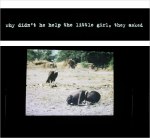
–There is the story of photographer Kevin Carter, who took a heart-stopping photo of a starving child apparently being stalked by a waiting vulture. That photo, taken in Sudan in 1993, earned him both praise and condemnation. After the photo won the Pulitzer Prize in 1994, Carter took his own life. Here is his NYT obit (written by South Africa correspondent Bill Keller). Few people realize that Carter helped save the girl’s life. His story was later the focus of a film, called “The Death of Kevin Carter: Casualty of the Bang Bang Club.” (Made in 2006 at the Cal-Berkeley School of Journalism.)

–There is the longer version of Mal Browne’s photo of the burning monk. Browne also describes the incident in a segment of a terrific historical PBS video called “Reporting America at War.”

KIM PHUC VIETNAM –There is the story behind another famous Vietnam war photo — the “napalm girl” photo of 1972, taken by photojournalist Nick Ut, a Vietnamese native who was working for the AP at the time. As with Kevin Carter, few people who saw this photo ever learned that Ut put his camera down and render aid that probably saved the girl’s life. Here is a version told in part by the AP photo chief in Saigon during the war, the prize-winning photojournalist Horst Faas. The girl, Kim Phuc, survived and moved to Canada. Here is more about her. She was also the subject of a 1999 biography by Denise Chong called The Girl in the Picture. Photographer and subject also met several times.

–More recently, NYTimes photojournalist Tyler Hicks has found himself in the thick of things all throughout Pakistan, Afghanistan, and the countries of the Arab Spring. Hicks, a Pulitzer Prize-winner, was captured in Libya in March 2011. Later, he was with his colleague Anthony Shadid when Shadid died from a severe asthma attack that came on while the two journalists were entering forbidden territory in Syria. Hicks carried his buddy’s body across the border into Turkey. images

–Finally, there is the incomparable James Nachtwey, who has been thinking about these things for a long time. Here are some of his thoughts in a TED talk.


Leave a comment

Filed under Journalism, Uncategorized

Memo to Britain

By Christopher B. Daly 

I’ll keep this brief. Just 11 words, in fact:

CONGRESS SHALL MAKE NO LAW ABRIDGING THE FREEDOM OF THE PRESS. 

It has worked here (on the whole) since 1791. As the Brits grapple with the fallout from the multiple disasters in their news media inflicted by the minions of conservative media mogul Rupert Murdoch, they might want to consider doing nothing.

Keep calm and carry on and all that. Not to be missed: The Guardian‘s comprehensive coverage.

leveson-report-government-prepares-draft-bill-live-coverage

Leave a comment

Filed under First Amendment, Journalism, Murdoch scandal, Uncategorized

The right’s war on holidays (pre “War on Xmas” edition)

By Christopher B. Daly

Who does more to harm American families, ruin the holidays, and undermine our traditional way of life?

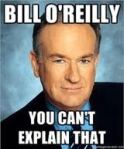
Is it left-wing secularists? (as Bill O’Reilly and other right-wing commentators,would have it)

Or is it corporate America (opening stores on Thanksgiving night and making workers show up) and the crazy shoppers who line up to buy all that stuff?

A thought for the holiday season

Let’s try this: Just don’t shop. Stay home and actually be with your family. Go out in the yard and gather twigs and make little presents out of twigs. People who love you will love whatever you make.

Peace.

Leave a comment

Filed under Fox News, Uncategorized

Why I am a Democrat

Why I am a Democrat

By Christopher B. Daly

It’s not because of the “gifts” that I supposedly get from the government, if we are to believe the recent confidential statements by Mitt Romney. Luckily, I have not needed the government very much in my life (so far) except for the blessings that good government brings to all the people – a terrific public education that lifted me to places I never thought I would go; safe streets and fire protection; clean drinking water and wholesome foods; confidence that my country would not be invaded and occupied by hostile armies.

The reason I am a Democrat is simple: on balance, over the long haul, the Democratic Party has been the single most effective agent for progressive change in America.

No, the party is not perfect. We have our own problems. We have our own corrupt and hypocritical leaders. Some Democratic leaders pander; some are slow to lead; a few are corrupt bozos. Democratic administrations sometimes screw up. Some Democratic voters do indeed have their hands out.

But look at the record. Since 1933, the Democratic Party has been the leading change-agent behind the following:

–the New Deal, including the right of workers to organize and the minimum wage

–Social Security

–the defeat of fascism in World War II

–the civil rights movement

–the (eventual) opposition to the War in Vietnam – and to all the subsequent unwise U.S. military adventures abroad

–the environmental movement, including global climate change

–the women’s movement

–the gay rights movement

–control of assault weapons and high-capacity ammo clips

–immigrant rights

Needless to say, the Republican Party, as an institution, has resisted each of these long, broad campaigns to recognize the essential humanity of all people and to ensure their rights under law. The issue is not handouts; it is dignity, decency, personal rights, and global peace.

And it’s not as though the Republicans don’t give out “gifts” to their own constituents. If we are talking about political parties that use government as a source of giveaways to their supporters, I would say Republicans do not make such a charge with clean hands.

Republicans spend vast amounts, for example, on defense contracting (even more than the generals ask for). Through tax breaks, they reduce the effective tax rate on many rich Americans to a level below that of the average worker. Through tax expenditures, they subsidize agribusiness, the fossil fuel industry, and a host of other businesses that donate to Republicans or hire lobbyists to look out for their interests. This is the activity that progressives denounce as “corporate welfare” – a charge that many Republicans seem not to even acknowledge.

All that said, I am happy to grant that there are many issues where reasonable Americans can disagree. I will even stipulate that most Americans love our country and have its best interests at heart.

–Should taxes be a little higher or a little lower?

–Should government be a little bigger or a little smaller?

–Should we pay our public bills now or later?

Those questions define the bulk of what we in this essentially conservative, centrist society argue about when we engage in politics. Does anyone seriously think we could not solve those problems if we really put our minds to it?

If Mitt Romney does not understand all this, then he never deserved a role in our public life.

Leave a comment

Filed under Politics, Uncategorized

Not to be missed: Jon Stewart’s takedown of Bill O’Reilly and Bernie Goldberg

http://www.thedailyshow.com/watch/thu-november-15-2012/it-was-the-best-of-times–it-was-the-best-of-times

No comment.

Leave a comment

Filed under Uncategorized