Category Archives: Uncategorized

Terror suspects’ parents

By Christopher B. Daly

Is it just me? Or does something about the body language of the people in this photograph seem wildly inauthentic?

DAGESTAN-articleLarge

(Photo: Dmitry Kostyukov for The New York Times)

I ask myself: If my wife and I had to conduct a press conference under similar circumstances (which, granted, is a big stretch), would we carry on like that? What is really up with these folks? This looks like a scene from a “Borat” film. It looks like a parody of two distraught parents. They seem to be saying “Up yours!”

Does anyone else find this odd?

4 Comments

Filed under Uncategorized

Readers to the rescue! NYTimes gains in circulation

By Christopher B. Daly 

Yes, the New York Times company reported a sharp drop in earnings this week.

Yes, the figures for advertising revenue were wretched and getting worse.

BUT, buried in the financial details, there is some potentially important good news: Money coming in from circulation is rising. In fact, it rose 6.5% in the first quarter of this year compared to the same quarter a year ago. Therein may lie the salvation of the most important news organization in the country.

The reason is that “circulation revenue” is all the money coming in from the subscriptions to the traditional print edition, the dollars paid by folks picking up a copy of the Times at newsstands, and — most important of all — the money coming in from digital subscribers who bumped into the Times “paywall” and decided to pony up and pay for full access to the Times online. They are important because they are the future. In the digital era, the key metric is whether you can make money online. Historically, newspapers depended on a “dual revenue stream” of money coming from both circulation and advertising. For more than a century, both sources increased, and they fluctuated around a ratio of 50/50 in terms of total revenues.

If the Times can continue to gain readers who will pay, then there is no reason it could not sustain itself mainly on the basis of its own readers — who are, ultimately, a better base for journalism than advertisers. Thank you, Tiffany and Bloomingdales, and may your ad spending continue. But ultimately, the Times might be better off if it were funded like the old PM newspaper, or I.F. Stone’s Weekly, or NPR, or the AP or other news organizations that do not depend on advertising.

According to the latest figures, readers now account for a majority of the Times revenues.

Here’s a chart from the company’s press release.


First Quarter
2013 2012 % Change
Revenues
Circulation $ 241,789 $ 226,994 6.5 %
Advertising 191,167 215,234 -11.2 %
Other(a) 32,977 33,204 -0.7 %
Total revenues 465,933 475,432 -2.0 %

When I looked at the numbers more closely, here’s what I found on a percentage basis:

First quarter

[                                 2013               2012

Revenues

Circulation             51.8%          47.7%

Advertising            41.0%          45.2%

Other                          7.1%             6.9%

So, it appears that “the people formerly known as the audience” are pointing the ( or a?) way forward.

Readers to the rescue!

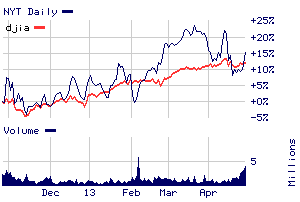
chart

This chart (which I customized using a tool on the NYTCo corporate site) shows how the NYTCo stock has performed in the last six months, compared to the Dow Jones average, which has been on a tear. 

Leave a comment

Filed under business, Journalism, journalism history, New York Times, Uncategorized

“Historians Still Despite George W. Bush”

By Christopher B. Daly 

“Now, there are some who would like to rewrite history - revisionist historians is what I like to call them.” -- George W. Bush

“Now, there are some who would like to rewrite history – revisionist historians is what I like to call them.” — George W. Bush

That’s the headline on a piece in the latest History News Network website, reporting the results of a flash poll of elite historians timed to coincide with this week’s opening of the new George W. Bush presidential library.

(Actually, it’s the George W. Bush Presidential Library and Museum, dedicated Thursday on the campus of the private religious school Southern Methodist University in Dallas. Like all 13 U.S. presidential library+museum complexes, it is administered by the National Archives and Records Administration. At all these operations, there is an inherent tension between the desire of the families and supporters to lionize our ex-presidents and the professional obligation of the NARA to preserve everything and make it all available to the public and to scholars.)

Back to the historians: they really can’t stand Bush, and they grade him about as harshly as possible. (Memo to future presidents: Invading the wrong country is never good for your reputation.)

The History News Network conducted an informal poll on Thursday asking American historians from the nation’s top research universities and liberal arts colleges to grade the presidency of George W. Bush on an A-F scale, based on fourteen different metrics, ranging from foreign policy to the economy to transparency and accountability.

Sixty-four historians responded. Thirty-five — over half — rated his presidency an outright failure.

“Thank you, God, for this opportunity,” one professor, a faculty member at one of the service academies, wrote in a comment. “He was not qualified to be president and it showed for eight long years.”

But Bush, famously unreflective, professes nonchalance. He spoke this week to CNN national correspondent John King (yes, the same John King who mis-reported a key part of the Boston Marathon bombing case).

An excerpt:

GEORGE BUSH: History will ultimately judge the decisions that were made for Iraq. And I’m just not going to be around to see the final verdict.

KING: Not going to be around. That’s an interesting way to put it. You…

GEORGE BUSH (laughing): In other words, I’ll be dead….

Bush said something similar when he was asked a similar question by Bob Woodward in late 2003. Asked by Woodward about how history would judge Bush’s decision to invade Iraq, Bush said: “History. We don’t know. We’ll all be dead.”

True that.

Here’s the Bush report card from the top historians:

HNN contacted faculty members who list American history as a research interest at the top twenty-five graduate programs in history and the top twenty-five liberal arts colleges in the United States, as ranked by the U.S. News and World Report in 2013.

Respondents were asked to grade President Bush on the following metrics (the average letter grade accompanies each metric) and provide justifications for their marks:

Overall (not a composite):  F 0.70
Communication ability D- 0.94
Relationship with Congress C 2.06
Supreme Court appointments D 1.09
Handling of the economy F 0.57
Executive appointments D 1.26
Diplomacy & foreign policy F 0.57
National security D- 0.82
Civil rights & civil liberties D- 0.90
Innovation and initiative D 1.14
General leadership D 1.04
Vision D 1.06
Transparency & accountability F 0.70
Integrity D+ 1.45
Crisis management D 1.00
Ability to learn from mistakes D- 0.82

1 Comment

Filed under Uncategorized

When the news is wrong (for a stupid reason)

By Christopher B. Daly 

imagesAs many have observed, several front-line news organizations reported incorrectly on Wednesday afternoon that authorities had “arrested” or “taken into custody” a suspect in the Boston marathon bombing. As someone who spent 10 years working for The Associated Press (where our watchword was always, “Get it first, but get it right”), I feel bad for journalists who are chasing leads in the investigation into the bombing case. They are under tremendous pressure to advance the story, “break” news, and stand out from the crowd.

I feel bad for them, but that’s not my only response. I also feel appalled at the news media’s chronic inability to exercise restraint. As the afternoon unfolded, I had a sickening sense of deja vu: here we go again, with the race to be first.

But, first with what, exactly? If the cops or the FBI had really made an arrest, they were going to announce it — and quickly. So, what difference does it make if I find that out at 2:30 or 2:45 or 4:00? Is my life any better?

Besides, it’s not as if this is the kind of news that authorities try to hide. When they nab a bad guy, they’re proud of it. They want to stand there at the press conference (ties all straight, uniform gleaming) and take a turn at the podium to say the same clipped phrases they always say. Sure, that’s important, and someone should be there to report it. But we do not need an entire army of reporters trying to get this information first. The mania for being first upsets and erodes all other journalistic priorities.

This kind of frenzy for “scoops” is essentially a waste of journalistic resources and enterprise. There are many fine, experienced, tough reporters and photographers in Boston this week. They should not waste their time trying to surf a few feet ahead of the cops in pursuit of factual information that is going to be divulged anyway. This is particularly true when reporters get in the way: if journalists report, for example, that an arrest is “imminent,” doesn’t that tell the bad guys that it’s time to flee?

In fact, I don’t consider that kind of reporting a “scoop” at all. Real news consists of information that someone is trying to hide or that would not come to light unless an individual journalist gets out and gathers information and connects some dots. Reporters make a contribution to society when they generate information that we would not have otherwise.

So, get out there and find a real, true story — and tell me something I don’t know and that won’t be announced from a podium.

We can do better.

Leave a comment

Filed under CNN, Journalism, journalism history, leaks, Uncategorized

End the NCAA: follow Spelman’s lead

By Christopher B. Daly 

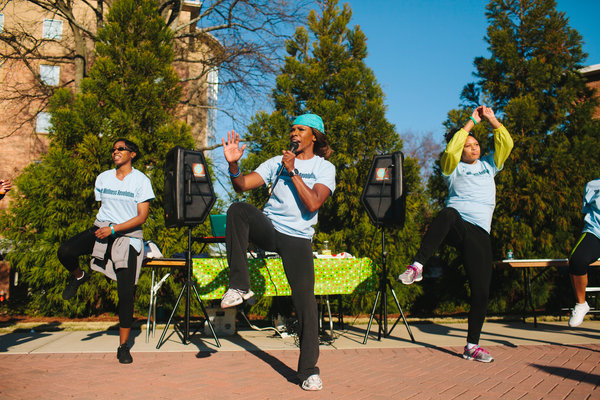
Here’s some very exciting news for those who would like to eliminate the corrupt (and corrupting) NCAA from college campuses and instead encourage college sports that actually involve getting all college students to exercise.

Today’s New York Times has a story about Spelman College, which is doing exactly that.

Go, Spelman!

Who’s next?

Get moving!

Get moving!

Leave a comment

Filed under Uncategorized

Wikileaks defendant gets a break

By Christopher B. Daly 

Among the many public services rendered by the New York Times, one is the coverage of the “Wikileaks case” being prosecuted in a U.S. court martial against Pfc. Bradley Manning. The case is taking place at Fort Meade, Maryland, which is about midway between Washington and Baltimore. That means that New York Times reporter Charlie Savage (formerly of the Boston Globe) has to

Welcome!

Welcome!

schlep out there every day when hearings are held and submit to all the rigamarole of entering a U.S. military base and the extra challenges of covering a court martial.

Because Savage is there and because he is well-versed in the law of the case, Savage is alert to the meaning of a lot of the pre-trial maneuvering. In today’s story, he informs us that Bradley caught a rare break this week: the judge ruled that the government will have a higher burden of proof than had originally been thought. The issue involves some arcane provisions of the Espionage Act of 1917 (as amended), but the judge’s ruling on the burden of proof goes right to the heart of the case. Put simply, it comes down to this:

When Private Manning leaked all those secret files to WikiLeaks (and he has already admitted doing so), did he have an intent to harm the United States? Did he have a “reason to believe” that the leaks would help a foreign enemy of the U.S.? And can the government prove that he had such a state of mind?

That really tips the balance in the defendant’s favor, because one can imagine a whole host of intentions that a leaker could plausibly have that would fall short of the “aiding the enemy” standard. Like Daniel Ellsberg — the leaker in the Pentagon Papers case — Manning could have been acting with an intent of changing U.S. war policy, or simply hastening an end to a war he considered unjust.

The government side, including military lawyers, had wished to proceed to trial under a different set of rules. Here’s how Savage paraphrased the government’s position:

A military legal spokesman argued that the decision may make little difference because the judge previously ruled that Private Manning’s motive — whether he thought of himself as trying to help society — was irrelevant to whether he intentionally broke the law. The fact that many of the documents were classified, he said, was a reason for Private Manning to believe that their disclosure could cause harm.

In other words, the classification system is always correct and any violation of its rules is, on its face, a crime. That, of course, is an invitation to those in power to cover their asses in perpetuity by classifying any information that they don’t want to see the light of day. In that case, we would never learn any of the disclosures that came to light through the Pentagon Papers or  Wikileaks. We, as citizens, could not even debate whether our elected officials are doing a good job, because we would have no evidence to work with.

It’s not an overstatement to say that, no matter what happens to Manning in the end and no matter how we feel about the wisdom of the war in Iraq, we should all thank the Times for looking out for the rights of all of us.

0    0      0       0        0

Extra credit:

Savage’s story also gives us a glimpse of the conditions under which the reporters covering the trial have to work:

Military authorities, meanwhile, said that while court was in session they would ban cellphones and air cards and turn off the wireless Internet in a media center where reporters and activist bloggers watch a closed-circuit feed from the courtroom. The steps were a response to the release on the Internet by the Freedom of the Press Foundation of a bootleg recording of Private Manning’s statement in February. Colonel Lind emphasized that recordings were not allowed at any court-martial proceeding.

“To date I have not ordered persons to be screened for phones and recording devices,” she said. “I hope I won’t have to. I trust you will all follow the rules and we will not have any additional violations of the court’s rules.”

Got that?


Leave a comment

Filed under Uncategorized

Transparency in food production?

By Christopher B. Daly 

Let’s stipulate that killing large animals is probably difficult and bloody.

Let’s stipulate that most of us are not exactly volunteering to slaughter the animals we eat.

Let’s also stipulate that there are probably no trade secrets in any U.S. slaughterhouse that require secrecy.

So, the only reasons for secrecy are to protect consumers from the truth about meat, or to protect shameful practices from public exposure. Either way, there is a case to be made for ending the secrecy that shrouds the practices of agribusiness and large-scale meat production.

That’s what law professor Jedediah Purdy tries to do in an op-ed in today’s Times.

0409OPEDrosen-articleInline

I don’t know if his piece will make any difference, but it’s a welcome pushback to the movement in many states to shield meat processors from the prying cameras of animal-rights activists and journalists. The campaign to pass so-called “ag-gag” laws is a direct assault on the protections granted to news-gathering activities under the First Amendment. Such unconstitutional laws, outlined in the Times three days ago, are exactly the kind of thing that would have prevented one of the classics of the muck-raking movement, Upton Sinclair’s expose of the meat-packing industry in turn-of-the-century Chicago — published as a thinly fictionalized novel, The Jungle

Which raises a question: would we be better off as a society if meat-packers had been able to shield their practices of a century ago and persist in disgusting, inhumane, and literally sickening methods of thejunglepreparing our food?

I say, let the sun shine in. We all should take a look.


images-1


2 Comments

Filed under Uncategorized

More on WWII photo censorship

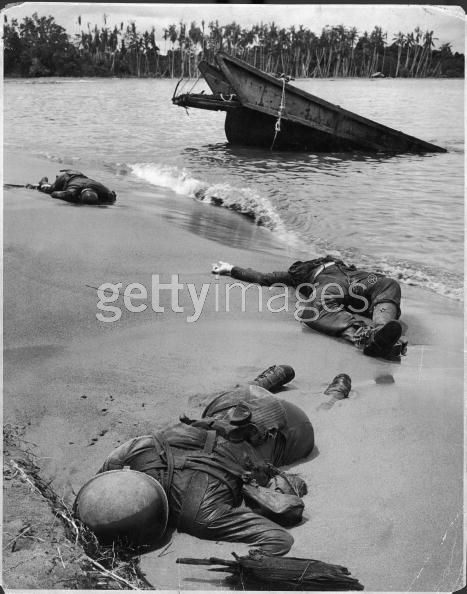
Here is a new  Times “Lens” blog, with more on LIFE magazine photographer George Strock.

Photo by George Strock/ LIFE magazine.

Photo by George Strock/ LIFE magazine.


1 Comment

Filed under Uncategorized

Not to be missed

Thanks to the Library of Congress for its National Recording Registry, which is compiling some of the greatest sounds ever recorded. Here is the page for the latest recordings, including Janis Joplin, Ornette Coleman, Junior Wells, Wild Tchoupitoulas and lots of other great stuff.

Be sure to click on link near the top to listen to the audio montage.

Only complaint: it’s going to take a long time to listen to them all.

dlc_victor_18509_01_b22160_07_160


Leave a comment

Filed under Uncategorized

A baby picture of our universe

Wow.

universe-planck


2 Comments

Filed under Uncategorized