
And they should get it (much as I would like to side with B.U. alum Pete Souza, the official White House photographer).
Here’s a version.


And they should get it (much as I would like to side with B.U. alum Pete Souza, the official White House photographer).
Here’s a version.
By Christopher B. Daly
In the end, the sentencing of James “Whitey” Bulger was oddly unsatisfying. Bulger — the lord of the underworld, the big man with the killer’s coldness, the guy who struck fear into so many for so long – left the public stage without so much as a whimper. Playing the role of a stand-up guy (or at least, his version of one) all the way to the bitter end, Bulger not only refused to testify, he also refused to even make eye contact with his victims’ families.
To make matters worse, Bulger committed one last robbery: he robbed all of us in the Boston area of the satisfaction of a real showdown with the forces of 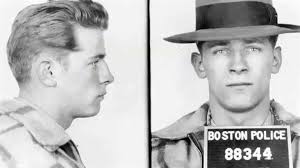 justice. Bulger should have been on the witness stand (and his testimony should have been on television), but he denied us that. It was a petty crime, compared to all his monstrous crimes against individuals, but it was one more shot at a public that grew tired of him long ago.
His trial over, Bulger will now spend the rest of his few remaining days in prison, where he belongs. So be it. I don’t believe in the death penalty on other days, and I will stick to my position on this one. I will not give Bulger the satisfaction of getting me to make an exception for him. I will choose not to sink to his level. (No more special treatment for you, pal.)
The whole process of putting Bulger on trial took so long that when the final stages unfolded in federal court last week, there was an odd quality of a formality about it. After all, Bulger’s capture took place more than two years ago. Ever since, it was more or less assumed that Bulger would be found guilty and given a life term.
Indeed, the thoroughly predictable and highly scripted process of a criminal trial was overshadowed this year by a lot of other local news of spontaneous origin. In April came the horrible crime of the Boston Marathon bombing, in which a couple of miserable losers decided to try to rob us all of something wonderful — the

Dhokhar Tsarnaev surrendering, with his forehead marked by a sniper’s infrared.
spirit that always used to bloom in Boston on Marathon Monday, a mix of having fun and playing hooky and being nice to out-of-towners and trying to hurry spring along.
That was followed this year (simply in time, not in a great cosmic reckoning, as some would have it) by the quite unexpected rise of the Red Sox, who gave us something of a civic bouquet this year — not by winning the World Series, which was nice but a bit much. No, I think the Sox’ real gift to us this year came from seeing them having fun playing a child’s game as if it mattered and seeing them outperform expectations. All that, plus beards — what a treat.
* * * *
Yet, there is still some unfinished business in the Bulger matter. Whitey Bulger owes us all the answers that we didn’t get when he chose not to testify. He may try to tell his story – on his terms, of course, with a book or letters – but he should have had to sit in the dock, under oath, and face questions not of his choosing.
For that matter, his brother Billy (the former president of the state Senate)  owes us some answers, too. What did he know about his brother, and when did he know it? Billy owes us these answers because he was not a private person all those years. He’s not in the same category as the third Bulger brother or their sister. No, Billy was at or near the center of public power during the very same years and in the very same city that Whitey was at or near the center of criminal power.
I will not compare or contrast the two brothers, except to say that as a journalist who covered Billy during that period and who often got the back of his hand, I believe that even rough justice demands that he give answers to the people whose money he spent and whose government he hijacked. No more of his grinning and winking and ducking. What did he know and when?
Other unfinished business?
There’s the FBI, for one. The agency has yet to offer a convincing explanation of how Whitey Bulger could have drafted the FBI’s Boston office into his protection racket or of how the agency is preventing a repeat by some other hoodlum.
Then there is the matter of how anybody could have fallen for the blarney that Whitey was a good guy who was keeping drugs out of South Boston or that Billy was a good guy because he gave away some turkeys at the holidays. Both of the Bulgers got too much power, and we are the ones who let them get away with it.
So, in the end, I suppose, the final reckoning is not with them but with ourselves. That’s a sentence with no parole, no appeal. In a way, we’re lifers, too.
Filed under Boston, history, Journalism, Politics, Uncategorized
By Christopher B. Daly
In her newest book, presidential historian Doris Kearns Goodwin takes a turn toward the history of journalism. Actually, she is working at the intersection of Presidential History and Journalism History in The Bully Pulpit: TR, Taft and the Golden Age of Journalism. In any case, I am happy to welcome her to the ranks of journalism 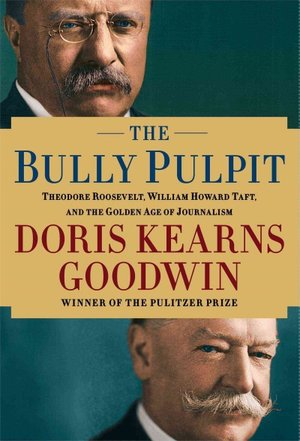 historians, and I am always glad to see any professional historian from another specialty stray into journalism’s past.
I am also intrigued by her discovery of a “golden age” in the journalism at the turn of the last century. It was certainly a time of great achievement, thanks to the “Muckrakers” who investigated so much wrong-doing, corruption, and squalor. I look forward to reading the book and seeing why she considers that period so wonderful. (Personally, I would nominate the period from about 1968-74: rise of rock journalism/ heyday of “new journalism”/ Pentagon Papers / Watergate. Your nomination?)
Until then, here’s an interview Goodwin did recently with NPR.
One stunning excerpt: Goodwin recounts that the great muckraking journalist Lincoln Steffens decided to examine the performance of the U.S. government. So, Steffens wrote to the head of the outfit — none other than President Theodore Roosevelt.
“Mr. President, I want to investigate corruption in the federal government.”
According to Goodwin, TR’s reply was quite a stunner. He gave Steffens a calling card that he could use in his reporting and present to government officials as needed, which read, in part:
“Please tell Mr. Lincoln Steffens anything whatever about the running of the government that you know (not incompatible with the public interest) and provided only that you tell him the truth.”
Now, that‘s the way to treat a reporter! Just tell the truth.
Filed under history, Journalism, journalism history, Politics
By Christopher B. Daly
Bill Keller, former executive editor of The New York Times and keeper of the flame of traditional reporting, has squared off with Glenn Greenwald, the journalist who disclosed the Snowden leaks and an avatar of advocacy, in a debate over the meaning and future of journalism. Their debate is well worth reading and contemplating.
Here’s my take: they are actually talking past each other. Each participant represents a different definition of journalism and cannot fathom the other’s values. As I argue in my book, Covering America, they come from competing visions of the essence of journalism, each of which has a long record.
Keller stands squarely for the tradition of responsible, dispassionate, nonpartisan, factual reporting. This was articulated forcefully by Adolph Ochs, the great-grandfather of the current Times publisher, when he bought the Times in 1896. Keller seems to believe that this tradition is the only legitimate one and that all others represent a deformation or corruption of “real” journalism.
Greenwald stands squarely for the tradition of journalism that prizes journalism for its ability to change the world. This is the polemical, analytical, interpretive form of journalism that considers advocacy the essence of journalism. Practitioners like Greenwald often look down on the reporting tradition as a weak, hypocritical, trouble-avoiding compromise.
It may come as a surprise that the advocacy tradition is actually older (much older) than the reporting tradition. In America, the first newspaper launched in 1704, and for more than a century after that, most journalism in America was a fact-free zone of argument and advocacy carried out by the likes of Sam Adams and Tom Paine.
The first full-time reporter in America (the obscure figure George Wisner of the New York Sun– pgs 61-62 in Covering America) wasn’t hired until 1833, and it took decades to establish the idea that the proper contents of a newspaper were value-free “facts” gathered by non-partisan professionals.
Personally, I don’t think one tradition is inherently more virtuous or more valuable than the other. I admire the best in both worlds.
Filed under blogging, history, Journalism, journalism history, media, New York Times, Politics
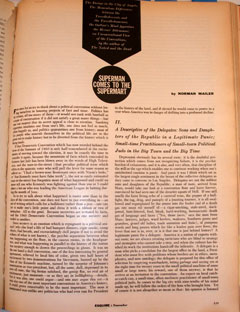
In the next month, much will be said and written about John F. Kennedy on the occasion of the 50th anniversary of his assassination. To prepare for this season of remembrance, here is a good place to start: the landmark essay/profile that ran in Esquire magazine in November 1960. Written by the novelist/playwright/journalist Norman Mailer, it was titled “Superman Comes to the Supermarket” and it remains must-reading.
A hat tip to Esquire for posting the whole thing on its site.
[Hint: if you hit the “print” button on the Esquire page, you can get the whole piece in one big file, minus most of the ads. But then again, if you are not being bombarded about sex and whiskey, are you really getting the full Esquire experience?]
Filed under Journalism, journalism history, Politics
By Christopher B. Daly
That’s one message to take from the decision by Politico (which is virtually online-only) to expand its brand of political coverage to Albany and the state government of New York.
It’s interesting to note in today’s story, that the publisher of Politico, Robert Allbritton, recently divested himself of his family’s longstanding involvement in one form of “legacy media” — television broadcasting. He recently sold the Allbritton family’s stake in seven TV stations for something like $1 billion. Rather than sit on it, he is investing in the future by branching out from Politico’s base in Washington to New York City, where Capital New York is based. From there, the online news operation covers one of the biggest state capitals in the country. Now, just 49 to go!
Here’s the Politico version.

Filed under broadcasting, Journalism, media, Politics
By Christopher B. Daly
A federal appeals court recently dealt a blow to press freedom by ruling that there is no legal basis for an American reporter to protect the identity of a confidential source if a prosecutor demands to know it. This is not the last word on the subject, but still, it was a setback because the ruling last Friday came from the 4th U.S. Circuit of Appeals, the level just below the Supreme Court. (Not only that, but the 4th Circuit has jurisdiction over Virginia and Maryland, which covers a lot of federal agencies, including the Pentagon and the CIA.)
The case is important because it is part of a recent upsurge in federal cases attempting to stop “leaks” of classified information by intimidating journalists. The case is also important because it strengthens the hand of the Justice Department and federal prosecutors (at least in the 4th Circuit) to chill whistle-blowers, pressure journalists to give up their sources, and jail those reporters who won’t do so.
The July 19 ruling runs to 118 pages. Below is my analysis of all the major points made in both the majority ruling and the dissent. Overall, I find that the majority ruling was arbitrary, biased, and flat-out wrong. I believe that the dissent has it right.
I am approaching this ruling not as a lawyer, judge, prosecutor, or law professor. My main credential is one that I share with all the parties (including the judges) in this case: CITIZEN. I believe I have a right to read the Constitution and the statutes and the evidence, draw my own conclusions, and share them with you. I approach this as an advocate for press freedom. To be specific, I am an advocate of the public’s right to know what our government is doing. To that end, press freedom is instrumental, but it is also incidental. The real purpose of the First Amendment is to ensure that we, the people, would always have the means to gather and share the information we need to govern ourselves and prevent the resurgence of tyranny.
[Some brief background: The case is U.S. v. Sterling. It is a criminal case against Jeffrey A. Sterling, a former CIA officer who has a major beef with the agency. Sterling, who is black, has charged the CIA with racial discrimination, and he has a conflict with the agency over material he would like to publish in his memoir. The CIA claims that he divulged classified information to a journalist in violation of the Espionage Act of 1917, as amended. Sterling maintains that he is a target of CIA retaliation because he divulged a botched operation. The journalist in question is James Risen, a Pulitzer Prize-winning expert on national security and veteran reporter for the New York Times. He is also an author of several books, including the one at issue, State of War (2006, Free Press). In the book, Risen revealed details about a CIA operation aimed at undermining Iran’s nuclear program. Federal prosecutors issued a subpoena ordering Risen to appear before a grand jury and reveal his source. Risen has refused and vows to go to jail instead. The underlying case, U.S. v. Sterling, has yet to come to trial. The 4th Circuit ruling had to do with pre-trial motions in the Sterling case. The constitutional issue is whether, under the First Amendment or some other basis, reporters in America have the right to protect the identity of their sources, even when they are ordered to do so in a criminal case. In other words, do they enjoy a legal “privilege” that frees them from having to give testimony? Do they have a “testimonial privilege”? If so, is it absolute?]
0 0 0 0 0 0 0
The Circuit Court opinion begins with the majority ruling (in a 2-1 split), written by Chief Judge William Byrd Traxler, Jr. The majority opinion opens with some factual background, covered above.
p. 5
Traxler notes that Sterling was indicted on a charge of illegally disclosing classified information and observes that
he may have done so in retaliation for the CIA’s decision to terminate his employment and to interfere with his efforts to publish such classified information in his personal memoirs.
So, as to MOTIVE, Sterling is not accused of “aiding the enemy” – unlike, say, leaker Bradley Manning.
p. 6: In 2000, Sterling filed a federal lawsuit against the CIA charging employment discrimination – a classic “disgruntled employee” if there ever was one. These folks are the natural target for reporters.
p. 7: In Oct. 2001, the CIA sacked Sterling.
He was reminded of his legal duty to protect secrets and asked to sign an acknowledgement. He refused.
p. 8: March 4, 2003. Sterling filed a second suit against the CIA, protesting the way they wanted to censor his memoir.
March 5, 2003. Sterling goes to the Senate Intelligence committee and divulges information to staffers about the Iranian intel program.
“Telephone records indicate that Sterling called Risen seven times between February 27 and March 29, 2003.”
Hmmm… wonder how the government got those phone records. Still, no crime there.
One thing that’s clear: Sterling and the agency are developing a world-class hatred for each other.
p. 9:
“On April 3, 2003, Risen informed the CIA and the National Security Council that he had classified information concerning Classified Program No. 1 and that he intended to publish a story about it in The New York Times. In response, senior administration officials, including National Security Advisor Condoleezza Rice and Director of the CIA George Tenet, met with Risen and Jill Abramson, then Washington Bureau Chief of The New York Times, to discuss the damage that publication would cause to national security interests and the danger to the personal safety of the CIA asset involved in the operation. Several days later, Ms. Abramson advised the administration that the newspaper would not publish the story.”
Worth noting: The government made a reasoned request to protect a current “asset” – which is to say, an active spy. The newspaper agreed. Fat lot of good it did them. You do the govt a big favor and they turn around and screw you.
p. 10: Jan 2006, Risen publishes State of War, in which he used the stuff that the Times would not publish. [Presumably, that “asset” was long gone by then.]
“Risen does not reveal his sources for the classified information in Chapter 9, nor has he indicated whether he had more than one source. However, much of the chapter is told from the point of view of a CIA case officer responsible for handling Human Asset No. 1. The chapter also describes two classified meetings at which Sterling was the only common attendee.”
Dec. 22, 2010, Sterling indicted. Subpoenas issued for Risen to testify before grand juries and identify his source. He moves to quash the subpoena (i.e., make it go away and end his legal problem).
p. 12:
“The district court held that Risen had “a qualified First Amendment reporter’s privilege that may be invoked when a subpoena either seeks information about confidential sources or is issued to harass or intimidate the journalist,” id. at 951 (emphasis added), and that the government could overcome the privilege only by meeting the three-part test that this circuit established for reporters’ claims of privilege in civil cases in LaRouche v. National Broadcasting Co., 780 F.2d 1134 (4th Cir. 1986).”
So, in the first round, Risen actually won. The district court judge agreed that the First Amendment protects journalists in most situations. (Hence, the “qualified” privilege. See below.)
p. 13. Oh, and by the way, the government would like to protect the identity of its secret witnesses while forcing Risen to name his. That’s rich, but, of course, they are going to get their way.
p. 15-16: Traxler announces the new bottom line:
There is no First Amendment testimonial privilege, absolute or qualified, that protects a reporter from being compelled to testify by the prosecution or the defense in criminal proceedings about criminal conduct that the reporter personally witnessed or participated in, absent a showing of bad faith, harassment, or other such non-legitimate motive, even though the reporter promised confidentiality to his source.” [emphasis added/ CBD]
As his main precedent, Traxler cites the 1972 Branzburg case, decided 5-4 by the U.S. Supreme Court. On a close call more than 40 years ago, SCOTUS said it could not find a legal “privilege” for a journalist in the First Amendment. In plain English, that means that the news-gathering function of journalism does not extend to protecting sources – at least not when doing so conflicts with the duty of prosecutors in criminal cases to bring “every man’s evidence” into court. The journalists had hoped to establish that – like doctors, psychotherapists, spouses, clergy, and lawyers themselves – members of the public have an interest in knowing that they can confide in any of those people without having their confidences betrayed in open court. I believe that the Branzburg ruling was wrong, if narrowly so, and it has been under attack ever since.
Getting back to the quoted section above, here’s a question: What about a confidential source who does not commit a crime? In that case, the journalist is neither a participant nor a witness to a crime. It’s actually far more common for confidential sources to tell journalists about third parties, which Traxler does not address here. What if the confidential source does not hand over any purloined documents or commit any crime in the journalist’s presence? What if the source merely describes the misdeeds of others?
Moreover, what about a Wikileaks style work-around where the journalist has to protect his/her own identity?
What about anonymous posting (like 18th Century pamphleteers?)
Another alternative: Journalists could decide to live with the Branzburg rules and encourage journalists to go to jail and honor those who do so. We could create a Hall of Fame, or we create a special prize and give them each $1 million for their service to the profession and the general public.
[NB: Traxler also relies heavily on the 2005 Judith Miller case. In that instance, her source – Scooter Libby – was committing a crime in the reporter’s presence (whether Miller realized it or not) by outing Valerie Plame, then an active CIA agent. But what if he were not actually committing a crime?]
If there is no legal/constitutional remedy, maybe there is a technological or behavioral remedy. Journalists could change their technology or their techniques. Maybe they need to improve their tradecraft – safer transfers of documents and data, untraceable meetings, disguises, meetings in other countries, go-betweens, etc., etc.
If they insist on criminalizing journalism, then must journalists learn to act like criminals? The mob always esteemed “stand-up guys” who would take their punishment rather than rat out their associates. Is that the model Traxler is pushing us toward?
Why doesn’t the government do a better job of protecting its own whistleblowers? Why do they have to resort to telling journalists?
p. 25:
“The Branzburg Court considered the arguments we consider today, balanced the respective interests of the press and the public in newsgathering and in prosecuting crimes, and held that, so long as the subpoena is issued in good faith and is based on a legitimate need of law enforcement, the government need not make any special showing to obtain evidence of criminal conduct from a reporter in a criminal proceeding. The reporter must appear and give testimony just as every other citizen must.”
Do I detect a certain amount of glee in these opinions when judges have the chance to uphold the power of prosecutors (and, of course, judges) to compel reporters to do things?
p. 26: Here, Traxler does something of an about-face and says it would be fine to give an alternate reading to Branzburg in civil cases. Traxler would grant a qualified reporter’s privilege in civil cases. It’s just the criminal cases where the law enforcement is transcendent over the public’s right to know. Since when does law enforcement trump all other values, goals, priorities?
[Note that the privilege is always qualified; judges always want to be able to put their thumb on the scale of justice. They say: We are not going to give you something once and for all; any time you want to exercise that right, you have to come into court and beg a judge for it. Thanks a lot!]
p. 27: Traxler calls for a “balancing approach” – which translates into arbitrary judicial discretion as far as I can see. When a reporter is about to talk to a source, is he/she really supposed to project ahead and guess correctly about how that “balancing” is going to turn out in his/her case? Fat chance. That is completely unrealistic.
p. 28: Traxler keeps clinging to this obscure clause in Branzburg that offered remedies at law for journalists who are faced with prosecutions intended to “harass” the reporter or carried out “in bad faith.” What is that about? How often does a court decide that a prosecutor has acted in bad faith? That’s a non-issue, a red herring.
p. 29-30: More on the criminal/civil distinction. But: the fact is, some crimes are petty and some civil actions are momentous. I don’t believe it is true that every criminal matter is by definition more important than any civil matter. That strikes me as dogma (or a device for getting to some desired outcome). Some criminal cases, even felonies, involve small potatoes like selling a couple of ounces of marijuana.
[Let’s all keep in mind The BIG PICTURE in the Sterling case: the CIA pissed off one of its agents, and he went rogue, and they want to crush him. Risen is caught between the two antagonists.]
p. 32: Risen also raised a claim to a “common-law reporter’s privilege.” By “common law” he means law that is made by some fashion other than the Constitution and the acts passed by Congress. Usually, this means judge-made law that results from rulings made over time that produce trends. Traxler begins by citing Branzburg saying no common-law privilege existed. But that was as of 1972. Has the common law evolved since then? (which is the nature of common law, no?)
p. 36: Traxler analyzes the common-law argument, based on Rule 501 in the federal rules of evidence, which was passed by Congress, after Branzburg. In comparing a reporter/source case to a psychotherapist/patient case, Traxler writes:
“Applying Rule 501, the Court weighed the competing interests and concluded that the plaintiff’s interest in obtaining evidence of the confidential communications in the ensuing excessive-force action was outweighed by the patient’s private interest in maintaining confidence and trust with his mental health provider and the public’s interest in protecting that privacy in order to “facilitat[e] the provision of appropriate treatment for individuals suffering the effects of a mental or emotional problem.” Id. at 11. As noted above, the Court also relied, in part, upon the fact that a psychotherapist-patient privilege was one of the nine, enumerated privileges considered when Rule 501 was adopted and had found near unanimous support in state laws as well.”
But Traxler misses the point here. The point is that in both kinds of cases, it is the PUBLIC interest that creates the privilege, not the personal or professional one. The public wants to know that psychotherapy patients as a class have a right to seek help from therapists as a class with confidence that the statements they make in therapy will not end up in court with the names attached. The public also wants to know that when they read a newspaper, there is no information missing because sources in general are afraid to approach reporters in general.
The public wants people in general to feel confident in talking to a doctor, lawyer, or clergymember. Likewise, the public wants people in general to feel confident in talking to a reporter.
Also, note: Branzburg did not forbid a journalist’s privilege as some kind of an evil. It just said that court couldn’t quite find it in the First Amendment. Now, if you are determined not to find one anywhere, you won’t. But if you are looking for one, there are a number of places you might find it. Much depends on one’s predisposition, and there are a lot of judges who are not predisposed to trust reporters.
In Traxler’s case, for example, here’s a passage from p. 37:
“Rule 501 thus leaves the door open for courts to adopt new common-law privileges, and modify existing ones, in appropriate cases. But nothing in Rule 501 or its legislative history authorizes federal courts to ignore existing Supreme Court precedent.”
So, the door is open, but Traxler (and his colleague who joined this majority opinion) does not want to walk through it. To my mind, that does not seem to dispose of this issue once and for all. If lower courts don’t make rulings that allow common-law rulings to accrete, how will the common law ever evolve?
BTW, what if judges had to divulge what goes on in-camera? How would they feel about that? What if they could not guarantee the confidentiality of sidebars or in-camera discussions?
p. 40: Traxler has a message for journalists: Even if we thought we could grant a common law privilege, we wouldn’t [So go fuck yourself!]
“First, unlike in the case of the spousal, attorney-client, and psychotherapist-patient privileges that have been recognized, the reporter-source privilege does not share the same relational privacy interests or ultimate goal. The recognized privileges promote the public’s interest in full and frank communications between persons in special relationships by protecting the confidentiality of their private communications.”
Traxler completely (willfully?) misunderstands the issue. The party with the claim here is not really Risen as an individual (and not even Sterling). The party whose rights are being evaluated here is THE PUBLIC. The public has a compelling right to know things. If reporters cannot find things out, then the public will not find things out either. It’s that simple.
Traxler’s analogy here is not sound either. He says Risen does not deserve protection because he did not try to hide the information he obtained confidentially but, on the contrary, shouted it from the rooftops by publishing it. Well, what is a journalist supposed to do? Seek the truth and not share it with anyone?
Traxler is writing like a Martian who has never read a newspaper.
Besides, psychotherapists often write up cases and publish their findings in the professional literature but withhold the identity of the patient. That’s a much more apt analogy.
Pgs. 40-41: Speaking of Risen, Traxler writes:
“His primary goal is to protect the identity of the person or persons who communicated with him because their communications violated federal, criminal laws.”
That’s not true, either, and he is imputing a motive to Risen that does not exist – or, at least, has not been proven. As a reporter, Risen had to make a decision about confidentiality in advance of knowing whether such communication violated any federal laws – and indeed, that is a matter of fact for a trial court, not something that Traxler should assume. (Again, the judge is showing his bias in this case; he clearly agrees with the government and has pre-judged the case against Sterling.) Traxler is pro-prosecutor and does not even recognize his own bias. I wonder how many other former prosecutors there are on the federal bench? And I wonder how many ex-journalists? (probably zero)
[Note to self: I am starting to warm up to the idea of a federal Shield Law, if only to take these determinations away from the Traxlers of this world – a conservative with a lifetime appointment can do a lot of damage. I have been reluctant to see journalists go hat in hand to Congress and ask for anything. My fear is that Congress will begin by giving journalists half a loaf — a crummy shield law loaded up with compromises — and later take it away altogether. That would not leave journalists where they are now; it would leave them worse off. Because Congress will have established the precedent of legislating about journalism, even though the First Amendment said it about as clearly as words can say anything: Congress shall make no law abridging the freedom of the press.]
TALK ABOUT COMMON LAW – WHAT ABOUT THE 49 STATES WITH SHIELD LAWS? DOESN’T THAT REGISTER?
If a reporter’s privilege is such a terrible idea and so likely to thwart the pursuit of criminal justice, why tolerate all these state laws? What about “every man’s evidence?” (a term that is not in the Constitution either; it is a legal doctrine, like the right to know)
p. 47: Here, Traxler puts all his cards on the table: Even if there were a qualified reporter’s privilege, we would still not extend it to Risen. He would not even meet the civil standard – the so-called “Larouche test.”
Under that standard, a reporter can be compelled to testify only if three conditions are met:
1. The info is relevant to the case at hand (duh!)
2. the info cannot be gotten by any other means (all prosecutors will affirm this)
3. There is a compelling interest in the info. (all prosecutors will affirm this, too)
In this case, Traxler (a former prosecutor) happens to side with . . . the prosecutors!
p. 50:
“Risen is the only eyewitness to the crime. He is inextricably involved in it. Without him, the alleged crime would not have occurred, since he was the recipient of illegally-disclosed, classified information.”
Note that Traxler refers to “the crime” in one sentence and then catches himself two sentences later and writes (properly) of “the alleged crime.” Worth remembering: Nothing has been proven. Sterling has not been found guilty by a jury of anything, and he enjoys the presumption of innocence.
Besides: maybe it wasn’t Sterling. Or maybe it wasn’t only Sterling. Traxler accepts the indictment as if all matters of fact have been proven.
p. 52:
“During these proceedings, Sterling has often represented that he intends to point his finger at these third parties as the source of the leak. The district court’s ruling, however, would require the government to compel the testimony of every other possible source, sources who could do little more than assert their own privilege or offer a simple denial of guilt, while allowing Risen, the only person who can identify the perpetrator or perpetrators, to protect his sources from the criminal consequences of their behavior.”
Huh?
Why should the journalist have less protection than those possible miscreants? Shouldn’t he have at least as much – given that the journalist is not an instigator of any criminal activity and that he is serving a compelling public interest?
This ruling is upside-down.
p. 57: Traxler takes up the argument that there is a compelling interest in Risen’s testimony. This is rich: one of the reasons he cites is the “obvious” claim that national security is important. He cites Haig v. Agee to state that “no governmental interest is more compelling” – in other words, national security is tops or at least tied for first, compared to every other governmental interest. But that’s just his opinion. It is not a natural fact or a fact that is even self-evident.
Then, he has the chutzpah to argue that the national security interest extends to the methods of gathering and keeping secrets, including “the appearance of confidentiality” – which is exactly what reporters need in order to carry out their constitutionally protected role.
p. 58: Traxler betrays a disturbing willingness to go on a fishing expedition to find out all Risen’s sources.
0 0 0 0 0 0 0 0
On to the DISSENT
p. 86: Judge Roger Gregory (the first black judge on that circuit, nominated by Bill Clinton; he is also a former litigator – and therefore someone who is not automatically inclined to believe or support the government) wrote the DISSENT, for himself. He begins by celebrating press freedom and noting its central role in self-govt.
p. 90: Gregory indicates that he actually read the pro-media affidavits, whereas there is no literary evidence in Traxler’s opinion that he is conversant with that other point of view. It appears that Traxler read only the prosecutor’s briefs.
p. 91: Gregory singles out the affidavit from the Washington Post’s veteran national security investigative reporter Dana Priest — about Gitmo, Abu Gharib, secret prisons, Walter Reed.
QUESTION: Which of these revelations would any American want to put back in the bottle? They were all secret originally (maybe not Walter Reed), and they all had to be pried loose using confidential sources. Would we as a society be better off not knowing? Does Judge Traxler really prefer, himself, to learn only what the government wants him to know?
p. 98: Gregory’s bottom line:
I, too, would recognize a qualified reporter’s privilege in the criminal context, and evaluate the privilege using the three-part test enunciated in LaRouche as an “aid” to help “balance the interests involved.” 780 F.2d at 1139. I would add a caveat to this general rule, however; in cases involving questions of national security, if the three-part LaRouche test is satisfied in favor of the reporter’s privilege, I would require consideration of two additional factors: the harm caused by the public dissemination of the information, and the newsworthiness of the information conveyed.
p. 108: Gregory implies that the CIA is not trying to cover up vital national security secrets but is simply trying to cover its ass after a botched operation.
“This information is not extraneous. Quite the opposite, it portends to inform the reader of a blundered American intelligence mission in Iran.”
Gregory says Risen’s disclosures are definitely newsworthy. The final test is to balance that newsworthiness against the harm of disclosure.
Which raises the question: where’s the harm?
Gregory:
“. . .the Government has not clearly articulated the nature, extent, and severity of the harm resulting from the leak.”
This is classic. The government failed to do this in the Pentagon Papers case, too and lost as result. In this case, it must be asked: WHERE’S THE HARM? The stuff in Risen’s book came out years ago already, and what part of the sky fell? What’s the body count? As usual, there’s nothing but some egg on some faces.
p. 112: In his big rhetorical wind-up, Gregory laments the majority ruling written by Traxler:
I find it sad that the majority departs from Justice Powell’s Branzburg concurrence and our established precedent to announce for the first time that the First Amendment provides no protection for reporters. . .
Under the majority’s articulation of the reporter’s privilege. . . a reporter can always be compelled against her will to reveal her confidential sources in a criminal trial. The majority exalts the interests of the government while unduly trampling those of the press, and in doing so, severely impinges on the press and the free flow of information in our society. The First Amendment was designed to counteract the very result the majority reaches today.
Amen.
0 0 0 0 0 0 0 0
So, that’s where things stand. By my reading, as a citizen, I would say that while this ruling was a setback, it was just another battle in a long war. Branzburg was a close call back in 1972, and, while I believe the court got it wrong, my guess is that the Branzburg ruling is not destined to stand much longer. The surge of state-level shield laws, the closeness of these cases in federal courts, and the rightness of the journalist’s privilege all give me reason to hope that neither James Risen nor any other journalist ever has to go to jail for their efforts to inform the American people about the doings of their own government. We, the people, created that government (including the judiciary), and we should be able to make it do what we want.
“Whenever any Form of Government becomes destructive of these ends, it is the Right of the People to alter or abolish it.”
Filed under blogging, broadcasting, First Amendment, Journalism, journalism history, New York Times, Politics, Supreme Court, Wikileaks
By Christopher B. Daly
 It was disappointing to see the vote in the House on a measure to rein in the NSA fall a bit short on Thursday. It was particularly disappointing to see my own Rep., the rookie Joe Kennedy, vote on the wrong side. (Was he taking one for Obama? Not worth it. Here’s a tip, Joe: Never vote with Michelle Bachmann.) Interesting to note that many of the Democrats in favor were members with tremendous seniority — they have seen presidents come and go, they are not afraid to buck the party’s floor leadership, and they have been lied to so many times by the surveillance state that they have just had it.
On the plus side, this rather hurried attempt to rein in the surveillance state came darn near passing. Getting 205 votes in the House is not nothing, and it certainly sends a powerful signal around Washington and the world.
Here’s coverage in today’s Times, Post and the Atlantic.
A look ahead, from the Times (quoting Rep. Jerry Nadler):
At the very least, the section of the Patriot Act in question will be allowed to expire in 2015, he said. “It’s going to end — now or later,” Mr. Nadler said. “The only question is when and on what terms.”
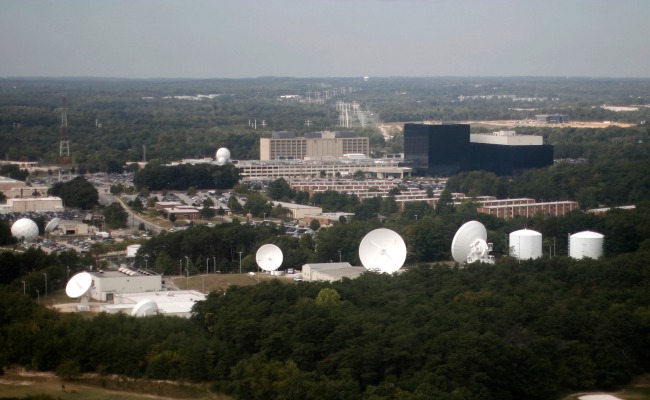
Secret stuff. You probably shouldn’t even be looking at this.
Filed under Journalism, Politics, President Obama
By Christopher B. Daly
During the current revelations about the extent of routine surveillance being conducted on American citizens by agencies ranging from the NSA to the Postal Service, it might be worth recalling how this liberty-loving country was founded.
In the 1760s and early 1770s, a growing minority of British colonists living in North America were developing longer and longer lists of grievances against the Crown and Parliament. These Whigs (or patriots) looked for ways to turn their concern into practical action to resist what they considered abuses of their rights as Englishmen.
Recognizing the power of information and coordinated action, they formed Committees of Correspondence — first in Boston and later in all the colonies. They eventually became tantamount to shadow governments, but they

Sam Adams, enemy of the surveillance state.
National Portrait Gallery
began as a mechanism for sharing information, views, and debates. Immediately, the founders recognized a problem: most of the mail that passed through the British postal system was routinely read by postmasters. So, if the Whigs were going to get organized on a continental basis, they needed to find a way to escape from that surveillance if they were to avoid arrest and punishment.
The answer was the Committees of Correspondence, which developed a shadow post office to serve their needs. When one committee had an important message to send to another, the members dispatched a private post rider, who carried the message on horseback — from Boston to New York, say, or from Baltimore to Savannah. Alternatively, they might dispatch a loyal Whig aboard a ship carrying the printed or handwritten messages on his person.
One famous case in point: after the dumping of the tea into Boston Harbor in December,

Paul Revere thwarted postal surveillance.
By John Singleton Copley
1773, the Boston Committee of Correspondence dispatched none other than Paul Revere to carry the news to Manhattan. That was a trip of more than 200 miles by horseback, which Revere completed in less than a week, over pretty rough roads, as winter was settling in. Long before his famous ride to Lexington and Concord, the Boston copper- and silversmith made other, lesser-known but essential rides for the cause.
From the patriot point of view, this system was a clever, heroic, and indispensable work-around that was a vital means for advancing the cause of liberty.
From the British point of view, of course, this was an illegal conspiracy to commit treason.
[Postscript: As soon as the revolution began, the (illegal) Continental Congress began trying to conduct foreign affairs in hopes of drawing other nations into the revolutionary battle against Britain. The Congress set up a “Committee of Secret Correspondence,” led by Benjamin Franklin. Members began reaching out to contacts in Europe, but of course they could not use the British postal system and the new revolutionary government had not established its own. So, they turned to private couriers, who carried the committee’s secret messages. Later, this committee was renamed the Committee for Foreign Affairs. Thanks to the U.S. State Dept Office of the Historian for that one.]
Filed under broadcasting, First Amendment, history, journalism history, Politics
By Christopher B. Daly
In America, where the people attempt to rule themselves, why should we not have access to even the innermost reaches of our executive, legislative and judicial branches of government? It seems to me that if we really believe in transparency, we should demand it. We should operate on the assumption that all government operations are open unless there is a really good case for closing them.
Two cases in point:
–The Whitey Bulger trial in Boston is a matter of intense interest to a couple of million people in eastern Massachusetts and lots of other individuals around the country. But we cannot watch his trial on television, because video cameras are banned from federal courts. Instead, we make do with the daily work of “sketch artists,” pursuing an odd hybrid of fine art and journalism that should have gone out of business by now. TV cameras have been operating for decades in most state-level courts, and guess what? The quality of justice in the state courts has not diminished measurably.

(LEFT TO RIGHT) CHRISTINE CORNELL; JANE FLAVELL COLLINS; MARGARET SMALL
Boston Globe
–The recent filibuster in the Texas Legislature made a hero of state Sen. Wendy Davis (and her pink running shoes). Last week, she borrowed a tactic from conservatives and waged a real, old-fashioned filibuster in order to block a bill that would have seriously rolled back access to abortion in Texas. Yes, she was aligned politically with the liberal agenda. Yes, she was very telegenic. But the only reason that she could rise to her current level of stardom is the presence of television cameras that routinely record and transmit the people’s business being done in the legislature.

Sen. Wendy Davis faces the cameras.
Obviously, we the people cannot attend every court hearing or legislative debate. For one thing, we are busy. For another, we would never all fit in the tiny public galleries available in most courtrooms or legislative chambers. We need access.
Let those cameras in!
(And if you are worried about the presence of cameras touching off an epidemic of grandstanding, forget it. Our litigators and legislators are already grandstanding every day. We’re just missing a lot of it.)
Filed under broadcasting, Journalism, Politics, Uncategorized
 Prof Chris Daly's Blog