
By Christopher B. Daly
After two years in office, President Trump has proven that he has one great skill: the ability to dominate news coverage. Not only does he generate a torrent of news, he has become a great manipulator of public opinion – distracting us, distorting facts, distributing conspiracy theories, and flat-out dissembling.
That approach to news-making presents novel challenges to the press corps. Those journalists who operate in good faith and take an empirical approach to the job should  be proud of their important work. But to make sure that journalism is not misunderstood or undermined by others, these times call for high standards and new approaches. Clearly, Trump cannot be counted on to elevate the discourse, so it will be up to members of the news media to impose discipline, standards, and new protocols.
At the start of a new year, it is a good time to consolidate some of the lessons learned since Trump took office. Based on my decades as a reporter and on my research into the history of American journalism, I believe the following changes would begin to address the president’s rampage through the norms of journalism:
- NEVER, NEVER BROADCAST HIM LIVE. It is almost certain that he will say something false, knowingly false, kooky, plain wrong, insulting, or inscrutable. By carrying him live, journalists lose the chance to DO THEIR JOB – which is to fact-check, verify, provide context and background, seek out other points of view, etc. He has squandered the right to use mass media. He should always be on a delay, allowing a minimum of time to check his assertions, prepare a corrective chyron, or mute a flat-out falsehood.
- DON’T ALLOW TRUMP TO SERVE AS YOUR ONLY SOURCE. If the president tweets something, that might be news. But there is no journalistic reason to just pick up his tweet and run with it. We are not here to storify Trump’s tweets. Yes, his words can be parts of stories, but they cannot be the main or only source of information. “The President Tweeted Something” is not a headline anyone needs.
- DON’T SINK TO HIS LEVEL. You know what I mean.
- COVER HIS ACTIONS MORE THAN HIS WORDS. That is, cover everything he does, but do not cover everything he says. Cover his administration, not his person. There are dozens of appointments, actions, policy decisions, executive orders, and the like that make up the reality of a presidential administration.
- DIVIDE THE LABOR. Let the AP cover the few remaining, sporadic White House briefings. Under Sarah Huckabee Sanders they are practically useless anyway. And never broadcast or stream her live either. (See #1)
- STICK TO FACTS. Never exaggerate, and double-check every detail. In reporting on Trump, the error rate must be zero, because any mistakes will be used against the news media. Critics will assume that errors were made in bad faith, not in good faith. So, mistakes will be cited as “evidence” of a political agenda.
- FOLLOW UP. Trump generates so many promises and threats that it is nearly impossible to keep up, but it’s important to try. At his rallies, in his Twitter feed, and in his off-the-cuff remarks, the president leaves behind a trail of items that cry out for follow-up. Keep score.
- SPREAD OUT. Get out of the White House and report on what’s going on in departments, agencies, and lobbying firms. Trump takes up so much bandwidth that it’s easy to miss the shenanigans going on deep inside his administration.
- COVER THE FALLOUT. The policies of Trump and his appointees in Washington have impacts far from D.C. Travel around and see what the elimination of regulations is doing to our streams and forests. Find out how the rank and file soldiers and sailors really feel about this commander in chief. Ask people in other countries how the U.S. is affecting them. Get out of Washington, and report from the ground up.
- OWN YOUR AUDIENCE. Now more than ever, it’s important to connect to your audience. Show your readers and viewers how you are looking out for them – whether it’s by covering waste, fraud, and abuse in Trump’s world or by examining how his policies are affecting working families. Be the voice of the people – and let the people know it.
Throughout our history, journalists have faced many challenges. Now it is the turn of the admirable men and women who deliver the real news to carry on the great tradition of reporting on the sayings and doings of the powerful.
 As Joseph Pulitzer, a great publisher and editor who did battle with presidents in his day, defined the stakes in this challenge: “Our republic and its press will rise or fall together.”
Chris Daly, a former reporter with the AP and the Washington Post, teaches journalism and history at Boston University. He is the author of “The Journalist’s Companion” and “Covering America: A Narrative History of a Nation’s Journalism.”

 Yes, profits were off a bit. Yes, revenues from print advertising continued to slide. But the real headline is impressive growth in new digital subscribers. These are the folks who supply the company with its most stable source of funds and who do not want anything from the paper but great journalism. They are the foundation of the digital future.





 my shoulder and hopped on the bike. While riding “no-hands,” I would fold the papers as I went and toss them up onto the porches. Now, I could get through my whole route in no time and focus my attention on the revenue model.


 the 1920s. HGF features an epically dense screenplay, as the two leads constantly talk over each other. One memorable zinger after another. From the play, “The Front Page,” written by journalists Ben Hecht and Charles MacArthur.
 starred. It’s a thinly veiled biography of William Randolph Hearst, who hated it and did all he could (which was a lot) to try to suppress it. Welles gets the last laugh. Screenplay co-credit goes to Herman J. Mankiewicz.
 plays an oily, sycophantic p.r. agent. A noir masterpiece that explores the careers of people who don’t know how not to manipulate others. One of the screenwriting credits goes to playwright Clifford Odets.
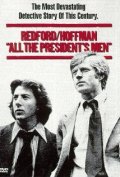 The essential celebration of investigative reporting, starring Robert Redford and Dustin Hoffman as Bob Woodward and Carl Bernstein. The film dramatizes the real-life reporting of the Washington Post reporters that led to the downfall of President Nixon. Screenwriter William Goldman wrote the best line, uttered by Hal Holbrook, playing “Deep Throat” in a dark and empty parking garage: “Follow the money.”
 television newsroom, the main characters manage to address real journalistic issues without preachy speeches. Written by James L. Brooks, no relation to Albert. (who also wrote the newsroom-based TV shows Mary Tyler Moore and Lou Grant).


 Prof Chris Daly's Blog