Category Archives: journalism history

Million+ historic photos put online

By Christopher B. Daly 

Don’t miss: if you are a historian, researcher, or dedicated browser, visit the new flickr site of The British Library. The library recently made news by posting more than 1 million historic images — all digitized, all in the public domain, and all available for use now. Plus, there’s metadata for each one. The site is not as easy to navigate (it’s actually a bit overwhelming) as the U.S. Library of Congress site for the Prints & Photographs Division, but I’m hardly complaining.

It’s also based on flickr, so you need to have an account to take full advantage. (I tried to re-activate my old Yahoo account — Yahoo bought flickr a few years ago — but it was so cumbersome and annoying that I gave up, for now. I got these images by dragging them in from news sites.)

British Library Flickr


blflickr5_0

Leave a comment

Filed under history, journalism history, Photography, Photojournalism, Uncategorized

Dasani’s story — a team effort

By Christopher B. Daly 

By now, most readers of the NYTimes have discovered Dasani, the remarkable girl whose story epitomizes the plight of the 22,000+ homeless in New York City. Kudos to investigative reporter Andrea Elliott and photographer Ruth Fremson.

BTW, the online version has extras. Although the series “Reasons to Dream” did not get the full TimesSnow Fall” treatment, it still looks better online. There are big, gorgeous, poignant, full-color pictures of

Dasani at play. NYT/Ruth Fremson

Dasani at play.
NYT/Ruth Fremson

Dasani and her world, and some videos too.

But not to be missed is this: The full credits at the bottom of the last installment indicate how much institutional heft counts in a series like this.

Here is a brief summary of how they went about it:

SUMMARY OF REPORTING

Andrea Elliott, an investigative reporter with The New York Times, began following Dasani and her family in September 2012. The series is written in the present tense, based on real-time reporting by Ms. Elliott and Ruth Fremson, a photographer with The Times, both of whom used audio and video tools.

Throughout the year, Dasani’s family also documented their lives in video dispatches from the Auburn Family Residence, which does not allow visitors beyond the lobby. Ms. Elliott and Ms. Fremson gained access to the shelter to record conditions there.

The reporting also drew from court documents, city and state inspection reports, police records, the family’s case files at city agencies and dozens of interviews with shelter residents. Most scenes were reported firsthand; others were reconstructed based on interviews and video and audio recordings.

The Times is withholding the last names of Dasani and her siblings to protect their identities. The nicknames of some of Dasani’s siblings are used in place of their birth names.


And here is a long list of people who pitched in:

CREDITS

By Andrea Elliott
Photographs by Ruth Fremson

Design, graphics and production by Troy Griggs, Jon Huang, Meghan Louttit, Jacky Myint, John Niedermeyer, David Nolen, Graham Roberts, Mark Suppes, Archie Tse, Tim Wallace and Josh Williams.

Reporting was contributed by Rebecca R. Ruiz, Joseph Goldstein and Ruth Fremson, and research by Ms. Ruiz, Joseph Burgess, Alain Delaquérière and Ramsey Merritt.


By my count, that’s 18 people — not to mention all the editors who had a hand (who should also be credited/held accountable). And, of course, Andrea Elliott has done basically nothing else for 15 months — so that in itself is a big commitment.

Plus, the Times is providing the “source notes” (like scholarly footnotes) so that others can confirm or pursue further info. This is a model practice for many other stories.

That’s how it’s done.


Leave a comment

Filed under Journalism, journalism history, New York Times

NY court issues a major ruling for press freedom

By Christopher B. Daly 

Invoking journalism history, New York state’s highest court has ruled that under New York’s state constitution and the state’s version of a “shield law,” a journalist cannot be forced to divulge the identity of a confidential source — even if another U.S. state is trying to extract the information. The ruling, issued Tuesday, was a major victory for press freedom, and not just in New York. But it will have its greatest impact in New York, where so much of the news media operate, because now the highest court in that state has ruled that New York’s own laws grant complete immunity to journalists from any attempts to force them to reveal their sources. Since that court is the ultimate interpreter of the New York state constitution, it is a landmark.

It remains to be seen if a New York journalist can use this new ruling as a shield against federal prosecutors. Federal courts are not obligated to follow the New York state court ruling, of course, but any person who gains more rights under a state constitution or law does not forfeit those rights just because federal law has not caught up. The U.S. Constitution and federal laws establish legal minimums that must be afforded to all Americans, but they do not establish maximums. When it comes to our rights, federal law is a floor, not a ceiling.

Briefly, the case involves Jana Winter, a reporter for FoxNews.com. She went to Colorado in 2012 to report on the horrific mass shooting at a movie theater in Aurora. Expecting a media frenzy, the local Colorado court imposed a “gag order” — that is, a pre-trial order that tries to limit disclosures to the news media in advance of a trial. During the investigation into the crime, police got hold of a notebook that belonged to the suspect, James Holmes, which he had shared with his psychiatrist. Someone divulged the existence of the notebook to the reporter, along with a summary or description of its contents. Colorado authorities consider that a breach of the gag order, and they are stamping their feet to see who disobeyed. All the cops in Colorado say “it wasn’t me,” so the authorities are turning to the journalist and demanding that she rat out her source so they can punish that person. For that, they want to make her travel 2,000 miles to violate a promise she made to her source(s). If she stands firm and refuses to name names, she goes to jail. If she gives them up, she is ruined as a reporter, and the whole enterprise of news-gathering is undermined because all sources will doubt all reporters when they promise confidentiality. [Winter has absolutely no information that is exclusive to her and based on confidential sources that has any bearing on the commission of the crime itself. All she knows about is which Colorado cop (or cops) violated the gag order. Please.]

Many, many courts would rule against the journalist in these circumstances. Judges normally sympathize with their fellow judges and see things their way. Judges normally do not like to see anyone violate their rulings and get away with it. Judges like the idea that what they say, goes. All of which makes this ruling even more remarkable. It was a win-win: the court expanded legal protections for reporters, and it relied in part on a famous case involving an 18th-century partisan journalist to do so.

Here are versions by the New York Times (which should have put this on page 1, not inside the business section) The New Yorker, TVNewser, and Poynter. (Even Fox News had to come down on the side of press freedom in this case.)

Here is the text of the decision, written by Judge Victoria Graffeo. Among the stories I saw, only Poynter actually linked to the decision, which is disappointing — hey, people, there’s this thing called the Internet; let’s take advantage of it. Besides, the decision is well worth reading in full. It is a pro-freedom primer on the history of the freedom to gather news. Here are some key excerpts:

New York has a long tradition, with roots dating back to the colonial era, of providing the utmost protection of freedom of the press. Our recognition of the importance of safeguarding those who provide information as part of the newsgathering function can be traced to the case of “John Peter Zenger who . . . was prosecuted for publishing articles critical of the New York colonial Governor after he refused to disclose his source” (Matter of Beach v Shanley, 62 NY2d 241, 255 [1984] [Wachtler concurrence]). A jury comprised of colonial New Yorkers refused to convict Zenger — an action widely viewed as one of the first instances when the connection between the protection of anonymous sources and the maintenance of a free press was recognized in the new world. In acknowledging the critical role that the press would play in our democratic society, New York became a hospitable environment for journalists and other purveyors of the written word, leading the burgeoning publishing industry to establish a home in our state during the early years of our nation’s history.

That is an important point: New York did indeed become the nation’s media capital. I doubt that the New York State Constitution was much of a causal factor (compared to all the economic ones), but the fact that the industry is now centered in New York City means that many, many journalists enjoy the favored status granted by this new ruling. And the ruling holds that a New York-based journalist is protected by New York’s constitution even when he or she roams into another state or online to do reporting. What remains to be seen is what might happen when a New York-based journalist attempts to use the new ruling in the Winter case against a federal prosecutor who comes around with a subpoena seeking to force a journalist to name a confidential source in a federal investigation or trial.

Judge Graffeo wrote that the protections offered to journalists in New York are ancient, robust, and multiply determined.

To begin with, she wrote, there is the matter of common law. Before New York was even a state, the jury in the 1735 image-crown-zenger-tryal-pageseditious libel case against the printer John Peter Zenger  established through its not-guilty verdict that Zenger did not have to reveal the identity of the author of the offending article. The Zenger case is usually cited as a precedent for the idea that truth is a valid defense in libel cases, but if Judge Graffeo finds the germ of a “shield law” in there, so be it. (For more on Zenger, see “Covering America,” chap 1)
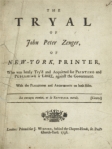
 

Later, New York citizens wrote and ratified a state constitution. It says, in part:

“Every citizen may freely speak, write and
publish his or her sentiments on all subjects
. . . and no law shall be passed to restrain
or abridge the liberty of speech or of the
press” (NY Const, art I, § 8).

In her reading, that language from 1831 constitutes a shield for journalists all by itself, saying it is more expansive than even the First Amendment to the U.S. Constitution and thus affords more protections to New Yorkers than other Americans enjoy under the First Amendment alone.

In addition, Graffeo cites New York state law. In 1970, the New York Legislature adopted a “shield law” that includes an absolute legal privilege for journalists who want to protect the identity of their confidential sources. She said that after considering the views of the likes of Walter Cronkite and Mike Wallace, the Legislature decided to throw its weight into the balance on the side of reporters. The relevant part of that law says:

no professional journalist or newscaster . . .
shall be adjudged in contempt by any court in
connection with any civil or criminal
proceeding . . . for refusing or failing to
disclose any news obtained or received in
confidence or the identity of the source of
any such news coming into such person’s
possession in the course of gathering or
obtaining news for publication

So, Judge Graffeo concludes, journalists in New York are protected by common law, constitutional law, and statutory law. Now, how hard was that? Why do so many judges fail to understand this reasoning? The ruling holds that all these sources of protection for journalists combine to provide evidence of a clear “public policy” in New York state to encourage the practice of journalism within its borders.

But Judge Graffeo was not finished. She noted that the testimony of the journalists that the New York legislators relied upon arose from another case — that of NYTimes reporter Earl Caldwell. In a footnote, she observed

The affidavits were prepared in connection with a motion
to quash a subpoena in a case that was pending when the Shield
Law was under consideration by the Legislature and which involved
an investigative reporter from the New York Times who was
subpoenaed by a Federal Grand Jury in California to testify
concerning knowledge he obtained about the Black Panther
organization. Two lower courts held that the First Amendment
protected the reporter from being compelled to reveal his sources
or disclose information provided to him in confidence, differing
only on whether the reporter could avoid appearing at the Grand
Jury altogether (Caldwell v United States, 434 F2d 1081 [9th Cir
1970] [reporter could not be compelled to appear at Grand Jury],
vacating 311 F Supp 358 [ND Cal 1970][although required to appear
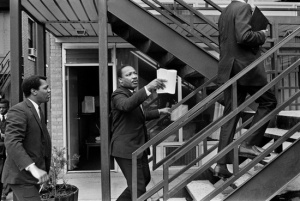
Caldwell, left, with MLK in Memphis, 1968.

Caldwell, left, with MLK in Memphis, 1968.

at Grand Jury, reporter was entitled to protective order
precluding questioning concerning confidential sources or

information]). However, deciding the case with Branzburg v Hayes
(408 US 665 [1972]), the United States Supreme Court disagreed,
holding that the reporter could not rely on the First Amendment
to avoid appearing and giving evidence in response to a Grand
Jury subpoena.

That was a regrettable decision that journalists lost by an eyelash, only because five judges on the U.S. Supreme Court did not understand the U.S. Constitution as well as these New York judges understand the New York constitution. For more on Caldwell, see Covering America, chap 12. For more on the Supreme Court’s ruling, see earlier blog posts here and here.)


The new ruling also sends a message to prosecutors in all the other states: don’t bother going on fishing expeditions. If you send us requests to compel a New York journalist to appear in your state’s courts, those will be denied. The opinion says New York will not tolerate harassment of journalists by subpoenaing them to show up halfway across the country just to assert their immunity under the New York shield law. That would be terribly disruptive to their work. Just leave them alone, the court said. Quoting an earlier case, the ruling states:

“Journalists should be spending their time in newsrooms, not in courtrooms as participants in the litigation process”

It’s thrilling to read a judicial opinion written by a judge who actually understands the meaning of a free press and appreciates its value to society. It’s rare — and therefore, I suppose, all the more thrilling.

0      0       0       0       0       0


Finally, a hat-tip to the judge, Victoria Graffeo, the former solicitor general for the state of New York who was appointed to the Court of Appeals by Republican Gov. George Pataki to a 14-year term in 2000. No liberal, Graffeo was expected to be a moderate conservative voice on that important bench. Labels aside, she gets credit for getting the point.

1 Comment

Filed under blogging, broadcasting, Covering America, First Amendment, Fox News, Journalism, journalism history, leaks, media, New York Times, publishing, Supreme Court

New York mag cuts back on print edition

By Christopher B. Daly 

[Update: Here is a glass-half-full response to Carr, which I think makes a lot of sense.]

David Carr uses his NYTimes “Media Equation” column today to describe the changes going on at New York magazine under its phenomenally successful current editor, Adam Moss. The magazine is scaling back its print version from nearly weekly now to

“You can’t help but get wistful about it,” said Adam Moss, the editor in chief of New York. Photo: Fred R. Conrad/NYT

“You can’t help but get wistful about it,” said Adam Moss, the editor in chief of New York.
Photo: Fred R. Conrad/NYT

every other week. The culprit: the high cost of printing and distribution versus the dropping value of print advertising.

The good news: the printing cutback is being done in service of strengthening the online version, which is the magazine’s future.

Meanwhile, New York is actually thriving by some measures: the website is going gangbusters and is considered must reading among younger “readers” in Manhattan and Brooklyn (as well as aspirational districts around the rest of the world).

As a supplement to Carr’s column, I am offering a couple of excerpts from my book Covering America that touch on the early days of New York, under its founding editor, Clay Felker:

. . . Another reason for the success of the New Journalism was institutional. Like the innovators of any new creative movement, the practitioners of this hybrid form of journalism needed patrons. They did not find them among the lords of the newsroom, the editors of America’s daily newspapers, who mostly thought these writers had lost their bearings (and maybe their sanity). Instead the New Journalists found sympathy, encouragement, expense accounts, and pretty good pay at a handful of magazines with extraordinary editors. One of the most influential was Clay Felker, who edited the Sunday supplement published by the Herald Tribune. It was an incubator for the talents of the young Tom Wolfe and a columnist named Jimmy Breslin. Felker, who had previously worked at Esquire, stayed at the Trib, cultivating good new writers—such as Gloria Steinem—wherever he could find them, until the newspaper folded in 1967. Then he took the nameplate of the Trib’s Sunday magazine, New York, and turned it into the prototype “city magazine.” In the early days, New York magazine also served as one of the unofficial headquarters of the New Journalism. A second clubhouse was not far away in Manhattan, at the offices of Esquire magazine. Under editor Harold Hayes, Esquire published many of the foundational pieces of the New Journalism, including Norman Mailer’s 1960 meditation on JFK, “Superman Comes to the Supermart,” and Gay Talese’s famous profiles of Joe DiMaggio and Frank Sinatra. Elsewhere in Manhattan, literary agents and editors at book publishing houses were starting to talk to some of these hotshot young writers, and some of those journalists quit their newspaper jobs to become full-time writers. . . 

Here’s another excerpt, about Felker and Gloria Steinem:

. . . One of the most prominent and influential women who changed the perception of feminism was a journalist and political activist who helped found a magazine that captured the new zeitgeist—Gloria Steinem. With obvious talent, intelligence, and (as was always remarked) good looks, Steinem became a highly visible figure who helped to lead both a magazine and a movement.

After a difficult childhood in Toledo, where she saw firsthand the vulnerability of women in traditional roles after her father left her mother, Steinem went to Smith College. Following her graduation in 1956, she traveled around India before landing in New York City, where she began to work as a freelance magazine writer. She worked hard and took all kinds of assignments. In an effort worthy of Nellie Bly, Steinem even went undercover for an article about working as a Playboy bunny. She thrived as a freelance writer, and she became a rising star. But still, as a “girl reporter,” she knew there were limits. (The low point: a piece for the New York Times magazine about textured stockings.) Over the course of the decade, even as she kept writing, Steinem became an activist in the civil rights, antiwar, and farm workers’ movements.

She found a congenial base at New York magazine, where editor Clay Felker allowed Steinem to tackle bigger and better assignments. Eventually she wrote the magazine’s “City Politic” column, which meant she was covering national politics and all the major issues. She liked Felker, and he advanced her career immeasurably, but in the end they came to an impasse: he was interested in pro-feminist articles only if they were paired with articles from an opposing point of view. “That’s why I gradually stopped writing for New York,” Steinem later explained. “It was just too painful to be only able to do it in the context of two women fighting.” . . .

1 Comment

Filed under Journalism, journalism history, Uncategorized

Ted Williams and his feud with baseball writers

By Christopher B. Daly

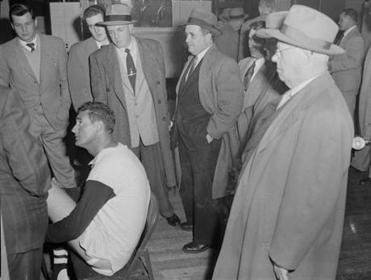
The Boston Globe is running a series of excerpts from a new book about Ted Williams, written by Ben Bradlee Jr., a former Globe editor and son of the great Washington Post editor. Today’s installment focuses on Ted’s testy relationship with the press corps, particularly the large gang of baseball writers who worked for the Boston dailies in the 1940s and 50s. Fun fact: Boston had nine daily newspapers back then, with separate sports staffs. Here’s the line-up:

Between 1939 and 1960, the years spanning Ted’s career with the Red Sox, Boston had eight major newspapers, or nine if one counted both the morning and evening editions of The Boston Globe, which had separate staffs and circulations. The morning papers were the Post, the Herald, the Record, the Daily Globe and the Christian Science Monitor. The evening journals were the American, the Transcript, the Traveler, and the Evening Globe. The Post and the Record dominated the city in 1940 with circulations of 369,000 and 329,000 respectively.

Here’s an excerpt from the excerpt:

In the ’30s, ’40s, and ’50s, major league baseball was by far the dominant sport in the country, and would often take up a third of the front page of newspapers in Boston, New York, Chicago, and Philadelphia. To be a baseball writer assigned to cover one of the big league teams was a highly prized assignment.

The writers wore suits. On long road trips, they’d play poker on the trains with the players and among themselves. Some great yarns came out of those trips, but in the fraternal milieu, it was understood that the stories would stay in-house, never to turn up in print.

On average, the writers were a generation-or-more older than the players they covered. Before World War II, the vast majority had not gone to college, and in the ’40s, their salaries ranged between $5,000 and $7,000 a year. But you couldn’t beat the perks. In what seems a quaint anachronism today, it was common practice at least into the ’60s for the ball clubs to pay all the expenses of the writers when the teams traveled. The reporters would stay at the best hotels, order from room service, and eat at fine restaurants. Moreover, they spent six weeks in Florida for Spring Training on the teams’ tab as well. In return for such largesse, the clubs of course expected, even demanded, favorable coverage, and they received it. On the rare occasions they did not, the teams would not hesitate to assert their economic leverage over the papers.

Does any sportswriter still wear a suit? (or a fedora?)

Ted Williams surrounded by the gentlemen of the press.  (via Boston Globe)

Ted Williams surrounded by the gentlemen of the press.
(via Boston Globe)


2 Comments

Filed under Boston, Journalism, journalism history, Red Sox

White House photogs demand access

And they should get it (much as I would like to side with B.U. alum Pete Souza, the official White House photographer).

Here’s a version.

sub-photographers-1-articleInline


photographers-2-articleInline

Leave a comment

Filed under Journalism, journalism history, New York Times, Obama, Photography, Photojournalism, Politics, President Obama, publishing

JFK Remembered

By Christopher B. Daly 

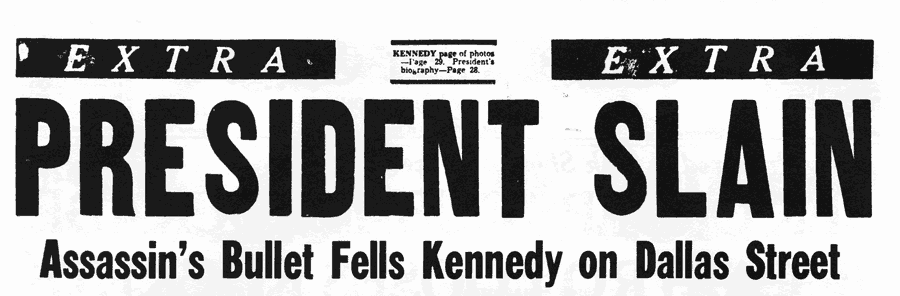
Among the many journalistic efforts to commemorate the assassination of John F. Kennedy on its 50th anniversary, one of the best is a production by JFK’s hometown newspaper, The Boston Globe. In its print editions of today, the Globe wrapped the day’s regular edition in a special four-page supplement made up on reproductions of the paper’s actual pages in 1963.

In the online edition, the Globe has links to an interactive graphic. The graphic consists of images of historic front pages from Nov. 22 to Nov. 29, 1963. If you scroll over articles, you can click through to the full text of each. Beautiful, powerful, useful.

112263-evening1_01

Some highlights from that week:

–the old Globe, like most American newspapers, was wider then, running to eight columns wide (instead of today’s standard of 6)

–the Globe ran ads on page 1, which was commonplace until the glory days of the 1970s and 1980s, when a lot of U.S. papers were profitable enough to forego those ads as a point of pride.

–the paper featured a lot of wire-service copy, mostly from AP but including the famous “scoop” by UPI’s Merriman Smith on the assassination. Here’s the lead:

DALLAS (UPI) –President Kennedy was assassinated here today.

A single shot through the right temple took the life of the 46-year-old Chief Executive. He was shot as he rode in an open car in downtown Dallas, waving and smiling to a crowd of 250,000.

Smith beat out the AP by using the car phone in a limousine in the motorcade to dictate his lead, then bending over the phone to physically block it from the AP reporter, who pummeled Smith for access to the phone but could not get his hands on it.

–In the Nov. 23 edition of the Globe, the front page features stories by UPI’s Helen Thomas, who only recently gave up covering the White House, and by Mary McGrory, whose son Brian now edits the Globe.

–On the 28th, the Globe ran a page 1 column by Walter Lippmann, the great mid-century syndicated columnist. True to form, Lippmann held forth in his most olympian mode, saying little but sounding momentous.


Leave a comment

Filed under Boston, Journalism, journalism history

Preserving video news (before it’s too late)

By Christopher B. Daly

Three cheers for WGBH-Tv in Boston and the Library of Congress, which are teaming up to preserve a significant trove of television news footage from public TV. According to the Boston Globe, the project will also result in digitizing the material and putting it online, where everyone will have access.

In researching my book, Covering America, on the history of journalism in America, I found the most difficult kind of historical material to get hold of was radio and television. In general, broadcasters have done a terrible job of preserving their original news programs (and you can just about forget about transcripts), and they are terribly ephemeral. If something is not done, a big chunk of US history will just be lost.

Thanks to the Corporation for Public Broadcasting for under-writing all this.

Leave a comment

Filed under broadcasting, Journalism, journalism history

Doris Kearns Goodwin turns to journalism history

By Christopher B. Daly 

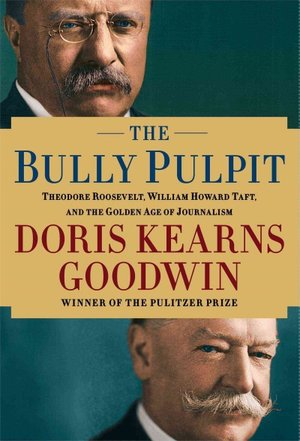
In her newest book, presidential historian Doris Kearns Goodwin takes a turn toward the history of journalism. Actually, she is working at the intersection of Presidential History and Journalism History in The Bully Pulpit: TR, Taft and the Golden Age of Journalism. In any case, I am happy to welcome her to the ranks of journalism 9781416547860_custom-cbfa6372bc5fbe63f5a575b089d8f201e92d1c0b-s2-c85historians, and I am always glad to see any professional historian from another specialty stray into journalism’s past.

I am also intrigued by her discovery of a “golden age” in the journalism at the turn of the last century. It was certainly a time of great achievement, thanks to the “Muckrakers” who investigated so much wrong-doing, corruption, and squalor. I look forward to reading the book and seeing why she considers that period so wonderful. (Personally, I would nominate the period from about 1968-74: rise of rock journalism/ heyday of “new journalism”/ Pentagon Papers / Watergate. Your nomination?)

Until then, here’s an interview Goodwin did recently with NPR.

One stunning excerpt: Goodwin recounts that the great muckraking journalist Lincoln Steffens decided to examine the performance of the U.S. government. So, Steffens wrote to the head of the outfit — none other than President Theodore Roosevelt.

“Mr. President, I want to investigate corruption in the federal government.”

According to Goodwin, TR’s reply was quite a stunner. He gave Steffens a calling card that he could use in his reporting and present to government officials as needed, which read, in part:

“Please tell Mr. Lincoln Steffens anything whatever about the running of the government that you know (not incompatible with the public interest) and provided only that you tell him the truth.”

Now, that‘s the way to treat a reporter! Just tell the truth.


1 Comment

Filed under history, Journalism, journalism history, Politics

David Carr on the media: Content for sale

By Christopher B. Daly 

In his latest weekly column, David Carr identifies a growing trend: the paid creation of “content” (formerly known as stories, pieces, etc.) for clients who want to “tell a story” that also happens to advance their commercial interests. He highlights a leader in this new mutation, a website called Contently, which functions as a kind of dating service for journalists and companies. If you visit

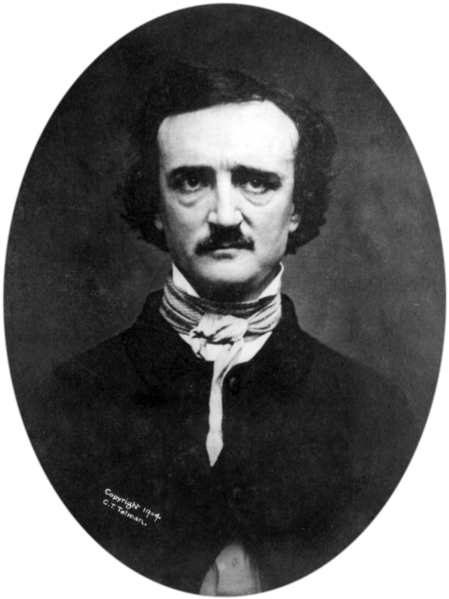
Poe (minus the sunglasses)

Poe (minus the sunglasses)

the homepage, which features a full-screen background image of Edgar Allan Poe in aviator sunglasses, you are invited to proceed through one of two portals: “Journalist” or “Company.” In the “manifesto,” the founders explain their win-win proposition:

Those who tell and promote the best stories—in the best ways—will increase in reputation and trust, fans and influence. Journalists will build their personal brands. Businesses will make a difference. Media companies will thrive.

In writing about this phenomenon, Carr shrewdly sidesteps a category problem: what is this kind of material, exactly?

It’s not journalism, that’s for sure. It’s not journalism because it is not produced by independent people who are working for the good of their audience. They are hired guns working for the good of whoever is paying them.

It’s not P.R., exactly, either, because it appears in disguise — sporting a trenchcoat and a fedora borrowed (or stolen, if you will) from journalism. The reason to look and feel like journalism, of course, is to try to cadge some of journalism’s credibility, to bolster the sales pitch buried in these messages. I suppose it is the inevitable result of an over-supply of writers and the ceaseless demand for material that can fool people into buying stuff.

I am inclined to say “Judge not” when anybody can find a way to get a paycheck into a writer’s hands, but I have to say that I don’t have a good feeling about how this story ends.


1 Comment

Filed under Journalism, journalism history, media, New York Times