Category Archives: journalism history

The journalism battle fought on D-Day between Hemingway and Gellhorn

D-DAY: Hemingway and Gellhorn at War
By Christopher B. Daly

. . . In 1944, as the world war reached a crescendo, so did the marital conflict between Ernest Hemingway and his third wife, the journalist Martha Gellhorn. “Marty” was engaged in covering the Allied campaign to liberate Italy, but she still wanted to find some role for Hemingway. She even suggested that he might pitch a series to Collier’s, the popular national weekly magazine. If it worked, she knew full well that he would outrank her among the magazine’s correspondents; she also knew that each magazine got only one slot to cover the front lines, so it might cost her. Still, Hemingway balked and stayed in Havana – drinking to the point where he often started with a scotch around 10 a.m. and ended the night by sleeping in his clothes, on the floor. “My crime really,” Marty concluded, “was to have been at war when he had not.”

There are differing versions of exactly what happened next. One view is that Marty offered Hem the chance to take her place as Collier’s front-line war reporter. The other version is that he went around her back to editors at Collier’s and talked them into letting him big-foot her off the momentous story. From her letters it appears that Marty regretted the switch, and she certainly came to resent Hem for it. To make matter worse, she called in a favor with her writer friend Roald Dahl to arrange for the RAF to fly both herself and Hem across the Atlantic. As it turns out, Hem got his seat all right, and then he informed Marty that the RAF was not taking any women on such dangerous flights (even though the actress Gertrude Lawrence was somehow given a seat on Hem’s flight). Bumped from flying, Marty had to go by ship. She was the only woman and the only civilian on a Norwegian freighter full of explosives crossing the North Atlantic. As such, her ship was a prime target for Nazi submarines prowling the ocean.

At this point, the marriage was pretty nearly shot. During the long voyage, Marty poured her heart out in a letter to an old friend.


He is a good man, which is vitally important. He is however bad for me, sadly enough, or maybe wrong for me is the word; and I am wrong for him. . . . As far as I am concerned it is all over, it will never work between us again. There may be miracles but I doubt it, I have never believed in them. . . . I dread the time ahead, the amputating time, I do not see how to manage it.


Hemingway arrived in London well ahead of Marty in that fateful spring of 1944, and he was soon up to his old tricks. Thanks to the writer Irwin Shaw, Hem was introduced to Mary Welsh, an attractive American journalist (who also happened to be somewhat married). They were soon carousing around London, as Hemingway enjoyed getting to know the 36-year-old Mary, who clearly adored him. (As Mary wrote: “I wanted him to be the Master, to be stronger and cleverer than I; to remember constantly how big he was and how small I was.”) On May 25, while Gellhorn was still at sea, Hemingway attended a very boozy party in London hosted by the photographer Robert Capa. Hem got a ride home, but the driver crashed the car into a water tower, and Hemingway was thrown against the windshield, resulting in another of his many traumatic brain injuries. Among his hospital visitors was Mary Welsh of TIME magazine, who brought daffodils.

When Marty arrived in London, she quickly sized up the situation and decided she had really had it with Hem’s drinking, his lying, his cheating, and his bullying. She would have demanded a divorce right then, but she felt bad for the fifty-seven stitches etched into Hem’s head and so she waited.

All that spring, the Allies were planning their big push from England into France. All of London, indeed all of England, was abuzz about the impending invasion, the largest amphibious assault in world history. Everyone knew it was imminent, but no one knew exactly when or where. The details were top secret. Throughout May and early June, soldiers, officers, journalists, and others all knew that something epic was coming, but much still depended on the tides and the weather. In the final days, journalists were quietly tapped by military handlers and vanished, one by one, into the staging areas.

The Allied public relations staff assigned Hem to cross the Channel on a big Navy ship named the Dorothea Dix; from there he would be lowered into a landing craft skippered by Lieutenant (j.g.) Robert Anderson of Roanoke, Virginia.

In the story that he wrote for Collier’s, Hemingway behaves (and writes) as if he outranks Anderson – offering to steer the ship and, if needed, command the whole invasion. As usual, Hem makes himself the main protagonist of his story, if not the hero. Mostly, they end up bobbing around in their landing craft, searching for the intended landing spot.

The landing craft, also known as Higgins boats, were 36 feet long, with sides made of plywood, equipped with an engine in the rear and a bow that could drop open to form a ramp. The boats could be driven into shallow water or right onto a beach. They could be used to sweep for mines, to transport vehicles and explosives, or to carry loads of soldiers. The U.S. Navy purchased thousands of them and used them to storm beaches from Normandy to Sicily to Iwo Jima.

Each boat could carry about three dozen soldiers who, with the bow lowered, could charge down the ramp and into action. Ideally, the men could exit swiftly, the skipper could throw it into reverse, and clear the area for the next craft to hit the beach. In practice, the boats tended to bounce around badly in choppy seas or high surf, and the wooden sides could not stop enemy fire. As a result, the soldiers on board were vulnerable. Many times, the ship’s bottom would be shin-deep with a mix of seawater, blood, and vomit.
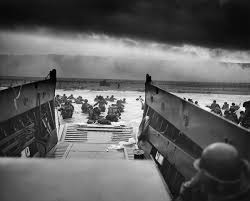


This photo captioned “Into the Jaws of Death,” taken on D-Day by U.S. Coast Guard photographer Robert F. Sargent, provides the soldier’s view of the invasion from a Higgins boat.


In Hemingway’s account, we see him using his own binoculars, conferring with the skipper like a peer, offering advice to Anderson, pointing out landmarks, and trying to guide the boat to a section of Omaha Beach code-named Fox Green. Thousands of words later, the landing craft proceeds near the beach and disgorges its platoon of fighting men. Hem, who stayed on board, wrote a deeply misleading finale to his story. He notes that the Germans kept firing their antitank guns and mortars from the cliffs above the beach. But the Americans kept coming. “It had been a frontal assault in broad daylight, against a mined beach defended by all the obstacles military ingenuity could devise,” he wrote in his final paragraph. “But every boat . . . had landed her troops and cargo. No boat was lost through bad seamanship. All that were lost were lost by enemy action. And we had taken the beach.”
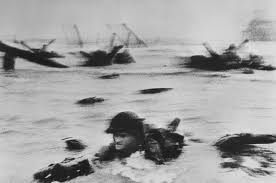


U.S. troops struggle to get ashore during the invasion of Normandy on D-Day, June 6, 1944.

Photo by Robert Capa for LIFE magazine. 


When Hemingway wrote that “we” had taken the beach, he could not have meant that he was among the successful invaders, because he knew damn well that he had never left the boat nor gone ashore. To be fair, though, it was a common practice among U.S. journalists during World War II to say that “we” were doing this or that. So close was the identification of the press corps with the military corps, and so unified was the commitment to victory, that the usage became standard and drew almost no notice. But Hemingway’s last statement – “We had taken the beach” – was both true and misleading. It’s true that American troops had taken the beach, but by using the pronoun “we,” Hem was implying that he was among the “we” who had taken the beach. Actually, in this case they took the beach. In fact, Hem did not step foot on an invasion beach that day or any other. He made it back to London the same day and spent the night at the Dorchester Hotel in Mayfair. He did not get to France until weeks later, safe and dry. Then, thanks to the general he was attached to, Hemingway was provided with a captured German motorcycle that had a sidecar, plus a Mercedes convertible with his own driver.


As for Gellhorn, she was furious at Hemingway, enraged by his boorishness. As any journalist knows, the decent thing for him to have done would have been to find another magazine to write about D-Day for and to have left Gellhorn as the top correspondent at Collier’s. But no. He had to take her slot, then stash her at sea for three weeks while he partied in London and started romancing a new woman.

Marty was also angry at the last-minute restrictions imposed by the Allied public relations command. They decreed that no women would be allowed to report on the first day of the invasion. Instead, all the women reporters were shepherded into a giant press briefing center in London, along with any male reporters who were left behind; they were all locked in, and all fed the same official information about the invasion from Public Relations Officers.

As soon as the doors opened, Marty made her own way to the story. Wearing her standard-issue correspondent’s uniform, she hitched a ride to one of the embarkation ports in southern England. There, she wrote a story on June 6 about the first batches of German prisoners to reach England.

The next day, she found a hospital ship getting ready to cross the Channel to the invasion beaches. She talked her way on board, then locked herself in an empty bathroom and hid there until the ship was under way. Painted white, the ship was under the command of the English merchant marine, not the U.S. Navy, so she was allowed to move about freely, observe the action, and interview nurses, doctors, patients, and prisoners.

The result was a magnificent piece of reporting. She began by noting that the white medical ship stood out in the sea of grey military craft “like a sitting pigeon” and that “there was not so much as a pistol on board in the way of armament.” Carefully, the ship picked a way through lanes in the sea that had been cleared of German mines. “Then we saw the coast of France and suddenly we were in the midst of the armada of the invasion.” Noting the stunning number of ships, planes, and barrage balloons (“looking like comic toy elephants”), Gellhorn described the continuing booming of naval weapons all around.

Then, the first of the wounded began to arrive. A wooden box, “looking like a lidless coffin,” was lowered overboard to pick up the wounded from the smaller craft known as “water ambulances.” Those little ships were beginning to scour the surf and the beaches for wounded combatants to bring them to the large floating hospital. As it turned out, the first soldier was German. No matter. The medical team went right to work. Marty described horrible injuries suffered by U.S. soldiers – gaping untreated wounds, shattered bones, missing body parts.

Around sunset, she went ashore at “Easy Red” beach with a medical team and set to work as a stretcher-bearer. She was now the only woman among the invading force of hundreds of thousands of men. Staying in the narrow, marked lanes that had been cleared of mines, Gellhorn pitched in and helped move bodies in the dark to pickup spots. All the while, German sniper fire and the occasional anti-aircraft battery kept up the roar of war. “Everyone agreed that the beach was a stinker and it would be a great pleasure to get the hell out of here sometime,” she wrote.

Eventually, she boarded a landing craft loaded with wounded that was heading back out to the hospital ship, anchored in deeper water. She looked back at the beach, where bonfires were roaring. “The beach, in this light, looked empty of human life, cluttered with dark square shapes of tanks and trucks and jeeps and ammunition boxes and all the motley equipment of war. It looked like a vast uncanny black-and-red flaring salvage dump, whereas once upon a time people actually went swimming here for pleasure.”

Under fire, she had gone ashore and served as an eye-witness to history from one of the invasion beaches – something her famous husband had not done. Marty had beaten Hem to France.

Six months later, they were divorced.  . . .


Christopher B. Daly is a journalist, historian, educator, and award-winning author. This story is adapted from his current work-in-progress, a book titled The Democratic Art, (UMass Press 2025) which is a narrative history of the role played by journalism in the careers of America’s top literary and visual artists.


[All quotations in this article come from Hemingway’s story “Voyage to Victory,” which can be found in By-Line: Ernest Hemingway, or from Gellhorn’s story “The First Hospital Ship,” which can be found in The Face of War.]  


Leave a comment

Filed under D-Day, democracy, Gellhorn, Hemingway, Journalism, journalism history, Uncategorized

On Reading Walt Whitman

By Christopher B. Daly 

I have been reading American literature for most of my life, but I had never read Walt Whitman’s masterpiece, Leaves of Grass, out loud. Until yesterday.

I took a couple of hours and ran through the whole 1855 version of the great, sprawling poem. Whitman himself said his poem was meant to be read aloud, and I now see why.  So many wonders leap out when the poem is read aloud — strong, varied rhythms; slashing sarcasm; a character/narrator called Walt Whitman passing in and out; a cast of hundreds; poems within poems; a poke-your-ribs sense of humor; a deep respect for the many people in 19th C. America who were neither free nor equal.

I am working on a new book in which Whitman, who worked as a journalist when he was a young man, will feature in the first chapter. As I work on Whitman, I plan to post more of his great, very contemporary work.

For today, I want to highlight one such passage. This is part of the section of Leaves of Grass that would, in later editions, acquire the title “I Sing the Body Electric”:

The man’s body is sacred and the woman’s body is sacred 

    .   .   .   .    it is no matter who,

Is it a slave? Is it one of the dullfaced immigrants just landed 

on the wharf?

Each belongs here or anywhere just as much as the welloff

   .   .   .   . just as much as you,

Each has his or her place in the procession.

All is a procession,

The universe is a procession with measured and beautiful motion. 

(Leaves of Grass, Library of America edition, p. 122)


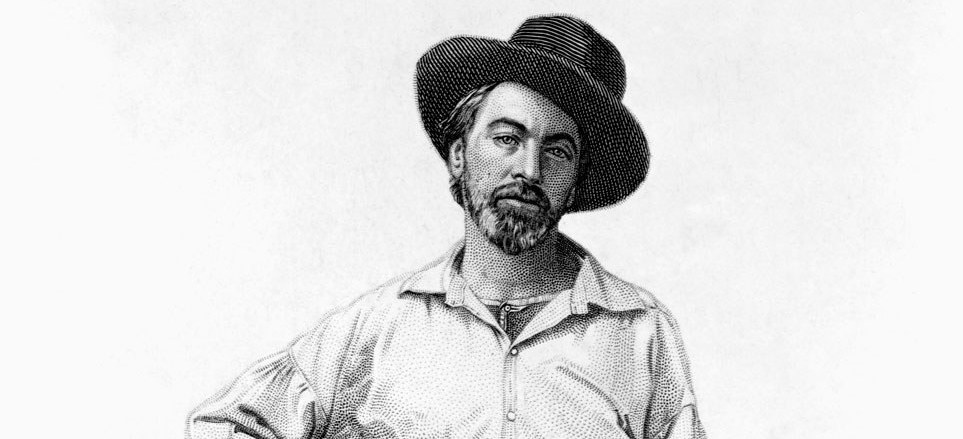
whitman-nyc-lead

Walt Whitman, detail from the frontspiece to the 1855 edition. Engraving by Hollyer.


Leave a comment

Filed under journalism history, Uncategorized, Walt Whitman

10 Ways the Media Could Improve Coverage of Trump (but probably won’t)

By Christopher B. Daly

After two years in office, President Trump has proven that he has one great skill: the ability to dominate news coverage. Not only does he generate a torrent of news, he has become a great manipulator of public opinion – distracting us, distorting facts, distributing conspiracy theories, and flat-out dissembling.

That approach to news-making presents novel challenges to the press corps. Those journalists who operate in good faith and take an empirical approach to the job should maxresdefaultbe proud of their important work. But to make sure that journalism is not misunderstood or undermined by others, these times call for high standards and new approaches. Clearly, Trump cannot be counted on to elevate the discourse, so it will be up to members of the news media to impose discipline, standards, and new protocols.
At the start of a new year, it is a good time to consolidate some of the lessons learned since Trump took office. Based on my decades as a reporter and on my research into the history of American journalism, I believe the following changes would begin to address the president’s rampage through the norms of journalism:


  1. NEVER, NEVER BROADCAST HIM LIVE. It is almost certain that he will say something false, knowingly false, kooky, plain wrong, insulting, or inscrutable. By carrying him live, journalists lose the chance to DO THEIR JOB – which is to fact-check, verify, provide context and background, seek out other points of view, etc. He has squandered the right to use mass media. He should always be on a delay, allowing a minimum of time to check his assertions, prepare a corrective chyron, or mute a flat-out falsehood.
  2. DON’T ALLOW TRUMP TO SERVE AS YOUR ONLY SOURCE. If the president tweets something, that might be news. But there is no journalistic reason to just pick up his tweet and run with it. We are not here to storify Trump’s tweets. Yes, his words can be parts of stories, but they cannot be the main or only source of information. “The President Tweeted Something” is not a headline anyone needs.
  3. DON’T SINK TO HIS LEVEL. You know what I mean.
  4. COVER HIS ACTIONS MORE THAN HIS WORDS. That is, cover everything he does, but do not cover everything he says. Cover his administration, not his person. There are dozens of appointments, actions, policy decisions, executive orders, and the like that make up the reality of a presidential administration.
  5. DIVIDE THE LABOR. Let the AP cover the few remaining, sporadic White House briefings. Under Sarah Huckabee Sanders they are practically useless anyway. And never broadcast or stream her live either. (See #1)
  6. STICK TO FACTS. Never exaggerate, and double-check every detail. In reporting on Trump, the error rate must be zero, because any mistakes will be used against the news media. Critics will assume that errors were made in bad faith, not in good faith. So, mistakes will be cited as “evidence” of a political agenda.
  7. FOLLOW UP. Trump generates so many promises and threats that it is nearly impossible to keep up, but it’s important to try. At his rallies, in his Twitter feed, and in his off-the-cuff remarks, the president leaves behind a trail of items that cry out for follow-up. Keep score.
  8. SPREAD OUT. Get out of the White House and report on what’s going on in departments, agencies, and lobbying firms. Trump takes up so much bandwidth that it’s easy to miss the shenanigans going on deep inside his administration.
  9. COVER THE FALLOUT. The policies of Trump and his appointees in Washington have impacts far from D.C. Travel around and see what the elimination of regulations is doing to our streams and forests. Find out how the rank and file soldiers and sailors really feel about this commander in chief. Ask people in other countries how the U.S. is affecting them. Get out of Washington, and report from the ground up.
  10. OWN YOUR AUDIENCE. Now more than ever, it’s important to connect to your audience. Show your readers and viewers how you are looking out for them – whether it’s by covering waste, fraud, and abuse in Trump’s world or by examining how his policies are affecting working families. Be the voice of the people – and let the people know it.

Throughout our history, journalists have faced many challenges. Now it is the turn of the admirable men and women who deliver the real news to carry on the great tradition of reporting on the sayings and doings of the powerful.

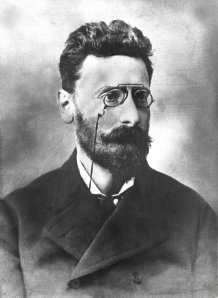
Pulitzer, Joseph - Verleger, Ungarn/ USA/ undatiertAs Joseph Pulitzer, a great publisher and editor who did battle with presidents in his day, defined the stakes in this challenge: “Our republic and its press will rise or fall together.”



Chris Daly, a former reporter with the AP and the Washington Post, teaches journalism and history at Boston University. He is the author of “The Journalist’s Companion” and “Covering America: A Narrative History of a Nation’s Journalism.” 


Leave a comment

Filed under Donald Trump, Journalism, journalism history, news, Politics, reporting, Trump, Uncategorized

A RECENT ATTACK ON JOURNALISM EDUCATION WAS WRONG AND HARMFUL. HERE’S ANOTHER VIEW

By Christopher B. Daly

Journalism Professor,

Boston University


In its spring/summer issue for 2018, the Columbia Journalism Review ran an odd attack on, of all things, journalism education. It was written by Felix Salmon, a journalist whose work I admire. But in this case, almost every sentence he wrote was outdated, tendentious, or flat-out wrong.

Here’s his piece in regular text and my comments in all caps bold.

By Felix Salmon

When it comes to journalism school, there are two questions. The first is the tough one, and was asked and answered by Michael Lewis in a blistering (and very funny) takedown in The New Republic in 1993: Is it all bullshit? The answer then was a clear yes.

THIS SEEMS GLIB, ESPECIALLY COMING FROM SOMEONE WHO NEVER WENT TO ONE.

 In the 25 years since Lewis wrote his article, the occupation of journalism has become more precarious than ever: Joseph Pulitzer’s plan to “raise journalism to the rank of a learned profession” rings hollow in an age of Chartbeat, post quotas, and pay-per-pageview. If you meet a theologian today, or a lawyer, or a doctor, it’s reasonable to assume they have studied deeply and learned a lot in order to do their job. That’s not the case with journalism, nor should it be;

ARE YOU MAKING THE CASE FOR IGNORANCE HERE?

even J-school’s staunchest defenders don’t consider a journalism degree to be a necessary prerequisite for anybody entering the field. 

GRANTED, A DEGREE IS NEITHER NECESSARY NOR SUFFICIENT. BUT THAT DOES NOT MEAN THEY ARE ALL WORTHLESS FOR ALL PEOPLE. FOR SOME STUDENTS, THEY ARE A LIFELINE.

 Thus have the contours of the debate stood for at least a quarter century. ACTUALLY, THIS DEBATE HIS NOT CHANGED MUCH SINCE 1904. AS I WRITE IN MY BOOK “COVERING AMERICA,” JOSEPH PULITZER AND HORACE WHITE DEBATED WHETHER A NEWS REPORTER EVEN NEEDED TO ATTEND COLLEGE. (WHITE SAID NO, PULITZER YES)

Copy Desk, Columbia J-School

Students at the Columbia Journalism School work at the “copy desk.”

On one side, we find people who think a journalism degree can be a useful way to learn skills that come in handy while editing and reporting; on the other, more perspicacious types look around, see that many of the greatest journalists have no such degree, and can find no evidence that a J-school education correlates in any way with better work.

THE FACT THAT “MANY OF THE GREATEST JOURNALISTS” OF THE PAST – OR EVEN OF THE PRESENT – DID NOT GET JOURNALISM DEGREES HAS NO BEARING ON WHETHER CURRENT STUDENTS WILL NEED THOSE DEGREES IN THE FUTURE. THINGS CHANGE.

IN MY OWN CASE, I STUDIED HISTORY IN COLLEGE IN THE 1970S AND WORKED ON THE COLLEGE PAPER. I GOT SUMMER JOBS AT SUBURBAN NEWSPAPERS, WHERE I WAS PAID. (AND PAID THE UNION WAGE, TOO!)

Perhaps it is worth asking a more pointed question: Should J-school even exist?

For anybody on Lewis’s side of the original question, the answer is easy. If J-school is indeed bullshit, if it adds no value to the world, if it has signally failed in more than a century of existence to raise journalism to the rank of a learned profession

JOURNALISM IS QUITE A BIT CLOSER TO A LEARNED PROFESSION THAN IT WAS A CENTURY AGO —well, then, it has no real ability to justify its existence, and the world would be better off without it. But the fact is that everybody should concede that the world would be better off without J-school, no matter how noble they consider Pulitzer’s original undertaking.

Indeed, the more useful J-school is, the more urgent and important its abolition becomes. A useless J-school is a waste of time and money for those who go there, offset by the benefit that accrues to teachers and other recipients of the students’ tuition. The net effect is negative, but the only people suffering real harm are the students. What’s more, it’s easy to avoid that harm: Don’t go to J-school. But what if the J-school defenders are right? What if J-school students really do end up with a significant advantage over those who don’t share their credentials? In that case, even more people are harmed. 

HUH?

J-school attendees might get a benefit from their journalism degree, but it comes at an eye-watering cost. The price tag of the Columbia Journalism School, for instance, is $105,820 for a 10-month program, $147,418 for a 12-month program, or $108,464 per year for a two-year program. That’s a $216,928 graduate degree, on top of all the costs associated with gaining the undergraduate prerequisites. (Columbia, it seems important to say, is also the publisher of Columbia Journalism Review, the publication you’re now reading.)

IMPORTANT TO NOTE: MOST SCHOOLS COST LESS, AND NEARLY ALL REDUCE THAT “STICKER PRICE” WITH SCHOLARSHIPS. SO, THIS IS AN ALARMIST FIGURE. TUITION IS STILL TOO HIGH, GRANTED. BUT IT IS NOT THAT HIGH.

 There are also substantial opportunity costs. Once you’ve graduated from a four-year college, you’re eminently employable, and can enter the workforce immediately. If you delay your career by another year or two, you lose out on a significant amount of income as well as valuable professional experience. Even if you start working in journalism at minimum wage, after a year or two you’re still going to be richer, more experienced, more employable, and almost certainly more skilled than someone who’s spent that time getting a grad-school degree.

BUT WHAT ABOUT THE YOUNG PERSON WHO GRADUATED WITH A DEGREE IN ENGLISH? THE WORLD IS HARDLY WAITING FOR THEM. MANY OF THEM TAKE STOCK IN THEIR LATE 20S AND DECIDE TO GET A MORE-PROFESSIONAL DEGREE, LIKE JOURNALISM. WE KICK-START MANY CAREERS FOR YOUNG PEOPLE WHO WERE WAITING TABLES.

But what about the people who choose not to go to J-school? Here’s their problem: When you’re looking for that entry-level foot in the door, you’re going to be competing against applicants a year or two older than you who have just spent six figures getting themselves a Columbia degree. And if that credential is worth even marginally more than nothing, those candidates are going to be more attractive to employers, and more likely to get the job. 

The result is a crowding-out effect, whereby job-hunting J-school graduates, having already caused themselves substantial financial harm, then go on to harm any aspiring journalistic employee who was smart enough not go to J-school. 

What does that mean in practice? It means a much less diverse workforce, at a time when newsroom diversity has perhaps never been more important. If you’re poor, or working-class, or a rural person of color, or mobility-constrained, or a single mother struggling to bring up multiple children, or otherwise part of a group that has historically been underrepresented in newsrooms, is it possible for you to go to J-school? Sure. Is it likely? Not in the slightest. VALID POINT. THE WORST FEATURE ABOUT ALL OF AMERICAN HIGHER ED, NOT JUST JOURNALISM, IS THAT IT IS TOO EXPENSIVE.

Is it advisable? It is not. INVALID POINT. IF YOU WANTED TO GO AND YOU COULD GO, YOU DEFINITELY SHOULD.

Yet you’re exactly the kind of person news organizations should be spending more effort bringing into their ranks. Carl Bernstein never went to college; ANCIENT HISTORY

the journalistic profession needs more of his ilk, not fewer.

The best and simplest way to move toward that goal would be to abolish the graduate journalism degree entirely. That would help to level the playing field, while saving students billions of dollars in tuition. Better yet, it would bring the industry back to a model of on-the-job training. People wanting to enter the profession would get paid to learn the ropes.

BY WHOM??? I BENEFITED FROM THAT KIND OF ON-THE-JOB TRAINING, BUT THAT WAS 45 YEARS AGO! THE SMALL AND MEDIUM-SIZED PAPERS THAT USED TO OFFER THOSE KINDS OF JOBS ARE THE LEAST LIKELY AND LEAST ABLE TO OFFER THEM TODAY. NOT ONLY THAT, BUT OUR STUDENTS ARE OFTEN FILLING THE GAPS IN THOSE HOLLOWED-OUT LOCAL PAPERS. MOST J-SCHOOLS COMBINE CLASSROOM LEARNING WITH REAL-WORLD EXPERIENCE.

 It’s more effective, it’s infinitely more real, and it focuses the mind: No one’s going to fire you from J-school if you misspell the mayor’s name in a headline. 

Rather than putting money and effort into expensive trainee programs, news organizations no doubt will attempt to outsource their training to journalism schools, thereby getting someone else (anybody else!) to pay the cost.

THEY DID SO LONG AGO, AND THERE IS NO REASON TO THINK THEY WILL REVERSE THAT DECISION.


 It’s a false economy, because a well-run trainee or internship program is not only cheaper than J-school, it’s also vastly more valuable. 

NOT NECESSARILY. I LEARNED A LOT ON THE JOB, BUT I NEVER LEARNED ANYTHING ABOUT THE HISTORY, LAW, OR ETHICS OF OUR FIELD. BESIDES, WHERE ARE YOUNG PEOPLE SUPPOSED TO LEARN SKILLS LIKE ‘DATA JOURNALISM’ OR ‘DATA VISUALIZATION’? NOT FROM GRIZZLED VETERANS, BECAUSE MOST OF THEM DO NOT HAVE THESE SKILLS THEMSELVES. THAT’S WHY OUR STUDENTS ARE IN DEMAND FOR JOBS LIKE “MMJ” AND “MULTIMEDIA PRODUCER” AND “DATA INVESTIGATOR.”

So let’s abolish J-school, or at the very least turn it into a purely academic subject no one can mistake for vocational training. By doing so, we will force the training back into the newsrooms, where it belongs. WISHFUL THINKING.

 THE FACT IS, WE NEED JOURNALISM EDUCATION NOW MORE THAN EVER.

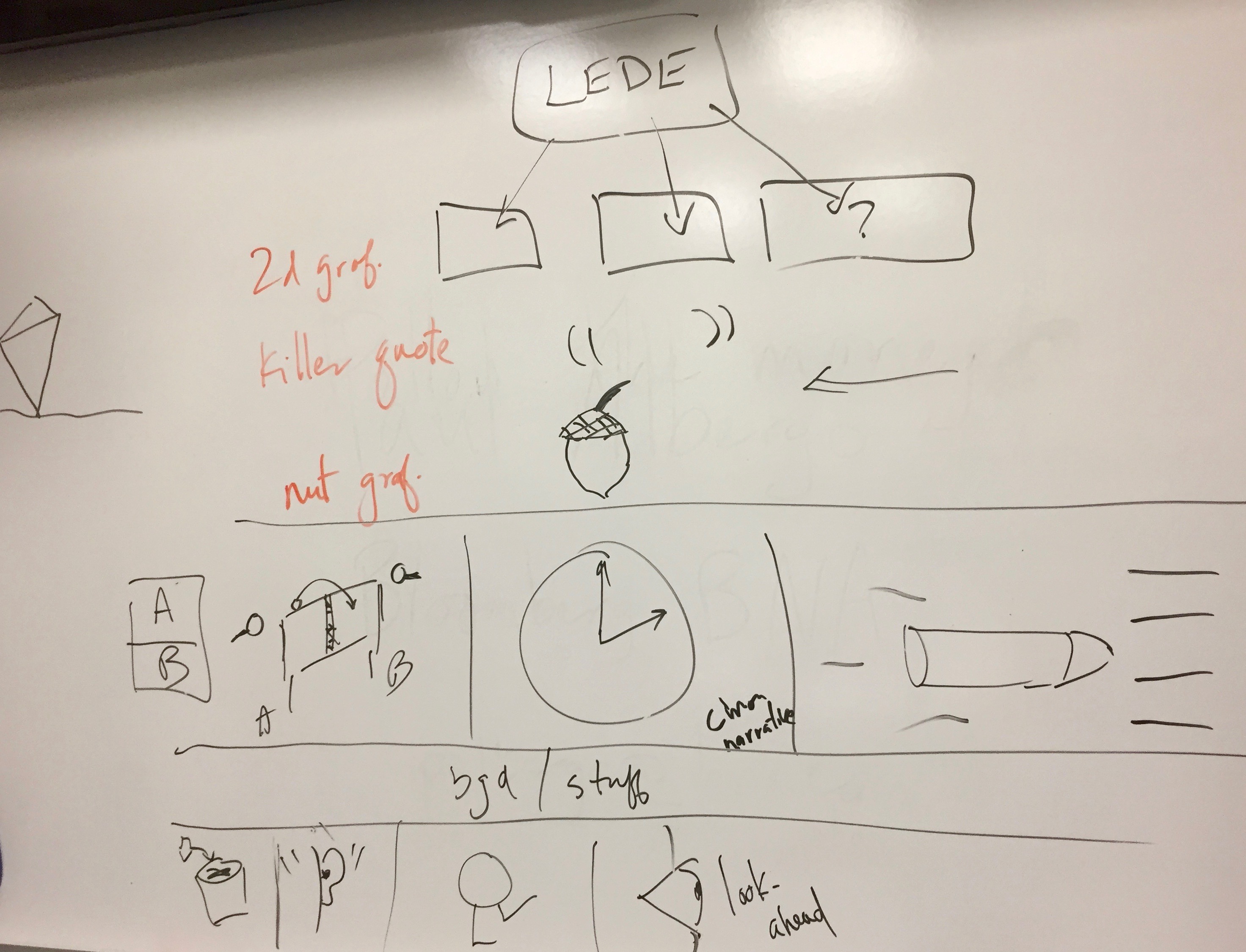
Story outline


1 Comment

Filed under digital media, Journalism, journalism history, media, news, reporting, writing

A warning from a century ago: Resist criminalizing thought, speech, and expression

By Christopher B. Daly

Below is a piece I wrote for the Made in History section of The Washington Post.

(The original had a different illustration.)


download

Democracy Dies in Darkness

Made by History Perspective

Why we shouldn’t criminalize political speech — even the worst of it

A marketplace of ideas is our best hope for functional democracy.

By Christopher B. Daly May 24 at 6:00 AM

Christopher B. Daly is a reporter, historian and professor at Boston University and the author of the prize-winning study of the history of U.S. journalism titled “Covering America,” now available in an expanded second edition.

A CENTURY AGO this month, Congress passed a Sedition Act, effectively making it illegal to express opposition to President Woodrow Wilson’s war policies and abridging Americans’ First Amendment rights to freedom of speech and of the press.

With candidate Donald Trump arguing protesters should be arrested and now-President Trump making threats on a regular basis against what he calls “fake news,” hinting that he would like to rein in a free press, it seems timely to consider the Sedition Act of 1918 and see what can be learned from that history.

Wilson had campaigned for reelection in 1916, in part on the slogan “He Kept Us Out of War!” Things changed quickly, however, in 1917. By April, Wilson had decided that German attacks on U.S. shipping were intolerable, and he attempted to lead a reluctant nation into war. Because he did not entirely trust the public to support his push, Wilson was concerned about enforcing “loyalty,” as he understood it.

With the U.S. mobilizing for war and Democrats in control of the federal government, Congress gave Wilson a new tool for enforcing that loyalty: the Espionage Act. While criminalizing expression, the Espionage Act was fairly non-controversial — prohibiting behavior that amounted to military spying (taking U.S. military secrets without authority and selling or giving them to a hostile power in wartime).

But it also set a dangerous limit on freedom of speech. Whenever the United States was at war, the law made it a federal crime to make “false statements” intended to interfere with the armed forces or to “willfully obstruct” the military draft. Violations could be punished by fines of up to $10,000 or by 20 years in prison.

Essentially, Congress made it a crime to use words to oppose the war effort or to encourage young men to resist the draft. The greatest immediate impact of the new law fell on the socialist and German-language newspapers, many of which were promptly suppressed.

In 1918, while U.S. forces were fighting in Europe, the majority of American newspapers enthusiastically supported the war effort. Most cooperated with the government’s efforts to shape the coverage, and when in doubt, most editors engaged in self-censorship. Even so, the president and Congress were not taking any chances.

So Congress passed another, more draconian law abridging freedom of the press, the Sedition Act of 1918 (technically, a batch of amendments to the Espionage Act). For the first time since 1798, Congress deemed expression of certain ideas a crime. The result was, according to one legal scholar, “the most repressive legislation in American history.”

The 1918 law made it a crime to publish “any disloyal, profane, scurrilous, or abusive language” or any language intended to provoke scorn about the American government, system of government, Constitution, armed forces or flag. It also prohibited displaying the flag of a foreign enemy and any advocacy for the curtailment of the production of goods necessary to prosecute the war effort. Violations could be punished by fines up to $10,000 or 20 years in prison. Both the House and Senate rapidly approved the measure, and Wilson signed it into law in May 1918.

The plain meaning of the new law was clear: Watch what you say. If you displease the government, you will go to jail.

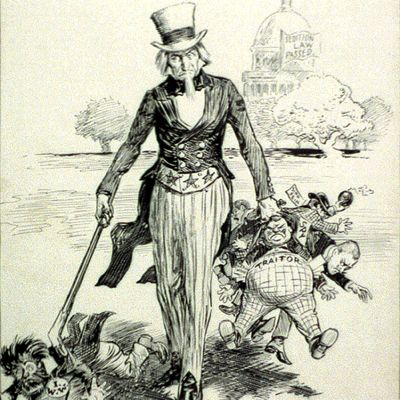
sedition_cartoonFederal prosecutors made ample use of the statute during the remaining six months of the war. One month after the law was signed, for example, prosecutors brought charges against the most prominent socialist in the United States, Eugene V. Debs. As the Socialist Party candidate for president in 1912, Debs had captured almost a million votes. Debs was a visible critic of the war with a substantial following nationwide. Yet his popularity didn’t prevent Debs from being sentenced to 10 years in federal prison — just for giving a speech.

The wartime limits upon freedom of speech and press led to a series of U.S. Supreme Court rulings after the war ended in 1919, which permanently circumscribed freedom of expression, particularly in wartime.

In the landmark case of Schenck v. U.S., socialist Charles Schenck challenged a prison sentence he had received not for an act of resistance, but for authoring a pamphlet urging voters to tell their member of Congress to vote against the draft. Supreme Court Justice Oliver Wendell Holmes Jr. spoke for the court, asserting that all speech must be considered in context. He famously used the example of shouting “Fire!” in a crowded theater, which, while being a civic duty in a burning theater, was dangerous and reckless in a theater not on fire.

Applying this logic to wartime, Holmes concluded that Schenck’s ideas amounted to a “clear and present danger” to a country at war, and the court upheld his conviction. The court also upheld Debs’s conviction. Holmes explained that if “one purpose of the speech . . . was to oppose [the] war, . . . and if, in all the circumstances, that would be its probable effect, it would not be protected.”

The Court split in Abrams v. U.S., a case in which the defendants were sentenced to as much as 20 years in prison for a political pamphlet that charged that Wilson had ordered an invasion of Russia not for his stated reason — to open an eastern front against Germany — but to roll back the Russian Revolution. Citing Holmes’s reasoning in Schenck, the majority unsurprisingly upheld the convictions of the defendants.

But Holmes himself dissented, along with Justice Louis Brandeis, laying out the case against the Sedition Act — one that resonates today. He argued that the framers of the Constitution believed that “the best test of truth is the power of the thought to get itself accepted in the competition of the market, and that truth is the only ground upon which their wishes safely can be carried out.” Clearly, Holmes had come to believe that Americans were best served when truth and error were free to do battle in a wide-open “marketplace of ideas” in which the government plays no role.

In spite of the Court’s willingness to countenance limits upon free speech, on Dec. 13, 1920, Congress repealed the Sedition Act while leaving intact the older provisions that made up the Espionage Act. That law remains in effect today, banning criminal deeds.

But we have now survived a century without a Sedition Act, and we should heed the clarion warning from Holmes. The First Amendment protects political speech for a reason — the founders wisely understood that an open marketplace of ideas provided the best chance for democratic governance to work. We should not be in a rush to put Americans in jail for the things they think, say, print, broadcast or tweet.

–30–

Leave a comment

Filed under First Amendment, history, Journalism, journalism history, press freedom, Trump, Uncategorized

Trump is an unwitting ally of the media

By Christopher B. Daly

Is Trump helping the media more than hurting them?

Consider: After a month in office, Donald Trump’s approval rating is dropping. It was never very high. After all, he finished second in the balloting, received a minority of votes, and won on a technicality.

Since taking office, he has waged war on the news media. How’s that working for him?

While his number drop, all the indicators for the media are rising. Ratings are up for television news programs — and not just on his favorite, Fox News, but also for independent news sources like CNN, MSNBC, the legacy broadcasters, and PBS. At the major independent newspapers (the Times and the Post pre-eminently), subscriptions are up, and I expect revenues will be up for the quarter when the time comes to report.

Yes, Trump recently called the independent media “the enemy of the American people.” That was a hateful, deplorable thing to say. Shame on him.

But so far at least, Trump is losing the war he started.


Leave a comment

Filed under broadcasting, Donald Trump, Journalism, journalism history, media, NPR, press, Trump, Uncategorized

Jefferson on the press

“The people are the only censors of their governors: and even their errors will tend to keep these to the true principles of their institution. To punish these errors too severely would be to suppress the only safeguard of the public liberty. The way to prevent these irregular interpositions of the people is to give them full information of their affairs thro’ the channel of the public papers, & to contrive that those papers should penetrate the whole mass of the people. The basis of our governments being the opinion of the people, the very first object should be to keep that right; and were it left to me to decide whether we should have a government without newspapers or newspapers without a government, I should not hesitate a moment to prefer the latter. But I should mean that every man should receive those papers & be capable of reading them.”

–Jefferson to Edward Carrington, 1787


Leave a comment

Filed under First Amendment, Journalism, journalism history, press freedom, Uncategorized

Trump epitomizes the “charismatic leader” where power is personal

By Christopher B. Daly

Nothing so aptly captures the phenomenon of Donald Trump as the social theory laid out more than a century ago by the German social thinker Max Weber. In Weber’s scheme of understanding power, Trump epitomizes a type known as the “charismatic leader.”

American politicians are sometimes described as charismatic by people who really want to use a word more like “charming.” But leaders like Trump are actually pretty rare in American political history.

Which means, in turn, that Trump is likely to present challenges to the journalists trying to cover him. Most of the national political press corps has never seen the like. On the one hand, Trump is a gift to the news media because he’s exciting; on the other, he does not fit nicely into any conventional category or narrative.

According to Weber, “charismatic authority” is different from traditional or legal sources

max weber

of authority. As the great German sociologist argued in “Politics as a Vocation,” the charismatic leader is followed because of his personal qualities. His success depends on “devotion to the exceptional sanctity, heroism, or exemplary character of an individual person, and of the normative patterns or order revealed or ordained by him.” In essence, a charismatic leader is endowed with special qualities because his followers believe he has those qualities. He is powerful because people think he’s powerful.

Trump’s authority is entirely personal. It is not connected to a party or a movement or a set of policies. It is all about him. His subliminal message to the convention and the television audience was: I will make you safe. It’s the rough equivalent of saying “I will walk you to school so no one will scare you.”

As a businessman, he is the “Lord of the Tower.” High inside Trump Tower, he rules over a privately held company. He is not like a CEO of a big publicly traded corporation. The modern corporate executive is a cog in a giant machine – made up of corporate boards, executive committees, finance committees, legal counsel, giant organizational charts, rules, policies, and guidelines. This environment produces CEOS who are risk-averse and who know that their time at the top is limited to about four or five years.

os-pictures-donald-trump-rally-in-tampa-20160212

credit: Orlando Sentinel

None of that pertains to Trump. He trusts only those people who work for him in Trump Tower. Any authority they have flows from him directly, in proportion to how close they are to him or how trusted. No one in the Trump camp exercises power independently or by virtue of a place in a bureaucracy. It’s all about personal relationships, as in a royal court or a cult.

♦        ♦        ♦       ♦

While Trump was rising last week, another career in American conservative politics was ending. Roger Ailes, the founding chief of Fox News, was ousted from his powerful position by his only boss, media mogul Rupert Murdoch.

Like Trump, Ailes was a charismatic leader in the Weberian mold. For decades, Ailes ruled Fox News by fear, bullying, helping favorites, and attempting to exercise the droit de seigneur by “flirting” with the many attractive news readers he hired.

Trump and Ailes also shared a masterful instinct for managing the public’s resentment. Even if you never watch Fox News, you have probably heard phrases like these:

  • “liberal elites”
  • “the War on Christmas”
  • “mainstream media”
  • “radical Islamic terrorism”

These and similar conservative tropes (or “memes”) are all hobgoblins intended to amplify the fear and loathing felt by some Americans. Such memes reinforce the fear that something is slipping away and reinforce the loathing of those responsible – smart people, immigrants, jihadis, liberals.

Ailes toiled for decades inside the conservative meme factory – generating, refining, and broadcasting the idea that America used to be a great country until _______________________  (fill in the blank: secularism, feminism, political correctness, elites, blacks, gays, immigrants) came along and ruined everything. Like Trump, Ailes practiced a politics of restoration.

♦        ♦        ♦       ♦

Trump had a successful convention in one sense: he managed the almost impossible task of making a modern convention interesting. For decades, the national conventions have been highly scripted, fully produced pageants made for television. No surprises – and no real politics, either. Everything is decided beforehand.

As the Democratic National Convention unfolds in Philadelphia, watch for a dramatic contrast from last week’s show in Cleveland. Hillary Clinton is the opposite of a “chaos candidate” like Trump. He huddles with a small team of political novices and makes decisions at the last minute. In Hillary’s approach to politics, by contrast, professionals are respected, and qualities like steadiness, consistency, and predictably (which Trump disdains) are considered virtues.

She makes plans and sticks to them.  She limits access. Everything is vetted. There is a structure with veteran professionals staff all key positions, from speechwriting to finance to policy.

Not so with the charismatic candidate Trump. He harkens back to political insurgents like Huey Long or George Wallace – not (just) in his bigotry but in his personal approach. Trump has no bureaucracy around him. A reporter cannot go seek out Trump’s “foreign policy shop” and get briefings on his approach to the Mideast. First of all, there is no “shop.” Second, even if there were a shop, there is no policy. There will be a policy when Trump makes one up, and it will change when he feels like it. He may meet with Netanyahu, for example, and if they hit it off personally, then Israel is under U.S. protection. If they don’t hit it off, then all bets are off. What are Trump’s budget plans? Who would make up the Cabinet? No one has a clue. Reporters are hard pressed to find reliable sources.

In covering Trump, the media have a further problem: they feel obligated to treat Trump with a straight face. Their professional code prevents them from writing and saying many things that they know to be true.

Moreover, the press gets no down time with Trump. Even when he has retreated to Trump Tower, he could still feel the urge to tweet out some message or insult or provocation at any time, creating a brand-new controversy and “winning” that news cycle.

Trump likes to talk about law and order. But in his style, he is the candidate of chaos. Fasten your seatbelt.

1 Comment

Filed under broadcasting, Donald Trump, Fox News, history, Journalism, journalism history, media, meme, Politics, Trump

Media Earthquake: the end of the Roger Ailes era at Fox News

By Christopher B. Daly

“If you would strike at a prince, you must kill him.”  –Niccolo Machiavelli

The fall of Roger Ailes is an ephocal event in the history of modern news media. For a man who delivers more than $1 billion in annual profit to his boss and who delivers the top viewer ratings in cable TV news to be fired certainly marks the end of an era.

Carlson : NYDaily NewsHis departure today was brought about by the charges of sexual harrassment filed in court by Fox News on-air star Gretchen Carlson. (Before there was Megyn Kelly, there was Gretchen.)

Variety's Power of Women New York luncheon - Arrivals

Megyn Kelly Credit: Dennis Van Tine


Ailes was a king-maker who became a powerful prince himself within the kingdom of American conservatism. By assembling a loyal audience for Fox News, Ailes performed several important services for resurgent conservatism:

–Fox News attacked the rest of the news media

–Fox News provided an outlet for conservatives (including climate deniers, conspiracy theorists, and conservative ideologues who could not get on the air otherwise)

–Fox News hounded the Clintons and Obama while endorsing and defending George W. Bush

–Fox News cultivated and sustained Bill O’Reilly (and stood by him when O’Reilly had his own problems with a sexual harrasment claim).

–Fox News, by selling ads for gold bullion, attorneys for the plaintiff’s bar, and many other products, delivered a consistent profit stream to Murdoch’s News Corp.

The back story is well told in the 2014 biography of Ailes by the journalist Gabriel Sherman. The book is titled “The Loudest Voice in the Room” and subtitled “How the Brilliant, Bombastic Roger Ailes Built Fox News and Divided a Country.” Sherman, a national correspondent for New York Magazine whose recent daily reporting has driven and shaped the coverage of Ailes, lays out the rise of Ailes from the day the young tv producer met Richard Nixon in 1967 and lectured the veteran politician on the power of television.

Ailes went on to work for Nixon, then became an impresario of conservative media. He had a big role in the rise of conservative talk-show champ Rush Limbaugh, then teamed up with conservative media mogul to found Fox News in 1996.

Fox News is the embodiment of Roger Ailes. He is responsible for the shrewd and deeply cynical slogans “Fair and balanced” and “We report/you decide.” Never mind that neither slogan was true. They served the purpose of assembling an audience of American conservatives who consider Fox a national message board.

Ailes harrangued the mainstream media for being liberal, while building the most ideological news operation on the air, all the while denying that he was doing so.

What brought him down was his failure to make an alliance with Murdoch’s sons, who are the future of News Corp. The sons may be less conservative than their father and, as members of a younger generation, they certainly have far less tolerance for the towel-slapping, know-nothing ethos of the Fox News morning show. On that show, whose co-hosts regularly humiliated Gretchen Carlson, who may have more i.q. points than Steve Doocy and Brian Kilmeade combined. They harped regularly on her looks, her wardrobe, and her hotness.

Under Ailes, Fox News had a history of hiring attractive women and placing them in front of the cameras in ways that displayed their physical attributes. Even in an industry like television, which is obsessed with visuals, Fox News stood out for its use of news babes. Turns out, Ailes — who resembles the late Sidney Greenstreet minus the charm — was “flirting” with them and implying that they should put out for him.

In the end, it would appear, the man who ruled by fear was brought down by one brave woman.

Screen Shot 2016-07-21 at 2.23.42 PM


Leave a comment

Filed under broadcasting, Fox News, Journalism, journalism history, media, Politics, Uncategorized

Journalism jobs: Digital now outnumbers print

By Christopher B. Daly

Two important trend lines have recently crossed, probably forever. The number of jobs in the U.S. newspaper sector has now dipped below the number of jobs in the digital media. Newspapers are not dead, but they are no longer the center of gravity for the news business. Thus ends a dominance that began in the 17th century and reached a peak in the 20th century before cratering in the 21st century.

That is one of the major findings in a new study from the U.S. Bureau of Labor Statistics, documenting what many have long noticed: American newspapers are no longer the driving wheel of American journalism. The past belonged to the printing press, but the future belongs to the web.

Here’s the big picture:

Jobs in news

Here are some highlights:

–The purple line that starts so far above the others in 1990 represents all employment in the newspaper industry. It’s worth noting that the BLS counts everyone who works at a newspaper, not just the newsroom crew. So, this is just a rough approximation of the employment situation of journalists — reporters, photographers, videographers, podcasters, editors, producers, and others who are directly involved in gathering and disseminating news. That is a much harder number to track.

–Newspaper employment took a hit in the early 1990s, then sort of plateaued, took a steeper hit when the “tech bubble” burst in 2001 (taking with it a lot of full-page ads), and then really dove in the Great Recession of 2008-9. Since then, the downward trend has slowed a bit, but the trend from 2009 to 2016 gives no reason to think that newspapers are coming back.

–The BLS also provides a helpful monthly chart of the data used to draw all those lines. Here are some salient details I found in the data tables.

Screen Shot 2016-06-09 at 11.23.24 AM

–Looking deeper into the numbers, it is heartening to see that the overall numbers of jobs in all these industries combined has not dropped very much, having fallen about 3 percent over 26 years. The biggest proportional hit seems to have occurred in “books” — which I take to mean the publishing industry as a whole. While a small number of journalists make a living by writing non-fiction books, it is probably a very small group that depends primarily on their book royalties.

–The big gainer is “Internet publishing and broadcasting.” It’s hard to imagine how 28,800 people made a living putting stuff online in 1990 (which was before the Web became ubiquitous), but there is no mistaking that web-based activities have been on a surge.

–The other big gainer in the last quarter century has been “Motion picture and video production.” It is unclear from the BLS definitions of its categories what fraction of all those folks could be considered journalists. Probably a lot of them work in Hollywood or other venues where they produce content that is fictional or promotional. Still, it is a rough indicator of where the growth is.

One question that these data raise is this: what will journalists of the future need to know and do?

About a decade ago, my colleagues and I began a deep re-think of our curriculum to bring it out of the days of print newspapers, glossy magazines, film-based photography, and broadcast television. We eliminated our separate, medium-based “concentrations” and decided that all our students should be educated as digital journalists. We tore out our darkrooms, converted to all-digital photography, and decided that all our students need to be competent in “visual journalism.” We ramped up our instruction in shooting and editing video. We converted our student radio station to digital and embraced podcasting. We decided that essentially all our coursework should be multimedia. Like other journalism programs in U.S. universities, we found that it was not easy, but it was a matter of survival.

As a specialist in the history of journalism, I spend a lot of time thinking about the centuries when the newspaper ruled the field. The newspaper had a good long run, but it is clearer every year that newspapers not only documented history, they are history.

cropped-stamp-tax-tombstone.gif


Leave a comment

Filed under Boston University, broadcasting, digital media, history, Journalism, journalism history, media, news, NPR, Photography, Photojournalism, press, publishing, Uncategorized