Tag Archives: Politics

Follow the money (cont.)

By Christopher B. Daly

Is political spending the same as political speech? Does it deserve the same constitutional protections? Is there anything that can be done to undo the 2010 Citizens United ruling by the Supreme Court?

Those are some of the questions raised by the 2012 elections. In the Times, Nicholas Confessore has been doing a good job keeping an eye on the money in politics, and today he weighs in with a “political memo.” (Is that reporting? analysis? opinion?)

One point the memo makes is that if you have a huge number of donors each giving a small amount, you can raise all the money you need to counter the impact of a small number of huge donors. Look at it this way:

100 wealthy donors give $1 million each.

100 x 1,000,000 = 100,000,000

1 million ordinary donors give $100 each:

1,000,000 x 100 = 100,000,000

So, it’s a tie. That shows the power of a million people acting together.

A question remains: How are we better off as a society with all that spending?


Leave a comment

Filed under Politics

Math for journalists (and everyone else too)

By Christopher B. Daly 

In the wake of last week’s election, many Republicans seems to be facing not only a political problem but also an epistemological one. Epistemology is the term philosophers use for the study of knowledge itself. It is an inquiry that asks: How do we know what we know? (or, How do we know what we think we know?)

Two recent pieces raise the issue.

David Carr,in his column in the New York Times, emphasizes the crisis that overtook Fox News on election night, when some professionals at the conservative news network were forced to choose — live, on television — between Republican orthodoxy and journalistic empiricism. Carr rightly applauds Megyn Kelly for insisting on a fact-based approach while she was on-air with Republican Party strategist, fund-raiser, consultant (have I left any roles out?) Karl Rove, who doubles as a paid news “analyst” for Fox. As the Ohio vote was being counted last Tuesday night, it was becoming clear that Obama would win the state and, thus, the country. Rove insisted that Fox set aside the facts and hold off on placing Ohio in the president’s camp.

Inexplicably, though, Carr did not cite the definitive quote in the exchange. Kelly turned to Rove and asked:

“Is this just math that you do as a Republican to make yourself feel better, or is this real?”

(Jon Stewart rightly pounced on it as a moment of political/journalistic/epistemological crisis, and you can see the video.)


How about math we do as Americans to determine reality?


Many of the same issues are raised in a searching piece in Politico today about the “cocooning” of many Republicans. On election night, some Republicans found it difficult to believe that Obama was actually winning, largely because they only watch Fox News and only hear the views of analysts like Karl Rove. The piece, by Jonathan Martin, points in the direction of the book I am working on about the rise of conservative media after WWII, with the working title: Inside the Meme Factory: The Rise of Conservative Media and Think Tanks. Stay tuned for that. (If you think that an idea/slogan like “the rich are job-creators” arises spontaneously, you got another think coming!)


Leave a comment

Filed under broadcasting, Fox News, Journalism, Politics

Politics: Bad for business?

By Christopher B. Daly 

If business executives and the titans of finance are so good at investing, why do they do so poorly in investing in politicians? Clearly, big business and Wall Street went all-in this time on Mitt Romney and other Republicans. Through direct donations and superPACs, they sank enormous amounts of money (which, by rights, should go to the stockholders) into the Romney campaign and now have nothing to show for it.

Actually, they may have less than nothing to show for it. Because in the process of investing in Romney, they also managed to antagonize the majority of Americans who prefer the other guy.

These thoughts were prompted by a timely piece in today’s Times Business Day section by columnist Eduardo Porter, who tries to follow the money in corporate political donations. Porter estimates that business interests spent about $2 billion and got nothing but ill will.

All of which reminds me of a remark attributed to former hoops wizard Michael Jordan. He became a wealthy businessman by getting into the sneaker business. Later, he was asked why he didn’t endorse Barack Obama. His answer: “Republicans buy shoes too.” (Just recently, Jordan had an apparent change of heart and endorsed Obama.)

For you activists: Some of the biggest donors to conservative candidates and causes are the Koch brothers. Here are some of the companies they own or products those companies make:

Georgia-Pacific

Brawny paper towels

Angel Soft toilet paper

Mardi Gras paper napkins

Vanity Fair paper products

Stainmaster carpets

Lycra fabric products.

And before you buy any oil pipelines, be sure to check the label.

Leave a comment

Filed under Politics

Is democracy for sale?

By Christopher B. Daly

A hat-tip to NPR. As a public service, NPR has compiled a list of the individuals and corporations who have donated $1 million or more to political campaigns or SuperPACs during this presidential election cycle.

Except for a handful of creative people and liberals, it is a conservative landslide. No surprise there. Wealthy people believe that they don’t need government and don’t deserve to be taxed. So, they tend to support the political party that supports their wishes.

I have not added up all the subtotals, but at a glance, here is a candidate for the biggest donor of them all: Sheldon Adelson. Here’s a guy who made a fortune off casino gambling — literally taking money from people who can almost never afford to lose it.

IN what way does all this spending help to strengthen our democracy or improve our society? What on earth gave the Supreme Court the idea that this kind of spending was protected by the Constitution? Do the individuals on the super-donor list love their country more than the rest of us? Do they have better ideas? Do they deserve the kind of giant megaphone that $30 million can buy?


Leave a comment

Filed under First Amendment, Politics

Citizens United meets “Breaking Bad”

By Christopher B. Daly 

Now comes news that certain people have

1. created an organization that meets the technical definition of the kind of non-profit that can funnel unlimited amounts of money into U.S. politics without having to identify the donors.

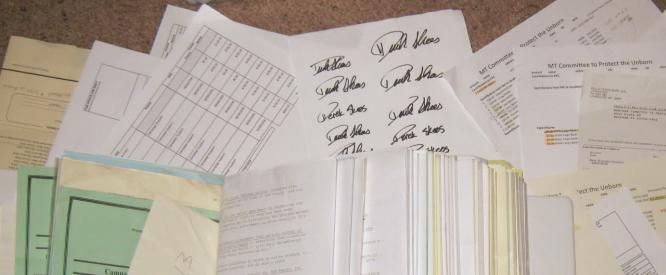
2. perhaps (according to documents found in a meth house in Montana, fer chrissake) skirted the legal requirement that they steadfastly avoid coordination of their efforts with any actual politicians.

Hmmm…. does that seem: surprising? shocking? dismaying? inevitable? All of the preceeding?

I would say that ever since the U.S. Supreme Court’s profoundly wrong ruling in the 2010 Citizens United case, this kind of thing was entirely predictable. (All except the meth house; that is a nice touch.) In brief: the story involves a conservative group opposed to clean energy is organized into something called the American Tradition Partnership. According to news accounts and Montana election officials, ATP may have violated campaign finance laws, based on documents found in the meth house.

For the full story, watch Frontline tonight on PBS (before public broadcasting’s enemies destroy it), or read about it at ProPublica. You can also follow it in the pages of the Missoulian, a newspaper based in Missoula, Montana, which (luckily!) still maintains a bureau in the state capital of Helena trying to keep an eye on government and politics. A hat tip to Mike Dennison of the Missoulian — and keep up the good work. Or, check out the coverage in the Billings Gazette.

p.s. Don’t miss this handy interactive info-graphic from ProPublica, which shows who is giving what amounts to which causes.

p.p.s. Memo to the conservative SCOTUS bloc: thanks a lot.


Leave a comment

Filed under Politics, Supreme Court

Presidential debate: The global perspective

By Christopher B. Daly

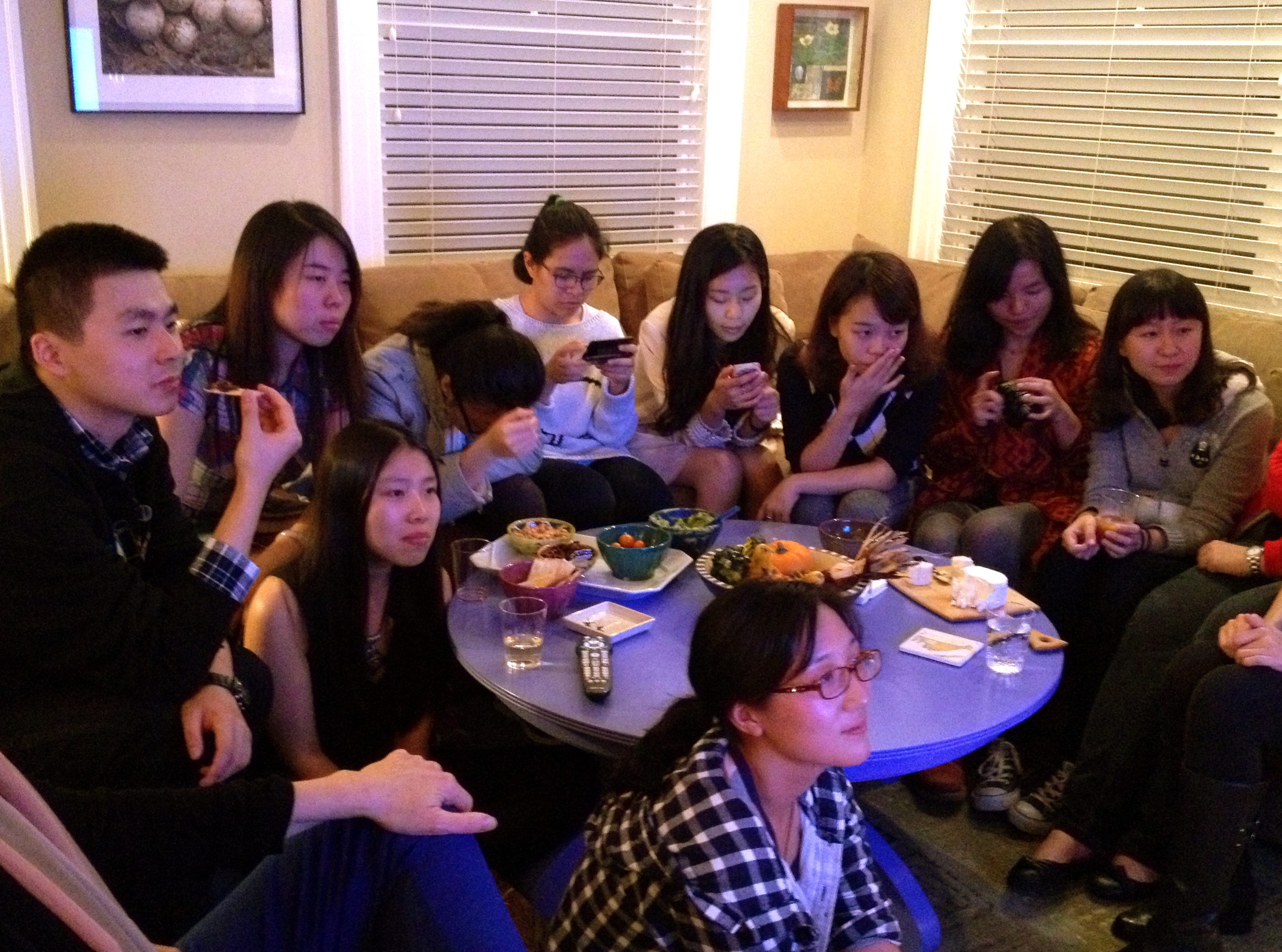
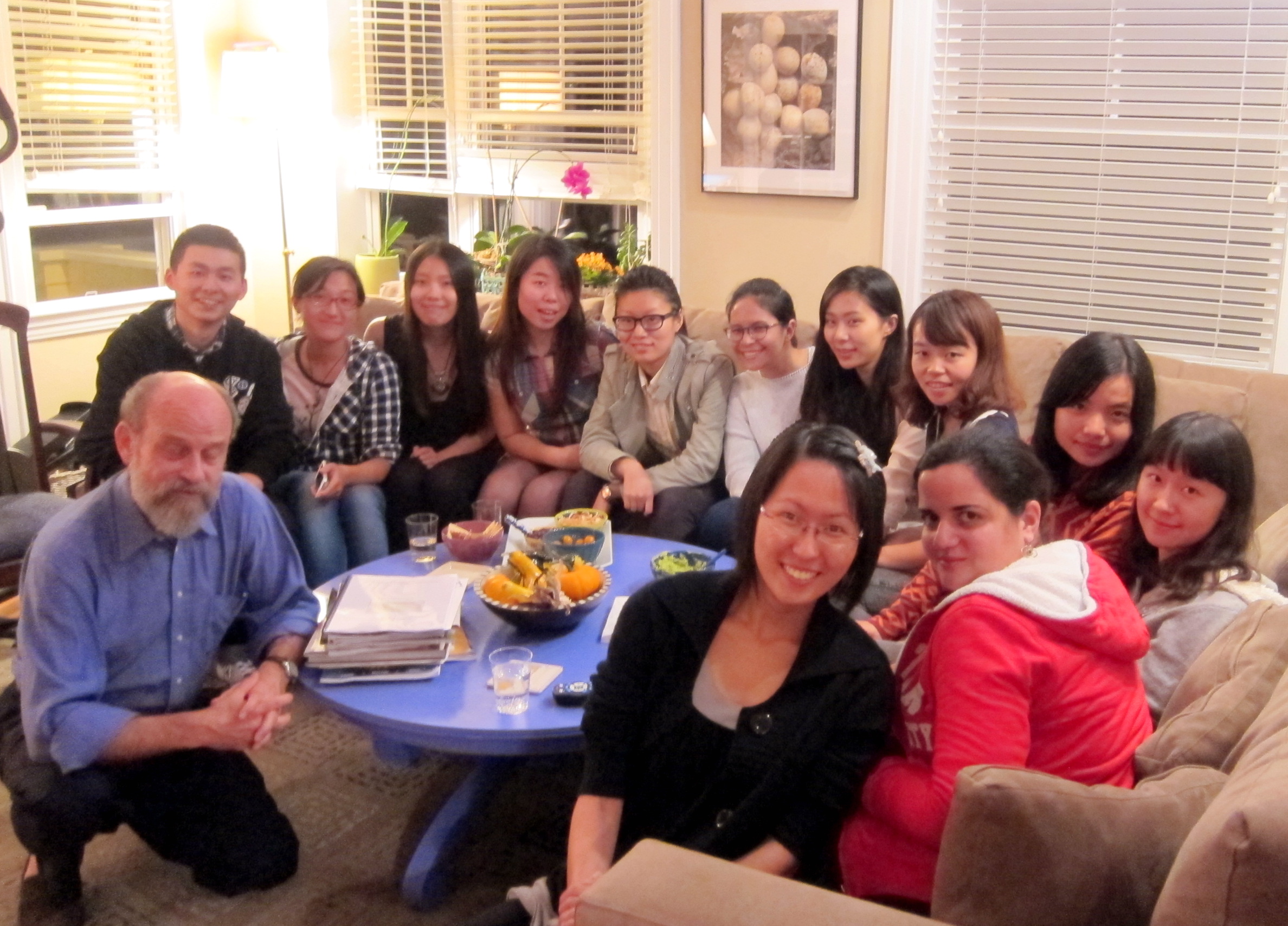
I had the opportunity to watch the presidential debate last night with a unique group of non-voters: a dozen grad students enrolled in the Journalism Dept at Boston University. I teach all of these great young people in a special class for the new students from overseas.


As you can see, they were really dialed in and asked great questions.


I think quite a few of them were perplexed by Obama’s disappointing performance (but were too polite to dump on him!).

Note to academic advisers: tell your students not to take classes with professors whose eyes are shut.

Leave a comment

Filed under Journalism, Politics

Rhetoric 101: the Brown-Warren race

By Christopher B. Daly

When did the term “professor” become an epithet?

U.S. Senator Scott Brown, R-Mass., seems to use it that way in his campaign against challenger Elizabeth Warren. As can be seen in the wordmap below, created by the Boston Globe, Brown never misses a chance to use that title. What is hard to tell from the graphic, though, is Brown’s tone and demeanor. He usually delivers the “professor” line with a smirk, as if he knows he’s blowing a dog whistle intended to reach every anti-intellectual voter in Massachusetts. This from a guy who has benefitted from the teaching he received from many professors. After all, he has a b.a. from Tufts (cum laude) and a Juris Doctor degree from Boston College Law School. It takes a lot of nerve for him to run a campaign in which he mocks higher education (which is also a major industry in the state he wants to represent).

As someone who worked very hard to become a professor myself, I guess I take this one a little bit personally. Where I come from, in Medford, we’d call someone like Brown cute. The way we used it there, it was not a compliment.

Boston Globe

Boston Globe


Leave a comment

Filed under Journalism, Politics

Clint Eastwood: Questions for journalists

By Christopher B. Daly 

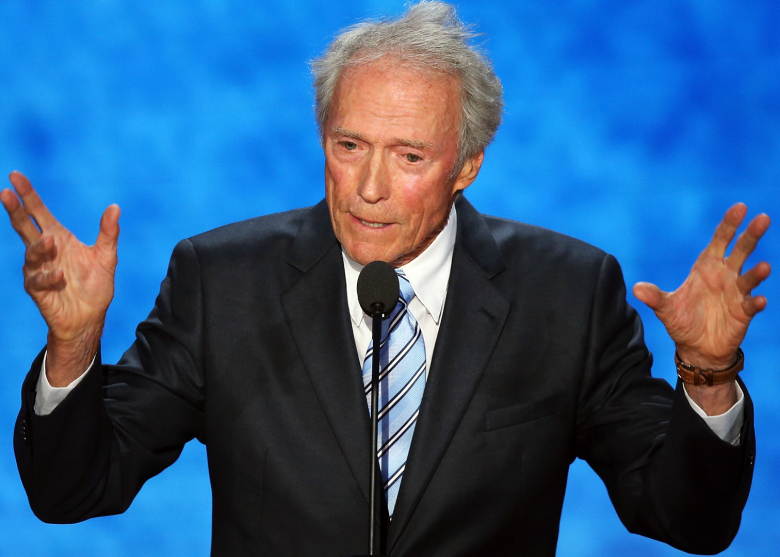
In the aftermath of the Republicans’ “big night,” two questions occur to me about the appearance by the actor Clint Eastwood. These questions seem worth raising, but I have not seen any traces in the mainstream coverage:

1. Who approved the decision to put Eastwood on the GOP convention schedule? Who allowed Eastwood to hijack the agenda at that critical moment of prime-time exposure? Did Romney do so himself? If so, what kind of judgment does that show? What political aim was advanced (or meant to be advanced)? Was it presidential?

Clint Eastwood / CBS News

Clint Eastwood / CBS News

2. A useful thought exercise: when covering politics in a two-party system, it is often useful to turn the mirror around and ask, “What would happen if the other party did this?” In this case, you would have to ask, What would happen if the Democrats chose to spotlight a left-wing Hollywood figure in prime time? Furthermore, what would happen if that left-winger had a reputation for menace and incipient mayhem? And what if that figure showed up apparently disheveled and engaged in a vulgar, intermittently incoherent rant? What if that person disrespected the office of the presidency by talking down (literally) to a seated imaginary president?

1 Comment

Filed under Journalism, Politics

Obama: Media Critic?

By Christopher B. Daly

Even on vacation, I couldn’t help noticing this piece in today’s Times about President Obama’s news-reading habits and his criticisms of some of the coverage. 

As a media critic myself, I am not sure how I feel about adding this new guy to the ranks. But he does seem to have a grasp on some major issues. From the Times:

The news media have played a crucial role in Mr. Obama’s career, helping to make him a national star not long after he had been an anonymous state legislator. As president, however, he has come to believe the news media have had a role in frustrating his ambitions to change the terms of the country’s political discussion. He particularly believes that Democrats do not receive enough credit for their willingness to accept cuts in Medicareand Social Security, while Republicans oppose almost any tax increase to reduce the deficit.

Privately and publicly, Mr. Obama has articulated what he sees as two overarching problems: coverage that focuses on political winners and losers rather than substance; and a “false balance,” in which two opposing sides are given equal weight regardless of the facts.

Mr. Obama’s assessments overlap with common critiques from academics and journalism pundits, but when coming from a sitting president the appraisal is hardly objective, the experts say.

Irony alert: after quoting Obama on the problem of false balance and explaining the concept, the piece goes on to engage in the very practice.

To his credit, Obama seems to read a lot, and that can’t be a bad thing.

Now, back to the beach.

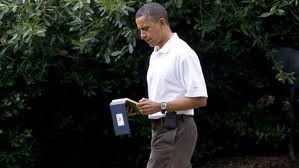
Obama reads his iPad while walking. ABC News.com

Obama reads his iPad while walking. ABC News.com

Leave a comment

Filed under broadcasting, Journalism, Politics, President Obama

“Quote approval” fallout

The National Journal joins a (small and slowly growing) list of news organizations that are publicly disowning the practice of “quote approval” — which happens when journalists allow the people they interview to screen and approve their own quotes before those quotes appear in print or online.

Where’s everyone else?

From today’s Times:

Quote approval has become accepted in Washington and on the campaign trail, with politicians and candidates often refusing to grant interviews unless they have final say over how their quotations appear in print. The New York Times examined the issue in an article last week, drawing attention to a part of news gathering that journalists had long complained about but felt pressured into accepting.

Quote approval is wrong. Don’t read quotes that have been approved!


2 Comments

Filed under Journalism