TNR re-designs itself

By Christopher B. Daly

The venerable opinion magazine The New Republic is getting a makeover. Here is a video report from the NYTimes about the new look.

TNR was founded in 1912 by Progressive journalist Herbert Croly. One of his first recruits was Walter Lippmann, who became one of the most prominent US journalists of the 20th Century. Here’s my take, from Covering America:

In 1912 a friend asked Lippmann if he would like to write a book. Lippmann

published A Preface to Politics the next year to favorable reviews, and while living

in New York and mingling with the leftist and bohemian crowd around the intellectual

and patron Mabel Dodge, he started another book. While he was working

on it, Lippmann got an invitation to lunch from Herbert Croly, a prominent Progressive

thinker and journalist. Croly, who had been impressed by Lippmann’s

debut book, had a proposition: How would Lippmann like to join the staff of a

new magazine Croly was putting together? The magazine was to be smart, literate,

and progressive. He could write and edit and make $60 a week. Lippmann

jumped at the offer. It was another stroke of good fortune. The magazine, which

still had no name, was eventually called the New Republic, and it became one of

the most influential journals of opinion and analysis of the twentieth century.14

Croly’s goal was to “be radical without being socialistic”15 and to advance his view

that the small, weak central government envisioned by Jefferson could not possibly

deal with the challenges posed by companies like Standard Oil or the big

meatpacking firms or the sugar trust. Instead, the country needed new agencies

like the Interstate Commerce Commission or the Food and Drug Administration,

staffed by a new class of expert public servants who would have the power

to police and guide these huge private enterprises. This was just the outlook that

Lippmann had been moving toward ever since he left Harvard, one that ultimately

drove him away from the socialists and muckrakers of his youth. . .


Leave a comment

Filed under history, Journalism, journalism history

Stanley Karnow, 1925-2013

Today brings news of the passing of Stanley Karnow, who wrote one of the most-cited works trying to figure out what happened during the U.S. war in Vietnam. He was an exemplar of the journalist-turned-historian.

Here is the Times obit, which mentions that Karnow was also on the Nixon “enemies list.”

Here is the AP version, which notes that Karnow got his start in journalism on his high school newspaper and at the Harvard Crimson.

The ultimate quote:

‘‘What did we learn from Vietnam?’’ Mr. Karnow later told AP. ‘‘We learned that we shouldn’t have been there in the first place.’’

imgres


Leave a comment

Filed under history, Journalism

The Civil War at 150

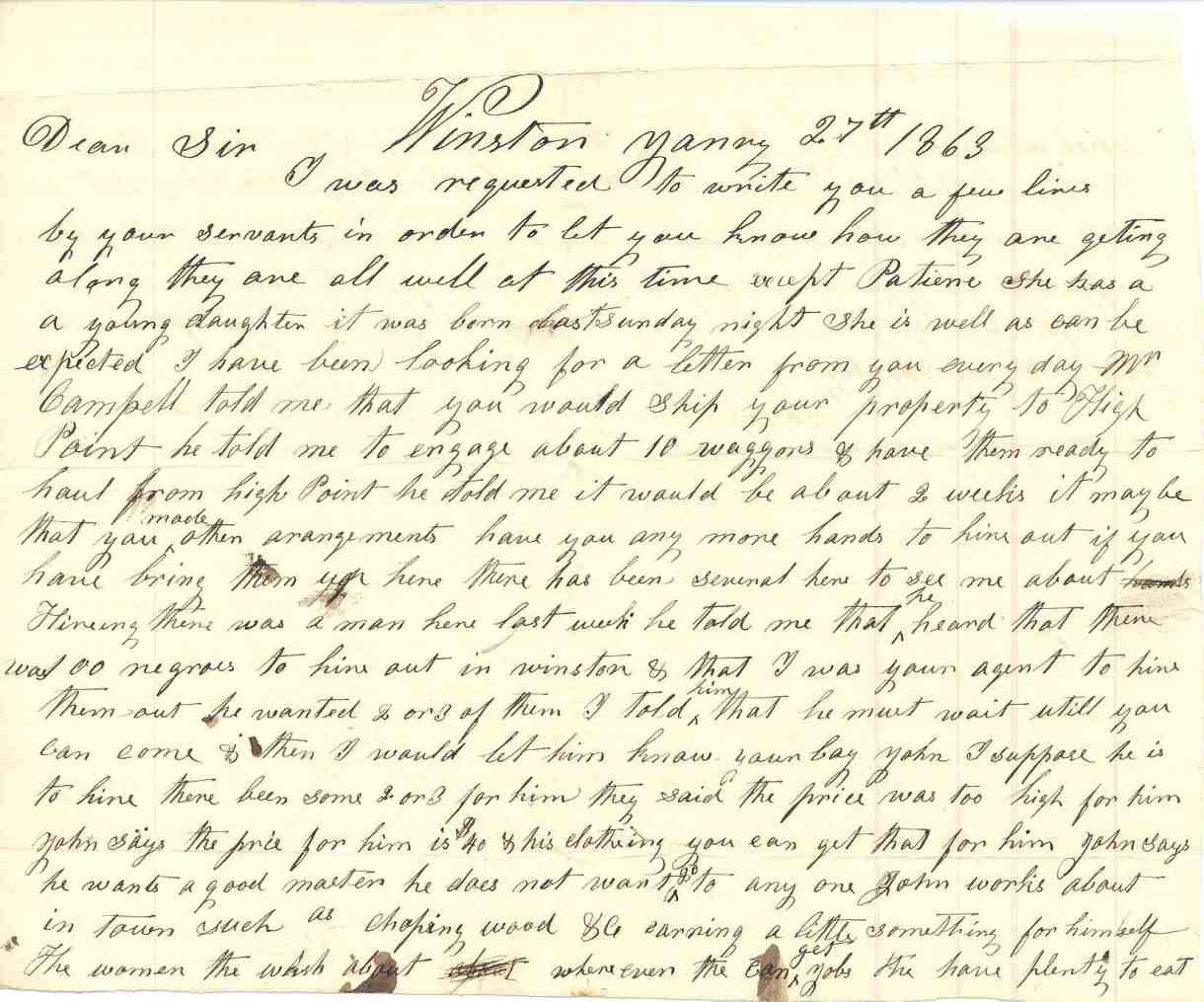
Don’t miss this project at the Wilson Library of the University of North Carolina (where I went to grad school in history). The library is posting a letter written by a Civil War soldier on the exact day on which it was written 150 years ago. (Hint: practice reading hand-writing!)

Here’s today’s entry:

18630127_01

1 Comment

Filed under history

Book notes

By Christopher B. Daly

A couple of updates from the world of letters:

–My B.U. colleague Amy Sutherland has a Q+A with the estimable Tracy Kidder in the Boston Globe. A brief highlight:

BOOKS: Anything else you avoid?

KIDDER: Most biographies are too long. But I loved “King Leopold’s Ghost” by Adam Hochschild. I don’t want to read any more memoirs about dysfunctional families. I don’t think it’s a form that should be condemmed. It’s just there’s been a surfeit of it.

I certainly agree with his point about biographies: they have become so vast that they are approaching the point where they are both un-readable and un-writable. There are a number of biographies I’d like to read and a handful I’d like to write, but the prospect of either is daunting. Bring back the short biography!

–My friend Amy Wilentz will be speaking this Friday at the Harvard Bookstore at 7 p.m. aboutWilentzAmy_creditPaulaGoldmanher new book on Haiti, which has been getting great reviews. Come if you can.


–I found this review in today’s NYTimes irritating. What bothers me is the premise that Adam Begley brought to his reading of a new history of Venice by Thomas F. Madden, titled Sunken Treasure. The reviewer takes the author to task for writing a book of history that tackles a great subject, synthesizes a tremendous amount of material, and writes a readable version for intelligent general readers. Where’s the harm?

But if it’s new, it’s not innovative. Madden has written a conventional narrative history, sweeping in scope and calmly, blandly authoritative. Though he’s a professional historian who teaches at St. Louis University, he seems more proud of his storytelling than his scholarship.

That view is what drives the mania among academic historians for writing books with novel arguments on arcane subjects. Later in the review, Begley calls Madden a “breezy, cheerful, evenhanded” debunker of myths. Begley begrudgingly allows that the last general history of Venice was written a generation ago, and that book dropped the tale in 1797. Madden has tapped newer research, brought the story up to the present, and done so in an engaging way. Why is that not enough?

Painting by Gentile Bellini/Galleria dell'Accademia, Venice (1496; detail)/Photographed by Erich Lessing, Art Resource, NY

Painting by Gentile Bellini/Galleria dell’Accademia, Venice (1496; detail)/Photographed by Erich Lessing, Art Resource, NY


Leave a comment

Filed under Uncategorized

The big picture

By Christopher B. Daly 

In case you missed it, here is the Washington Post‘s panoramic photo of Obama’s second inaugural, which is quite impressive. (I’m just not crazy about those tags. They take up a lot of space and block a lot of pixels. Maybe there is a better design.)

And if you want to know how it was done, here is an explanation by the Reynolds Journalism Institute at Mizzou.

Can you spot yourself?

d

Leave a comment

Filed under Journalism

Defaming the king

By Christopher B. Daly 

This episode of press intimidation in Thailand — where a journalist was sentenced to 10+ years in prison for insulting the king — may seem like a throwback to journalists in many countries. His crime: Lèse majesté, which to say: an injury to the majesty of the ruler.

imgres


But don’t get too smug too fast. There are similar laws against dissing the king in the following places:

1 Current lese-majesty laws in Europe
1.1 Denmark
1.2 Netherlands
1.3 Norway
1.4 Spain
2 Current lese-majesty laws in the Middle East
2.1 Kuwait
2.2 Jordan
3 Current lese-majesty laws elsewhere
3.1 Morocco
3.2 Thailand

Yikes!

Lese-majesty is an old legal doctrine, which once ruled the British publishing world, including the original publishing efforts that developed into the American press.

Newton_Bull_farts_G3


Leave a comment

Filed under Journalism

Math for journalists (cont.)

By Christopher B. Daly 

In their own words, Republican strategists explain one of the superficially puzzling results of the 2012 election: The total vote for all Republican candidates for the U.S. House combined were 1 million votes fewer than the total vote for Democratic candidates for the U.S. House. Yes, the Republicans won a majority of House seats, giving them the power to elect the House Speaker.

How?

In this memo, the Republican State Leadership Committee takes credit, saying that Republicans who control state governments used that power when they used the results of the 2010 census to redraw the lines that define House districts. (That job is a responsibility of the states, not Congress itself.) No surprise, Republicans drew districts that favored their own party’s candidates.

QED.

Here’s the takeaway:

The rationale was straightforward:  Controlling the redistricting process in these states would have the greatest impact on determining how both state legislative and congressional district boundaries would be drawn.  Drawing new district lines in states with the most redistricting activity presented the opportunity to solidify conservative policymaking at the state level and maintain a Republican stronghold in the U.S. House of Representatives for the next decade.


Leave a comment

Filed under Politics

One of the greats

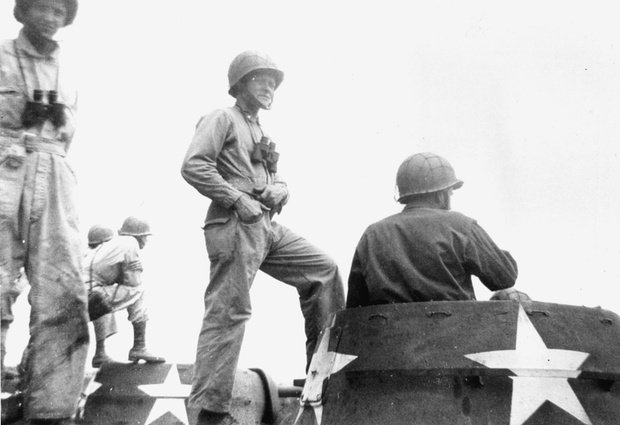
Sad news: the death of Eugene Patterson, a member of the “greatest generation” who really was a great journalist. Reading his obituary in the Times and the version in the Post today, I wondered how many tank commanders go into journalism any more. (After facing the Germans at Bastogne, why would he fear the KKK?)

This undated photo made during World War II, shows Eugene Patterson, commander of a tank platoon as Gen. George Patton’s 3rd Army drove through the German ranks. Newspaper editor and columnist Eugene Patterson, who helped fellow Southern whites understand the civil rights movement, has died, Saturday, Jan. 12, 2013. He was 89. Photo: AP.

This undated photo made during World War II, shows Eugene Patterson, commander of a tank platoon as Gen. George Patton’s 3rd Army drove through the German ranks. Newspaper editor and columnist Eugene Patterson, who helped fellow Southern whites understand the civil rights movement, has died, Saturday, Jan. 12, 2013. He was 89. Photo: AP.


Leave a comment

Filed under Journalism, journalism history

The power of story

by Christopher B. Daly

Narratives in the news:

–Here is a smart piece about why some of us are drawn to TV narratives like Downton and other shows with strong narratives.

–Here is a smart piece about the power of narrators (although I think there is a bit of confusion here between narrators and protagonists, which are not the same).

1 Comment

Filed under history, Journalism

Uh-oh. Layoffs loom at NYT

Here’s the New York magazine version, complete with the memo from Jill Abramson.

No matter how you slice it, this is not good news.

NYT executive editor Jill Abramson

NYT executive editor Jill Abramson


4 Comments

Filed under New York Times