Choosing the right word: rebut or refute?

By Christopher B. Daly

At the risk of sounding pedantic, I want to point out a classic journalistic error in word choice that appears in a story in today’s NYTimes. From Vatican City, pope-watcher Rachel Donadio writes:

In recent days, often speculative reports in the Italian news media — some even alleging gay sex scandals in the Vatican, others focusing on particular cardinals stung by the child sexual abuse crisis — have dominated headlines, suggesting fierce internal struggles as prelates scramble to consolidate power and attack their rivals in the dying days of a troubled papacy.

The reports, which the Vatican has vehemently refuted, touch on some of the most vexing issues of Benedict’s nearly eight-year reign, including a new round of accusations of child sexual abuse by priests and international criticism of the Vatican Bank’s opaque record-keeping.

The problem: the use of the word “refute.”

To refute an assertion means to prove it false or erroneous. Such proof can only come from those who are hearing or reading the argument and counter-argument.

The word Donadio needed to use was something like rebut – which means to attempt to prove something false or erroneous.

If you say that someone rebutted someone/something, it leaves open the question of whether the rebuttal was successful. If you say someone refuted someone/something, it jumps to the conclusion that the matter is settled. Almost always, journalists should not jump to conclusions or favor one side over the other. A verb that leaves the matter open is almost always preferred.

In fairness to Rachel Donadio, it is entirely possible that the wrong word was inserted into her copy by someone on an editing desk. These things happen all the time, driving reporters to distraction.

Class dismissed.


1 Comment

Filed under Journalism

Inside the Meme Factory

By Christopher B. Daly 

The career of Michael Goldfarb, as described in today’s NYTimes, is a great example of the power of the conservative “meme factory” that sustains individuals, institutions, and ideas on the right. It’s the combination of right-wing think tanks and right-wing news media — all created since World War II as an alternative universe to the world of academia and mainstream journalism. It’s a subject I am researching and writing about for what I hope will be my next book.

To quote the Times:

His career was spawned, rather, in the conservative confines of The Weekly Standard and allied organizations, namely the Project for the New American Century, which is well known for promoting the war in Iraq. He has since gone on to thrive in the influential world of outside ideological groups. Mr. Goldfarb, known as a flamethrower on both sides of the aisle, has achieved unparalleled hybrid status in the process.

What this passage suggests is that the conservative Meme Factory is now into its second generation. Many of the key steps that created the Meme Factory in

Irving Kristol Wikipedia

Irving Kristol
Wikipedia

the first place were taken by Irving Kristol, neocon intellectual entrepreneur and founder of The Public Interest. His son, Bill Kristol, is the founder of The Weekly Standard, which gave Goldfarb his start. Bill Kristol is also the chair of the think tank Project for a New American Century.

At age 32, Goldfarb has passed several times through the revolving door connecting the think tanks and the media.


Leave a comment

Filed under Journalism, Politics

A(nother) review of “Covering America”

Shameless commerce division: Here’s a review I just came across.

[FYI, I use a “Google alert” to tell me about new mentions on the Web of the phrase “Covering America.” Turns out, they miss a lot of stuff. If you are using a google alert for something important, don’t assume that it’s catching everything. Do an active search once in a while.]

Here goes:

Information & Culture: A Journal of History

Covering America: A Narrative History of a Nation’s Journalism

By Christopher B. Daly.

[Amherst, Massachusetts: University of Massachusetts Press, 2012. 546 pp. $49.95.]

From the earliest days of European colonization of North America, the settlers were by

and large literate and able to afford reading materials. That was the backdrop for the

birth of the press in what eventually became the United States. Historian and one-time

reporter, Christopher B. Daly provides a narrative history of journalism, of its major

figures, institutions, and industry from 1704 to the early 2000s. He devotes much of his

narrative to the lives of individual publishers, such as printer Benjamin Franklin,

publisher James Gordon Bennett, and editor William Randolph Hearst, describing the

organizations they built, the publications they produced, and the effects they had on the

profession of journalism. The book is organized in two parts, the first covering events

from 1704 to the 1920s, the second where he focuses on the media from the 1920s to

the present. The first was all about print publications, from broadsides to newspapers

and magazines, while the second in addition included radio, television, and most

recently, the Internet.

While narrating the evolution of the press into the profession of journalism, he pays

considerable attention to their business organizations: how they made money and who

bought their products, because the vast majority of the work done by this sector of the

American economy was conducted by private enterprises. As with other industries,

media evolved in response to changes in the American economy, political attitudes,

desires of their customers (readers), and events in the life of the nation. Technologies

came that also altered the events of this industry, from the introduction of the telegraph

in the nineteenth century to the arrival of the Internet in the twentieth.

Daly argues that the history of journalism went through five cycles. The first (1704-

1832) involved a highly politicized and partisan press, while the second (1832-1900)

saw the commercialization of a national news industry with large newspapers, a national

readership, and the development of specialized workforces, such as full-time reporters.

The third era (1900-1974) witnessed the professionalization of news gathering and

reporting, both of which occurred during a time when electronic media came into its

own. The fourth period (1965-1995) Daly characterizes as the time when media

businesses conglomerated, with newspapers and radio and television becoming parts of

much larger enterprises, often run by executives with little or no background in

journalism. The fifth era (since 1995) introduces the period of the PC and the Internet.

Most readers familiar with the history of American newspapers, magazines, and

journalism will find no surprises in this synthetic well-written history up through World

War II. The chapters covering the next six decades, however, are some of the best in this

book, providing a history of journalism through the Cold War, the Vietnam period, and

recent national developments, most notably the arrival of the Internet. It is these later

chapters that provides much new material, and offers a synthesis of developments on

the part of the media, but that also contributes an analysis on the expanding role of

citizens in using their content. Consistent across all periods is his attention to

technological innovations, the economics of the media industry, the culture of the

profession, the political environment in which they operated, and finally on the work

values of the profession. He includes discussions about the African-American press and

the role of women in each period, beginning after the Age of Jackson and extending to

the present. In the process, he demonstrates that these communities initially had an

alternative, yet parallel, development alongside mainstream journalism that during the

twentieth century increasingly became more intertwined with the activities and

institutions of American journalism. This was particularly the case with African American

journalism. However, he barely discusses Hispanic journalism of the late twentieth

century, possibly because it may not yet have developed sufficiently to warrant attention

in such a broad treatment of American journalism.

This is a useful, very up-to-date one volume narrative summary of the story. It is not a

book based on archival research; rather, Daly relies extensively on secondary literature,

which he documents in notes and in a bibliography. For students of the history of

information, this is a welcome addition to the literature on who supplied many types of

publications to the American public and how they functioned. It is a practical volume for

both students of American history and for participants in American media, such as

journalists, editors and publishers. In the vernacular of today’s media, it is also “a good

read.”

James W. Cortada, IBM Institute for Business Value

Information & Culture

info@infoculturejournal.org

Published by University of Texas Press

Website © The University of Texas at Austin

School of Information

The University of Texas at Austin


Leave a comment

Filed under Journalism, journalism history

Press freedom: A new “Ken Burns effect”?

By Christopher B. Daly 

Thanks to documentary film-maker Ken Burns, a federal magistrate has struck a blow for press freedom that strengthens the legal protections for documentary film-makers, journalists, all sorts of people who prepare non-fiction for audiences, and — not least — those audiences themselves. In this case, everyone wins except the government lawyers who wanted to rummage through Burns’ outtakes from a controversial film.

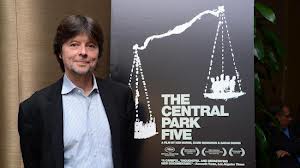
Briefly, the case involves a 2012 film made by Burns and his daughter, Sarah Burns. The film, titled “The Central Park Five,” tells the true story of imgres-1a notorious 1989 rape that occurred in New York’s Central Park. It tells of the fateful rush to judgment by law enforcement officials and the railroading of five young African-American men who were sentenced to long jail terms, even though they were innocent of the crime. Eventually, the men sued the city of New York.

Then, the city’s lawyers, presumably seeking some exculpatory material, decided to go fishing in the Burnses’ raw footage. They probably hoped to get lucky and find something that would let the city off the hook or at least muddy the waters. The city’s lawyers demanded access to the Burnses’ notes and outtakes. Right there, they should have known better. What could be more chilling to the practice of journalism (or documentary film-making, or history, for that matter) than having government lawyers picking through the material that doesn’t meet the standard of truth and accuracy. (I know that I have cartons full of notes of material that never saw the light of day because I considered that stuff wrong, unfair, or simply incomprehensible.)

To his credit, Ken Burns resisted that demand and hired lawyers of his own. This week, Magistrate Judge Ronald L. Ellis of United States District Court in Manhattan threw out the government lawyers’ request.

imgres 

[Before any journalists reading this get too smug, “The Central Park Five” is also a cautionary tale about the news media’s own rush to judgment in the case, which was just as grotesque as that of law enforcement — indeed it may have been a driver of the ultimate injustice.]


So, congrats to Ken and Sarah Burns for standing up for freedom. In the rape case, it turns out the authorities had the wrong guys. In the subpoena for outtakes, it also turns out the authorities had the wrong guys. 

From today’s New York Times:

Judge Ellis also ruled that the city failed to meet the requirements for subpoenas to journalists for nonconfidential material: that the material would be significant and relevant to its case and was unavailable elsewhere. He said pretrial depositions would give the city’s lawyers ample opportunity to question the five men.

“It’s a marvelous decision for documentary filmmakers and point-of-view journalists,” Mr. Burns’s lawyer, John Siegal, said. “And it’s an important victory for the media industry generally.”


Leave a comment

Filed under First Amendment, Journalism, Uncategorized

Monday roundup: awards, complaints, etc.

Christopher B. Daly 

As so often happens, Monday morning brings a bunch of things to consider:

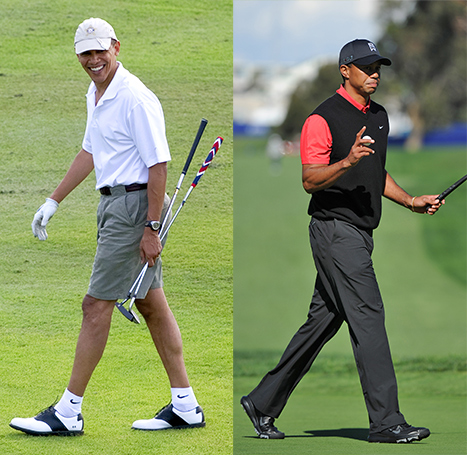
–The White House press corps is pissed about being kept away from Obama and Tiger Woods. Rightly so. Why schlep to Florida if you can’t go golfing?

This photo is a composite!

This photo is a composite!


–David Carr has a fascinating example of what I like to call The Power of Reporting. He tells how one reporter got out of the office to examine the apparent truth of a dramatic photo. 


Photo by Stephanie Sands


Photo by Stephanie Sands


–The new Polk Awards are out (they are something like the Golden Globes vis-a-vis the Academy Awards). 2012 was a good year to be reporting about the inexplicable fortunes amassed by the families of some of China’s most powerful men. Among the winners: David Corn of Mother Jones (for breaking the story about Mitt Romney’s fateful “47 percent” comment) and David Barboza of the New York Times for his series from China “Princelings.” Congrats to all winners. Good luck in the competition for the Pulitzer Prizes (due out in April).

–The NYTimes Public Editor, Margaret Sullivan, continues to explore the dust-up between Times auto writer John Broder and the head of Tesla Motors, Elon Musk.

[Full disclosure: I am wildly biased on this issue by my desire to own a Tesla some day.]


Leave a comment

Filed under Journalism, New York Times, Politics, President Obama

Essaying the essay

By Christopher B. Daly

Don’t miss this marvelous essay about essays by one who knows — Philip Lopate. He is the editor of The Art of the Personal Essay and a prolific essayer in his own right. I love his emphasis on doubt and on the use of the essay to explore doubt. In an age of assertion, this seems worth remembering, or at least I think so.

17DRAFT-blog427


Now, time to get back to that biography of Montaigne, the ur-essayist.

As Montaigne himself put it, the starting point of the essay is this: What do I know? roll that around in your head, or on your tongue, putting the emphasis on each word in turn.

Leave a comment

Filed under Uncategorized

Using research in journalism

By Christopher B. Daly

This column by James B. Stewart in today’s Times is a good example of the power of using research. When journalists avail themselves of expertise and data, they can get past myths, slogans, and he-said/she said. In the column, Stewart examines the claim that rich people move to avoid income taxes. That claim, a favorite of tax-cutters, is an assertion that should be testable by facts. Turns out, it has been tested — multiple times — by social scientists. What did they find?

Here’s Stewart’s take-away:

It turns out that a large majority of people move for far more compelling reasons, like jobs, the cost of housing, family ties or a warmer climate. At least three recent academic studies have demonstrated that the number of people who move for tax reasons is negligible, even among the wealthy.

Cristobal Young, an assistant professor of sociology at Stanford, studied the effects of recent tax increases in New Jersey and California.

“It’s very clear that, over all, modest changes in top tax rates do not affect millionaire migration,” he told me this week. “Neither tax increases nor tax cuts on the rich have affected their migration rates.”

The notion of tax flight “is almost entirely bogus — it’s a myth,” said Jon Shure, director of state fiscal studies at the Center on Budget and Policy Priorities, a nonprofit research group in Washington. “The anecdotal coverage makes it seem like people are leaving in droves because of high taxes. They’re not. There are a lot of low-tax states, and you don’t see millionaires flocking there.”

Despite the allure of low taxes, Mr. Depardieu hasn’t been seen in Russia since picking up his passport and seems to be hedging his bets by maintaining a residence in Belgium. Meanwhile, Russian billionaires are snapping up trophy properties in high-tax London, New York and Beverly Hills, Calif.

“I don’t hear about many billionaires moving to Moscow,” said Robert Tannenwald, a lecturer in economic policy at Brandeis University and former Federal Reserve economist.

Far too often, journalists fall for the anecdote, such as the noisy departure of Gerard Depardieu from high-tax France. 

(pool photo)GD embraces Putin, leader of his "adoptive" country -- or is he evaluating Putin as a possible hors d'oeuvre?

(pool photo)
GD embraces Putin, leader of his “adoptive” country — or is he evaluating Putin as a possible hors d’oeuvre?

Or else, they repeat the assertion unexamined, or “balance” it with an offsetting comment by someone from the other side.


5 Comments

Filed under Uncategorized

Tesla v. NYTimes

By Christopher B. Daly

I have been hanging fire on this one, but now comes a terrific blogpost by Dave Weinberger that not only has a wise take on the whole thing, but it also contains most of the relevant links. That way, you can see all the original contributions to this fascinating dust-up between  the New York Times and Tesla Motors. My problem is, I want them both to be right (and adult about it), so I am waiting for more data to emerge.

Vroom or bust?

Vroom or bust?

Leave a comment

Filed under Journalism, New York Times, Uncategorized

Minimum wage: international comparisons

By Christopher B. Daly

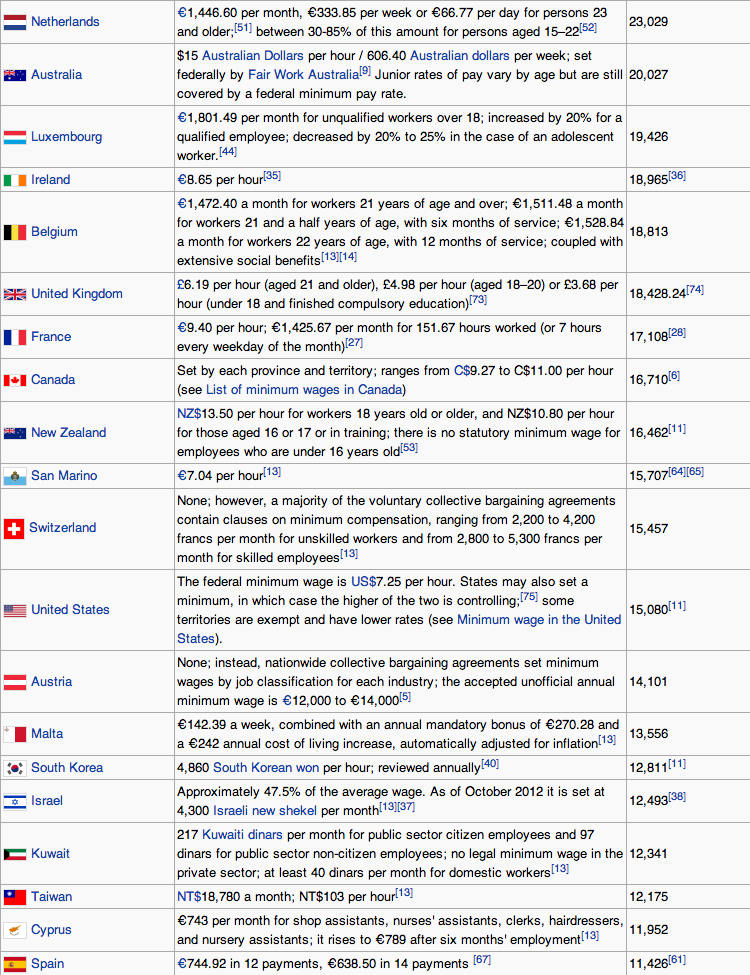
Thanks to Wikipedia, here is a chart showing how the current U.S. minimum wage compares to the minima in other countries (at least, those that have a minimum.)

For handy reference, below is the same chart reorganized a bit. What I did was to sort the annual wage column (the amount a person in a given country would earn by toiling at the minimum for an entire year) in a descending fashion. So here you can see, already converted into US$, how we stack up. We are #12 on the list.

(Note: some countries were excluded for various reasons; if they were counted here, I bet that Sweden, Norway, and Germany would all rank ahead of the USA.)

Screen Shot 2013-02-13 at 1.27.34 PM


The list goes on and on, but I could only capture so much in a single screen shot.


Leave a comment

Filed under Uncategorized

NBC News now a tiny cog in Comcast

By Christopher B. Daly

It is worth noting that the once-mighty NBC News division is now a tiny cog in the giant money-making machine thatimgres-1 is Comcast. Exercising a legal prerogative, the giant cable provider decided to go ahead and gobble up the rest of NBC Universal that it did not already own.

As a result, the entire NBC Universal, including TV news carried by NBC, MSNBC, CNBC, et al, are now owned by the biggest cable provider in the US. So, from one point of view, the journalists at NBC News have a new set of conflicts of interest: how do they cover Comcast and its many problems, regulatory issues, lobbying efforts, etc.?

Before anyone gets too teary-eyed, it should be noted that NBC Universal is a kind of trophy being passed back and forth between multibillion conglomerates. To put it in perspective, NBC News is a tiny part of NBC Universal (which is mainly an entertainment company with a news caboose.) 

imgres-4According to today’s Times, NBC Universal was sold for $17 billion or so from GE (a $147 billion corporation) to Comcast (a $62.5 billion corporation).


Some history of all these players:

imgres-6

(via Wikipedia)

Comcast Cable was originally formed as American Cable Systems in 1963[9] and was founded by Ralph J. Roberts, Daniel Aaron and Julian A. Brodsky based on a recommendation from Pete Musser, who brought the deal to Ralph Roberts to buy his first cable system in Tupelo, Mississippi. The company was incorporated in Pennsylvania in 1969, under the new nameComcast Corporation.[10][dead link] The name “Comcast” is a portmanteau of the words “Communication” and “Broadcast”.[11]

Then, there’s GE:

(via Wikipedia)

Before 1889, Thomas Edison had business interests in many electricity-related companies. . . In 1889, Drexel, Morgan & Co., a company founded by J.P. Morgan and Anthony J. Drexel, financed Edison’s research and helped merging those companies under one corporation to form Edison General Electric Company which was incorporated in New York on April 24, 1889. The new company also acquired Sprague Electric Railway & Motor Company in the same year.[12][13]

At about the same time, Charles Coffin, leading Thomson-Houston Electric Company, acquired a number of competitors and gained access to their key patents.
General Electric was formed by the 1892 merger of Edison General Electric Company of Schenectady, New York and Thomson-Houston Electric Company of Lynn, Massachusetts with the help of Drexel, Morgan & Co.[13] Both plants continue to operate under the GE banner to this day.[14] The company was incorporated in New York, with the Schenectady plant used as headquarters for many years thereafter.

In 1919, GE formed a subsidiary called the Radio Corporation of America (RCA) to get into the new business of imgres-2manufacturing radios. A few years later, RCA executives, led by chief executive David Sarnoff, realized that they could also make money by providing programming to radio (and thereby stimulate further sales of the hardware, too), and they formed the National Broadcasting Company (NBC). In radio, NBC quickly became dominant in entertainment programming and in the brand-news enterprise of putting news on the airwaves.

In 1930, GE sold off RCA under antitrust pressure from the government. Operating independently, RCA moved into its new headquarters in the new Rockefeller Center in midtown Manhattan, taking over the most prominent address in the complex, the skyscraper known as “30 Rock.” NBC was so dominant in radioimgres-5 that, again under antitrust pressure in 1943, it spun off a big chunk of its radio operations, which became the core of the new ABC.

Sarnoff pushed RCA and NBC into television after WWII, and NBC News evolved from primarily a radio operation into primarily a tv operation. In the following decades, NBC News grew into a large-scale news-gathering operation, associated with its prominent TV evening news anchors: Chet Huntley & David Brinkley, John Chancellor, and Tom Brokaw.

In 1986, GE bought RCA back and brought into the corporate fold once again, adding broadcasting to its global mix of businesses ranging from lightbulbs to locomotives to jet engines to finance and a lot of other things. So, once again, RCA/NBC was a small part of a big corporation. In that context, NBC News had plenty of conflicts of interest when it came to covering GE, since it was a large defense contractor and had a hand in dozens of industries.

If it is true that “freedom of the press belongs only to those who own one,” we are still a long way from having a truly free and independent NBC News division.

Leave a comment

Filed under broadcasting