Category Archives: Uncategorized

Bulger trial coverage

By Christopher B. Daly

Whitey Bulger, courtesy of Boston PD. One of the greatest mugshots in the history of the genre.

Whitey Bulger, courtesy of Boston PD. One of the greatest mugshots in the history of the genre.

The long-awaited trial of gangster/murderer Whitey Bulger is in full swing in a federal courthouse in Boston (named for the longtime congressman from the district of South Boston, the late Joe Moakley).

Some of the journalists and news institutions covering the trial are doing excellent work. Here’s a guide:

The Boston Globe, the biggest news organization in New England, is all-in. Here’s a link to their special expanded coverage for “Globe Insiders” (which just means non-freeloaders — i.e., those who have a digital subscription, as we all should).

WBUR, the longtime news leader among NPR stations in the region, has a smart-looking special section as well, led by veteran reporter David Boeri.

2013_Bulger-Banner_940x125

Both sites are rich with background, photos, timelines, who’s-who’s, and (my favorite) maps.

Also meritorious: the reporting of the ubiquitous Adam Reilly, who reports for the city’s other major NPR station, WGBH.

bulgerbanner3

And, if that’s not enough, you can always follow the Twitter feeds (#bulger), which are emerging as a pretty good workaround for the continuing silliness of banning TV cameras from federal trial courts.

Oh, and for deep background, read the Whitey biography written by my friend and BU colleague Dick Lehr.

2 Comments

Filed under Boston, Journalism, Uncategorized

Who will buy the Boston Globe?

By Christopher B. Daly 

imgresThe Boston Globe carries a story today about the impending sale of the newspaper by its owner of the past two decades — the NYTimes Co. Bids are due by June 27. As a regular reader, I hope, of course, that the new owners will be very, very rich people with very, very high standards of journalistic integrity. I hope they will be innovators who have a clue about how to make a business out of quality journalism. I also hope they really care about Boston and New England. I hope they have the nerve to stand up to people like Whitey Bulger (and Billy Bulger, for that matter) and an appreciation for why this is a special place. (Yes, every place is special, but I am looking for someone who gets the particular special-ness of this particular place; in other words, no Sam Zells, please.) I hope they have wit, and style, and grace.

Know anyone?

2 Comments

Filed under Journalism, New York Times, Uncategorized

NSA Leak: Why not the Times?

By Christopher B. Daly

Since the disclosure of the NSA leaks story, a fair amount of media commentary has focused on the thinking of the self-identified leaker, Edward Snowden, who got access to secrets by working for a government contractor. Many have compared him to Daniel Ellsberg, who got access to secrets by working for a government contractor, then divulged the Pentagon Papers in 1971 to the New York Times. 

Some wonder why Snowden chose to cooperate with Glenn Greenwald (who is a lawyer/activist/blogger/freelancer) rather than a traditional media heavyweight such as the New York Times. Some of the concern is misplaced, I believe, since Snowden also shared his NSA leak with the estimable Barton Gellman of the Washington Post.

As far as the Times goes, the newspaper’s own Public Editor, Margaret Sullivan, aired out the question in her most recent posting.

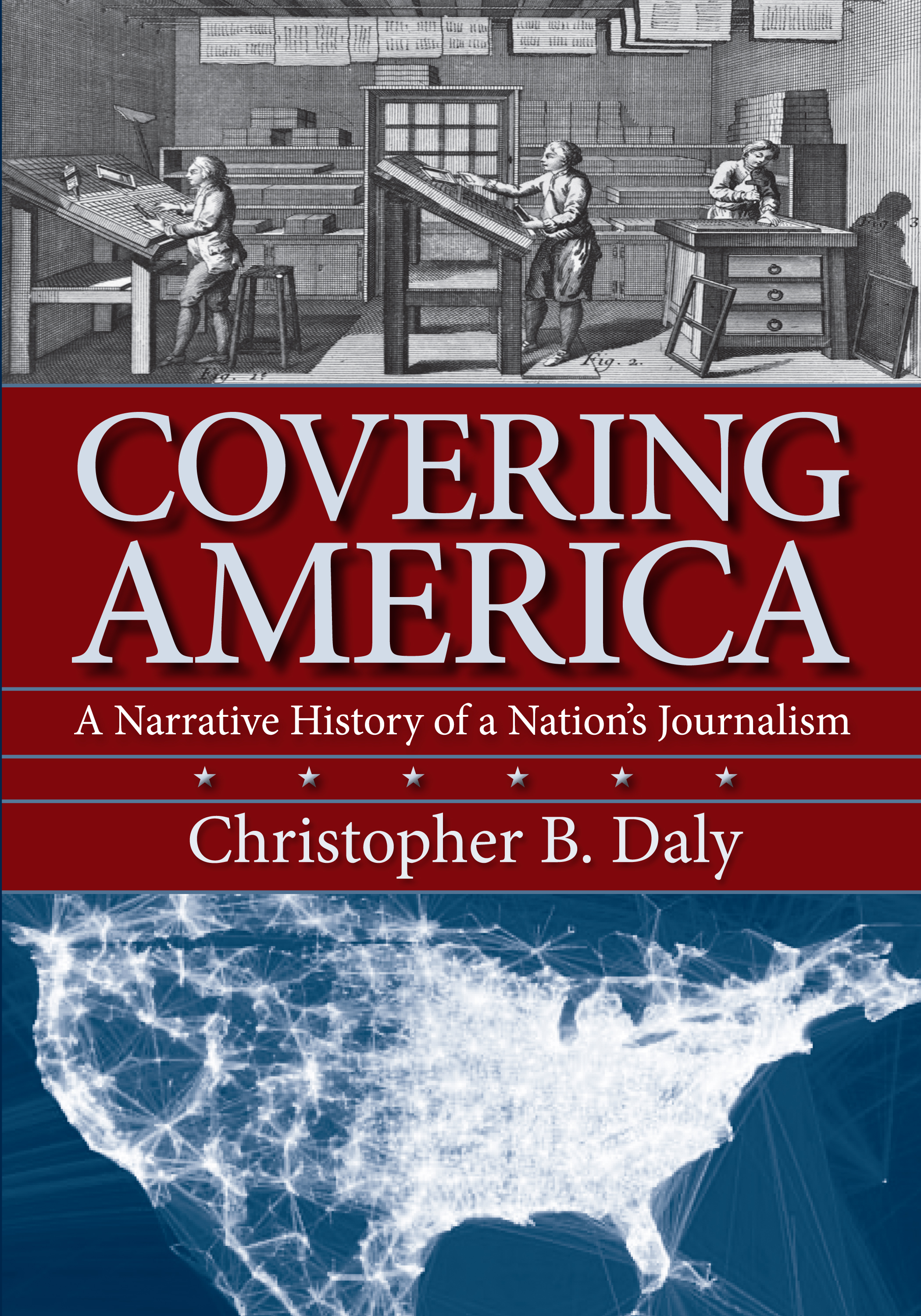
I think it is worth recalling some of the history of the Pentagon Papers case (which you can read at greater length in chapter 11 of my book, Covering America.) By his own CA cover finalaccount, Ellsberg had a political goal — ending the U.S. war in Vietnam. To that end, he first tried to leak the classified documents to members of Congress, on the theory that they could use their congressional immunity to read the papers aloud on the floor of the House or Senate. Because of their immunity, they could not be prosecuted for anything said as part of the proceedings of Congress and their remarks would be on the public record.

When the office-holders balked, Ellsberg turned his thoughts to the media. There I think it is indicative that he did not approach the Times as an institution. Indeed, the Times — in 1971 — was not well known for challenging the federal government. Instead, Ellsberg was targeting an individual journalist whom he thought he could trust: Neil Sheehan.

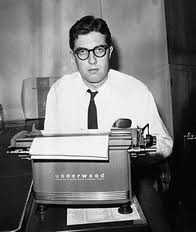
Ellsberg and Sheehan had a bit of history. They had met when Ellsberg was serving in the Marines in Vietnam and Sheehan was working for United Press in its Saigon bureau. Ellsberg had a sense that Sheehan was a skeptic about the war. Later, Sheehanimgres-1 joined the Times, and he was working as a reporter in the Times Washington bureau in 1971. Under the terms of employment for Times reporters, he was supposed to keep his political views to himself. On March 28, 1971, Sheehan wrote a lengthy multi-book review for the Times Sunday Book Review in which took seriously the idea that there should be war-crimes trials for the U.S. policy-makers who kept us in Vietnam. When Ellsberg read that review, he knew he had found the right journalist.

Three months later, Sheehan wrote the first front-page article in the series that became known as the Pentagon Papers.

imgres

4 Comments

Filed under Journalism, journalism history, leaks, New York Times, Uncategorized

Justice Powell’s SCOTUS errors

By Christopher B. Daly

Fascinating story in today’s NYTimes about the hidden history of gay clerks in the U.S. Supreme Court. No surprise: there were gay clerks in the high court’s chambers, drafting opinions, and spending a lot of time with the justices for years before any of them were out of the closet.

Ho-hum. This cannot come as that big a shock to anyone, although the details are certainly interesting.

What I found so interesting was how oblivious some of the justices were (or appeared to have been) until just how recently. A focus of the article is Justice Lewis Powell, who joined the 5-4 majority in a 1986 decision that upheld a Georgia law making sodomy a crime.

The Times observes:

Within just a few years, the climate for gay rights began to change. Justice Powell himself, in 1990, expressed reservations about his vote in the Hardwick case. “I think I probably made a mistake in that one,” he said at New York University’s law school.

Sure enough, the holding in Hardwick was reversed 180 degrees in 2003 in Lawrence v. Texas. So, in that instance, it took just 17 years for the Supreme Court to reverse itself on a 5-4 ruling that was wrong.

Justice Lewis Powell: wrong on sodomy, wrong on sources.

Justice Lewis Powell: wrong on sodomy, wrong on sources.

That is precisely the result I am holding out for in my recent posts about the 1972 Branzburg case and the idea of a federal “shield law” for journalists. In Branzburg, one of the five justices who made up the wrong-headed majority was none other than. . . Lewis Powell.

The take-away: the Supreme Court makes mistakes and sometimes corrects them later.


Leave a comment

Filed under Uncategorized

By Christopher B. Daly

As a public service, I went over the statement by James R. Clapper, the director of national intelligence, and made some suggested edits. I, for one, think it’s touching that Clapper wants to inform Americans about his activities, so I would like to help him with his writing skills.

Turns out, Clapper has a serious writing problem: he overuses the passive voice, thereby disconnecting acts from their actors. Maybe he should write more often.

Screen Shot 2013-06-07 at 10.58.12 AM

Screen Shot 2013-06-07 at 10.58.37 AM

Leave a comment

Filed under Uncategorized

Obama: Wrong on the Constitution, Stupid on the Politics

By Christopher B. Daly 

imgres3By approving or tolerating the abuses of power involved in the AP and Fox News cases, President Obama has positioned himself on the wrong side of the First Amendment. He is moving in the direction of making journalism a criminal activity.

For a former constitutional law professor, that is beyond disappointing.

For a politician who needs the press to govern, that is just stupid.

More evidence comes from the group Reporters Without Borders, an international journalism-advocacy group that supports press freedom in places like Morocco and Bahrain. Now, they feel the need to express concern about the state of press freedom in the United States, where the concept was born. Sheesh.

Also, don’t miss this comment from Ryan Lizza in The New Yorker.

Leave a comment

Filed under First Amendment, Fox News, Journalism, Obama, Politics, President Obama, The New Yorker, Uncategorized

Memo to Obama: Hands off the news media!

By Christopher B. Daly

Today brings more disappointing news about the Obama administration. As they spend more years in office, they are starting to revert to the mean and resemble a very ordinary power-grabbing, rights-trampling, self-serving operation. Alas.

NYT coverage / WaPo coverage.
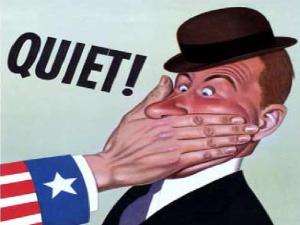
Image_FreeSpeechWhile they have been busy not closing Guantanamo, this administration has been busy setting the all-time record for leaks investigations. The latest misguided attempt to stop leaks is the disclosure that the Obama Justice Dept. “secretly seized two months of phone records for reporters and editors of The Associated Press.” The rationale was that the AP had received a “leak” from someone in the government about a CIA operation to disrupt a plot unfolding in Yemen that was aimed at taking down an airliner. If true, that was a fine thing for the CIA to do. If true, then the folks in the CIA running the operation should have kept their mouths shut. If someone in the government who had knowledge of it spilled the beans, that’s not the fault of journalists. The Obama administration, like every other administration, needs to get its own house in order. You don’t stop leaks by trampling the First Amendment.

Instead, we get this (from NYT):

The A.P. said that the Justice Department informed it on Friday that law enforcement officials had obtained the records for more than 20 telephone lines of its offices and journalists, including their home phones and cellphones. It said the records were seized without notice sometime this year. The organization was not told the reason for the seizure.

The First Amendment exists to safeguard the right of the American people to be informed. The only known means to provide the kind of information we need to govern ourselves comes from a free and independent press, which is protected in its new-gathering every bit as much as it is protected in its news-telling. If the executive branch investigates the news media every time its own employees leak information, that cannot help but have a “chilling effect” on the news business.

This is ancient truth, going back at least as far as the Pentagon Papers and Watergate. If Obama does not want to go down in history in the same chapter with Richard Nixon, he has got to cut this stuff out. He could start by firing Attorney General Eric Holder.

Memo to the AP: The government got all those phone records from your telephone company. I would suggest you cancel your account and try a different carrier. 

Hat-tip: to NYT’s Charlie Savage, who seems to have staked out a new beat: reporting on the constitutional infringements and other abuses of power committed by the Obama administration.

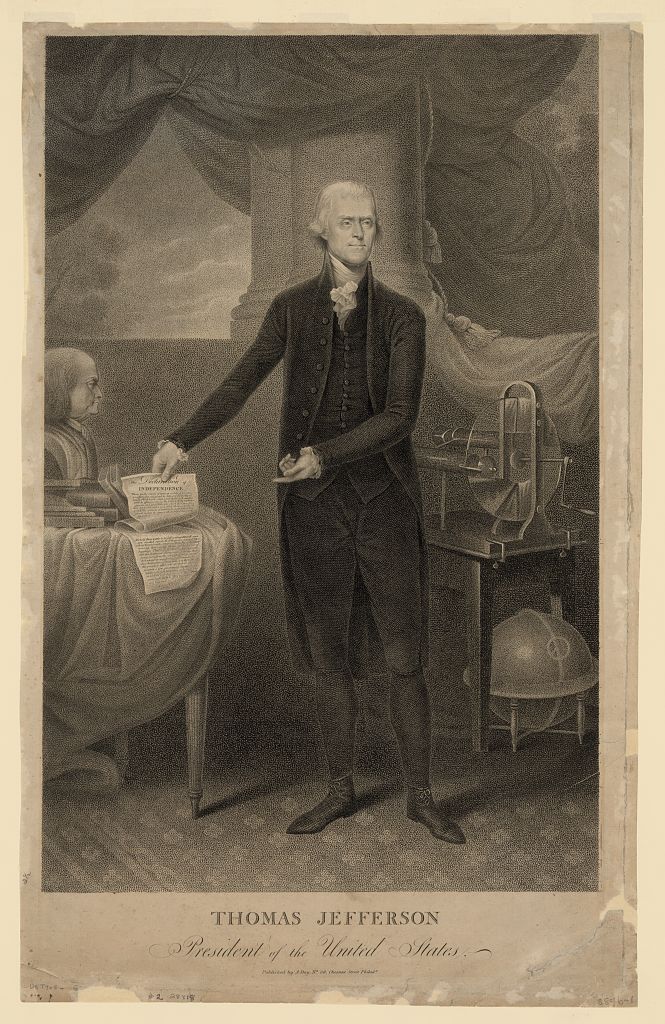
Obligatory quote: Here’s Thomas Jefferson on the dangers of executive power:

"Aware of the tendency of power to degenerate into abuse, the
worthies of our country have secured its independence by the15715v
establishment of a Constitution and form of government for our
nation, calculated to prevent as well as to correct abuse." 
--Thomas Jefferson to Washington Tammany Society, 1809.

Clarification: Of course, what the administration objects to are unauthorized leaks. The leaks they plan and execute for their own purposes are, naturally, quite alright.


Leave a comment

Filed under First Amendment, Journalism, leaks, Obama, Uncategorized

History keeps happening: Southern textile factory gets new uses

By Christopher B. Daly

The Loray Mill in its heyday, when it made fabric for the Firestone tire company.

The Loray Mill in its heyday, when it made fabric for the Firestone tire company.

The huge brick textile factory complex in Gastonia, North Carolina, once considered the largest in the world, is about to find a new life as an apartment complex, complete with amenities like restaurants and shops. From the description in today’s New York Times, it looks like the old factory has come a long way from the original life of the Loray Mill, built in stages starting in 1902.

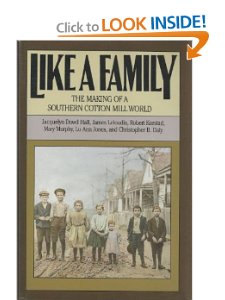
That earlier story is the one told in the book that I co-authored with five fellow historians, Like a Family: The Making of a Southern Cotton Mill World. Published in 1987 and reissued in 2000,51gBhqv0KTL._BO2,204,203,200_PIsitb-sticker-arrow-click,TopRight,35,-76_SX225_SY300_CR,0,0,225,300_SH20_OU01_ Like a Family puts the Loray Mill (see chap. 4), located near Charlotte, into the broader context of Southern industrialization, told largely from the workers’ point of view, based on their own testimony in hundreds of oral history interviews. That work was made possible through the Southern Oral History Program at UNC-Chapel Hill, which continues to do fine work in oral history. The SOHP interviews are mostly on deposit at UNC’s Wilson Library, where they are open to scholars. You can even search for a term like “Gastonia” in the search tool.

That should keep you busy for a while!

banner5

Leave a comment

Filed under history, Uncategorized

What is “strategic communications”?

By Christopher B. Daly

images-1While not wanting to sound holier than anybody, I have to ask:

What is a school of Journalism (not to mention the oldest one in the country) doing with a search for a new professor of something called “strategic communications”?

The once-proud University of Missouri School of Journalism, founded in 1908, recently posted this job advertisement:

The Missouri School of Journalism is seeking a colleague who will teach at the graduate and undergraduate levels in strategic communication in the areas of marketing research, data analysis, and consumer insights.  We invite applications for a full-time 9-month tenure track assistant professor beginning in August 2013.

Why are they teaching “marketing research, data analysis, and consumer insights”? What do those things have to do with journalism? Journalism is simple to define: try to find out the truth and tell it. I don’t know what those other activities are. They sound suspiciously like figuring out how to sell stuff (and maybe candidates or ideologies) to people who may or may not be better off after being researched and analyzed.

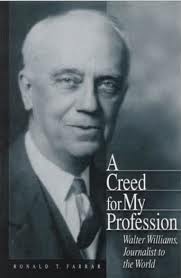
Obviously, the answer is that Mizzou has strayed from its original founding mission. That mission was spelled out by the school’s first dean, Walter Williams. It is worth recalling:

images

The creed

I believe in the profession of Journalism.
I believe that the public journal is a public trust; that all connected with it are, to the full measure of responsibility, trustees for the public; that all acceptance of lesser service than the public service is a betrayal of this trust.
I believe that clear thinking, clear statement, accuracy and fairness are fundamental to good journalism.
I believe that a journalist should write only what he holds in his heart to be true.
I believe that suppression of the news, for any consideration other than the welfare of society, is indefensible.
I believe that no one should write as a journalist what he would not say as a gentleman; that bribery by one’s own pocket book is as much to be avoided as bribery by the pocketbook of another; that individual responsibility may not be escaped by pleading another’s instructions or another’s dividends.
I believe that advertising, news and editorial columns should alike serve the best interests of readers; that a single standard of helpful truth and cleanness should prevail for all; that supreme test of good journalism is the measure of its public service.
I believe that the journalism which succeeds the best-and best deserves success-fears God and honors man; is stoutly independent; unmoved by pride of opinion or greed of power; constructive, tolerant but never careless, self-controlled, patient, always respectful of its readers but always unafraid, is quickly indignant at injustice; is unswayed by the appeal of the privilege or the clamor of the mob; seeks to give every man a chance, and as far as law, an honest wage and recognition of human brotherhood can make it so, an equal chance; is profoundly patriotic while sincerely promoting international good will and cementing world-comradeship, is a journalism of humanity, of and for today’s world.


Leave a comment

Filed under Uncategorized

End cell-phone thefts

By Christopher B. Daly 

Here’s my idea for a solution to the growing problem of cellphone thefts: build in the equivalent of the exploding re-dye packs that banks put in the bags of cash they give to bank-robbers. That way, robbers will figure out pretty quickly that it’s not worth stealing phones. It also makes the bad guys pretty easy to spot.

Besides, how satisfying would it be to know that the rotten bastard who stole your phone had a face full of red dye?

19776942_BG1-1


Leave a comment

Filed under Uncategorized