Category Archives: Politics

Math for journalists (cont.)

By Christopher B. Daly

Last-minute pre-election edition. Here’s a tip for filling the long hours on Election Day when not much is happening. Read this article from the Nieman Journalism Lab about the use of statistics in politics by the New York Times’s Nate Silver. Then, read Nate Silver’s blog, whose name is actually a number, 538 — so named for the number of votes in the Electoral College. 

That should keep you busy until some actual results start coming in after 7 p.m. (eastern time).


2 Comments

Filed under Journalism, Politics

Who are Mitt Romney’s people?

by Christopher B. Daly 

Readers of this blog are obviously an intelligent, discerning, and deeply informed group of people, curious about many things and knowledgable about many others. So, here goes:

How many presidential candidates in U.S. history have ever gotten elected without carrying their home states?

A bonus question: who were they?

Turns out, of the 44 men who have won the office, only three failed to carry their home state (that is, the one they were living in when they ran for president). They were James K. Polk of Tennessee, Woodrow Wilson of New Jersey, and Richard Nixon of New York.

Now, consider Mitt Romney.

–He was born in Michigan.

–He spent the bulk of his adult life in Massachusetts — racking up two degrees from Harvard (when’s the last time he mentioned either of those? Don’t forget: he has a law degree.), then working at Bain in Boston and later becoming governor. This is the state where he votes.

–He also has a vacation home in New Hampshire.

–And he is building some kind of pleasure dome in La Jolla, Calif.

So, that makes four states where he has roots or homes, and according to the polls, he is going to lose all four of those states on Tuesday. What does that say about him? He could lose Massachusetts, the state where he has lived the longest, by 20 points. How is that not a story? Just imagine if Obama were poised to lose Illinois by 20 points. . . (or Hawaii!)

[the Romney mansion in Belmont, Mass. It’s an affluent place, but still, no one lives like this.]

Leave a comment

Filed under Politics

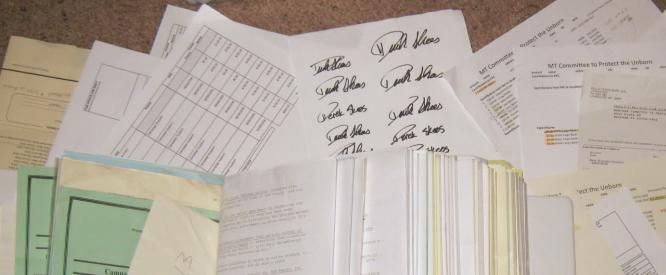
Citizens United meets “Breaking Bad”

By Christopher B. Daly 

Now comes news that certain people have

1. created an organization that meets the technical definition of the kind of non-profit that can funnel unlimited amounts of money into U.S. politics without having to identify the donors.

2. perhaps (according to documents found in a meth house in Montana, fer chrissake) skirted the legal requirement that they steadfastly avoid coordination of their efforts with any actual politicians.

Hmmm…. does that seem: surprising? shocking? dismaying? inevitable? All of the preceeding?

I would say that ever since the U.S. Supreme Court’s profoundly wrong ruling in the 2010 Citizens United case, this kind of thing was entirely predictable. (All except the meth house; that is a nice touch.) In brief: the story involves a conservative group opposed to clean energy is organized into something called the American Tradition Partnership. According to news accounts and Montana election officials, ATP may have violated campaign finance laws, based on documents found in the meth house.

For the full story, watch Frontline tonight on PBS (before public broadcasting’s enemies destroy it), or read about it at ProPublica. You can also follow it in the pages of the Missoulian, a newspaper based in Missoula, Montana, which (luckily!) still maintains a bureau in the state capital of Helena trying to keep an eye on government and politics. A hat tip to Mike Dennison of the Missoulian — and keep up the good work. Or, check out the coverage in the Billings Gazette.

p.s. Don’t miss this handy interactive info-graphic from ProPublica, which shows who is giving what amounts to which causes.

p.p.s. Memo to the conservative SCOTUS bloc: thanks a lot.


Leave a comment

Filed under Politics, Supreme Court

Presidential debate: The global perspective

By Christopher B. Daly

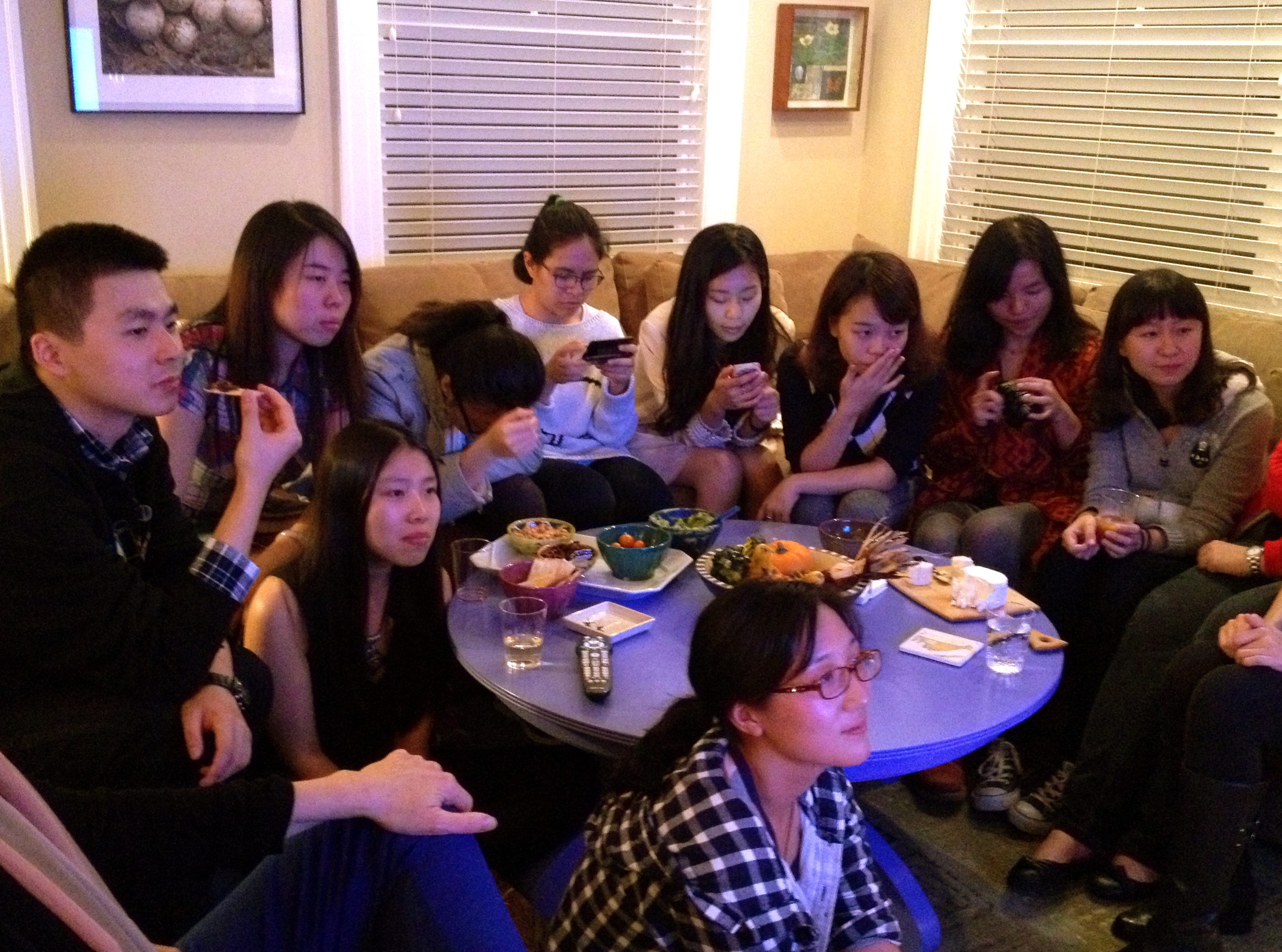
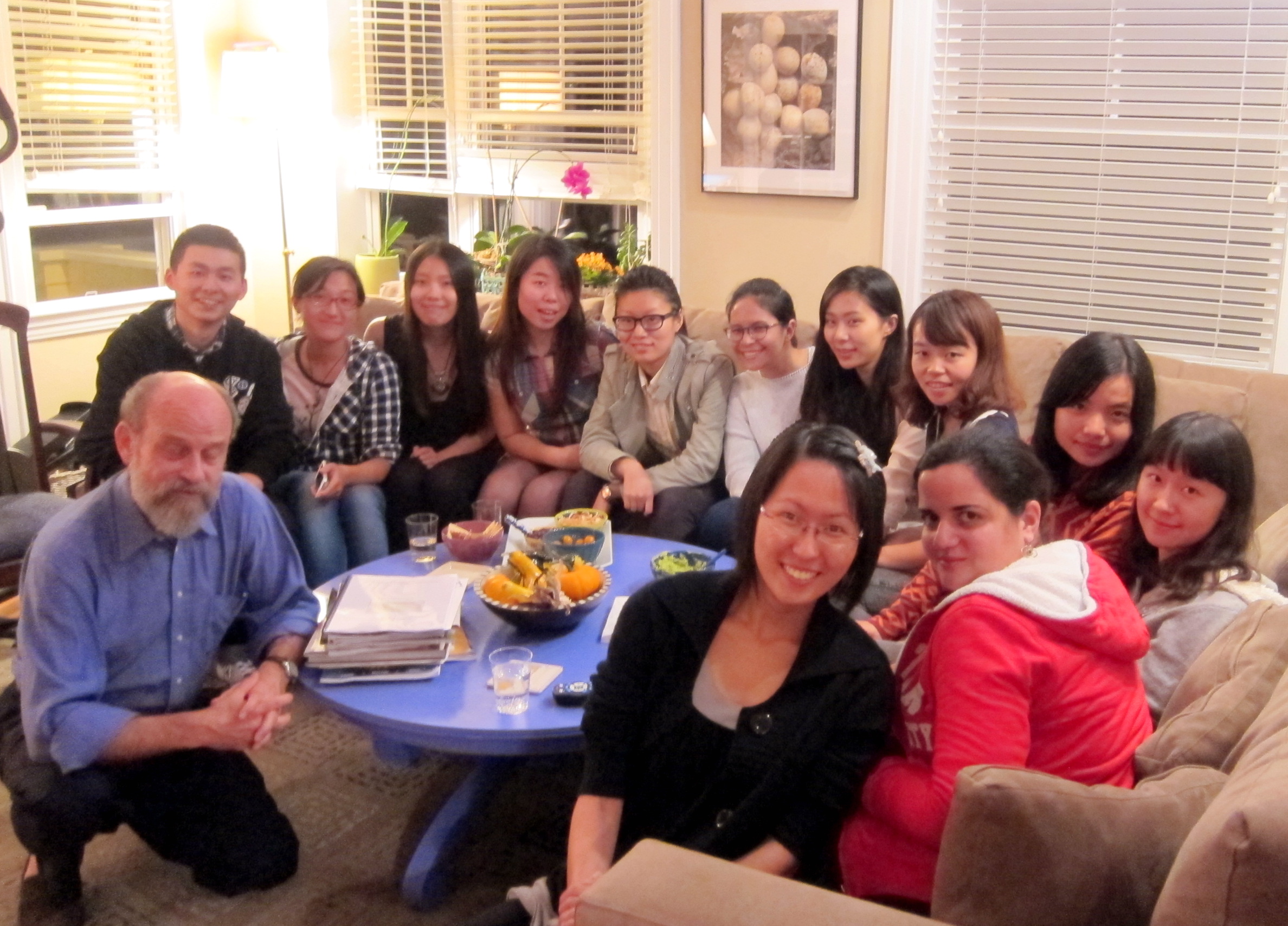
I had the opportunity to watch the presidential debate last night with a unique group of non-voters: a dozen grad students enrolled in the Journalism Dept at Boston University. I teach all of these great young people in a special class for the new students from overseas.


As you can see, they were really dialed in and asked great questions.


I think quite a few of them were perplexed by Obama’s disappointing performance (but were too polite to dump on him!).

Note to academic advisers: tell your students not to take classes with professors whose eyes are shut.

Leave a comment

Filed under Journalism, Politics

This and That

By Christopher B. Daly 

Some worthies from today’s news:

The Times has a piece that toys with what might be called the “journalistic Heisenberg principle.” That is, based on the popular view of Werner’s Heisenberg’s Uncertainty Principle, it would appear that a reporter cannot be present at a political event without changing the event. In any case, it’s always fascinating to hear what politicians say when they think they are off the record.

The Times has a piece about the final round of releases of the secret tapes that JFK made in the Oval Office. Disclaimer: Kennedy had an “on” button (unlike Nixon), so the conversations that were recorded were those that he chose. Furthermore, these tapes have passed through the hands of the family and the staff at the Kennedy Presidential Library, so there is no way of knowing what is not in there. Still, they are the best we are going to have.

The Globe has a piece that addresses the question: who is on the receiving end of all the money spent on political advertising? It’s the owners of the thousands of TV stations around the country, of course. Not all of the prosper equally, of course. Much depends on whether they are in a “battleground” state. Also, they may not prosper as much as you might think: Since Congress started regulating broadcasting in 1927, lawmakers have rigged the rules in their favor. As in this excerpt from the Globe:

By federal mandate, candidates for president and Congress receive preferential treatment when booking advertising time, and stations must give equal airtime to each side of a race. Candidates can also buy television advertising time at a discount from the going commercial rate. The result all too often: back-to-back political spots which can bump more lucrative commercial advertising.


Leave it to politicians to write the rules.


Leave a comment

Filed under history, Journalism, Politics

Rhetoric 101: the Brown-Warren race

By Christopher B. Daly

When did the term “professor” become an epithet?

U.S. Senator Scott Brown, R-Mass., seems to use it that way in his campaign against challenger Elizabeth Warren. As can be seen in the wordmap below, created by the Boston Globe, Brown never misses a chance to use that title. What is hard to tell from the graphic, though, is Brown’s tone and demeanor. He usually delivers the “professor” line with a smirk, as if he knows he’s blowing a dog whistle intended to reach every anti-intellectual voter in Massachusetts. This from a guy who has benefitted from the teaching he received from many professors. After all, he has a b.a. from Tufts (cum laude) and a Juris Doctor degree from Boston College Law School. It takes a lot of nerve for him to run a campaign in which he mocks higher education (which is also a major industry in the state he wants to represent).

As someone who worked very hard to become a professor myself, I guess I take this one a little bit personally. Where I come from, in Medford, we’d call someone like Brown cute. The way we used it there, it was not a compliment.

Boston Globe

Boston Globe


Leave a comment

Filed under Journalism, Politics

Romney’s taxes

By Christopher B. Daly

In the coverage of the political debate over who pays taxes in this country, most journalists seem to be overlooking some critical distinctions. Mitt Romney (and most conservatives) focus on the federal income tax. But that is only one tax among many. In the case of many wealthy people, it’s the primary tax they pay, and it is really a tax on the performance of the capital they control.

Most normal typical Americans earn wages or salaries, on which they pay the payroll tax. Most of them pay it willingly. They do not mope around complaining that that damn payroll tax is sapping them of their will to work harder. Most people accept and just wish their pay was higher (even though that would mean paying more tax; most people “get” this).

When Mitt Romney released his 2011 tax return, it showed — no real surprise here — that his income from wages was zero. Therefore, he did not owe or pay any payroll tax in 2011. That does not make him a deadbeat, just someone who is lucky to live off his investments.

[Another difference between the payroll tax and the income tax: the payroll tax is usually withheld by the employer and never seen by the worker. The income tax often falls on unearned income (from investments, for example), which is not withheld. As a result, rich people often have to write a check to the government for large amounts of money that they once had in their hands. This contributes mightily to the feeling they seem to have that it’s “their” money and the government should keep its hands off.]

One more thing: The payroll tax is not the only tax Romney does not pay. He is not pulling his weight with the alcohol tax or the tobacco tax either!

Leave a comment

Filed under Journalism, Politics, President Obama

Journalism issues galore

By Christopher B. Daly

Lots to catch up with this Labor Day:

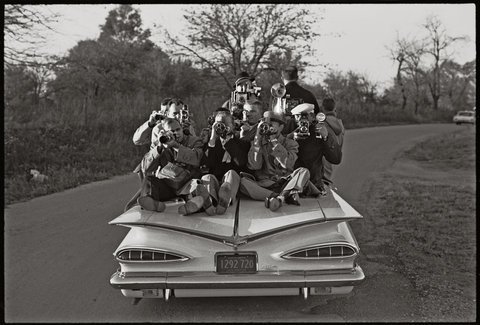
–A very thoughtful piece by Sasha Issenberg from the Sunday Timesabout a possible skills gap between political reporters and political operatives.

Nice slideshow goes with it, including this photo from the 1960 Kennedy campaign:

Paul Schutzer/Time & Life Pictures — Getty Images

Paul Schutzer/Time & Life Pictures — Getty Images


I wonder what Nate Silver thinks of all this?


–A new David Carr column about Reddit. (which may be the ugliest site on the Web.)


–A look at the top lawyer at Twitter, who makes the day-to-day calls on freedom of speech.


–A fascinating peek at how the New Orleans Times-Picayune is tip-toeing across the scary rope bridge to the future. Here’s a prior post.


Leave a comment

Filed under Journalism, journalism history, Politics

Clint Eastwood: Questions for journalists

By Christopher B. Daly 

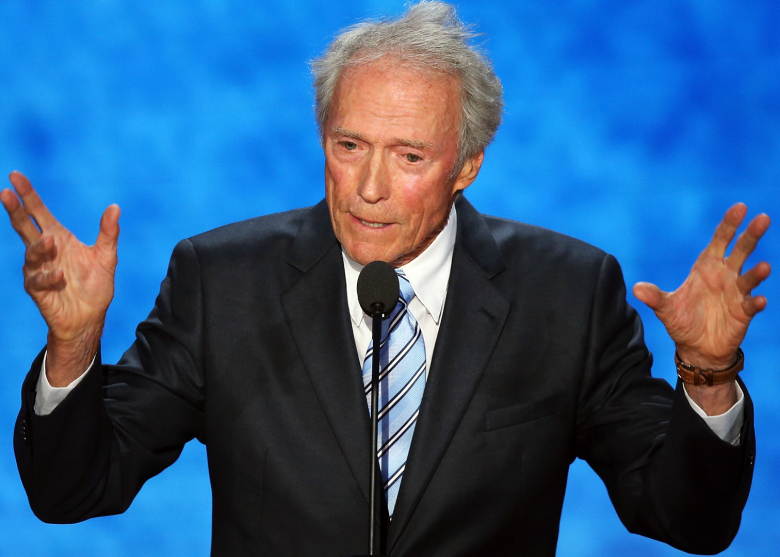
In the aftermath of the Republicans’ “big night,” two questions occur to me about the appearance by the actor Clint Eastwood. These questions seem worth raising, but I have not seen any traces in the mainstream coverage:

1. Who approved the decision to put Eastwood on the GOP convention schedule? Who allowed Eastwood to hijack the agenda at that critical moment of prime-time exposure? Did Romney do so himself? If so, what kind of judgment does that show? What political aim was advanced (or meant to be advanced)? Was it presidential?

Clint Eastwood / CBS News

Clint Eastwood / CBS News

2. A useful thought exercise: when covering politics in a two-party system, it is often useful to turn the mirror around and ask, “What would happen if the other party did this?” In this case, you would have to ask, What would happen if the Democrats chose to spotlight a left-wing Hollywood figure in prime time? Furthermore, what would happen if that left-winger had a reputation for menace and incipient mayhem? And what if that figure showed up apparently disheveled and engaged in a vulgar, intermittently incoherent rant? What if that person disrespected the office of the presidency by talking down (literally) to a seated imaginary president?

1 Comment

Filed under Journalism, Politics

Obama: Media Critic?

By Christopher B. Daly

Even on vacation, I couldn’t help noticing this piece in today’s Times about President Obama’s news-reading habits and his criticisms of some of the coverage. 

As a media critic myself, I am not sure how I feel about adding this new guy to the ranks. But he does seem to have a grasp on some major issues. From the Times:

The news media have played a crucial role in Mr. Obama’s career, helping to make him a national star not long after he had been an anonymous state legislator. As president, however, he has come to believe the news media have had a role in frustrating his ambitions to change the terms of the country’s political discussion. He particularly believes that Democrats do not receive enough credit for their willingness to accept cuts in Medicareand Social Security, while Republicans oppose almost any tax increase to reduce the deficit.

Privately and publicly, Mr. Obama has articulated what he sees as two overarching problems: coverage that focuses on political winners and losers rather than substance; and a “false balance,” in which two opposing sides are given equal weight regardless of the facts.

Mr. Obama’s assessments overlap with common critiques from academics and journalism pundits, but when coming from a sitting president the appraisal is hardly objective, the experts say.

Irony alert: after quoting Obama on the problem of false balance and explaining the concept, the piece goes on to engage in the very practice.

To his credit, Obama seems to read a lot, and that can’t be a bad thing.

Now, back to the beach.

Obama reads his iPad while walking. ABC News.com

Obama reads his iPad while walking. ABC News.com

Leave a comment

Filed under broadcasting, Journalism, Politics, President Obama