Category Archives: New York Times

Veteran correspondent: Why we failed

By Christopher B. Daly

A recent piece by the redoubtable Carlotta Gall in the NYTimes Sunday Magazine points up one reason why the Times is so valuable to its readers. Gall was a correspondent for the Times in Afghanistan for more than a decade — arriving shortly after the 9/11 attacks prompted the United States’ ferocious counter-strikes in the Muslim world. Gall (who I met once when we gave her an award at Boston University) is one tough cookie — a veteran, smart, deeply informed observer of places and things that most Americans would never get to see first-hand. We have depended on her.

Now, in a kind of valedictory, she is stepping out of her duties as a day-to-day news reporter and taking on the role of an analyst. The Times ran a chunk of her forthcoming book in the Magazine, and here are the parts that really struck me.

First, she credentialed herself:

Shortly after the Sept. 11 attacks, I went to live and report for The New York Times in Afghanistan. I would spend most of the next 12 years there, following the overthrow of the Taliban, feeling the excitement of the freedom and prosperity that was promised in its wake and then watching the gradual dissolution of that hope. A new Constitution and two rounds of elections did not improve the lives of ordinary Afghans; the Taliban regrouped and found increasing numbers of supporters for their guerrilla actions; by 2006, as they mounted an ambitious offensive to retake southern Afghanistan and unleashed more than a hundred suicide bombers, it was clear that a deadly and determined opponent was growing in strength, not losing it. As I toured the bomb sites and battlegrounds of the Taliban resurgence, Afghans kept telling me the same thing: The organizers of the insurgency were in Pakistan, specifically in the western district of Quetta. Police investigators were finding that many of the bombers, too, were coming from Pakistan.

Then, a bit later, she very helpfully boils down all those years of her hard-won education in the field:

“The madrasas are a cover, a camouflage,” a Pashtun legislator from the area told me. Behind the curtain, hidden in the shadows, lurked the ISI.

The Pakistani government, under President Pervez Musharraf and his intelligence chief, Lt. Gen. Ashfaq Parvez Kayani, was maintaining and protecting the Taliban, both to control the many groups of militants now lodged in the country and to use them as a proxy force to gain leverage over and eventually dominate Afghanistan. The dynamic has played out in ways that can be hard to grasp from the outside, but the strategy that has evolved in Pakistan has been to make a show of cooperation with the American fight against terrorism while covertly abetting and even coordinating Taliban, Kashmiri and foreign Qaeda-linked militants. The linchpin in this two-pronged and at times apparently oppositional strategy is the ISI. It’s through that agency that Pakistan’s true relationship to militant extremism can be discerned — a fact that the United States was slow to appreciate, and later refused to face directly, for fear of setting off a greater confrontation with a powerful Muslim nation.

I’d say that all the pundits and politicians who sit back here at home, safe and warm, should listen to someone who has actually been there and really knows what she’s talking about. So, there you have it: During all those years of dying and spending in that part of the world, the United States was basically being played as a chump, and the moment we leave, all parties involved are going to go right back to what they were doing before we got there.


Leave a comment

Filed under New York Times

To the Koch Bros: Maybe you’d prefer China

By Christopher B. Daly

Thanks to the NYTimes, we know a little more today about the doings of the Koch brothers — the secretive billionaires who are using the Citizens United ruling to spend unprecedented amounts of money to affect U.S. politics and policy. A major theme appears to be advancing their corporate interests by discrediting government, which attempts to regulate the fossil-fuel businesses that the Kochs profit from.

According to the Times:

Leaders of the effort say it has great appeal to the businessmen and businesswomen who finance the operation and who believe that excess regulation and taxation are harming their enterprises and threatening the future of the country. The Kochs, with billions in holdings in energy, transportation and manufacturing, have a significant interest in seeing that future government regulation is limited.

It occurs to me that there are countries where those very industries — energy, transportation and manufacturing — are encouraged and liberated from regulation. A paramount example would be China, which has achieved tremendous growth rates by unleashing those sectors.

But what China and the Kochs do not want to talk about are the social costs that de-regulation imposes on society. Here is a photo I took last year in Xian — a large city in China’s industrial heartland. Bear in mind, this was not taken on a cloudy or rainy day. It was just a normal day in China, with air so thick you could not read a cease-and-desist order through it.

A reminder: Spending money ≠ speaking.

To Messrs. Koch, I ask: can we keep our (relatively) clean skies, please?

Xian, China.  Photo by Chris Daly (March 12, 2013)

Xian, China.
Photo by Chris Daly (March 12, 2013)


Leave a comment

Filed under Environment, New York Times

Surveillance state (cont): FISA courts fail to check Executive

by Christopher B. Daly 

“Experience has shown, that even under the best forms of government those entrusted with power have, in time, and by slow operations, perverted it into tyranny.”
― Thomas Jefferson

So it goes. As Jefferson warned us, the nature of power is to be aggressive, to try always to expand rather than to contract or even to abide. Today brings a fresh revelation about the FISA Courts and the Executive Branch. Thanks to Charlie Savage and Laura Poitras of the New York Times, we now know what some of us have long assumed — that U.S.  intelligence agencies have steadily expanded their powers to spy on Americans and have run through, around, top-secret-stampand over the few legal restraints put on them by Congress. Working with a new batch of documents leaked by Edward Snowden from the NSA, the journalists focus on steps taken in secret by the George W. Bush administration, with the compliance of the secret(ive) FISA Court, to respond to the attacks of 9/11 by expanding the powers of the surveillance agencies. From the Times:

Previously, with narrow exceptions, an intelligence agency was permitted to disseminate information gathered from court-approved wiretaps only after deleting irrelevant private details and masking the names of innocent Americans who came into contact with a terrorism suspect. The Raw Take order significantly changed that system, documents show, allowing counterterrorism analysts at the N.S.A., the F.B.I. and the C.I.A. to share unfiltered personal information.

Obviously, there is a challenge here to the Congress: since the executive and judicial branches won’t stop this, the legislative branch must do something to rein in the surveillance state.

I would feel more optimistic about the chances of that happening if it weren’t for the “Spy v. Spy” drama playing out right now between the Senate Intelligence Committee and the CIA. Briefly, the committee thought it would be a good idea to look into the years of torture carried out by the CIA. The agency would have none of that, so it set up an operation that not only spied on the congressional committee’s staffers but engaged in a bit of cyberwarfare by hacking into the committee’s computers and deleting material. Has there ever been a more rogue operation? [Not only that: the CIA, which shows no respect for the rule of law, then had the chutzpah to refer the matter to the Justice Dept. to prosecute the Senate staffers involved. Now, that shows that someone at the agency at least has a sense of humor. Sheesh.]

imgres

Leave a comment

Filed under Journalism, New York Times, Politics, President Obama, surveillance, Uncategorized

Surveillance State (cont): Snowden: Why build a big haystack?

By Christopher B. Daly 

Edward Snowden, the former NSA contractor who divulged the secret surveillance that the agency conducts on innocent American civilians, made a good point in his recent “public appearance.” Still stuck in Russia, Snowden imgres3spoke to the SxSW conference, via teleconference, thanks to multiple encrypted relays to disguise his actual location.

The Times chose to put its story in the Business section (which was unfortunate, I think) on the apparent grounds that Snowden’s big pitch was aimed at U.S. tech and social-media companies, telling them that they need to step up their privacy. They already knew that, so I am not sure what the news value was there.

Of greater interest was the theme developed by the Washington Post’s Ellen Nakashima. She emphasized Snowden’s view that the NSA is so swamped with big data from its indiscriminate surveillance that it is not doing a very good job of tracking individual bad guys (which is, after all, what we want them to do).

‘‘We’ve actually had a tremendous intelligence failure because . . . we’re monitoring everybody’s communications instead of suspects’ communications’’ — a situation, he asserts, that has ‘‘caused us to miss’’ intelligence.

Come to think of it, for all the money that we spend on the intelligence community as a whole, and for all the compromises we make with the Constitution and our liberties, how great is the return? Where are the answers to these questions:

–Did anyone know that Putin would seize Crimea? Did anyone tell President Obama?

–Did anyone predict the Boston Marathon bombing?

–Did anyone predict the uprising that toppled Mubarak in Egypt?

–Can anyone tell us how to get rid of Assad in Syria?

–Did anyone know what was coming in Benghazi?

–What about 9/11? What about the fall of the Berlin Wall?

Basically, we need to ask: why do all the big, important things seem to come as such a surprise (to our presidents as well as to the average informed citizen)?

Whenever you don’t find something, doesn’t that tell you that you’re looking in the wrong places?


Leave a comment

Filed under Journalism, New York Times, Politics, President Obama, surveillance

NYTimes: Truth in labeling?

By Christopher B. Daly

When I was reading the NYTimes front page this morning, I started reading the paper’s Pg. 1 story about Pete Seeger. As I read, I had a growing sense that something was bugging me. The piece carried the byline of Jon Pareles, the paper’s longtime music critic, which I thought was appropriate. But the piece kept bugging me, until I realized what the problem was: I was not reading the paper’s obituary (also written by Pareles). Instead, I was reading something more like a critical appraisal of Pete’s musical career. Here’s part of it:

That put him at the center of the folk revival of the 1950s and 1960s, in all its idealism, earnestness and contradictions. Collectors found songs that had archetypal resonance, sung in unpretty voices and played with regional quirks, and transcribed them to be learned from sheet music. The folk revival prized authenticity — the work song recorded in prison, the fiddle tune recorded on a back porch — and then diluted it as the making of amateur collegiate strum-alongs.

That’s fine, of course, (although a bit tart for a story about his death) but it should have been labeled as such. There should have been some kind of banner or emblem that says AN APPRECIATION or CRITICISM or something like that which would signal that this is not a factual news story. (Online, the Pg. 1 piece carries the slug MUSIC: AN APPRAISAL, which is just what it needed.)

Inside the paper was Pete’s obit, which had a classical opening:

Pete Seeger, the singer, folk-song collector and songwriter who spearheaded an American folk revival and spent a long career championing folk music as both a vital heritage and a catalyst for social change, died on Monday in Manhattan. He was 94.

His death, at NewYork-Presbyterian Hospital, was confirmed by his grandson Kitama Cahill Jackson.

Mr. Seeger’s career carried him from singing at labor rallies to the Top 10, from college auditoriums to folk festivals, and from a conviction for contempt of Congress (after defying the House Un-American Activities Committee in the 1950s) to performing on the steps of the Lincoln Memorial at an inaugural concert for Barack Obama.

Recently, I had a similar experience with the Times’ coverage. After Obama gave his “big speech” about the NSA scandal back on Jan 17, the Times ran a page 1 story the next day. Actually, the paper ran two stories: one a straightforward factual account of the president’s speech by Mark Landler and Charlie Savage headlined “Obama Outlines Calibrated Curbs on Phone Spying.” Then, there was another story, also on Pg. 1, written by David Sander and Claire Cain Miller headlined “In Keeping Grip on Data Pipeline, Obama Does Little to Reassure Industry.” My problem was that the second story was clearly more analytical, and the authors drew several important conclusions on their own authority — not by quoting experts but by being experts.

Again, that’s fine. But it should be labeled ANALYSIS.

And here’s the kicker. I was staying in a hotel that weekend, and on Sunday I could only get hold of the International New York Times. There were the Saturday stories, recycled a day late, and when I looked at the Sanger and Miller piece, it carried a label that said ANALYSIS.


3 Comments

Filed under Journalism, New York Times

Abolish the NCAA, junior high edition

By Christopher B. Daly

Now it appears that the NCAA is not content to corrupt American colleges and universities. The imagesgargantuan semi-professional sports monopoly is now reaching not only into high schools but as far down the age ladder as junior high.

Today’s NYTimes has a page 1 enterprise story about the growing tentacles of NCAA coaches engaging in arms race to lock in young athletes at lower and lower ages. A key passage:

The heated race to recruit ever younger players has drastically accelerated over the last five years, according to the coaches involved. It is generally traced back to the professionalization of college and youth sports, a shift that has transformed soccer and other recreational sports from after-school activities into regimens requiring strength coaches and managers.

The practice has attracted little public notice, except when it has occasionally happened in football and in basketball. But a review of recruiting data and interviews with coaches indicate that it is actually occurring much more frequently in sports that never make a dime for their colleges.

Early scouting has also become more prevalent in women’s sports than men’s, in part because girls mature sooner than boys. But coaches say it is also an unintended consequence of Title IX, the federal law that requires equal spending on men’s and women’s sports. Colleges have sharply increased the number of women’s sports scholarships they offer, leading to a growing number of coaches chasing talent pools that have not expanded as quickly. In soccer, for instance, there are 322 women’s soccer teams in the highest division, up from 82 in 1990. There are now 204 men’s soccer teams.

I’m not sure this was what anyone had in mind when Title IX was passed in 1972 to put women’s and girls’ sports on an equal footing with male sports. Why can’t we just let kids run around and get some exercise? Sheesh. 


Leave a comment

Filed under NCAA, New York Times

A new New York Times online

By Christopher B. Daly

Today brings a long-awaited redesign of the New York Times online in all its various incarnations — desktop, laptop, tablet and mobile.

An overall first impression: it’s clean, smart, fast, and user-friendly. A clear winner. 

Screen Shot 2014-01-08 at 11.11.00 AM

To learn more, here’s an article by former Times media reporter Brian Stelter.

Some concerns:

–In the mobile version I am seeing on my iPhone, one screenful displays only 1.5 stories. It feels a bit like following a flashlight beam. I get no sense of the overall news picture.

–I am, of course, concerned about the simultaneous introduction of “native advertising” — which I consider an insidious erosion of the separation of  “church and state” within news organizations. I don’t care that everybody’s doing it. (On the other hand, I was just roaming around the site on my desktop computer, and I saw zero ads of any kind: is that courtesy of my ad-blocker?)

Your thoughts?


For comparison, here’s the way the Times looked when it made its debut in 1851 (price, 1 cent):

The_New-York_Daily_Times_first_issue


Leave a comment

Filed under Journalism, New York Times, publishing

Partisanship in journalism: a discussion

By Christopher B. Daly

For readers’ convenience, I am posting some material that airs out the issue of partisanship in the news media. In sequence, here are:

1. A NYTimes invitation to a Sunday Dialogue, a feature of the paper’s Sunday Review section in which readers are asked to respond to a short essay.

2. My reply as published on Dec. 7, 2013.

3. A thoughtful email that I got from a reader, who gave me permission to post his ideas here.

4. The Sunday Dialogue replies by people other than me.

5. The original author’s reply to the replies.

6. My reply to that reply.
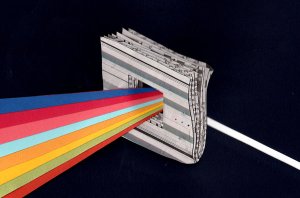
08letters-articleLarge


How Fox News, MSNBC and others present the news.

 To the Editor:

An autobiography gives an intimate account of a life, but to get the larger picture, you also need the biography.

The same goes for news. Relying on one source, or even on several sources with the same bias, will leave you with only part of the story.

That’s why the much maligned right-wing media is just as important as the so-called mainstream press. Fox News and others on the right certainly have a deeply embedded conservative bias, but the liberal bias on the other side is just as pervasive. Taken together, they roughly fill each other’s omissions.

Fox, for example, spent a good part of the past year digging into the Benghazi attack and I.R.S. tax-exempt status stories and talking hopefully about smoking guns, while the mainstream press was determined to take the Obama administration’s word for it that it did nothing wrong in either case.

More recently, when the president’s pronouncement about keeping your health insurance proved false, it was reported as a lie by the right and as a simple misstatement by the left.

And when the Obamacare website failed so miserably that not even the mainstream press could cover for it, the networks were obliged to sound like Fox for a while, although noticeably lacking was the appetite for pursuit that characterizes their coverage of Republicans.

Fairness in journalism requires not that every story or point of view receive equal weight but that every valid position receive equal respect. Thus the pro-life position should be treated with the same validity as pro-choice; small-government conservatives with the same respect as tax-and-spend liberals; Republicans as more compassionate than they sound and Democrats as less omniscient than they think.

But since journalists and news organizations are partisan at heart, one must sift through the best reporting and punditry from each side of the journalistic divide and take all the biases and agendas into account to arrive at an informed understanding of any story.

MARK R. GODBURN
North Canaan, Conn., Dec. 2, 2013

The writer is an antiquarian bookseller.

Here’s my comment:

In his lament about bias in the news media, Mr. Godburn assumes that unbiased journalism is possible and desirable. History suggests otherwise.

In the 18th and early 19th centuries, American journalism was highly political, often polemical and openly biased. That was the kind of journalism in which the likes of Sam Adams and Thomas Paine gloriously argued for liberty, and it was the form of journalism that was on the founders’ minds when they enshrined the doctrine of a free press in the First Amendment.

Only later, beginning with Benjamin Day’s Sun newspaper in 1833, did American journalists begin to develop a strong tradition of factual reporting. In part, this was the result of Day’s ambition to sell his paper to every reader (“It Shines for All”) and not limit his audience to members of any one political party.

In the 20th century, the major broadcast network news divisions, first in radio and then in television, reinforced this idea. They not only wanted the highest possible ratings, but were also operating as publicly traded corporations and were regulated by the Federal Communications Commission.

Nowadays, from within the turbulence of the digital age, we can begin to see that the years when big media companies were purveying what they described as nonpartisan, factual reporting were actually a historical period that is already fading into the past. The Internet has reinvigorated the “advocacy tradition” in journalism, and it has also made possible new forms of reporting such as crowd-sourcing, reporting that enlists the audience and the like. The spirit of innovation lives.

CHRISTOPHER B. DALY
Boston, Dec. 4, 2013

The writer is a professor of journalism at Boston University and the author of “Covering America: A Narrative History of a Nation’s Journalism.”

Here’s the email I got from blogger Steve Claflin:

Professor Daly:

Thank you for “Partisanship in the Media” in the December 8 New York Times letters.

The revived “advocacy tradition” problem you mention might be easier to manage if we had a form of majority rule that allows the general public to have more influence.

In the old days, the House was able to vote on any bill and the majority would prevail. Until an important bill recently passed by a wide margin, a Tea Party minority could usually intimidate other members, especially the Speaker, and prevent legislation that would easily pass from even getting to the floor. The minority party in the Senate can routinely block action on bills, because minority rule is built into Senate procedures. 60 votes are needed, with the help of a fickle minority, to pass legislation.

Is there anything more vital to democracy than majority rule? Is this what distinguishes democracy from autocracy? Is this what a democracy needs in order to succeed? We have the elections we normally associate with a democratic process. We reassure ourselves by going through the motions.

But the active ideological minorities in Congress, and the members who are owned and operated by special interests that donate large sums of money, are repeatedly able to slow or block or derail changes those few oppose and the rest of us generally favor. As such repeated occurrences so rudely remind us, we can have the structure, the trappings, the proceedings, the appearance of democracy without having majority rule.

Here are the other comments published in the Times:

Readers React

In an ideal world, graced by Enlightenment ideals, Mr. Godburn’s recommendation that citizens sift through biases of diverse news media outlets to form a complete perspective would be warmly endorsed. However, in this far-from-ideal world, individuals live in media echo chambers, selecting out viewpoints that agree with their own and sometimes avoiding conflicting ones.

Research finds that conservatives gravitate to Fox News and liberals to MSNBC — as well as to like-minded websites. A Pew Research Center study reported that from August to October of 2012, just 6 percent of Fox News’s election stories about President Obama were positive, while only 3 percent of MSNBC stories about the Republican presidential candidate Mitt Romney were positive.

Exposure to biased media strengthens partisan biases, exacerbating political polarization rather than producing the more informed understanding that Mr. Godburn desires.

RICHARD M. PERLOFF
Cleveland, Dec. 4, 2013

The writer is a professor of communication at Cleveland State University.

I read The New York Times every morning. I also watch more MSNBC than I like to admit. Occasionally, for entertainment, I’ll wander to Fox for a Bill O’Reilly moment or two.

Mr. Godburn’s thesis is an example of false equivalence. The Times is real journalism. But even The Times sometimes stretches too far in the service of “journalistic objectivity.” When one perspective is true and the other is propaganda, they should not be presented as equally valid.

As to MSNBC and Fox: The MSNBC host Rachel Maddow, for example, is surely dramatic. But I have never encountered an instance in which she was fundamentally dishonest. On the other hand, Fox is frequently and outrageously untethered from the truth, and its talking heads are attack dogs. Anyone consuming equal doses of this “news” will have intellectual indigestion.

If you bend over too far in the effort to be balanced, you’ll fall flat on your face.

STEVE NELSON
New York, Dec. 4, 2013

Well said, Mr. Godburn. Political correctness and a pervasive left-wing media bias are corrosive and do immense harm to the democratic process. People eventually find out that they have been misled. This breeds cynicism and mistrust. The left and the right learn to develop their own separate versions of the “truth.”

But while most right-wing news sources acknowledge their bias, those on the left deny their bias. Left-wing news sources are suffering a fallout in ratings because people are waking up to these facts and don’t like being manipulated.

FRANK COOK
Wayne, Pa., Dec. 5, 2013

Mr. Godburn makes a telling point, but he doesn’t go nearly far enough. His assertion that liberal and conservative news outlets “roughly fill each other’s omissions” assumes that there are exactly two reasonable points of view toward any given social issue; that these viewpoints are locked in a zero-sum game whereby each one can be validated only to the degree that the opposing one is impeached; and that they happen to correspond to the platforms of our two leading political parties.

Both parties are only too eager to promote this theory themselves, since it implies that together they have a monopoly on the truth. So a responsibility of both a free press and its readers is to examine both contrary viewpoints critically and consider other viewpoints — a third, fourth or fifth perspective — that have not been embraced by either side.

THOMAS LEITCH
Newark, Del., Dec. 4, 2013

Balanced news media is essential in any democracy. But let’s remember what brought us to the present situation — the 1987 repeal of the Fairness Doctrine, which required the airing of contrasting views on public issues, and the loosening of regulations on media concentration, allowing many media outlets to fall under the control of a few corporate-owned conglomerates.

Both have created a situation in which media is not only biased and unbalanced, but overwhelmingly influenced by the opinions and wishes of its corporate masters.

DOMINIC QUINTANA
Astoria, Queens, Dec. 4, 2013

Having recently returned from a trip to Brussels, I found the evening news there to be refreshing and professional. One subject wasn’t beaten to death 24/7 as it is here. You didn’t have to flip from channel to channel to see the “whole” picture, and the news was international in nature. In the United States you rarely hear about what is going on in Africa, Australia and, actually, most of the world.

It is a shame.

BONNIE CHALEK
Ridgewood, N.J., Dec. 4, 2013

I agree with Mr. Godburn that we need different perspectives. I would like to point out that Fox News is the No. 1 news source in America. Surely, that should qualify Fox as “mainstream.”

Studies have also shown that, for many Americans, Fox News is their only source of news. Those viewers are getting a slanted perspective — not balance. Defenders of Fox News often portray it as an underdog struggling to have a voice in the crowd of “mainstream” outlets, but that depiction simply isn’t consistent with its ratings.

I commend Mr. Godburn for admitting that news outlets he identifies as left-leaning did report on the problems with Obamacare. I find that so-called left-leaning news outlets, including The New York Times, are frequently critical of Democrats and their policies.

Mr. Godburn would have a much more difficult time finding comparable examples of Fox News criticizing the G.O.P. — except perhaps when it criticizes moderate Republicans for not being in lock step with the rest of their party.

TOBY PLEWAK
Easton, Mass., Dec. 4, 2013

It may be a fool’s errand to think that we can overcome media bias. The media is ultimately a collection of voices of various people, who generally stick to certain biases and opinions. The answer instead may be to encourage media outlets to be more forthcoming about their biases.

If we, as media consumers, know that a mainstream news outlet typically holds a certain viewpoint, then we can take in the news with a better understanding of what information may be missing or may be shaded one way or another. As it is, given the rather obvious political positions held by certain newspapers and television news divisions, many of us have already begun interpreting the news in this way.

MATTHEW K. KERFOOT
New York, Dec. 4, 2013

Here is Godburn’s last word:

The Writer Responds

Professor Perloff reinforces my point by noting that conservatives gravitate to right-leaning news sources and liberals to left-leaning ones, often without being exposed to contrary views or inconvenient facts.

But then he says that going to such biased sources only exacerbates the problem, as if he thinks there are reliably unbiased sources that one can go to instead. There are not, and that is why it is necessary to mine a variety of biased ones.

Mr. Nelson engages in the cheap liberal tactic of Fox-bashing. If Fox’s talking heads are attack dogs, they are poodles compared with the pit bulls he favors at MSNBC. Simply calling one’s favored sources true journalism and the other side propaganda doesn’t make it so. And if too much news causes intellectual indigestion, too little causes intellectual blinders.

Mr. Leitch is correct that there are more than two points of view. And examining all of them will not necessarily allow one to arrive at some desired middle ground. Just because you have one foot in hot water and the other in cold doesn’t mean you’re comfortable.

Professor Daly’s claim that I assume unbiased journalism is possible and desirable may have been a good lead-in for his journalistic history lesson, but that’s not what I said. The problem is not that journalists are biased — it’s that they claim they aren’t.

MARK R. GODBURN
North Canaan, Conn., Dec. 5, 2013

And, of course, since this is my blog, here’s my final, final word:

I will grant that maybe I misread his original post. When he wrote that all journalists and news organizations are partisan at heart, I thought he considered that a flaw. Perhaps inevitable, perhaps correctable (by reading multiple sources from different perspectives) but still a problem. If he says he doesn’t think so, then who am I to argue? I would say that many people (including a lot of journalists) do consider partisanship some kind of original sin of journalism.

Comments?

Leave a comment

Filed under blogging, broadcasting, First Amendment, history, Journalism, journalism history, media, New York Times, Politics

Surveillance state: The rationale for secrecy is, of course, SECRET

By Christopher B. Daly

top-secret-stampYou may think you are a sovereign citizen of a free country. You may think that “we, the people” rule through elected representatives who are accountable to us. But that would be wrong.

The latest affront to self-government is a ruling issued by a federal appeals court on Friday (beware of Friday rulings). Here’s the background:

Thanks to accused leaker Edward Snowden, we know that the U.S. government runs a secret program in which the government calls on the telephone companies to hand over information about you without a court order or subpoena, even if you are not suspected of any wrongdoing. You were not supposed to know about it, but that cat is now out of the bag.

So, you might want to know where the government gets off concocting such a scheme and how it could possibly square such massive, secret, peacetime spying on law-abiding citizens with the Constitution. Well, too bad. The Obama administration’s lawyers, who wrote a memo in 2010 attempting to justify the whole thing, decided that the memo itself should be kept secret, and President Obama agrees.

The Electronic Frontier Foundation and others filed suit seeking to get access to the memo. The government refused. On Friday, Judge Harry T. Edwards said no. EFF can’t see it and neither can we, the people. According to a link-rich story in today’s Times by the redoubtable Charlie Savage, the ruling seems likely to stand.

This is just the latest cause for disappointment in President Obama when it comes to transparency and press freedom. If he wanted to really serve those great causes, he could:

–stop prosecuting and issuing subpoenas to reporters at an unprecedented pace

–stop over-classifying new material as “secret”

–begin reducing the backlog of classified materials that can be de-classified with no harm

–adopt the common-sense reforms recommended by his own task force on surveillance issues.

There are many things to admire about Barack Obama, but his record in this area is not one of them Perhaps it confirms that the Founders were right to be suspicious of executive power per se, regardless of the individual wielding that power. They saw, rightly, that power is by its very nature aggressive, always seeking to expand and never yielding unless forced to do so.

Leave a comment

Filed under First Amendment, history, Journalism, journalism history, leaks, New York Times, Politics, President Obama, Uncategorized

Surveillance state: NSA reforms driven by Snowden (and Greenwald)

By Christopher B. Daly 

This may be obvious, but I think it bears repeating:

Absent journalists (and their sources, of course), President Obama would not have appointed a task force on the NSA, he would not have welcomed a debate over surveillance, and he would not be forced to consider reforms. From today’s Times:

While few in the White House want to admit as much in public, none of this would have happened without the revelations by Edward J. Snowden, the former N.S.A. contractor now in asylum in Russia. While Mr. Obama has said he welcomes the debate about the top-secret-stampproper limits on the N.S.A., it is not one he engaged in publicly until the Snowden revelations began. Now the president has little choice — this week alone a constellation of forces is pushing for change: A federal judge called the bulk-collection program “almost Orwellian,” while some in Congress, many of his allies and Silicon Valley executives demanded change.

So, let’s give thanks to Edward Snowden and Glenn Greenwald for enabling us to act as citizens of a free country. In the end, Americans may decide that they like being spied on. If they do, I will still disagree, but I will say, So be it. What I cannot abide is the grasping for power that goes beyond the constitution, American laws, and common sense.


1 Comment

Filed under New York Times, President Obama, surveillance