Category Archives: Journalism

Grammar for journalists

By Christopher B. Daly

One of the most popular “memes” of this week in politics has been the idea that Barack Obama hates business. The supposed evidence for this is something that the president said in a recent appearance in a fire station in Roanoke,Va. Here’s part of what he said:

“If you were successful, somebody along the line gave you some help. There was a great teacher somewhere in your life. Somebody helped to create this unbelievable American system that we have that allowed you to thrive. Somebody invested in roads and bridges. If you’ve got a business, you didn’t build that. Somebody else made that happen. The Internet didn’t get invented on its own. Government research created the Internet so that all the companies could make money off the Internet. The point is, that when we succeed, we succeed because of our individual initiative, but also because we do things together.”

Now, let’s examine that statement, shall we? At the risk of sounding like a university professor (oh, wait!), I feel compelled to point out that the problem in that passage arises, as so often happens, from a pronoun whose antecedent is not clear. The president was saying that before anyone can start a new business, the public has already invested tax dollars in an array of public goods that make that private enterprise possible. Public schools probably educated most of the workforce and customers. Police and fire departments provide a safe, orderly environment. Public roads bring supply trucks and customers to the new business. And so on. That is what Obama meant when he said, “If you’ve been successful, you didn’t get there on your own.” (Think, for a minute, about the chances of starting a business like Staples on a desert island, or in the tribal areas of NW Pakistan. Not gonna happen.)

The president went on to say, “Somebody invested in roads and bridges.” In other words, taxpayers funded the infrastructure.

In the very next sentence, the president said: “If you’ve got a business, you didn’t build that.”

Question is: in that last sentence, what does that refer to?

Does that refer to the noun that immediately precedes it? In that case, the president is saying: If you have a business, you didn’t build it. 

Or, does that refer to the previous concept of “roads and bridges” (in which case, grammatically speaking, the pronoun should be them not that) or the broader point of infrastructure?

Personally, I think the president’s meaning was plain: If you run a successful business today, your success is based on the earlier investment in infrastructure.

But that’s my personal conclusion. Fox News and Mitt Romney have come to a different conclusion (surprise!) and have chosen to lift one sentence out of context as “proof” that the president is hostile to business. People who use the English language in their professional lives should know how to parse it.
1 Comment

Filed under Fox News, Journalism, Politics

There’s journalism and then there’s advertising

By Christopher B. Daly

Trouble is, in politics, there are no rules. The very virtue that journalists try so hard to establish and protect — credibility — is just another tactical advantage to political ad-makers.

According to John Harwood in today’s Times,

More and more this election year, campaign ads include footage from television news programs, further blurring the fading lines separating modern journalism and politics. The trend bothers practitioners of journalism more than those in politics.

I’m afraid there is really no remedy.

As the veteran political Joe Klein of Time said on TV recently: there is no answer; journalists just have to get over it.

Leave a comment

Filed under Journalism, Politics

Not to be missed

By Christopher B. Daly

A few recent notable pieces:

Ken Doctor at Nieman Journalism Lab summarizes some favorable trends in the business of news. Woo-hoo.

Vanity Fair follows the money and takes a look at Mitt Romney’s decision to off-shore part of his personal finances.

Vanity Fair scores again with a vivid remembrance of the late Marie Colvin, who was a real reporter.

Leave a comment

Filed under Journalism, journalism history, Politics

“Quote approval”: A new low in journalism?

By Christopher B. Daly 

When a journalist interviews someone (anyone), the normal ground rules that govern the interaction amount to this:

I am a journalist working on a story. I want to talk to you and use the things you say in my story, based on my judgment of what is important. I will use none, some, or all of what you say, as I choose, to further the pursuit of the truth. Whatever quotations I use will be verbatim — nothing added, nothing left out. I will also use your real name (and title, if you have one).

This is the essence of the standard known as “on the record.” Journalists prefer it because we believe that, on the whole, it holds people accountable for the things they say. In certain (ideally rare) situations, however, journalists will negotiate some lower standard. Almost always, these retreats from the “on the record” standard come at the initiative of the people we are speaking to. These other arrangements are known by a bewildering array of terms, which do not always mean the same thing in different cities or beats. The problem is that these departures usually serve the source rather than the audience.

Today comes word from the Times that political reporters for all the major news organizations have adopted a new — and, I think, pernicious — practice. They allow the people they are interviewing to get a look at their own quotes before publication and censor them. That is, the big shots around Obama and Romney routinely demand and get the power to edit themselves before their words appear in print or online.

Well, you can hardly blame them for trying. Who wouldn’t want that option?

But the journalists should never have agreed to it. These spokespeople, senior officials, and top aides get paid lots of money for their ability to think on their feet and choose their words carefully.

At the very least, having agreed to this arrangement, the journalists have a professional duty to reveal the terms. What about transparency? I, for one, could live without stories in which members of the political class get to “clean up” their quotes.

Another question: in what other fields does this practice apply? Sports reporting? Business news?

(Props to Jeremy Peters of the Times for blowing the whistle on this practice.)

3 Comments

Filed under Journalism, journalism history, New York Times, Politics

Noting the loss of Little Bear’s creator

By Christopher B. Daly

How fondly I remember. . .

. . .reading the Little Bear stories to my boys when they were

like little cubs. So, here’s a gentle wave good-bye to Else Holmelund Minarik, who wrote the Little Bear series, so perfectly illustrated by her collaborator, the recently deceased Maurice Sendak. Today’s Times says in an obituary that she died at home in Sunset Beach, NC, at the age of 91. Sounds like her.
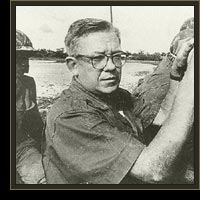
 

A journalistic footnote: This gentle soul was married for a while to Homer Bigart, one of the toughest war correspondents ever. A real reporter’s reporter and a two-time Pulitzer Prize winner, Bigart covered WWII, the Korean War, and the American war in Vietnam. Bigart, who was her second husband, died in 1991.

Leave a comment

Filed under Journalism, journalism history

“Wait, wait”: Would someone please impose an embargo on the news media

By Christopher B. Daly 

Kudos to the SCOTUSblog for this remarkable tick-tock on what went wrong in the initial reporting about the Supreme Court ruling on the Obama health care plan back on June 28. Tom Goldstein, the publisher of SCOTUSblog, has put together a 7,000-word reconstruction of the first half hour of reporting, focusing on the screw-ups  at CNN and Fox News. He has done us all a service with his meticulous, minute-by-minute (and sometimes second-by-second) narrative of that day’s hits, balks, run-downs, and errors.

What this post-game review suggests to me is that, first and foremost, the news business needs to do better. As a former wire service reporter (10 years with the AP, both on desks and in the field), I appreciate the need for speed. SCOTUS decisions move markets; they sometimes hand the White House to one party over the other. Often, they are the epitome of breaking news. That said, it is insane for reporters to cover Supreme Court opinions on the fly. No one benefits. In Goldstein’s tick-tock, the description of the gyrations of the front-line legal correspondents reminds me of nothing so much as an episode of “Iron Chef” — in which highly talented people are subjected to insanely artificial difficulties (“OK, now you have two minutes to make a three-course meal out of kale and strawberries. GO!”). There is absolutely no reason to turn this scheduled event into a speed-reading contest.

The Supreme Court also has some lessons to learn. It is insane that the Court does not post its opinions, in full, on the Web at 10:00:01. Why should the White House and Congress have to wait? Why should citizens have to wait? Why should prisoners facing execution or stock traders or anyone have to wait? In this day and age, to hand out paper decisions is an affront.

But most important of all, after reading Goldstein’s report, I am strengthened in my belief that the Court and the news business need to get together on a slow day and figure out a better system for these kind of hand-offs. The answer is staring them in the face: an old-fashioned news embargo. The Court could simply identify 10-20 of the top court reporters — all vetted, credentialed experts — and invite them to come to the building at 8 a.m. The journalists could all then be locked in a room (like jurors) with no wi-fi access. They could then take their time to read the opinion (in full), digest it, and craft a coherent and accurate story. At 10:00, those stories could all be released, all at once. That way, all the news organizations that care about speed would have a multi-way tie and the issue of who was “first” would be moot. That way, the first version would also be the right version. That way, the public gets a full, careful, accurate version at the earliest possible moment.

P.S.: The world would certainly be a better place if people would stop posting comments just to gloat. Goldstein mentions a couple of these kind of comments that SCOTUSblog received from readers rubbing it in that CNN and Fox were right and SCOTUSblog was wrong. In retrospect, they look like the doofuses they are.

Twitter postings / Topsy

Twitter postings / Topsy

Leave a comment

Filed under blogging, CNN, Fox News, Journalism, Supreme Court

“Forgive us our press passes”

By Christopher B. Daly

I heard a fantastic story yesterday on the “This American Life” radio program. It was about the business/ethics/professional issues raised for the field of journalism by a new-ish company called Journatic. The story, by producer Sarah Koenig had the brilliant memorable headline “Forgive us our press passes.” It explained the creepy side of how out-sourcing has arrived, almost completely under the radar, in the American newspaper business. Turns out, lots of the routine fillers (school lunches, ordinary obits, etc.) that fill up small-town and suburban newspapers are actually “written” by worker bees in the Philippines, Eastern Europe, and Africa. They toil away for peanuts, then transmit their “stories” to editors in the states, who get paid next to nothing to “edit” those “stories,” even though the editor could be more than 1,000 miles away from the community being “covered” in this way. The whole operation seems to make a mockery of the idea of “hyper-local” news. 

Sheesh.

To her credit, Koenig really pursues the issue in great depth and nuance.

Also, a note to journalism teachers: you should share this piece with your classes. It is really a two-fer: it tells some important truths about the direction the news business is heading in, and it is a model of how to use audio to tell a complicated story. It is must-listen journalism.


2 Comments

Filed under broadcasting, Journalism, local news, media, NPR

Journalism 101: Read the whole opinion

By Christopher B. Daly

It comes down to this: two major news organizations (CNN and Fox News) blew their initial coverage of the most important Supreme Court ruling this decade. They did so because reporters at both cable news outlets made a rookie mistake by generating headlines without reading the whole SCOTUS opinion. In these situations, reporters often face an apparent dilemma: Do you want to be first? Do you want to be right?

The answer, of course, is that a conscientious reporter should want to be the first one who is also right.

And, just so I don’t let anyone else off the hook, this message needs to be embraced and shared by editors, desk people, and top management. The message has to be sent early, often, and unambiguously.

How do I know?

Aren’t I just a professor, safely watching this from the sidelines?

Well, yes and no. I worked for almost five years in a news cockpit, covering the state government of Massachusetts for the AP. In that role, one of my duties was to read the opinions of the Massachusetts Supreme Judicial Court (the SJC, the oldest continuously sitting court in the English-speaking New World, older than SCOTUS). When those opinions were newsworthy, as they often were, I had to bang out an immediate hard-news lead. Directly across the room from me in the Statehouse Press Gallery, my competitors at UPI were doing the same thing. We could tell from the sound of our typing who was writing and who was finished and had transmitted the story. The stakes were not as high as they were on Thursday at SCOTUS, but covering the SJC is essentially the same challenge.

So, here are my takeaways from the health-care bulletin fiasco:

–News organizations need “beat” reporters. That is, they need reporters who specialize in an area (health care, let’s say, or covering the Supreme Court) and become experts in it. General-assignment reporters (and god love ’em, we need them too) cannot be thrown at every new situation and expected to learn on the fly.

–The Supreme Court should re-institute the “embargo” system. An embargo occurs when the news media are given material in advance, on condition that they agree to withhold it until a specific time. When that agreed-upon moment arrives, the journalists are all released from their promise and can all disseminate the news at the same time. That system has several advantages. It means that reporters are quarantined for a period of time that they can use to their benefit — they can read the whole opinion, maybe more than once; they can check their notes and background materials; they can even call experts for analysis and comment. They can use the time to craft a story that is accurate and complete, knowing that no other news organization that participated in the embargo is going to scoop them. Granted, it is not natural for a news professional to endorse any system that delays the delivery of news. But the reason we sometimes accept embargoes is that they ultimately serve the best interest of our audiences, which is what we should care about the most.

–We need bloggers too. A delicious irony from Thursday is that two big-deal professional news organizations (yes, I am lumping Fox News in here, arguendo) discovered their mistake in part by reading a blog! The highly regarded SCOTUSblog got the story right and prompted part of the correction process. So, let’s give a hat tip to the power of a small group of experts using the Web to communicate.

(And a special salute to Lyle Denniston of SCOTUSblog, seen at right. Talk about beat reporters! He has been covering the Supreme Court for 54 years, or far longer than any of the current justices has served.)

Leave a comment

Filed under blogging, broadcasting, CNN, Fox News, Journalism, Supreme Court

“Fox & Friends”

By Christopher B. Daly 

In reading today’s Times story about the Fox News morning program “Fox & Friends,” I found it difficult to decide which of these facts was more startling:

____ Gretchen Carlson graduated from Stanford University, with honors no less!

____ Gretchen Carlson plays classical violin.

____ Gretchen Carlson was Miss America in 1989.

It has been reported. Now you decide.

Leave a comment

Filed under broadcasting, Glenn Beck, Journalism

Watergate: Lessons learned and un-learned

By Christopher B. Daly

The Boston Globe’s estimable, veteran political reporter Brian Mooney has a front-page story addressing the question: what has happened to the “Watergate reforms” in the 40 years since the Watergate break-in that began the fall of Republican President Richard Nixon.

Turns out, one of the great post-Watergate reforms — the public financing of elections — is all but dead.

Not only that, but the larger trend of political changes in recent years mark a move away from the lessons learned in Watergate.

One lesson was that power corrupts. Therefore, the power that comes from making big donations to a politician was limited by the caps placed on individual giving. The Supreme Court, however, decided to get rich people back into the business of financing elections, through the Citizens United ruling.

Another lesson was that sunlight is the best disinfectant. Therefore, Congress required all candidates for federal office to account publicly for every dollar raised and every dollar spent. Not so for the new Super-PACs.

Another lesson was that money corrupts. Therefore, Congress almost got up the courage to ban all private donations and institute a system of 100% publicly funded elections. But they blinked and created a hybrid by which politicians had to opt in or out. When the amounts available through public financing failed to keep pace with the amounts candidates could get through private fund-raising, almost every serious mainstream candidate rejected public financing and started holding fund-raisers with wealthy donors.

It appears that the past is prologue.

graphic/ Boston Globe

graphic/ Boston Globe

1 Comment

Filed under Journalism, journalism history, Politics, Supreme Court