Category Archives: Journalism

A shield law for reporters? Thanks, but no thanks!

By Christopher B. Daly

First, the Obama administration antagonized the news media by seizing the phone records of The AP-logoAssociated Press. Now, in an effort to make up, the president has thrown his support behind a Senate bill that would create a federal “shield law” that would allow journalists to legally protect their confidential sources.

A lot of journalists have embraced the idea. But I believe that journalists should say, “Thanks, but no thanks.”

Tempting as it might be, a federal shield law is a bad idea for journalists. We do not need it, and we may ultimately regret it. The relevant part of the First Amendment to the Constitution says: Congress shall make no law abridging the freedom of the press. That powerful simple phrase “no law” means just that – no law, period. It means Congress simply cannot legislate in this area.

As a near-absolutist about the First Amendment, I think that part is clear and simple. Furthermore, I believe that a proper reading of the First Amendment makes a shield law superfluous. We almost got such a reading in 1972, in the Supreme Court case known as Branzburg v. Hayes. In that case, the nation’s highest court said that when prosecutors haul reporters in front of federal grand juries and demand to know the names of their sources, the reporters must reveal their sources or face going to jail for contempt of court. In other words, reporters do not enjoy a legal “privilege” against having to testimony such as those enjoyed by doctors, lawyers, or clergy.

The ruling in Branzburg, while wrong, was nearly right. It was a 5-4 ruling, and one of the majority justices was clearly ambivalent about the issue. Justice Lewis F. Powell, as the New York Times reported in 2007, wrote some handwritten notes while the case was being decided. Powell (no friend of the news media) went right up to the line of agreeing with the minority instead of the majority. He wrote:

I will make clear in an opinion . . . that there is a privilege analogous to an evidentiary one, which courts should recognize and apply on case by case to protect confidential information. . . . My vote turned on my conclusion . . . that we should not establish a constitutional privilege.

Those notes are fairly opaque, but they do suggest that reporters very nearly got the recognition they deserve. [Brief digression: Powell’s notes were written on a court form captioned U.S. vs. Caldwell. That’s not a mistake. The Branzburg case was combined with two others in 1972, including a federal subpoena ordering NYTimes reporter Earl Caldwell to testify before a federal grand jury and name his confidential sources among the Black Panthers. For more, see chap XX of my book, Covering America.] The reasoning for granting reporters a “testimonial privilege” is pretty straightforward. Through the First Amendment, the Constitution gives the practice of journalism a 1007LIPTAK.1100.1065special status that recognizes the vital role that a free and independent press plays in the ability of the American people to govern themselves. If the people are to make informed votes and policy choices, they need good sources of information — especially about the performance of the government itself. But like many powerful institutions (corporations, the clergy, and others), government officials like to control the flow of news and information. So, they regularly try to intimidate and chill the practices of journalism.

The practice of journalism includes both a news-gathering function and a news-disseminating function. Neither one is of much use without the other. That is, if journalists are free to disseminate news but not to gather it, they will have nothing of value to share with the people. Conversely, if they are free to gather news but not to disseminate it, the people will again be thwarted in their ability to learn the things they need to know to govern themselves. Thus, journalists must be free to gather news (by reporting) and to disseminate news (by printing, broadcasting or posting).

In the normal course of news-gathering, journalists seek information in all quarters. They observe some events first-hand, they examine documents, and they interview people. Often, the most sensitive and valuable kinds of news come to journalists from sources who need to remain anonymous to avoid retaliation such as being fired or prosecuted. In those cases, journalists promise the source confidentiality. They say something along these lines: Please give me the important information you have, and in return, I will promise to keep your identity a secret.

These kinds of promises are not routine, but they are fairly commonplace — especially in certain kinds of fields, such as reporting about the military, our spy agencies, or any sort of abuse of power. The source wants to blow the whistle on a secret that the source considers illegal, immoral, or just plain wrong. Often, the reporter is indifferent on that question, but the reporter can see that the material should reach the general public, so that the American people can decide the issue.

Should we, for example, use drones to kill American citizens abroad? That’s an important question, but we could not even debate it without “leaks” from confidential sources. Without a constitutional privilege, reporters make such promises to their sources at their peril. It is perfectly predictable that those in power (from either party) will reflexively attempt to control the flow of information to the people. One attractive mechanism for doing that is to force journalists to name their confidential sources and then to go after the sources and punish them. If I were a tyrant seeking to use the limited powers of government to create unlimited personal power, that is one of the ways I would go about it.
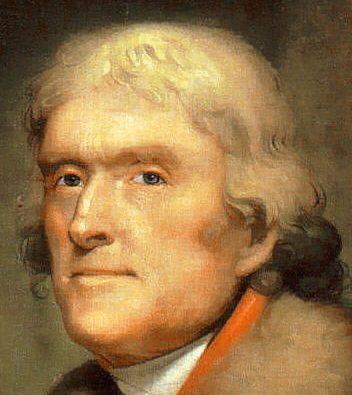
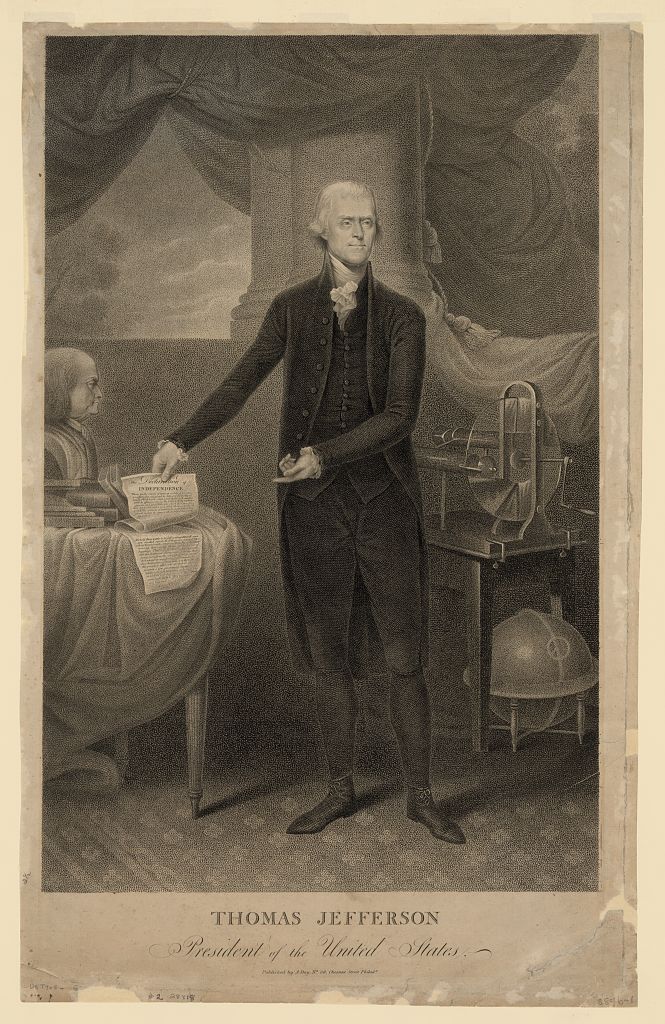
Gilbert_Stuart_Thomas_Jeffersen(5)That is exactly what Thomas Jefferson and his supporters among the Founders foresaw and sought to prevent. One of the remedies they came up with was an absolute guarantee of press freedom. That’s why I believe we journalists do not need to ask Congress to bestow such protections on the practice of journalism. Indeed, we should be wary of inviting Congress to legislate about the press at all, because once legislators start writing laws, it is exceedingly difficult to get them to stop. Today, they may say they are proposing to do us a favor by granting us a shield. Tomorrow, having established the precedent, they may decide to improve that law by “clarifying” just who is a journalist. Before long, Congress might decide to license journalists or protect confidential sources in the Executive branch but deny such protection to their own staffers. There would be no end to it.

Instead, I believe that journalists should stand firm and insist on the rights we already have under the First Amendment. That was essentially the view expressed by one of the dissenters in the Branzburg case. In an eloquent and penetrating opinion, Justice William O. Douglas argued that the First Amendment exists for the ultimate benefit of the American people. When reporters do their jobs, Douglas wrote, “the press is often engaged in projects that bring anxiety and even fear to the bureaucracies, departments, or officials of government.” But if journalists can be intimidated into giving up their confidential sources, he warned, then “the reporter’s main function in American society will be to pass on to the public the press releases which the various departments of government issue.”

[Full disclosure: I worked for The Associated Press for a total of 10 years, between 1976 and 1989, in the NYC world headquarters and in the Boston bureau.]


18 Comments

Filed under First Amendment, Journalism, journalism history, New York Times, Supreme Court

AP phone scandal

A hat-tip to Jack Ohman, editorial cartoonist at the Sacramento Bee

Oh, man, did he nail this one:

N67ER.St.4


(I just don’t know why he had to depict the AP “desk man” as an out-of-shape, stressed white guy with his tie at half-mast. Oh, wait. . .)

Leave a comment

Filed under Journalism, President Obama

Memo to Obama: Hands off the news media!

By Christopher B. Daly

Today brings more disappointing news about the Obama administration. As they spend more years in office, they are starting to revert to the mean and resemble a very ordinary power-grabbing, rights-trampling, self-serving operation. Alas.

NYT coverage / WaPo coverage.

Image_FreeSpeechWhile they have been busy not closing Guantanamo, this administration has been busy setting the all-time record for leaks investigations. The latest misguided attempt to stop leaks is the disclosure that the Obama Justice Dept. “secretly seized two months of phone records for reporters and editors of The Associated Press.” The rationale was that the AP had received a “leak” from someone in the government about a CIA operation to disrupt a plot unfolding in Yemen that was aimed at taking down an airliner. If true, that was a fine thing for the CIA to do. If true, then the folks in the CIA running the operation should have kept their mouths shut. If someone in the government who had knowledge of it spilled the beans, that’s not the fault of journalists. The Obama administration, like every other administration, needs to get its own house in order. You don’t stop leaks by trampling the First Amendment.

Instead, we get this (from NYT):

The A.P. said that the Justice Department informed it on Friday that law enforcement officials had obtained the records for more than 20 telephone lines of its offices and journalists, including their home phones and cellphones. It said the records were seized without notice sometime this year. The organization was not told the reason for the seizure.

The First Amendment exists to safeguard the right of the American people to be informed. The only known means to provide the kind of information we need to govern ourselves comes from a free and independent press, which is protected in its new-gathering every bit as much as it is protected in its news-telling. If the executive branch investigates the news media every time its own employees leak information, that cannot help but have a “chilling effect” on the news business.

This is ancient truth, going back at least as far as the Pentagon Papers and Watergate. If Obama does not want to go down in history in the same chapter with Richard Nixon, he has got to cut this stuff out. He could start by firing Attorney General Eric Holder.

Memo to the AP: The government got all those phone records from your telephone company. I would suggest you cancel your account and try a different carrier. 

Hat-tip: to NYT’s Charlie Savage, who seems to have staked out a new beat: reporting on the constitutional infringements and other abuses of power committed by the Obama administration.

Obligatory quote: Here’s Thomas Jefferson on the dangers of executive power:

"Aware of the tendency of power to degenerate into abuse, the
worthies of our country have secured its independence by the15715v
establishment of a Constitution and form of government for our
nation, calculated to prevent as well as to correct abuse." 
--Thomas Jefferson to Washington Tammany Society, 1809.

Clarification: Of course, what the administration objects to are unauthorized leaks. The leaks they plan and execute for their own purposes are, naturally, quite alright.


Leave a comment

Filed under First Amendment, Journalism, leaks, Obama, Uncategorized

Abolish the NCAA (cont.)

By Christopher B. Daly

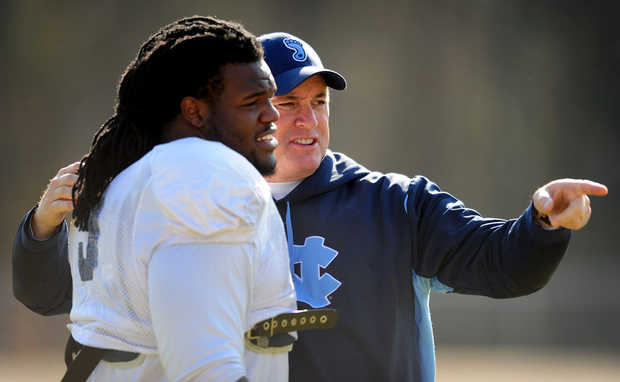
Former North Carolina head football coach Butch Davis talks with former defensive tackle Marvin Austin in a file photo. Austin is a key player in investigations involving improper contact with sports agents. JEFF SINER — JEFF SINER - jsiner@charlotteobserver.com

Former North Carolina head football coach Butch Davis talks with former defensive tackle Marvin Austin, who is a key player in investigations involving improper contact with sports agents.
JEFF SINER — JEFF SINER – jsiner@charlotteobserver.com

The latest episode of stupid, destructive results stemming from collegiate involvement in big-time athletics involves the University of North Carolina-Chapel Hill. This one is particularly painful to me, since I got my master’s degree at UNC in 1982. (Yes, that was the height of the Michael Jordan era in Tarheels hoops, and yes, I was a fan. I had not yet figured out how deeply corrupting the NCAA is.)

In today’s column, the NYT’s Joe Nocera lays out some of the low-lights from the downfall of UNC Chancellor Holden Thorp (what a name!).

Here’s a link to some of the coverage of the UNC mess by the estimable N&O, the News & Observer of nearby Raleigh. You know you’re in trouble when the biggest paper that covers you has to create a standing headline like “UNC Scandal.” The N&O has a story about a recent talk given by Mary Willingham, who once labored in the belly of the athletic beast, helping unprepared athletes navigate their ways to remaining eligible while working nearly full-time as minor-league players for pro sports.

Willingham, who worked as a learning and reading specialist inside UNC’s academic support program for athletes, talked Thursday about her struggle to combat the system. She spoke of NCAA paperwork that arrived annually that required a signature and promise that she hadn’t seen cheating, or been a part of it.

“I’ve got to tell you that most of the time, I scribbled my initials on it,” Willingham said. “So yeah, I lied. I saw it – I saw cheating. I saw it, I knew about it, I was an accomplice to it, I witnessed it. And I was afraid, and silent, for so long.”

Willingham still works at UNC, though not with athletes. She’s an assistant director in the center for student services and academic counseling. Of the 750 to 800 athletes at UNC, she described 150 to 200 of them on Thursday as “seriously underprepared” for the academic rigors of college life at UNC.

During her 20-minute speech, she lambasted the NCAA – calling the organization a “cartel” and describing its academic entrance standards for athletes “a farce.”

And she should know.
What more is there to say? Abolish the NCAA, before it corrupts another fine school. 


2 Comments

Filed under Journalism

Readers to the rescue! NYTimes gains in circulation

By Christopher B. Daly 

Yes, the New York Times company reported a sharp drop in earnings this week.

Yes, the figures for advertising revenue were wretched and getting worse.

BUT, buried in the financial details, there is some potentially important good news: Money coming in from circulation is rising. In fact, it rose 6.5% in the first quarter of this year compared to the same quarter a year ago. Therein may lie the salvation of the most important news organization in the country.

The reason is that “circulation revenue” is all the money coming in from the subscriptions to the traditional print edition, the dollars paid by folks picking up a copy of the Times at newsstands, and — most important of all — the money coming in from digital subscribers who bumped into the Times “paywall” and decided to pony up and pay for full access to the Times online. They are important because they are the future. In the digital era, the key metric is whether you can make money online. Historically, newspapers depended on a “dual revenue stream” of money coming from both circulation and advertising. For more than a century, both sources increased, and they fluctuated around a ratio of 50/50 in terms of total revenues.

If the Times can continue to gain readers who will pay, then there is no reason it could not sustain itself mainly on the basis of its own readers — who are, ultimately, a better base for journalism than advertisers. Thank you, Tiffany and Bloomingdales, and may your ad spending continue. But ultimately, the Times might be better off if it were funded like the old PM newspaper, or I.F. Stone’s Weekly, or NPR, or the AP or other news organizations that do not depend on advertising.

According to the latest figures, readers now account for a majority of the Times revenues.

Here’s a chart from the company’s press release.


First Quarter
2013 2012 % Change
Revenues
Circulation $ 241,789 $ 226,994 6.5 %
Advertising 191,167 215,234 -11.2 %
Other(a) 32,977 33,204 -0.7 %
Total revenues 465,933 475,432 -2.0 %

When I looked at the numbers more closely, here’s what I found on a percentage basis:

First quarter

[                                 2013               2012

Revenues

Circulation             51.8%          47.7%

Advertising            41.0%          45.2%

Other                          7.1%             6.9%

So, it appears that “the people formerly known as the audience” are pointing the ( or a?) way forward.

Readers to the rescue!

chart

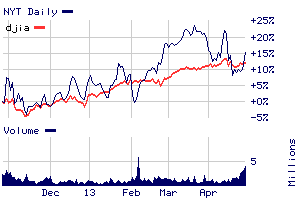
This chart (which I customized using a tool on the NYTCo corporate site) shows how the NYTCo stock has performed in the last six months, compared to the Dow Jones average, which has been on a tear. 

Leave a comment

Filed under business, Journalism, journalism history, New York Times, Uncategorized

The bombing case: “Total Noise”?

By Christopher B. Daly 

Here is a fine piece that features the author Jim Gleick thinking in print about the coverage of the Boston Marathon bombing and related events. (Full disclosure: I have known Jim since we were in college together, and I admired his books Chaos and The Information; I am not currently in touch with him.)

Gleick’s piece from New York magazine was also noticed by Maureen Dowd in her column today. She added value by actually taking him out for coffee and interviewing him.

Photo montage by New York magazine (including photo by BU student journalism Kenshin Okubo).

Photo montage by New York magazine (including photo by BU student journalism Kenshin Okubo).

Leave a comment

Filed under broadcasting, CNN, Journalism, journalism history, Photography, Photojournalism

CNN gets it wrong

By Christopher B. Daly 

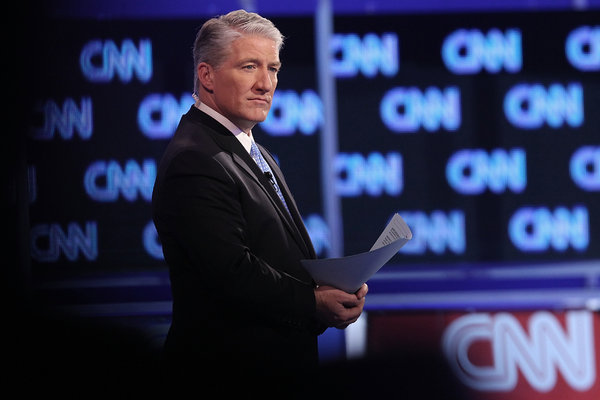
In his column in today’s New York Times, David Carr analyzes CNN’s self-inflicted wound caused by wrongly reporting the arrest of a suspect in the Marathon bombing case. In doing so, Carr makes some of the same points I made here last week in this post. The problem is how to gather news while the public is watching.

There’s no real answer, of course, except for everyone to do better.

CARR-articleLarge


Leave a comment

Filed under broadcasting, CNN, Journalism

Conservatives may buy some big U.S. newspapers

By Christopher B. Daly 

The wonder is that they have not done this already.

According to today’s Times, the Koch brothers are thinking about making a bid to buy the ailing Tribune company, which would give the billionaires ownership of the LA Times, the Chicago Tribune, the Baltimore Sun and the Hartford Courant. (It should be noted that for most of their existences, the LAT and the Tribune had editorial views that the Koch brothers would have envied.)

This sounds like a page from the Murdoch playbook: buy prominent American newspapers and use them to advance conservative views. Nothing could be simpler, really, and many conservatives founded U.S. newspapers to do just that.

I would be a little more concerned if they were buying up digital media properties with growing circulations, ad revenues, and staffs.

Shhh: don’t tell the Kochs!

Leave a comment

Filed under Journalism

When the news is wrong (for a stupid reason)

By Christopher B. Daly 

imagesAs many have observed, several front-line news organizations reported incorrectly on Wednesday afternoon that authorities had “arrested” or “taken into custody” a suspect in the Boston marathon bombing. As someone who spent 10 years working for The Associated Press (where our watchword was always, “Get it first, but get it right”), I feel bad for journalists who are chasing leads in the investigation into the bombing case. They are under tremendous pressure to advance the story, “break” news, and stand out from the crowd.

I feel bad for them, but that’s not my only response. I also feel appalled at the news media’s chronic inability to exercise restraint. As the afternoon unfolded, I had a sickening sense of deja vu: here we go again, with the race to be first.

But, first with what, exactly? If the cops or the FBI had really made an arrest, they were going to announce it — and quickly. So, what difference does it make if I find that out at 2:30 or 2:45 or 4:00? Is my life any better?

Besides, it’s not as if this is the kind of news that authorities try to hide. When they nab a bad guy, they’re proud of it. They want to stand there at the press conference (ties all straight, uniform gleaming) and take a turn at the podium to say the same clipped phrases they always say. Sure, that’s important, and someone should be there to report it. But we do not need an entire army of reporters trying to get this information first. The mania for being first upsets and erodes all other journalistic priorities.

This kind of frenzy for “scoops” is essentially a waste of journalistic resources and enterprise. There are many fine, experienced, tough reporters and photographers in Boston this week. They should not waste their time trying to surf a few feet ahead of the cops in pursuit of factual information that is going to be divulged anyway. This is particularly true when reporters get in the way: if journalists report, for example, that an arrest is “imminent,” doesn’t that tell the bad guys that it’s time to flee?

In fact, I don’t consider that kind of reporting a “scoop” at all. Real news consists of information that someone is trying to hide or that would not come to light unless an individual journalist gets out and gathers information and connects some dots. Reporters make a contribution to society when they generate information that we would not have otherwise.

So, get out there and find a real, true story — and tell me something I don’t know and that won’t be announced from a podium.

We can do better.

Leave a comment

Filed under CNN, Journalism, journalism history, leaks, Uncategorized

Digital media win another Pulitzer

By Christopher B. Daly

logoScore another victory for serious journalism that was born on the Web. The born-digital environmental website “InsideClimate News” won a Pulitzer Prize this week for national reporting based on its stories about an oil pipeline spill in the Kalamazoo River.

That follows earlier Pulitzers awarded to The Huffington Post and Politico (2012) and ProPublica (2011).

According to a story in the Washington Post, InsideClimate News was founded in 2008 and has just seven staffers. Founder David Sassoon is listed on the website as a graduate of Harvard and the Columbia Journalism School. With no office, InsideClimate News has virtually no overhead and zero “legacy costs.” Instead, they appear to depend for support in large part from foundations — including, ironically, the Rockefeller Brothers Fund, which is based on the fortune that the family made by dominating the market for, of all things, oil.

images

Leave a comment

Filed under blogging, Journalism, journalism history, Pulitzer Prize