Category Archives: history

The Civil War at 150

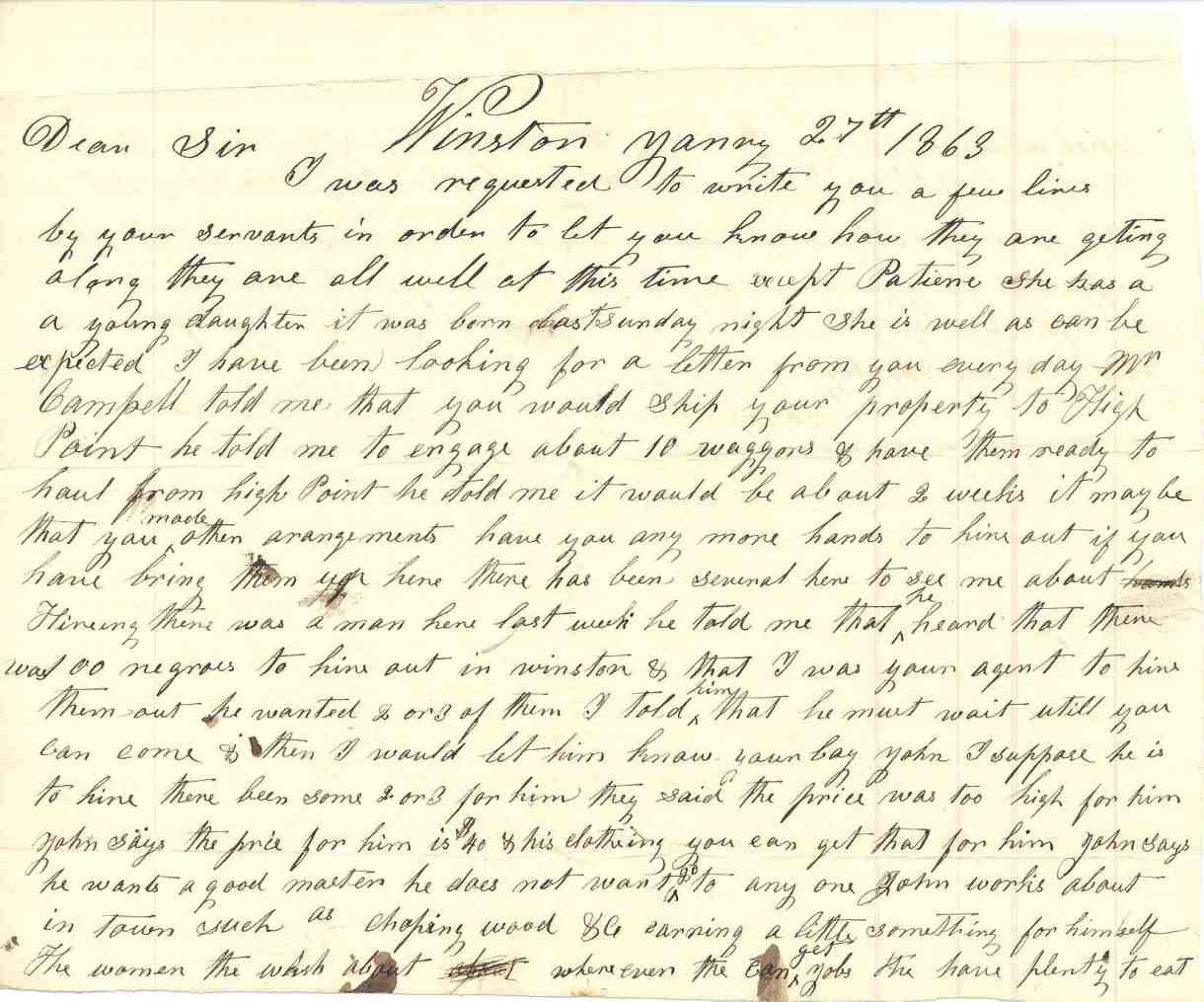
Don’t miss this project at the Wilson Library of the University of North Carolina (where I went to grad school in history). The library is posting a letter written by a Civil War soldier on the exact day on which it was written 150 years ago. (Hint: practice reading hand-writing!)

Here’s today’s entry:

18630127_01

1 Comment

Filed under history

The power of story

by Christopher B. Daly

Narratives in the news:

–Here is a smart piece about why some of us are drawn to TV narratives like Downton and other shows with strong narratives.

–Here is a smart piece about the power of narrators (although I think there is a bit of confusion here between narrators and protagonists, which are not the same).

1 Comment

Filed under history, Journalism

Rave review for “Covering America”

By Christopher B. Daly 

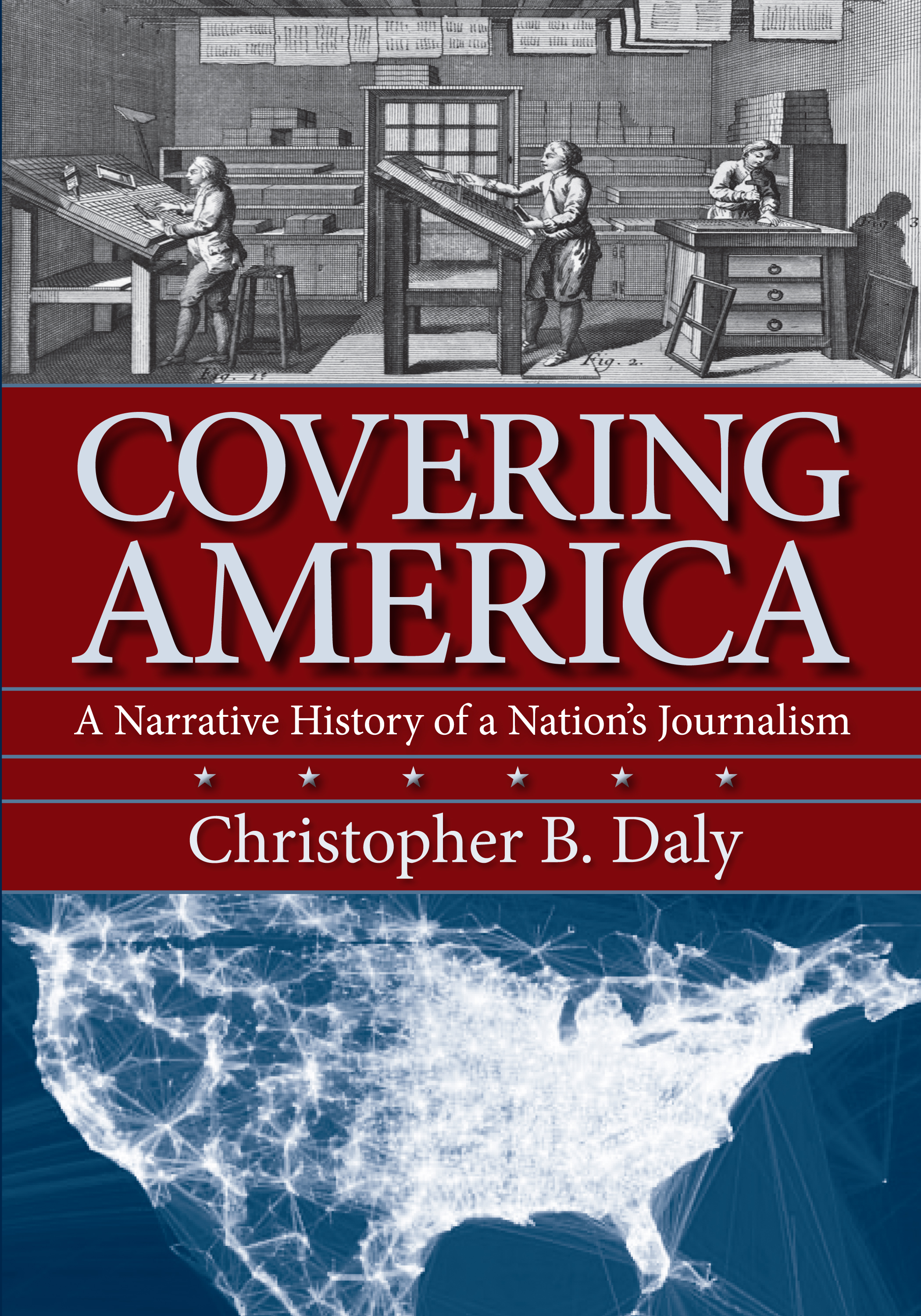
My book Covering America drew an insanely enthusiastic review in the Providence Journal on Sunday. The timing reminds me: IMHO, this book would make a great holiday gift for anyone who cares about American journalism, American history, American politics, the tech revolution in news, Jefferson/Lincoln/FDR, WWI/WWI/Vietnam, and a whole bunch of other stuff.

Have I left anyone out?

Leave a comment

Filed under Covering America, history, Journalism, journalism history

Notable historians die

By Christopher B. Daly

This week brings news of the deaths of two of the most prominent (and controversial) historians of the post-War period.

Eugene Genovese, a Marxist-turned-Catholic conservative. Author of a key work in the history of U.S. slavery: Roll, Jordan, Roll.


Eric Hobsbawm, a Communist nearly to the end. Author of a trilogy of essential works.


Rather than fight over who was a good person, we can do them and ourselves a favor by reading (or re-reading) their work and, in a spirit of free inquiry, judging it for ourselves.


Leave a comment

Filed under history

This and That

By Christopher B. Daly 

Some worthies from today’s news:

The Times has a piece that toys with what might be called the “journalistic Heisenberg principle.” That is, based on the popular view of Werner’s Heisenberg’s Uncertainty Principle, it would appear that a reporter cannot be present at a political event without changing the event. In any case, it’s always fascinating to hear what politicians say when they think they are off the record.

The Times has a piece about the final round of releases of the secret tapes that JFK made in the Oval Office. Disclaimer: Kennedy had an “on” button (unlike Nixon), so the conversations that were recorded were those that he chose. Furthermore, these tapes have passed through the hands of the family and the staff at the Kennedy Presidential Library, so there is no way of knowing what is not in there. Still, they are the best we are going to have.

The Globe has a piece that addresses the question: who is on the receiving end of all the money spent on political advertising? It’s the owners of the thousands of TV stations around the country, of course. Not all of the prosper equally, of course. Much depends on whether they are in a “battleground” state. Also, they may not prosper as much as you might think: Since Congress started regulating broadcasting in 1927, lawmakers have rigged the rules in their favor. As in this excerpt from the Globe:

By federal mandate, candidates for president and Congress receive preferential treatment when booking advertising time, and stations must give equal airtime to each side of a race. Candidates can also buy television advertising time at a discount from the going commercial rate. The result all too often: back-to-back political spots which can bump more lucrative commercial advertising.


Leave it to politicians to write the rules.


Leave a comment

Filed under history, Journalism, Politics

1968: A Hinge in History

[I recently finished reading a chunk of the new biography of Walter Cronkite that deals with the events of 1968. It put me in mind of the following essay, which I wrote for my book, Covering America, but had to cut for reasons of space. Enjoy.]


EARTH RISE, 1968.

This image was described in The Last Whole Earth Catalog as: “The famous Apollo 8 picture of Earthrise of the moon that established our planetary facthood and beauty and rareness (dry moon, barren space) and began to bend human consciousness.”

(photo by NASA)


1968: A HINGE IN HISTORY

By Christopher B. Daly

As the year 1968 began, the Beatles’ song from the year before was still playing on record-players and on radios:

I read the news today, oh boy…

 And what a flashing kaleidoscope of news it was. By turns amazing, shocking, depressing, inspiring, enraging, the news in 1968 seemed to have entered some uncharted realm. Things started normally enough. Americans woke on the first day of the year to read a UPI story reporting that the Census Bureau put the U.S. population at just over 200 million. During the first few days of January, they could also read about the exploits of the dashing O.J. Simpson, who rushed USC to victory in the Rose Bowl over Indiana. Newsweek reported that its own poll showed Republicans favoring Richard Nixon over his GOP rivals at the start of that presidential election year. Gary, Indiana, got a new “Negro” mayor, Richard Hatcher, whose first act was to appoint a white chief of police and order him to crack down on crime.

Then there was the news from Vietnam, all of it bad. During what was supposed to be a new year’s truce, Vietcong troops launched a sneak attack just a few minutes after midnight and “savagely mauled” ARVN forces, killing 19. The next day, the extent of the assault became clearer in a Times front-page story:

Vietcong guerrillas, attacking in regimental force, killed 26 American  infantrymen and wounded 111 early today in rubber plantation country near  Tayninh, 50 miles northwest of Saigon, United States officers said.

According to a Saigon newspaper, American psy-ops forces were blanketing Vietnam with propaganda leaflets. The only problem: six years into the war, Americans still had not learned to speak the language. The level of Vietnamese used in the leaflets ranged from “consistently awful” to “unintelligible.” From Hanoi came an AP report that North Vietnam had shot down 1,063 American warplanes in the previous year.  Trying to sum up the overall situation in a front-page piece on Jan. 1, Times correspondent Johnny Apple offered a “thumb-sucker”[i] that began this way:

SAIGON, South Vietnam, Dec. 31 — American officials at almost all  levels, both in Saigon and in the provinces, say they are under steadily increasing pressure from Washington to produce convincing evidence of progress, especially by the South Vietnamese….

So many portents and signals, and yet so much noise too. During the first week of 1968, readers could also find an AP story under the headline:

DUTY LIFTED ON BAGPIPES

Yes, President Johnson signed a bill lifting the 15% tax, but only after having certified that there “is no known commercial production of bagpipes in the United States.” (Who knew?) The Times reported that cigarette sales were up 7.5 percent, to 46.6 billion smokes, and the paper documented the new year’s social news, noting that 29 debutantes had been “presented” at the Waldorf Astoria. The Times also took note of the fashion trend of the era, the miniskirt, and asked the classic question during periods when the hemline is up: “Will It Go Down?” The paper waffled and said only that the issue was a “cliff-hanger” heading into 1968.

Readers would have also found the following item in the Times on the first day of the year, a sort of all-purpose headline that the newspaper could have kept on file for use through the year:

TOP OFFICIALS FRET OVER NATION’S ILLS

There was plenty to fret about: the problems of crime, housing, violence, race, and war were not getting any better. As the year continued, the headlines from the homefront kept growing larger and larger. At the end of February, the Kerner Commission weighed in on the previous year’s urban riots. “Our nation is moving toward two societies, one black, one white – separate and unequal,” the report warned, adding that the news media were part of the problem because “the media report and write from the standpoint of a white man’s world.”[ii] And, incidentally, the report pointed out that it was high time the news media hired some black reporters. Within weeks, more shocks: The U.S. abandoned the gold standard in March.

Then, in April, the news was suddenly wall-to-wall. In the estimation of the Times’ managing editor, Arthur Gelb, the first week of April 1968 was “the most crowded week of news since World War II.”[iii] It actually began on March 31. The president requested airtime on the TV networks to discuss the war. The advance text did not include the finishing lines, which were written at the last minute by LBJ himself. So, no one was prepared when Johnson suddenly announced: “… I shall not seek, and I will not accept, the nomination of my party for another term as your president.” A political earthquake, followed days later by the bulletins from Memphis: Martin Luther King Jr. shot – assassinated, really, almost like JFK. In no time, the fury caused by King’s death erupted in the streets – Newark, Baltimore, Chicago, Louisville, Washington, D.C., even on military bases in Vietnam

That spring, the whole world seemed to be freaking out. Students at Columbia, led by an SDS radical named Mark Rudd, took over buildings and demanded an end to Columbia’s involvement in the war and its imperial expansion into the surrounding neighborhood. A new show called “Laugh-In” – which featured drug jokes, a pop-art esthetic, non-sequiturs, and nonsense (“Sock it to me!”) – became the top hit on TV. In France, students and workers staged an uprising demanding change. The hottest show on Broadway was called “Hair,” and it had actual naked people on stage, along with some catchy anthem-melodies. Then, June 5: Bobby Kennedy won the Democratic primary in California and was making his way through a crowded hotel in L.A. when a lone gunman shot him, practically point-blank. The next day, RFK died, too. Another national funeral, another round of anguished self-examination. Were Americans “the people of the gun”?

The news kept coming. In late July, Pope Paul VI issued an encyclical condemning birth control. What a lot people heard was: sex is only for making babies. Thou shalt not have sex for the hell of it. (Well, screw that!) Within two weeks, the Republicans held their national political convention in Miami Beach, giving every possible signal that they were the party of straight, white, square people who accept hierarchy, who appreciate order, and who have no intention of turning the country over to a bunch of dirty hippies and crazy radicals. At the end of the month, the Democrats met in Chicago, and they staged a brawl inside the convention center and outside. Two gifted provocateurs, Abbie Hoffman and Jerry Rubin, told the world that their Yippie Party had big plans:

            We will burn Chicago to the ground!

We will fuck on the beaches!

We demand the Politics of Ecstasy!

Acid for all!

Abandon the creeping meatball!

YIPPIE![iv]


Provoked by such tactics and spoiling for a fight to begin with, the Chicago police erupted in a frenzy of beatings, letting the goddamn hippies know who was boss in Chicago. While the whole world watched, cops beat the kids – and they beat a few journalists, too, for good measure. A few weeks later, it was time to question another American tradition, the Miss America beauty pageant. Demanding an end to their “enslavement,” a group of radical feminists picketed the pageant in Atlantic City, setting up a “freedom trash can” on the Boardwalk which they filled with girdles, bras, high-heeled shoes, hair curlers and other things that pinched or demeaned women. The media went berserk, even inventing the myth that women took off their bras and burned them. In October, at the Olympics in Mexico City, two U.S. sprinters, Tommie Smith and John Carlos, went to the stand to get their medals and raised their gloved fists in a Black Power salute. Again, the whole world was watching. On Nov. 5, Richard Nixon and Spiro Agnew barely won the White House (43.4% for them, 42.7% for Humphrey, and 13.5% for George Wallace), but with less than 44 percent of the popular vote they got 100 percent of the power of the Executive Branch. In late November, the Beatles released another album – one with no apparent name, just a white cover – that featured a song called “Revolution.” Did they mean it?

Finally, just at the end of the year, the space program came through with some good news. Three astronauts managed to fly into space, get into orbit around the moon, see the dark side, and make it back home safe and sound. It had been quite a year.

 0   0   0   0

            During 1968, a year of miracles and horrors, something else was happening too. It never really qualified as “news,” but maybe it should have. Here are there, in twos and threes, millions of people, most of them under 30, were getting high for the first time, usually by smoking marijuana, then maybe some other psychotropic drug like hashish, mescaline, or LSD. Most of them were never quite the same afterward. Once they stepped through the “doors of perception” by deliberately altering their consciousness, they were not going to return to the “straight” world of alienated work, endless consumption, striving, conflict, and domination. Why should they? Why do that when life was a magical mystery tour, a carnival, a dream? Millions heard the call from Lennon and McCartney – “I’d love to turn you on” – and nodded. One result was a new divide in America, which had plenty of fault lines already: now the populace was self-dividing between hip and straight. These two cultures began to gawk at one another, even as they drifted further and further apart. The hip young people wanted nothing to do with the War in Vietnam, of course, but that was just the beginning. They wanted nothing to do with the whole world of hierarchy, power, Wall Street, thousand-year-old churches – basically, they rejected the idea that anyone should tell them what to do. They wanted a revolution, and it began with freeing their minds. They wrote about all manner of cosmic riddles and existential jokes: What color is time? What flavor is your hair? You ask, is the government too big? I wonder: Is the government real?

                        You tell me it’s the insti-tu-tion,

                        Well, you know,

                        You better free your mind instead…[v]

 One place to find the new culture was in music. Suddenly, the radio mattered, more than ever. New songs by Dylan or the Beatles were stunning, stopping people in their tracks. Pop music was not just silly love songs any more. Now, it could be about anything: it could be plastecine porters with looking-glass ties, or an opera about a blind boy who’s a wizard at pin-ball, or about the dark side of the moon. It could be made by men and women, it could be a sitar-player from India or an ancient black bluesman from the Delta, it could be fluffy and dreamy or it could be dark and scary, it could be the most fantastic, improvisational hodge-podge you could imagine.

Johnny’s in the basement,

mixin’ up the medicine,

I’m on the pavement,

thinking ‘bout the government…[vi]


(Who’s Johnny? What’s the government up to? Who knows? Who cares?) The thing was to open your mind, to seek, and to question everything. Music led the way.

In 1968, this music got a major new partner, in the form of a new magazine called Rolling Stone. It had been founded the year before in San Francisco, by a Berkeley dropout named Jann Wenner, but in 1968, it really began to take off, gaining national circulation – in part on the strength of young vagabonds who criss-crossed the country, following rock bands, going to concerts, always heading further down those long, long roads. They carried Rolling Stone with them, from Berkeley to Boston and from Austin to Madison, sharing it with friends, turning them on to a new voice that was right on their wavelength. Rolling Stone had caught the wave of hip culture, youth culture, and rock’n’roll. It was not the first “alternative” paper, and it was far from the only one; it was not even the only one covering the music scene, but Rolling Stone was one of a kind. It was not spying on the scene like Time or Newsweek, it was part of the scene. Like the music itself, each new issue of Rolling Stone was something of an adventure. Who would be on the cover? What taboo might fall? Whose weird new writing style might emerge from those acres of prose?

Out with the old.


[i] When a reporter goes into analysis mode – as for a Sunday “think piece” or a year-end summing-up piece – the writer is said to be preparing a “thumb-sucker.”

[ii] See Kerner Commission report, chapter 15, “The News Media and the Disorders.” Quote appears on page 366 in the New York Times edition, which includes an Introduction by Tom Wicker.

[iii] Arthur Gelb, City Room, pg. 480.

[iv] Quoted in Perlstein, pg. 291. To “abandon the creeping meatball” is, of course, nonsense, but it has a nice ring to it.

[v] Lennon/McCartney, Revolution 1, The Beatles (“The White Album”), 1968.

[vi] Bob Dylan, “Subterranean Homesick Blues,” 1965.

Leave a comment

Filed under history, Journalism, journalism history

JFK on Vietnam

By Christopher B. Daly 

The folks at the JFK Presidential Library in Boston have announced the completion of the task of transcribing and releasing the secret recordings that Kennedy made in the Oval Office while president. (Kennedy, not Nixon, first came up with the idea of secretly taping his conversations — no doubt with the intention of writing his memoir someday.)

Can we really be sure that the keepers of the flame in these presidential libraries really divulge everything? I don’t know.

But for the time being, here is a tidbit from the Library’s newsletter featuring some of the fruits of what was probably one of JFK’s last discussions of Vietnam:

During a meeting on September 10, 1963 regarding the civil
war in Vietnam, President Kennedy expressed frustration
with the conflicting reports provided to him by his military
and diplomatic advisors. General Victor Krulak and State
Department Advisor Joseph Mendenhall were reporting to
the President on their four-day fact-finding mission to South
Vietnam. Krulak’s view, based on his visits with military
leaders, was generally optimistic, while Mendenhall, a
Foreign Service Officer, shared his impressions of widespread
military and social discontent.
These vastly different viewpoints caused President
Kennedy to pause and then comment: “You both went to
the same country?”
After nervous laughter, the President continued, “I mean
how is it that you get such different—this is not a new thing,
this is what we’ve been dealing with for three weeks. On the
one hand you get the military saying the war is going better
and on the other hand you get the political (opinion) with its
deterioration is affecting the military…What is the reason
for the difference—I’d like to have an explanation what the
reason is for the difference.”


Hard to say definitively, but this sounds like a man with serious doubts. Even all these years later, I think a lot of people would like “an explanation what the reason is for the difference” between the military advice and the political advice. If any president asks any military figure, Can we do X? The answer will certainly be, Yes, Sir! Is that really advice?

Leave a comment

Filed under history

AP Apologizes for WWII Blunder

By Chris Daly

I was very pleased to see that my old employer, The Associated Press, finally did the right thing and apologized to a great correspondent who was wronged in 1945 as he broke the news about the end of the fighting in Europe. The apology came earlier this week on the 67th anniversary of the surrender of Germany.

Settle in: There’s quite a story behind the story of the end of the fighting in World War II in Europe. The date of the official celebrations was May 8, 1945, known as V-E Day, for victory in Europe. Much fighting remained to be done in the Pacific, where Japan was still refusing to recognize the now-inevitable Allied victory.

Back to Europe.

In early May, 1945, the Supreme Headquarters of the Allied Expeditionary Forces (SHAEF) command selected 17 correspondents from the world’s press and flew them to Riems, France to witness the surrender on behalf of the rest of the press and the people of the world.

There were very few Americans in the group. The ones who were there represented the big wire services and syndicates. In fact, not a single reporter representing a U.S. newspaper was present.

According to the allied military commanders, the news was to be embargoed: that is, you had to accept a deal. In exchange for access to the event, you had to agree to hold the news until the Army said you could release it. The SHAEF press officer said: “I pledge each one of you on his honour as a correspondent and as an assimilated officer of the United States Army not to communicate [the news] until it is released on the order of hte Public Relations Director of SHAEF.”

It remains unclear what constitutes an “agreement” under such conditions (what were the correspondents supposed to do — get up and walk out of an airplane?), but they proceeded to witness the ceremony.

The surrender by the German high command came in the early hours of May 7. Ordinarily, you might expect that the surrender would touch off immediate celebrations.

Not so fast.

The press officer announced that orders had come “from a high political level” to impose a news blackout until 8 p.m. the next day, when the news would be announced simultaneously in Paris, London, Moscow and Washington. (Turned out, Stalin was insisting on the delay so he could make a show in Berlin.) In other words, all the correspondents who had been eyewitnesses would lose their scoops. Instead, some desk-bound rewrite man or editor would get all the glory. The reporters protested tothe SHAEF press officer, but to no avail. The political leaders had decided.

Ed Kennedy, the Paris bureau chief for the AP and a veteran of coverage of the North Africa and Italian campaigns.

Among the press corps, one of the most upset was Edward Kennedy — not the late Democratic senator from Massachusetts but a man by the same name who was the chief correspondent in Europe for the AP. Bear in mind, Kennedy was in a special position. He had been burned earlier in the war when he cooperated with military brass. In 1943, Kennedy had agreed to suppress a story about Gen. George Patton and had gotten scooped by someone else. (See my book, Covering America, pgs 269-70.) Kennedy also knew that his account of the German surrender could probably reach more people on the planet than any other. He knew, too, that the AP thrives on being first and that throughout the ages, AP men (and a tiny but growing number or women) had gone to great lengths to be first to deliver the news.

Besides, he figured, no embargo on such a momentous story could hold for that long. (Nor, perhaps should it.) He was still fuming when the correspondents were marched back onto the military plane. They were flown from Reims back to Paris. Still, the world knew nothing of the surrender. Still, soldiers in Europe kept shooting at each other.

When they landed, Boyd Lewis of United Press got the first jeep from the airport to the Hotel Scribe in Paris, which had been serving as the outpost for most of the press corps. When Lewis got to the press center, he tried to tid up all the available telegraph outlets. Next in line was James Kilgallen of INS, who had beaten Kennedy to the spot by throwing his typewriter at Kennedy’s legs, slowing him down.

Kennedy was beside himself. Then he heard that SHAEF had ordered German radio to announce the surrender.

Kennedy went to the censors and announced that he was breaking the embargo. Using a telephone, he called the AP bureau in London and dictated the following lead:

REIMS, France, May 7_Germany surrendered unconditionally to the Western Allies and the Soviet Union at 2:41 a.m. French time today.

The surrender took place at a little red schoolhouse that is the headquaters of Gen. Dwight D. Eisenhower…..

Within minutes, the news was flashed to the world, and wild celebrations began.

SHAEF was furious and suspended AP filing facilities throughout Europe. The rest of the press corps was furious, too. More than 50 correspondents signed a protest to SHAEF Supreme Commander Dwight Eisenhower, calling Kennedy’s action “the most disgraceful, deliberate and unethical double cross in the history of journalism.”AP’s president apologized to the nation. AP brass told Kennedy he could keep his job if he admitted he had done wrong. He wouldn’t and was fired.

What might seem amazing today — aside from the lack of cell phones and other forms of instant global communication — is how unanimously the correspondents fell in line with the military. Today, I dare say, U.S. reporters would be at least split about the ethics of something that they new to be both true and life-saving.

Two weeks later, writing in The New Yorker, A.J. Liebling, the great World War II reporter and press critic, took up the issue of Kennedy’s firing in his column “The Wayward Press.” (May 19, 1945) Liebling’s take:

The great row over Edward Kennedy’s Associated Press story of the signing of the German surrender at Reims served to point up the truth that if you are smart enough you can kick yourself in the pants, grab yourself by the back of the collar, and throw yourself out on the sidewalk. This is an axiom that I hope will be taught to future students of journalism as Liebling’s Law.

I certainly teach it that way. His piece continued:

I do not think that Kennedy imperiled the lives of any Allied soldiers by sending the story, as some of his critics have charged. He probably saved a few, because by withholding the announcement of an armistice you prolong the shooting, and, conversely, by announcing it promptly you make the shooting stop. Moreover, the Germans had broadcast the news of the armistice several hours before Kennedy’s story appeared on the streets of New York. . . The thing that has caused the most hard feeling is that Kennedy broke a “combination,” which means that he sent out a story after all the correspondents on the assignment had agreed not to. But the old-fashioned “combination” was an agreement freely reached among reporters and not a pledge imposed upon the whole group by somebody outside it.

There’s a lot more to learn from Liebling’s piece, but that’s the nub.

I wonder how Liebling would greet the news this week that the AP has finally apologized to Kennedy. I wonder how Kennedy, who died in 1963, would have greeted the news. (For more on Kennedy, see the newly published memoir Ed Kennedy’s War: V-E Day, Censorship, and the Associated Press.

As for me, I say the AP was late — 67 years late.


Leave a comment

Filed under history, Journalism, journalism history, Uncategorized

“Covering America” reviewed

By Chris Daly

Delighted to see this review just out from Publisher’s Weekly.

Covering America: A Narrative History of a Nation’s Journalism.
Christopher B. Daly. Univ. of Massachusetts, $49.95 (544 p) ISBN 978-1-55849-911-9

In this scholarly yet readable volume, Daly (Like a Family: The Making of a Southern Cotton Mill World), a professor of history and journalism at Boston University, presents a surprisingly spirited and detailed account of American journalism and the many ways in which the press has impacted the trajectory of American history, and vice versa. Beginning in the early 1700s with the institution of a postal service and continuing through the advent of the Internet and its implications for the “dinosaurs” of big media, the book is full of colorful portraits of American media icons such as Benjamin Franklin and late New York Times reporter David Halberstam. Any history book runs the risk of being bland, but Daly peppers the text with amusing anecdotes and intriguing facts (e.g., the idea for the first journalism courses, offered at Washington & Lee University, came from defeated Confederate General Robert E. Lee). Daly divides the major time periods in American journalism into five categories: politicization (1704-1832), commercialization (1833-1900), professionalization (1900-1974), conglomeration (1965-1995), and digitization (1995-present). These divisions make the narrative easy to follow for both students of journalism and casual enthusiasts. In addition to the interesting stories, Daly makes many cogent arguments about what the press has meant to the country’s shared history and identity. Illus.

Reviewed on: 04/09/2012
If you’ve read it, please leave a comment of your own. If you haven’t, get off-line, pick it up, and read!


Leave a comment

Filed under history, Journalism

A St. Patrick’s Day tribute (part 2)

By Chris Daly 

One of the greatest Irish-Americans in the history of U.S. journalism is one who is not often remembered today: S.S. McClure.

After making money in the syndication business, McClure sent on to found one of the most important magazines in American history, the eponymous McClure’s Magazine. More than any other magazine, his was at the heart of the Muckraking movement at the start of the 20th Century. He hired or published Ida Tarbell, Lincoln Steffens, Ray Stannard Baker, and other pioneers of investigative journalism. The January 1903 issue of McClure’s Magazine was one of the greatest single issues ever published. 

Here is an excerpt from my new book (on sale now!), called Covering America, which is a narrative history of 300+ years in journalism.


As a coherent national movement, muckraking can be traced to the year 1902. The setting was a monthly magazine called McClure’s, which had been founded by S. S. McClure, an Irish-born journalist, in 1893 in New York City. Sam McClure was a pioneer in a new kind of publication then sweeping the country. Although magazines had been published in America for more than a century, they generally steered clear of journalism and focused instead on literature, fiction, ladies’ fashion, or housekeeping hints. Traditional magazines like the Atlantic Monthly, Scribner’s, or Harper’s were also typically quite expensive in price and conservative in outlook. But starting in the 1880s, a new kind of magazine appeared. Thanks to dramatic drops in the cost of paper, magazines could now be priced to reach middle- and working-class audiences. And thanks to the halftone engraving process, they could print extensive displays of photographs. It is also important to note that, unlike even the biggest daily newspapers, which were rarely distributed far beyond their home base, these magazines circulated around the country. The emergence of cheap, well-illustrated monthly magazines created the possibility, for the first time, of a mass national audience focused on news and public affairs. Until the advent of radio networks in the 1920s, such magazines were the only truly national outlet for journalism.

Still, it took some initiative to capitalize on this new possibility and to turn it in a politically progressive direction. That was precisely where Sam McClure, after making a fortune in syndication, led the way. One of McClure’s first hires for his magazine was a young woman named Ida Tarbell, who spent most of the 1890s working on lengthy serialized biographical sketches—first of Napoleon, then of Lincoln. Two other key additions were a contributing editor, veteran Chicago reporter Ray Stannard Baker, and a managing editor, Lincoln Steffens, hired in 1900. In January 1903, McClure’s Magazine assembled an issue that has been called the most famous in American magazine history. It contained three articles that became recognized as classics of modern muckraking: part three of Tarbell’s history of John D. Rockefeller’s Standard Oil trust, Steffens’s exposé of municipal corruption in Minneapolis, and an article by Baker on a brutal coal-mining strike in Pennsylvania—all accompanied by an editorial written by McClure that attempted to frame the entire issue as one that raised serious questions about American society. “Capitalists, workingmen, politicians, citizens—all breaking the law, or letting it be broken. Who is left to uphold it?” he asked. “There is no one left; none but all of us.”

Tarbell’s nineteen-part series on Standard Oil became a sensation and set the standard for the techniques of exposé. Tarbell, who had grown up in the oil fields of western Pennsylvania, where Rockefeller built his business, was a scrupulous researcher, and she relied heavily on official government documents and court records to build the case against him. Rockefeller’s companies had been sued and investigated for many years, and there was an extensive paper record dispersed across dozens of courthouses and state agencies, but no one had committed the time and expense (McClure sank an astonishing $50,000 into the project) to pull it all together in a dramatic narrative for a national audience. Tarbell’s account was quickly published in book form, and two years later, the administration of Theodore Roosevelt filed a federal antitrust suit against Rockefeller’s Standard Oil. For McClure’s Magazine, the impact was also great. From a circulation of about 370,000 in 1900, the magazine shot past half a million after it began running exposés.

Soon, others joined in. Journalists began looking into child labor, race relations, lynching, prostitution, and an array of other social ills. . .


Leave a comment

Filed under history, Journalism, journalism history