
TIME: A century later
By Christopher B. Daly
For the past 100 years, TIME Magazine has endured challenges from television, internet, and social media to sustain its role as a weekly update on the world and its peoples. Having just celebrated its centennial anniversary this past year, the question remains about what may unfold next. If history provides any insight, it suggests that a substantial number of readers wanted – and still want – a regular, familiar source of news and criticism. As the widest circulating single news source of the pre-Internet era, Time is the epitome of “legacy media,” and understanding its legacy in the 20th century is essential for understanding what might come next.
About a century ago, the media landscape was much more localized. At the time, news came through newspapers, and people often read several papers a day. The newspaper, the first form of mass media, would report stories that ranged from election results to crime news to the baseball scores. As a print medium, newspapers were quick to produce but difficult to distribute over long distances. Most never traveled more than a few dozen miles from where they were printed. Most papers stuck to covering local news, maybe supplemented by dispatches from The Associated Press. Bigger papers could afford to cover their state capital, or even Washington.
In the 1920s, most magazines were published once or twice a month. And so, they covered issues of special interest, such as science, fashions, or literature, not the news. Some magazines, like the muckrakers, sometimes made news by calling attention to child labor or meat-packing. But no one considered the magazine, even a weekly, up to the job of keeping readers up to date on general news.
In the early 1920s, two young Yale graduates, Henry Luce and Briton Hadden, saw that as a business opening: what if a weekly magazine could muster up a national distribution system and present readers with timely information about national and international affairs, the arts, and business?
At first, they lacked the money to establish a sizable network of bureaus where staff correspondents could do a lot of original reporting. So, they fell back on a different strategy. They got a legal opinion pointing out that while the phrases and sentences in a newspaper were subject to copyright, the information in those stories was not. That meant that Luce and Hadden could “cover the world” by subscribing to a bundle of the best existing papers and doing an extensive re-write.
Rewrite they did. Luce and Hadden and a small corps of their friends initially did all the writing from a humble rented office in midtown Manhattan. Without original reporting, they jazzed up their pages with slangy, pseudo-scholarly language known as “Timespeak.” For example, a story about the president, Hadden backed into it with inverted syntax:
“Forth from the White House followed by innumerable attendants, Mr. and Mrs. Warren G. Harding set out . . .”
This would later by parodied by the New Yorker magazine thusly: “Backward ran sentences until reeled the mind!” Hadden also loved to invent adjectives, such as “eel-hipped” for a football running back. And he raided other languages, popularizing the ancient Greek word “kudos” and the Hindi term “pundit.”
Two critical issues remained: production and distribution. The answer to both issues lay in Chicago. While maintaining their editorial offices in Manhattan (except for a brief sojourn in Cleveland), Luce and Hadden contracted with the printing powerhouse R.R. Donnelly & Sons. The printers could get Time’s contents from New York, quickly print them on glossy paper, and use the vast rail network that ran through Chicago to get the magazine out to all forty-eight states. The last mile was covered by the existing army of mailmen.
They planned to underwrite their operations through a combination of subscriptions and advertising. They targeted residents of the heartland who they considered ill-served by the existing newspapers. From Dubuque to Duluth and lots of other places, the new magazine would give folks in smaller cities and towns the chance to be better informed – or, at least, to feel better informed. 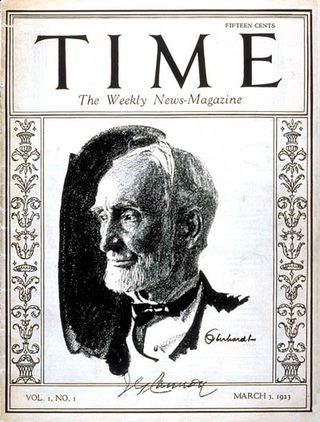
Eventually, the magazine eventually survived, caught on, and thrived, becoming “must reading” in the worlds of business, politics, and the arts. Because it circulated so widely, Time was read from coast to coast, which meant that it reached every congressional district. By the 1960s, President Kennedy was so obsessed with Time’s coverage that he had mock-ups dropped off early at the White House.
Part of Time’s appeal, at least to investors, was Luce’s promise that it would have no editorial page and no political agenda. Thus, it enjoyed a degree of credibility among members of both major parties, and in the 1950s, it thrived in an era of broad political consensus. And yet, while Time had no editorial page, it didn’t avoid political opinion. Rather, Luce wanted to give readers not just the news but a way of thinking about the news.
Consider, for example, its coverage of Chinese politics during the 1930s and ’40s. A leader in the “China lobby,” Luce became enamored of the Chinese Nationalist leader Chiang Kai-shek, to the point where he repeatedly placed Chiang on the cover of Time and fawned over him in print. Luce had said he wanted to cover the news objectively, but instead, actually misled U.S. readers into thinking that the Nationalists would prevail over the Communists. When Mao Tse-Tung came to power in 1949, Time readers were shocked.
Indeed, Luce derided the very idea of objectivity that many journalists heralded. “Show me a man who thinks he’s objective, and I’ll show you a man who’s deceiving himself,” he once said. Clearly, Luce was offering readers more than facts; he was selling his judgment (or his spin) on those facts.
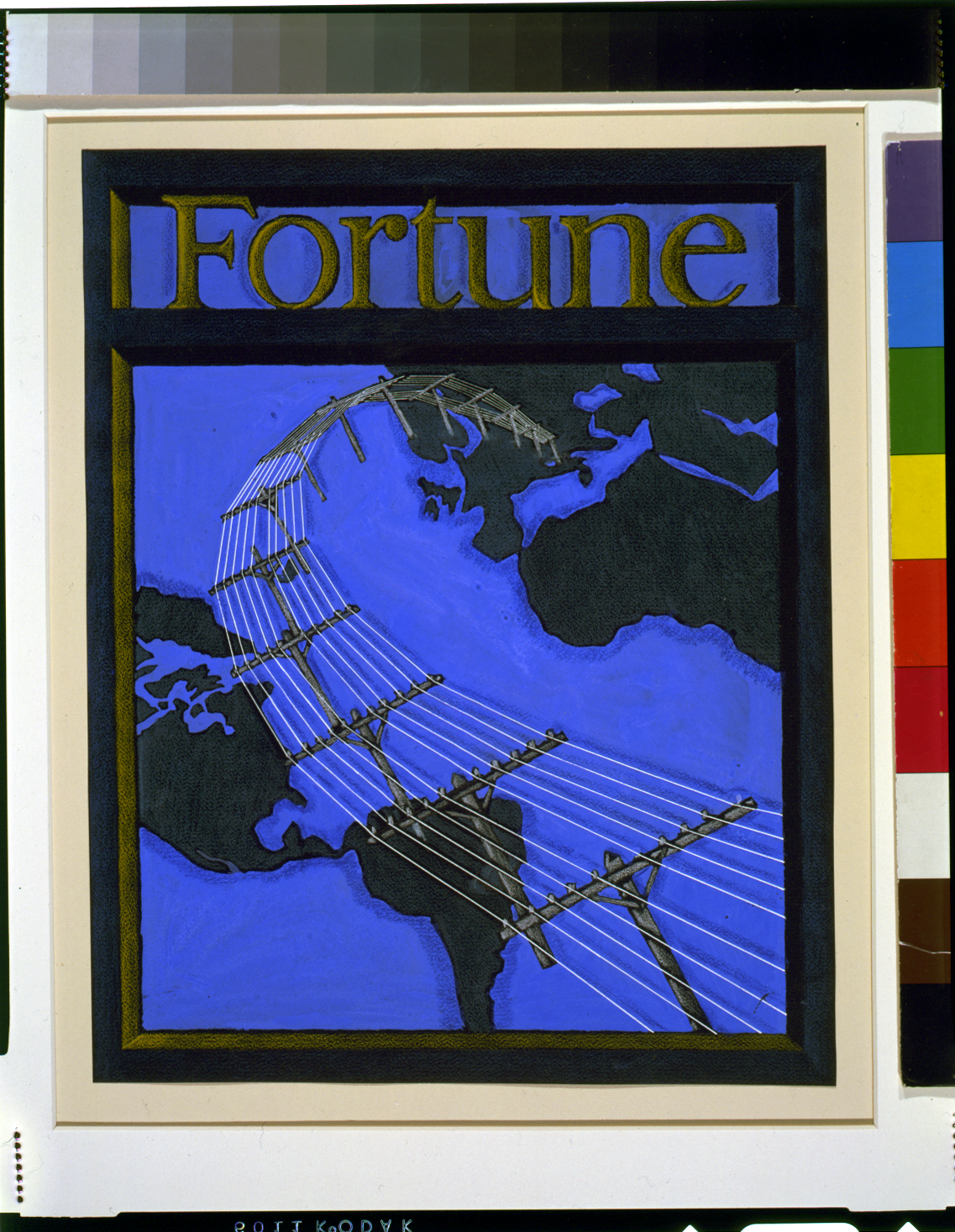
Hadden died an untimely death from a strep infection at the start of 1929, and Luce emerged as the biggest stockholder in the company they had founded. Luce then pursued a new magazine venture, Fortune, which would cover “the dignity and the beauty, the smartness and excitement of modern industry.”
Flush with money, Luce had the resources and judgment to hire top talent for Fortune. He enlisted the critic Dwight Macdonald and the poet Archibald MacLeish as writers, and he hired Margaret Bourke-White as the magazine’s lead photographer. The glossy, handsome monthly cost a hefty dollar a copy (that is, $18 by 2023 standards). Launched during the Depression, Fortune struggled to sell its vision of prosperity to struggling Americans, but survived in part because of its use of photography by people like Bourke-White who captured high-impact pictures of tractors, meat-packing, and architecture.
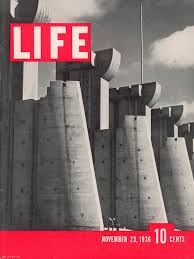
Luce made photography even more central to his next venture: LIFE magazine, which revolutionized American news media by elevating photos from an afterthought intended to illustrate stories written by writers into a dramatic new form of story-telling in which photos would tell the story with minimal use of words to provide captions and credits.
Such an experiment offered a fundamentally different way of presenting the news. No more would the news be accompanied by a blurry half-tone image of a dignitary or ball-player. In the pages of LIFE, photographers and editors pioneered new layouts to showcase the “photo essay.” Topics that were not particularly newsworthy could now be presented in a memorable visual way. W. Eugene Smith pioneered the form with photo essays about the process of giving birth and the life of a rural nurse-midwife. These were not news, but they sure were interesting.
Until his retirement in 1964 and his death three years later, Henry Luce ran the Time-Life empire as a media mogul with few rivals in U.S. history – ranking with William Randolph Hearst, the Sulzberger family, and perhaps Rupert Murdoch. In 1972, change caught up with one of his titles, as Life magazine went out of business as readers opted for television images over photography. Luce’s other titles have endured, although like all legacy media, they no longer dominate the media landscape and they are fighting a rearguard battle against digital upstarts.
Christopher B. Daly is a professor emeritus of journalism at Boston University. He is at work on a new history of American journalism focusing on the role of U.S. newsrooms in launching and incubating careers in literature and the visual arts.


Nice story Chris!
I Hope you’re enjoying retirement and all is well.
Best
Dino
LikeLike