Category Archives: Uncategorized

Math for journalists (cont.)

By Christopher B. Daly

When the latest jobs figures came out on Friday, one of the first dissenting voices was that of Jack Welch, the former CEO of General Electric. In a Twitter message, he expressed overt skepticism about the integrity of the numbers generated by the non-partisan Bureau of Labor Statistics. Welch suggested that the falling unemployment rate did not square with an overall economy that he considers sluggish.

Many journalists quoted him at face value. Few noted that Welch is a Republican and a Republican donor.

Even fewer noted that much of Welch’s personal fortune takes the form of GE stock. Which raises the question: What has happened to the value of GE stock since Obama took office?

Turns out, the Obama years have been very good years for GE (and thus for Welch). When Obama took office in January 2009, GE stock was in the toilet, trading at about $12 a share. At the close of trading on Friday, GE stock was valued at about $23 a share. In other words, the value of the stock has nearly doubled under this president.

Who says the economy is not improving?

If anybody would know, it should be Jack Welch.
 

1 Comment

Filed under Uncategorized

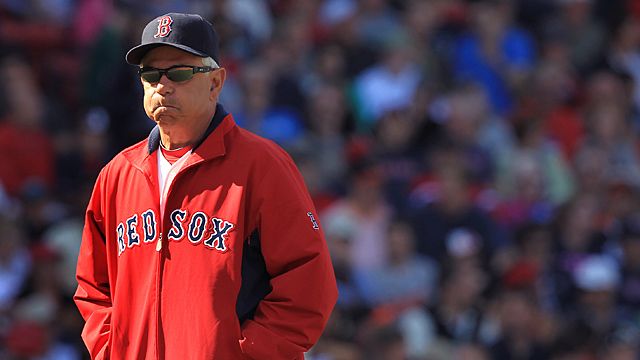
Red Sox 2012: RIP

This, alas, has to be said.

(And a hat-tip to Charlie Pierce for saying it.)

Leave a comment

Filed under Uncategorized

Math for Journalists (cont.)

By Christopher B. Daly 

What better way to learn about math for journalists than from one of our own?

Happily, the nonpareil Nate Silver of the NYTimes has a new book out in which he explains the math behind polls, predictions and other predicaments that reporters cover all the time and rarely understand in depth. The book seems to be very much of a piece with his work at the Times, on the blog “FiveThirtyEight” (named for the number of votes in the Electoral College).

His book is called The Signal and the Noise, and it weighs in at 534 pages! (I can only imagine what kind of arguments must have gone back and forth about that length with the folks at Penguin. I’m no mathematician, but I am a book author, and I can tell you that publishers are allergic to long non-fiction books.)

Here is a review of Signal and Noise from the Sunday Globe. And, just for fun, here’s a link to the Wikipedia page about the engineering concept of “signal/noise ratio” — complete with mathematical formulas!)


Leave a comment

Filed under Uncategorized

Punch Sulzberger: A great publisher

By Christopher B. Daly

The recent death of Punch Sulzberger, publisher of the New York Times, (1963-1992) has prompted an  outburst of obituaries, memories, and tributes — all deserved as far as I can determine.

Here is the Times’ own vast obit with sidebars galore. Here is a wonderful tribute from longtime NYT

Arthur "Punch" Sulzberger, by Andrea Ventura

Arthur “Punch” Sulzberger, by Andrea Ventura

m.e. Max Frankel.


In my humble opinion, Punch was the epitome of a great publisher, mainly on          the strength of two positions he took:


1. He consistently acted on the principle that his job as publisher was to make money to support great journalism. Everything else was secondary — including making money to enrich the company’s investors (many of whom were his siblings and cousins). This is no small thing, as anyone who ever worked for a broke or nearly broke news organization can testify.

2. Although he occupied a prominent position near the pinnacle of the American Establishment, he made the right call on the biggest challenge of his career, even though it meant defying that very establishment. I am thinking of his magnificent courage in the Pentagon Papers case in 1971. Shortly after his retirement, Sulzberger was asked about what was the toughest call he had been required to make while publisher. Without hesitating, he answered that it was the Pentagon Papers case.

Here is an excerpt from my book, Covering America, that shows Punch at work:

. . .The set [of photocopies of the Pentagon Papers] held by the Times represented an unprecedented breach of the national security classification system, and anyone in possession of the report could face criminal charges, not merely of stealing government property but perhaps even of espionage or, ultimately, treason. Indeed, that was the opinion reached by the Times’ longtime law firm, Lord Day & Lord. Senior partner Louis M. Loeb objected to the idea of publishing leaked military secrets in wartime, which he considered irresponsible and unpatriotic, and he warned that the government would be sure to prosecute the newspaper and its top executives. He urged the editors to return the papers to the government. Punch Sulzberger decided to listen instead to the company’s in-house counsel, Jim Goodale, who was more sanguine about keeping everyone out of jail. With that question still unresolved, Sulzberger decided to let the project move forward but to proceed carefully. By now, he had eight years as publisher under his belt, and he felt a lot more confident than he had in his first year, when JFK had tried to bully him into transferring Halberstam out of Saigon. Still, confronting the president of the United States would be a challenge.

In one room at the hotel, Sulzberger assembled the newspaper’s lawyers to help him decide whether to publish anything at all. They argued over issues of sedition, corporate liability, and professional responsibility. In another room he assembled a select group of the newspaper’s senior editors and top reporters to wade into the documents and help him determine what to publish. It was tough going in both rooms. In the roomful of journalists, the Pentagon Papers were providing dozens of leads and tantalizing revelations. But the report as a whole was so vast that it would take a long time to find a storyline in there. What was the upshot? What was the headline? Week after week, debates raged in both rooms. Was the Times about to break the law by publishing classified information during wartime? Would the government bring a charge of treason? If so, could the paper survive? Finally, the stories were ready.

It all came down to Sulzberger. It was time to say yes or no, time to put all his chips—the paper he loved, his family’s legacy, the good of his country—on the table. His answer was yes. So on Saturday, June 12, 1971, while President Nixon was dancing in the White House at the wedding of his daughter Tricia and enjoying what he called the happiest day of his presidency, the typesetters and pressmen at the Times started printing the stories that would bring about a first-order constitutional crisis. . .


–from Covering America, by Christopher B. Daly


Leave a comment

Filed under Uncategorized

A prayer for journalists?

By Christopher B. Daly

I was in temple today, accompanying my family to services for Yom Kippur. Part of the service included this passage, which I thought could serve many journalists well:

For failures of truth, O Lord, we ask forgiveness.

For passing judgment without knowledge of the fact,

and for distorting facts to fit our theories, 

For deceiving ourselves and others with half-truths, 

and for pretending to emotions we do not feel. . .

~Happy new year. May you be inscribed in the Book of Life.

Leave a comment

Filed under Uncategorized

Quote Approval: NYTimes bans it

By Christopher B. Daly 

It was the only decision they could have made, but credit New York Times executives with deciding to ban the pernicious practice of “quote approval.”

In an announcement made Thursday, the paper said it would no longer allow its reporters to grant their sources the power to approve their own quotes before they appear in news stories. The Times was slow in figuring this out, but a right decision is always welcome.

Here’s the takeaway:

. . .starting now, we want to draw a clear line on this. Citing Times policy, reporters should say no if a source demands, as a condition of an interview, that quotes be submitted afterward to the source or a press aide to review, approve or edit.

That should have been self-evident.

Leave a comment

Filed under Journalism, New York Times, Uncategorized

“Silent Spring” at 50

Here is a wonderful tribute to Rachel Carson’s ground-breaking environmental reporting, Silent Spring. The book was published on Sept. 27, 1962, just a few months after it first appeared in (where else?) The New Yorker.

Rachel Carson, thank you.

Leave a comment

Filed under Uncategorized

Monday round-up

By Christopher B. Daly

I don’t know about you, but I had a surprise today when I picked up my NYTimes: it was literally wrapped in a section-sized, full-color ad for Tiffany & Co. (Interestingly, there is no sign of Tiffany on the Times‘ website homepage.)

Thank heaven for Tiffany. How lovely that they have enough money on hand to buy what amounts to a 4-page print ad, just to congratulate themselves on turning 175 years old. For most of those years, Tiffany has prospered hand-in-hand with the Times, which has delivered an upscale audience to the upscale retailer. That relationship was critical to the business model that drove U.S. journalism from the 1830s until recently. With the money from today’s special wrap-around section (and  hefty doses of regular Tiffany ads), the Times will make it to its own 175th birthday — which is due in 2026.


–Mercer University in Macon, Ga., is filling a  gap in local journalism, by housing two important institutions and supplying the raw foot-soldiers for professional newsrooms.  This is a strong trend at many universities, such as the Boston University News Service and the New England Center for Investigative Reporting.

David Carr was trying to say something today about financing innovation in journalism, but I’m really not sure what his point is. Does anyone know?


Leave a comment

Filed under Uncategorized

Abolish the NCAA — B.U. Hockey edition

By Christopher B. Daly

If you were a big, strong, aggressive young guy, already drafted by a pro sports team, and you were turned loose on a college campus where some number of your fellow students treated you like a demigod . . . how would you behave?

At my school, Boston University, it turns out that some members of our nationally ranked men’s  hockey team behave poorly, at least some of the time. And naturally, some of them perform poorly in class, at least some of the time.

All of this is laid out in a new report from a campus-wide task force and covered in today’s Globe (and elsewhere).

Of course, we should make the changes recommended by the task force, right away. But even then, we will still be in the educationally absurd position of housing a couple of dozen young men who are essentially professional athletes, laboring in the NHL’s farm system. There is no obvious reason that they should be on a university campus. Can anyone offer one?


2 Comments

Filed under Uncategorized

The digital future is here

By Christopher B. Daly

Exhibit A: today’s New York Times politics section.

The on-line version shows the rapid evolution of a news organization from what used to be a print-only operation into a full-fledged multimedia operation.

Among the many features:

–A dynamic map of the Electoral College vote totals.

–Many color photos, including a slideshow. Plus, a trip through the Times photo archives with a b&w slideshow from 1968.

–Videos of the key speeches.

–Blog posts by beat reporters discussing their specialties.

–An old-fashioned “lede-all” main story, but one that has 416 comments (and counting).

–A behind-the scenes “TimesCast” in which a Times editor interviews a Times reporter.

–More than a dozen sidebars.

–Lots of old-fashioned “eat-your-peas” civics information, including a helpful side-by-side comparison of the two party platforms.

–Material carried forward from the GOP convention (which newspapers could never do when they were print-only).

–An interactive feature about undecided voters.

–An iPhone App, twitter feeds, a Facebook page. . .

It just goes on and on. All of which raises a question: which business is the New York Times really in? After more than 150 years in the newspaper business, I would say the Times can say it is in the news business, period.

Well, almost. That politics homepage that has so many features (and which reflects the work of I don’t know how many trained professionals — many dozens, certainly, maybe in the low hundreds) has mighty few ads. I see:

–a banner near the top from CNN,

–a second ad from CNN in a box in the right column.

–a couple of “house ads” touting NYTimes services, which bring in no money.

–a small ad from Corcoran Real Estate about waterfront estates in Delray Beach

–A “GoogleAd” for Trader Joe’s coupons.

I have no idea how much revenue those ads are bringing in. All told, however, I  am sure that they don’t amount to a fraction of the cost of putting all those reporters and editors in Charlotte, NC, plus the cost of the team in NYC who are helping out.

For now, then, it must be acknowledged: the tools and the philosophy of online news have outrun the business model. This is impressive but not sustainable. Yet.

Will it be self-supporting by 2016?


Leave a comment

Filed under Journalism, New York Times, Uncategorized