Category Archives: Black history

America’s first Black newspaper

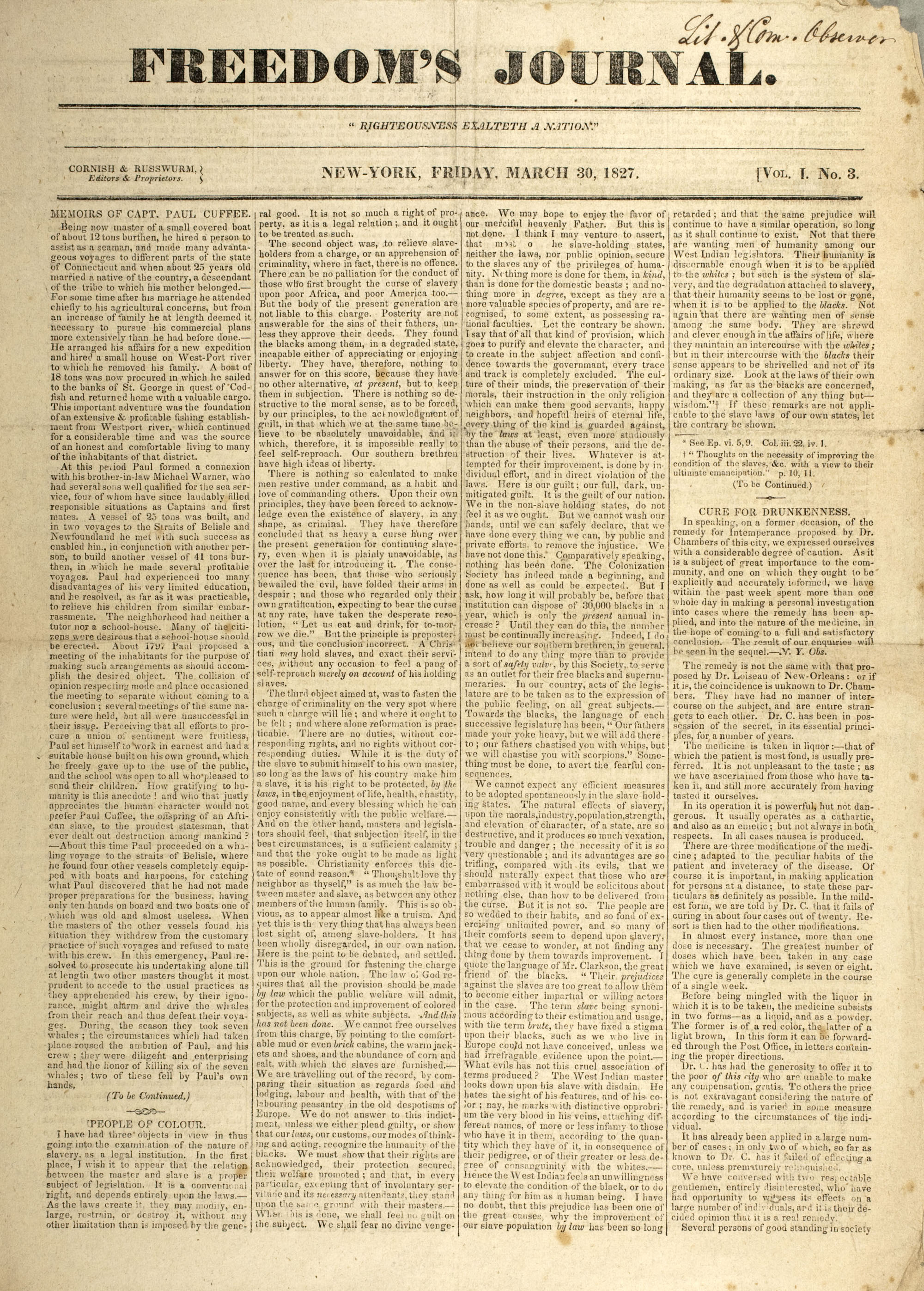
March 16 marks the 197th anniversary of the founding of the first Black-owned newspaper in the United States, Freedom’s Journal.


During the 1820s, free Blacks in New York City and elsewhere were beginning to form a  literate community large enough to support a newspaper. As it happened, during the very year that Frederick Douglass started to learn to read, the first newspaper in America owned by Blacks was founded. Freedom’s Journal began publishing on March 16, 1827 in New York City.


The founding editors were Reverend Samuel Cornish, a minister, and John Russwurm, an alumnus of Bowdoin College, who was the first black person to graduate from an American college.

In their first number, the editors boldly stated their goal:

“We wish to plead our own cause. Too long have others spoken for us.”


Not surprisingly, Freedom’s Journal was editorially opposed to slavery, and it published the first account of a lynching ever printed in the United States. At the same time, it served its largely Black readership by running newsy items of general interest, as well as sermons, poetry and advertisements.

The newspaper did not survive long, but it was followed by many others, notably Frederick Douglass’s first newspaper, The North Star, which he founded in 1847.
2 Comments

Filed under Black history, history, Uncategorized

Happy birthday, Frederick Douglass

By Christopher B. Daly 

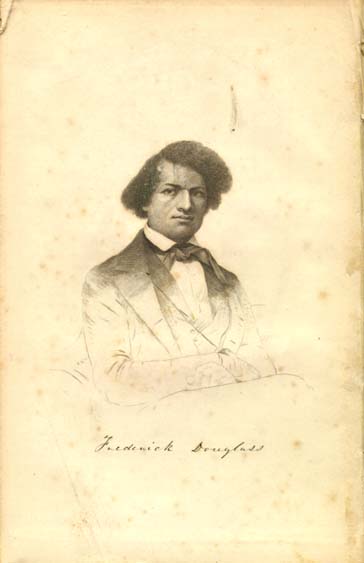
BY TRADITION, today is the day that marks the 200th anniversary of the birth of Frederick Douglass, a towering figure in American history known for his journalism, his public speaking, his opposition to slavery, his support of women’s rights, and much more. But in fact, no one can be sure of the date of Douglass’s actual birthday, for a simple reason: He was born into slavery, and most slaves were never told the exact date of their birth.

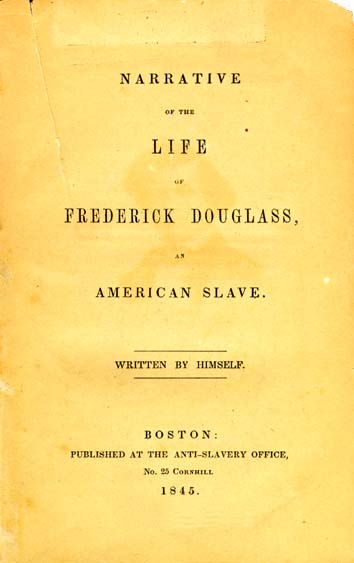
As Douglass wrote in the powerful opening to his Narrative:

        I was born in Tuckahoe, near Hillsborough, and about twelve miles from Easton, in Talbot county, Maryland. I have no accurate knowledge of my age, never having seen any authentic record containing it. By far the larger part of the slaves know as little of their ages as horses know of theirs, and it is the wish of most masters within my knowledge to keep their slaves thus ignorant. I do not remember to have ever met a slave who could tell of his birthday. They seldom come nearer to it than planting-time, harvest-time, cherry-time, spring-time, or fall-time. A want of information concerning my own was a source of unhappiness to me even during childhood. The white children could tell their ages. I could not tell why I ought to be deprived of the same privilege. . .

I have always found that line comparing the status of a slave to that of a horse to be stunning. It epitomizes the evil of chattel slavery.

douglfp

dougltp


1 Comment

Filed under Black history, Frederick Douglass, history, Uncategorized